
Which UK university is best for you?

PTE Author
PTE Author
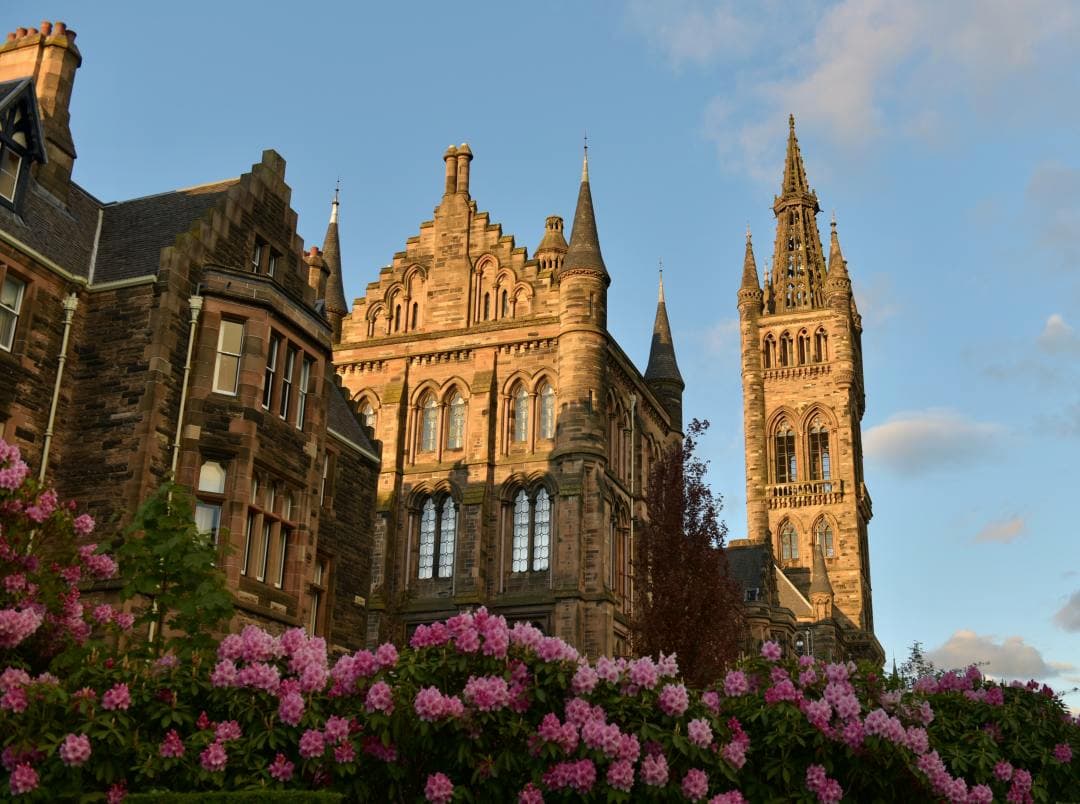
Image - University of Glasgow
Reading time: 8 minutes

People study abroad for many reasons - to see new places, to experience a different culture, and maybe most importantly, to get access to student life and educational opportunities not available at home. If you want to study at a UK university, you’ll not only have access to some truly innovative teaching and research - you’ll also be joining one of the most multicultural student bodies in the world. 

Within the UK, there’s a huge range of universities and courses to choose from. So, how do you choose between over 160 institutions, and thousands of courses? Research finds that half of students who drop out of university early do so because they chose the wrong course, so it’s important to be completely happy with your choice.  

So, let’s have a look at what you need to consider before you make your university application, so that you can make the right choice. 

Choose your subject   

The first step in the process of choosing a university is deciding what you want to study. Your UCAS personal statement will be sent to all your university choices, so it should be relevant to all the courses you apply for. This means that all of your course choices must be the same or in a similar field. 

Think about the school subjects you’re good at, but also think about what you could spend the next three or even four years studying.  

Is there a subject that you want to continue and deepen your knowledge in? Or do you want to study something completely new?  

Do you want to study a subject like law or medicine that relates to a specific job? Or perhaps you want to take a course like history that can be used in a wide range of careers? Think carefully about these questions, and the rest of the process will become a lot easier. 

Do as many events and online taster sessions, and sign up for as many free online courses as you can. Futurelearn has a great range of taster courses from universities all over the world. This can really help you decide where your interests lie.  Above all, keep notes on what interests you, and what doesn’t. 

If you think you want a broader degree, then you’ve always got the option of doing a joint honours degree. This means you combine two different courses. Many joint honours courses combine a language with another subject, giving you the possibility to use your learning around the world, or even do a study placement in another country.  

Consider the competition 

When thinking about what course you could do, it’s important to consider the competition. Some courses have many more applicants than places, but there are also hundreds of ‘hidden’ courses which get far fewer applicants. For example, the University of Oxford gets 16.9 applicants per place on its Economics course, but it’s closer to 3 applicants per Classics place. Classics covers a range of areas like politics, history, linguistics, social sciences and more, and really challenges your intellect.  

Economics might be competitive, but Classics might be just as valuable. There are thousands of ‘hidden’ courses, which, just because they’re not famous, don’t attract as many applicants. Check out the full range of courses on the UCAS Explore site, and the Uni Guide, and do it with an open mind. 

Once you’ve narrowed down your list of courses, it’s time to think about where to study. 

Think about location and compare universities in the UK 

The UK might be a small country, but it’s incredibly diverse. There are large, international cities like London or Glasgow, smaller towns and cities like Cardiff, Belfast or Nottingham, rural universities like Lancaster, coastal towns like St. Andrews or historic cities like York, Oxford or Cambridge.  

So, when you’re deciding on a UK university, you need to first ask yourself: what’s important to you? Would you prefer to live in a busy city or in the quiet countryside? Are you going to be doing a lot of exploring or will you stay near campus? These factors will make a difference to your decision. 

You’ll also need to think carefully about costs. Different parts of the UK have different costs of living, depending on things like rent, transport, and the cost of entertainment. Check out property websites to see what rents are like, to get an idea of how expensive life will be.  

For more information, check out our article on the cost of living in the UK.  

Finally, the type of university itself is important. Some universities have campuses where the whole of university life takes place, like the University of York. Others are more spread out, such as the University of Manchester, which has buildings all over the city. Each has its own atmosphere and you should think about which you prefer. 

Look at the rankings: How to choose a university in the UK 

Find out how your preferred universities rank in the league tables. Rankings of the top universities in the UK don’t just measure teaching quality. They show data on student satisfaction, post-graduation employment rates, and staff to student ratios. 

The best universities in the UK and courses with higher rankings will be more competitive to gain entry to. You can apply for up to five courses on your UCAS form, so it’s a good idea to choose a range of courses and universities. Include an ambitious choice which you may or may not get the grades for, and safe choices that you know will accept you. 

You can check the Guardian university rankings, or the Times Higher Education rankings to see which universities are the most highly rated. 

That being said, student life in the UK is about balance. You need to consider both rankings and what’s right for you. It’s no use going to a top ranking UK university in a location you hate, studying things that don’t interest you, and where the culture on campus doesn’t appeal to you.  

Sometimes it might be better to move down the rankings if you know that the university will really help you to shine.  

Remember, the reason that there are so many different kinds of university is because everyone is unique. If you’re applying to somewhere that you know really matches your values and interests, you’ll be much more likely to make a success of your university career. 

Research the teaching style  

It’s a good idea to look at the style of teaching and assessment at your chosen university. Some courses focus more on final exams, some on coursework, and some on projects, dissertations and independent research.  

See whether your university’s exams are open book or closed book. If they’re closed you have to remember a lot more, but if they’re open you will probably have to give more detailed answers in your exams.  

If you can attend open days and chat to other students and potential professors, do so. But if you can’t, remember that each university course website will tell you about the course content and how it is assessed. You need to make a choice based on what type of assessment will suit you best. 

Some courses are taught in large lectures and seminars, and others, such as many Oxbridge colleges, will teach you in small groups or one-to-one with a tutor. The teaching style that works best for you will be decisive in your choice. 

Consider your hobbies   

Every university has its own culture and social life based around the student unions and societies. University life is about more than studying, for local and international students alike.   

You will have a more balanced student experience if you make time for your hobbies. Look on the university website to learn about student societies and clubs, and see which activities are available to you. But don’t worry if you don’t see anything that appeals - you can always be proactive and start your own society.  

Do you have a sport that you love to do? If you do, and you’re really good at it, you might even be eligible for a scholarship. There are all sorts of funding and awards available, so even if you think you won’t get anything it’s a good idea to check. 

Read about sports scholarships at UK universities.   

Make sure you fulfil the English language requirements 

You’ll need to pass a test of English for your UK student visa requirements. You can take any Secure English Language Test (SELT) that’s been approved by the Home Office, the UK government department responsible for immigration.  

PTE Academic can be used for UK student visas for degree level courses, and to access 99% of universities in the country. The test takes two hours, covers reading, speaking, listening and writing and is entirely done on a computer. Results usually come back within 48 hours, making it convenient and reliable.  

Choosing a UK university requires a lot of thought. Luckily, choosing an English test to get the visa is easy.

Related Content

  • Image- Canada, 1080px
    Top 5 multicultural cities in Canada for international students
    By PTE Author
    Reading time: 7 minutes

    Canada is easily one of the most multicultural countries in the world. The northern nation draws people from far and wide - and, for most Canadians, the international scene is a major source of pride.

    There are approximately 7.5 million people from abroad living in Canada today. Walkthrough one of the country’s many amazing cities and you’ll see people from anywhere from Jamaica to China to India. You’ll also experience celebrations, customs, music, food, and art from all over the world. Honoring the backgrounds of its citizens is just part of the Canadian way.

    The North American country invites immigrants for a variety of reasons: population growth, economic growth, and cultural diversity being some of the biggest ones. A 2020 Canadian Government report noted that immigration accounted for more than 80% of Canada’s population growth in 2019. That year, Canada recorded 341,000 permanent residents as well.

    In fact, workers from other countries represent 26% of the workforce. As for students, in 2019, more than 800,000 international students held valid study permits in Canada.

    But with so many great cities from coast to coast, many wonders: “Which are the most multicultural cities in Canada?” Below, a look at five Canadian cities that are home to the largest percentages of people from abroad.

    1. Toronto: Canada’s most diverse city 

    Among Canada’s most diverse cities, Toronto easily wins first place. It’s nearly impossible to spend a day in Toronto without mixing with people from around the world. A Statistics Canada report examined the geographic distribution of the Canadian immigrant population and found Toronto to be the top destination for new Canadians.  

    Toronto’s 2.7 million immigrants actually account for nearly half—46% to be exact—of the city’s entire population. This group represents 35.9% of Canada’s entire immigrant population.  

    That’s exactly why The BBC named Toronto the most multicultural city in the world a few years ago. In Toronto, the bustling Chinatown takes up a prominent part of the city’s downtown that it’s pretty hard to miss. Koreatown is a great place for food and fashion. Little Italy always has dozens of restaurants with mouth-watering pizzas and pastas on offer. There are also festivals like Taste of the Danforth (Canada’s largest street festival) that celebrates all things Greek, the Tamil Festival, and the Chinese Lantern Festival.  

    Studying in Toronto with a PTE Academic Score 

    If Toronto appeals to you, there are a number of excellent universities in Toronto that accept PTE: York University, Ryerson University, Ontario College of Art & Design University, George Brown College, Humber College.  

    2. Montreal: An incredible arts scene  

    Located in the French-speaking province of Quebec, Montreal is the home to 936,305 immigrants. It’s the second most diverse city in Canada. It has 12.4% of Canada’s immigrant population with folks from abroad representing 23.4% of the city’s total population. The ministry of immigration in Quebec reports that they are mostly European, Asian, or from other parts of the Americas.  

    Montreal is a great city for a variety of reasons: its arts scene is incredible, it has amazing cuisine, it’s affordable and it’s located in the culturally-rich province of Quebec.  

    And, if any newcomers want to experience this cultural diversity, the city puts on a number of festivals in summer in order to do so. There are entire weeks devoted to celebrating Japanese and Italian culture in June, for example.  

    There is also a festival of world music in early summer where bystanders can hear instruments and music styles from all over the world. The Festival International Nuits d’Afrique is also a well-known festival in which more than 100 performers put on shows celebrating culture from Africa, the Caribbean, and Latin America.  

    Studying in Montreal with a PTE Academic Score 

    If Montreal appeals to you, there are a number of excellent universities in Montreal that accept PTE: McGill University, Concordia University, Montreal College of Information Technology. 

    3. Vancouver: Combining city life with nature 

    Vancouver’s 989,545 immigrants represent nearly 41% of the city’s population and just over 13% of the Canadian immigrant population. Many of those people come from places like China, India, The UK, the Philippines, and Hong Kong.  

    Vancouver is arguably Canada’s most beautiful city. Those who live there get the best of both city life and nature. This is because Vancouver sits on the shores of the Pacific Ocean and in the mountains. It’s entirely possible to go trekking or sea kayaking during the day and settle in for cocktails and a fancy dinner in the evening. And thanks to the international community, you can expect to sit down to Chinese, Indian, or fusion foods at one of Vancouver’s many ethnically diverse restaurants.  

    Studying in Vancouver with a PTE Academic Score 

    If Vancouver appeals to you, there are a number of excellent universities in Vancouver that accept PTE: Simon Fraser University, University of British Columbia.  

    4. Calgary: Close to tourist hotspots 

    Calgary (nicknamed “Cowtown”) is one of Alberta’s most thriving areas. Statistics Canada has reported that about 5.4% of Canada’s immigrant population live in Calgary. That translates to nearly 405,000 and over 29% of the city’s total population. 

    While the Calgary Stampede festival is Calgary’s claim to fame, many other events highlight the international cultures present in the neighborhoods of Cowtown. Examples include GlobalFest, Omatsuri (a Japanese event), Fiestaval (which celebrates Latin American identity), Serbian Fest, and the Calgary International Film Festival which screens works from more than 40 countries worldwide.

    Another huge draw for those from abroad: Calgary provides the comforts of city life but is just a short road trip from main Canadian tourist destinations like Banff, Lake Louise and Kootenay National Park.  

    Studying in Calgary with a PTE Academic Score 

    If Calgary appeals to you, there are a number of excellent universities in Calgary that accept PTE: University of Calgary, Bow Valley College, Mount Royal University. 

    5. Edmonton: A city of parks  

    Edmonton has become a hub for immigrants seeking a new home in Canada. About 4% of Canada’s immigrant population lives in the northern city representing nearly a quarter of the Edmonton population overall. Move here and you can expect dry weather and long days with late sunsets in the summer. The winter, by contrast, is very snowy and cold.  

    Edmonton locals also brag that more than 150 languages are spoken there. French, Punjabi, Cantonese, Mandarin, Arabic, and Spanish are the most prevalent.  

    Edmonton is also a fairly green city with more than 460 parks. For day trips, newcomers can experience iconic locations nearby like Jasper National Park and UNESCO site Dinosaur Provincial Park—a spot famous for its dinosaur fossils.  

    Studying in Edmonton with a PTE Academic Score 

    If Edmonton appeals to you, there are a number of excellent universities in Edmonton that accept PTE: University of Alberta, The King’s University, Northern Alberta Institute of Technology, Macewan University.  

    PTE can make your Canadian dream a reality 

    If you’re thinking about studying in any of these top five most multicultural Canadian cities, consider using PTE as your stepping stone. The English proficiency test is recognized by some of Canada’s most prestigious colleges and universities. It also has testing centers in or near each of the cities listed above. Currently, international students can complete a test in Toronto, Montreal, Calgary, Edmonton, Burnaby (right next door to Vancouver), and Ottawa.  

    Discover where PTE can take you in Canada.

  • Image - reading book 1080px
    5 famous Canadian authors and where they went to university
    By PTE Author
    Reading time: 6 minutes

    Are you thinking about moving to Canada to study? Get inspired by these talented Canadian authors and discover the universities they attended. Find out which Canadian universities accept PTE Academic now! 

    Canada inspires good writing. The northern country is home to many talented literary figures and authors whose works have been celebrated worldwide for decades. From old classics like Anne of Green Gables to newer works like Women Talking and The English Patient, Canadian literature has really made a mark.  

    But who are the masterminds behind these incredible stories? More importantly, where in Canada did they study?  

    Here, we take a look at some of Canada’s most talented writers and learn where they earned their university degrees. 

    This list includes reputable institutions from the scenic east coast, to the quiet prairies to highly-regarded schools in Ontario. And if you have yet to read these writers’ books, add them to your reading list! 

    1. Lucy Maud Montgomery  

    Lucy Maud Montgomery published Anne of Green Gables in 1908. It became one of Canada’s most famous books. The story is set in the Canadian province of Prince Edward Island which is where the author was born.  

    The fictional story is about a red-haired, impulsive orphan growing up in a small eastern Canadian town. Though it was rejected by many publishers at first, the novel went on to sell more than 50 million copies. It has also been translated into 36 languages.  

    More recently, it was developed into a TV series called Anne With An E, which can be streamed on Netflix.  

    Education: Dalhousie University 

    Lucy Maud Montgomery studied at Dalhousie University in Halifax, Nova Scotia. She started her studies there at age 21 in 1895. At the time, it wasn’t common for women to be seen on campus. During her time at Dalhousie, she argued that more women should seek a university education.  

    Feeling inspired to study at Dalhousie University? The good news is that they accept PTE as proof of your English level.  

    2. Joseph Boyden  

    Joseph Boyden is a Canadian novelist and short-story writer. Boyden is best known for writing about First Nations culture. He is best known for his books Three Day Road, Through The Black Spruce, and The Orenda. In his writing career, Boyden has collected many Canadian literary prizes. These include Canada Reads, the Scotiabank Giller Prize, the Rogers Writers’ Trust Fiction Prize, The Governor General’s Award for fiction, and the Canadian Booksellers Association Fiction Book of the Year. Boyden grew up in North York, Ontario.  

    Education: York University  

    He studied creative writing at York University where he was admired by a professor for his intensity and determination. He also has honorary degrees from Wilfrid Laurier University, Trent University, Nipissing University, and Algoma University.  

    Do you want to follow in Boyden’s footsteps? York University accepts PTE

    3. Alice Munro 

    Alice Munro is one of the best authors to have ever come out of Canada. In 2013, she won the Nobel Prize in Literature. She is known and praised as being the master of the short story. Her books include Dear Life, Dance of the Happy Shades, The Lives of Girls and Women, Who Do You Think You Are and The Love of a Good Woman. When she won the Nobel Prize, she was quoted saying that she didn’t expect to win.  

    Education: Western University  

    As for her education, Munro studied English at Western University. She started at the university in 1949. She actually published her first-ever work at the university’s campus literary magazine called Folio. Munro is one of Western University’s most famous alumni.  

    If you’ve bookmarked Western University as a place to study, it also accepts PTE.  

    4. Miriam Toews 

    Miriam Toews is a bestselling author of Women Talking, All My Puny Sorrows, and A Complicated Kindness. Toews has collected many literary awards in Canada. Her major awards are the Governor General’s Award for English-language fiction, Canada Reads, and the Scotiabank Giller Prize. Her novel Women Talking is a fictional story based on a Mennonite colony in Bolivia. It became a bestseller and was shortlisted for the Governor General’s Award. Toews lives in Toronto.  

    Education: University of Manitoba 

    She earned her first degree at the University of Manitoba where she studied film studies and earned a bachelor of arts degree.  

    Check out the University of Manitoba for yourself, the highly regarded institution also accepts PTE. 

    5. Michael Ondaatje 

    Michael Ondaatje is considered one of Canada’s most important contemporary writers. His novels and poetry are required reading in many Canadian schools and universities. Ondaatje was born in Sri Lanka but moved to Canada in 1962 and stayed. His most famous book is The English Patient. It’s a war-era love story set in Italy. Not only did it win the Man Booker Prize, but it was also turned into an award-winning movie in 1996. Ondaatje also wrote In The Skin Of A Lion, The Cat’s Table, and Anil’s Ghost. In addition to the Booker Prize, Ondaatje has also won Governor General’s Awards and the Giller Prize. He is also a member of the Order of Canada. Before becoming the famous author that he’s known as today,  

    Education: Queen’s University 

    Ondaatje studied ag Queen’s University in Kingston, Ontario in 1967. He’s one of the university’s most celebrated past students. Currently, he lives in Toronto.  

    Queen’s University is a great choice for international students and accepts PTE

    Travel to study in Canada 

    Thinking of studying in Canada? With so many incredible universities, Canada is an obvious pick for many international students. In order to secure a spot at a Canadian university though, students coming from abroad must prove English proficiency.  

    PTE Academic can help make your dreams of studying in Canada come true. The English language test is recognized worldwide. Many top Canadian universities including the ones mentioned above accept PTE scores as part of their application process.  

    Check out PTE test centers and view prices in Toronto, Ottawa, Montreal, Edmonton, Calgary, or Burnaby to take the first step towards your Canadian university career.

  • Image- teachers 1080px
    10 free lesson plans for PTE preparation
    By PTE Author
    Reading time: 6 minutes

    When you’re preparing students for a high-stakes exam like PTE Academic, it’s important to give them the strategies they need to succeed. But teaching exam techniques can be challenging as there’s often a lot to cover in a short space of time.  

    A good lesson plan will help you to give your students all the information they need while making sure you are using your class time as effectively as possible. 

    So, let’s take a look at some of the free lesson plans available on the PTE website, and see how they can help you save time planning your PTE Academic classes.  

    1. Reading & writing: Fill in the blanks 

    The Reading & writing: Fill in the blanks task type requires students to use their knowledge of collocation and grammar to help them predict which word best fits in each blank. There are several strategies which students can employ to help them narrow down their choices.  

    In the lesson plan, there is an example task for students to practice, pair work activities, and finally a test item for students to use the strategies they have learned. 

    Download the lesson plan now

    2. Reading: Fill in the blanks  

    In the Reading: Fill in the blanks task, test takers will need to use contextual and grammatical cues to choose the correct answer.  

    This lesson plan covers a few of the different techniques that students need to learn to answer correctly; reading for gist, word prediction, and analyzing optional answers. There are also two examples for students to practice these techniques and see which ones are the most helpful. 

    Download the lesson plan now

    3. Read aloud  

    The Read aloud task in PTE Academic integrates speaking and reading skills, requiring students to read a short text with the correct pronunciation and intonation. There are three distinct strategies which students need to use to ensure success. They’ll have to decode word meaning from context, and use phonemic awareness to pronounce unfamiliar words. They’ll also need to link words together when speaking to appear fluent.  

    In the lesson plan, you’ll see how to teach your students these strategies, step by step, and then use them to answer an example question.  

    Download the lesson plan now

    4. Highlight correct summary  

    The Highlight correct summary task type requires students to listen and read at the same time. They’ll have to understand and analyze information from a recording in order to identify the most accurate summary of this information.  

    So, what strategies can they use? This lesson will show you how to help your students develop effective note-taking skills, which are essential for this task. They’ll also need to skim the text, identify the topic sentence and the main ideas, and connect the information they’ve read with the recording.  

    Download the lesson plan now

    5. Describe image  

    Test takers often find the Describe image task to be one of the most challenging questions in PTE Academic. However, when you break it down into logical steps, as suggested in this lesson plan, your students will find it a lot easier.  

    Your class will need to study the image and identify the most important features of the graph, then use the appropriate statistical vocabulary to talk about pie charts, bar graphs, and trends in line graphs in a well-structured and simple description.   

    If you find these resources useful, you might also like to read our PTE Teacher profiles and get insider tips from PTE professionals. 

    Download the lesson plan now

    6. Answer short question  

    The Answer short question exam task is fairly straightforward and doesn’t require a particular strategy to answer. However, students will need to do a lot of reading to increase their general knowledge, boost their vocabulary and develop their word skills.  

    The lesson plan offers suggestions for helping your students to build their academic vocabulary knowledge and details a few strategies which can help students when they are listening to the question, such as listening for direction words. 

    Download the lesson plan now

     7. Summarize written text  

    In the Summarize written text task, your students will need to use two different reading skills. They’ll have to skim the text for gist, then scan it for keywords. They’ll also need to make notes, and then condense them into one sentence between 5 and 75 words long which summarizes the text.  

    In this lesson, your students will practice each step, learning how to identify keywords, making notes, and sharing them with the class. They will then work in pairs to create summarizing sentences.  

    Download the lesson plan now

    8. Re-order paragraphs  

    The Re-order paragraphs reading task requires your students to be familiar with the organization and cohesion, or academic texts. In this lesson, you’ll teach your students how to recognize a topic or opening sentence, and then use that information to identify a flow within the passage. In groups of four, students will swap work and read their reordered paragraphs aloud, then get feedback from their peers. 

    Download the lesson plan now

    9. Reading: Multiple-choice, choose multiple answers 

    In the Reading: Multiple-choice, choose multiple answers task, students will need to use a variety of reading skills. Sometimes, they’ll be able to use their own background knowledge of a topic to help them answer the question - but at other times, this won’t be appropriate.  

    You’ll teach them how to choose which approach to use by identifying the focus of the question. Then, they will share their ideas on the type of text they are reading, learn how to find specific information, and work in pairs to rule out inappropriate answers.  

    Download the lesson plan now

    10. Listening: Fill in the blanks  

    When it comes to Listening: Fill in the blanks, your students will need to use both listening and writing skills to answer this question type successfully. They will need to listen for missing words in a recording, and then type the missing words into a transcript of the recording.  

    In this lesson, you will explain and practice the strategies to succeed in this question. Timing is of the essence. That makes it important for your students to get lots of practice in listening to long words and taking note of the word roots.  

    Download the lesson plan now

    What’s included in your lesson plan pack? 

    There are twenty lesson plans available to download in total; one for each question type in PTE Academic.  

    Download the full lesson plan pack and get a PDF of each lesson plan and the audio files you’ll need to use for sample tasks which require them. Also included are model answers, so your students can see what they are working towards.  

    Discover more PTE Academic preparation resources 

    For more preparation resources, head to the PTE Academic website, where there are lots more PTE Academic resources for teachers who are helping students to prepare for their tests.  

    And finally, sign up for our monthly PTE Teacher newsletter, where you’ll get advice, resources, and inspiration.