Teacher profile: Sharing the learning journey with PTE teacher Kelly Hoo

PTE Author
PTE Author
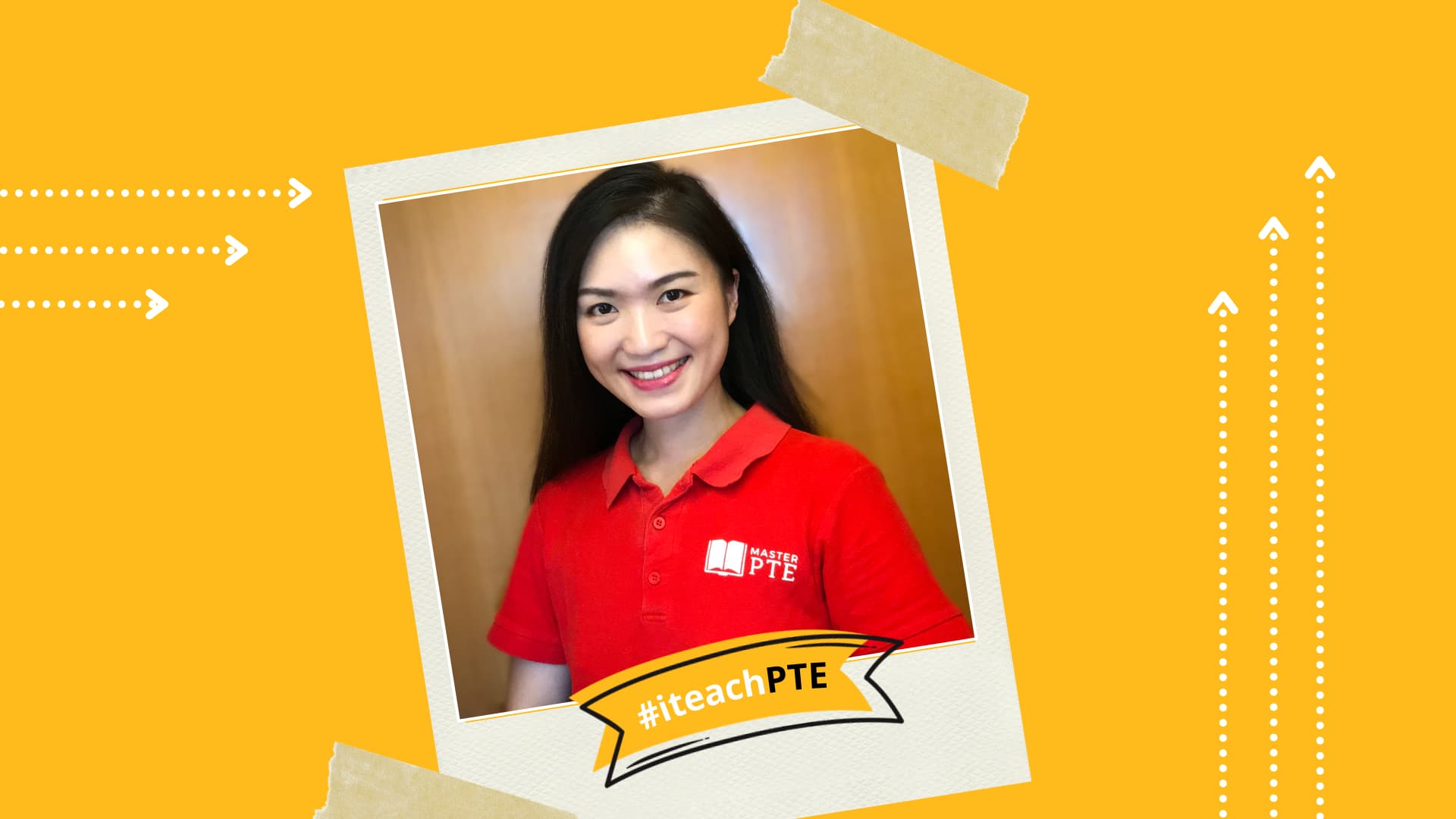
Image - Kelly Hoo #iteachPTE
Reading time: 6 minutes

Kelly Hoo is an English teacher based in Malaysia. She works with people from all over the world, helping them to prepare for PTE. But when Kelly first began learning English, she found it really difficult. She certainly never dreamed that one day she would be teaching English and running her own company!  

From student to teacher  

So how did Kelly go from learning English, to teaching other people how to get the score they need in PTE?  

Kelly’s first language was Mandarin, and she struggled a lot when first learning English. “I started my journey with IELTS,” she explains, “and then I discovered PTE.”  

Kelly was learning English in order to attend the University of Melbourne, where she studied for a Bachelor of Commerce. “I always thought I’d be an accountant,” she laughs. “But it wasn’t meant to be!”  

After graduating, Kelly went to work for Unilever, a big multinational corporation. But she found herself giving advice to people learning English, and being able to help people on their language-learning journey was really rewarding.  

“It started with sharing tips with other people who were learning English,” she says. “I’d been through the journey, so when I saw people struggling, I would always give them recommendations and advice.”  

Starting her own company 

From those small beginnings, Kelly went on to become a full-time teacher. The next step was starting her own English teaching company, Master PTE, where she is able to combine her passion for teaching with the expertise she gained in her business degree.   

But Kelly credits her success to the people around her. “It’s not just my own hard work,” she says. “Our team at Master PTE is amazing. My colleagues work so hard and do such a good job. Without them, I wouldn't be here, sharing my experience.”  

The company is now four years old, and in that time Kelly and her colleagues have helped lots of students build their English skills, prepare to sit PTE, and get the score they need.  

Helping students set manageable goals  

The team at Master PTE teaches students of all ages and levels, from all over the world, in a mix of online and in-person classes.  

“Thanks to Covid, we’re now doing hybrid classes,” explains Kelly, “a mix of online and face to face. Our clients are mainly working adults or students, so they’re very busy, and they need that flexibility.”  

At Master PTE, Kelly and her colleagues help students to break the big goal of getting the PTE score they need into smaller, more manageable goals.  

“We don’t ask them to do ten exam tasks in a day, because it’s impossible,” says Kelly. “We focus on what’s doable - a little bit of preparation each day, to make it easier for our students and give them a feeling of achievement, and the satisfaction that comes from that.”  

The skill that Kelly’s students struggle with the most is speaking. It’s a cultural problem, Kelly says, as in Malaysia, people are worried about making mistakes. “We want to boost their confidence and tell them to express themselves. I always tell students, Don’t be afraid to make a mistake. Just say what’s on your mind - it’s ok, we don’t judge people at Master PTE!”  

Speaking to a computer can also be a challenge for some students, but for others, a computer-based exam like PTE helps with their confidence. They prefer to speak to a computer rather than a human examiner.  

Kelly’s students are her inspiration  

One of the things Kelly loves about her job is meeting people from all over the world. “We have students from Japan, from Botswana, from India. It's amazing to connect with people and learn about their culture, their stories. The learning is definitely a two-way street in our classes!” she laughs.  

One of Kelly’s most inspirational students was from India. He was planning to sit PTE in order to move to Australia with his wife and young children. “When I first spoke to him, his English was at a really low level,” she explains. “I thought he would need a lot of preparation.”  

He started studying with Kelly, preparing for the test, and working hard every evening. “He was really burning the midnight oil,” she says, “as he was working full time too. He put in so much hard work, but he was doing it for his family, for his kids’ future, to give them a better life. I really admired his spirit - and I was so happy in the end when he got the score he needed after just two months of studying!”  

The importance of perspective 

Kelly has one piece of advice for other PTE teachers: always try to think from the students perspective.  

“Teaching English is easy for us,” she says. “We use English everyday. That’s why it’s so important to put yourself in your student’s shoes. Make sure they can absorb and retain the information you are teaching them.”  

From time to time, Kelly studies a new language like German, or Japanese, just to remind herself what it’s like to learn a new language.  

“I understand where the students are coming from,” she says. “I’ve been a learner too, and learning English as a second language isn’t easy.”  

That’s why Kelly is so focused on understanding each student’s situation, and making things a little easier for them by supporting them and creating a community that they are part of.  

“I always tell them, Don’t give up!” she says. “Learning can be fun and interesting.”  

Learn more 

For more insights into PTE preparation, have a look at the PTE blog, where you’ll find inspiration, advice, and lots of useful resources such as free lesson plans and preparation tools. And if you’d like to be featured on our PTE teacher profile series, just fill out this form!

Related Content

  • [Asset] Businesswomen working together
    The do’s and don’ts of the Describe Image question type in PTE Academic
    By PTE Author
    Reading time: 2 minutes

    The "Describe Image" task in the PTE Academic can be challenging, but we are here to help you prepare. Here are some key do's and don'ts: 

    What to do 

    1. Use your preparation time wisely 

    • Before the recording starts, use your preparation time to identify the key trends and the most significant trend in the image. This will help you focus your response on the most important aspects. 

    2. Speak for 30-40 seconds 

    • Aim to speak for 30-40 seconds. This duration is ideal for covering the key features without rushing or running out of time.

    3. Incorporate numbers 

    • Use numbers from the image in your spoken response. Mentioning specific data points can make your description more precise.

    What not to do 

    1. Avoid memorized responses 

    • Do not use memorized responses or templated sentences. Such responses can lead to a score of 0 for content. If this happens, your fluency and pronunciation will not be scored either. 

    2. Don't try to mention every feature 

    • Focus on the key features of the image. Prioritize the most significant trends and data points within the 40 seconds. 

    3. Don't spend too much time on labels

    • While it's important to mention labels, don't spend too much time describing them. Instead, focus on the trends and data they represent. 

    4. Avoid adding personal opinions

    • Stick to describing the elements you can see in the image.  

    By following these do’s and don’ts, you can tackle the "Describe Image" task in the PTE Academic test with confidence.    Need more help preparing for PTE Academic? Visit our PTE Academic Preparation page.

    Want to explore the other PTE Academic question types? Check out our PTE Academic Question Bank for over 300 sample questions with model answers.

  • [Asset] Confident girl smiling
    How to build confidence for the speaking section of PTE Academic
    By PTE Author
    Reading time: 6 minutes

    Whether you’re looking to create a new life down under or make your own American dream a reality, one of the first hurdles is proving you’ve got the right English language skills.  

    English proficiency exams cover listening, reading, writing, and speaking, and it will come as no surprise that it’s the speaking part of the test that people worry the most about.  

    With PTE there is no face-to-face speaking test to stress about, taking away the concerns around what to wear and whether you will get on with your examiner. Also remember that PTE’s automated scoring technology is trained to understand over 120 different accents so that is one less thing to worry about.  

    However, it is still daunting, which is why we’ve put together some tried and tested top tips to help you feel confident for the speaking section of PTE.  

    What to expect in the PTE speaking section

    Learning what to expect from each section of the test can help ease anxieties and allow you to prepare properly. PTE is made up of three sections:

    1. Speaking & Writing (54-67 minutes) 

    2. Reading (30 minutes) 

    3. Listening (30 minutes) 

     The Speaking & Writing section is then split into 8 tasks: 

    1. Personal introduction  

    2. Read aloud 

    3. Repeat sentence 

    4. Describe image  

    5. Re-tell lecture 

    6. Answer short question  

    7. Summarise written text 

    8. Essay  

    For more information on specific instructions for each task, you can review the test format and scoring criteria.

    Building your English-speaking confidence

    Feeling confident speaking English takes time and patience. Here are four ways to help you feel prepared for the PTE speaking section.

    1. Complete short practice activities every day 

    When something feels new and unfamiliar it can be stressful. Build your familiarity and comfort levels by setting aside time each day to complete short practice activities. It’ll help you learn what to expect from each task, keeping you calm and giving you more time to focus on providing a clear answer on test day.  

    2. Immerse yourself in English  

    Surrounding yourself with English-speaking TV shows, audiobooks, and podcasts is a fantastic way to build your vocabulary and practice your listening skills on a daily basis. The more you listen to English, the more you familiarize yourself with the language. You may also find yourself picking up new vocab and phrases that come in handy on test day. To take your speaking and listening skills to the next level, find a range of shows with different accents — American, British, Australian — to really tune into the English language.  

    3. Find a language exchange partner  

    Having conversations in English is one of the best ways to hone your language skills and build your speaking confidence. Look online to find a language tandem or see if there are partnership opportunities in your local area to help you get that real-life “I did it” confidence of being understood and connecting in another language. 

    4. Use speech recognition technology 

    If you’re struggling to find a language partner, look for language-learning apps like Mondly by Pearson that use technology to practise speaking and pronunciation. Some people actually find it easier talking to a computer rather than having the pressure of a real human, so it can be a great way to build confidence if you’re feeling nervous about speaking up.

    There’s no need to pick just one of these ways — try out several to see which works best for you or combine multiple ways of practicing to make sure you’re at your confident best on test day.  

    Tips for during the speaking section   

    You’ve done all your preparation, you’re feeling confident, now you’re in the test center ready to show everyone what you can do.

    Here’s how to make sure that practise shines through during the speaking exam:  

    • Utilize spare time  

    During the test, make use of the few seconds before each recording begins to properly read the material and mentally prepare your answer.

    • Pay attention to punctuation

    Punctuation helps you decide where to pause and change your intonation. Good pausing techniques can help you read more fluently and give more meaning to the text.  

    • Stress the important words 

    Add more emphasis to the words you think are important. Try to copy the tone and intonation of recordings to replicate the patterns of the sentences you hear.   

    • Listen to the phrasing  

    Pinpoint the most meaningful parts of the sentence and remember those phrases. You’ll be scored on correct word sequences, so remembering words as phrases will help you.  

    • Don’t rush 

    Remember to stay calm, speak clearly and try not to rush to make sure that your recording showcases the very best of your speaking ability.

    Take advantage of our preparation resources 

    We want PTE to be the worry-free way to start your new chapter. That’s why we offer a range of preparation preparation packages, which include a mixture of Scored Practice Tests, our Question Bank and our Official Guide to PTE Academic.

    You can also make the most of our free resources, including our Taster Test, which offers five questions in five minutes with instant feedback. For those who are juggling priorities, our free Practice App is perfect for preparing on the go.  

    Looking for more PTE tips? Take a look at our guides on what to expect on test day and how to prepare for PTE Academic.

  • [Asset] Woman writing and smiling
    Answering "Retell Lecture" effectively in PTE Academic
    By PTE Author
    Reading time: 4 minutes

    With the right approach, you can answer the “Retell Lecture” question type in PTE Academic with confidence. Here are some essential tips to help you prepare: 

    Dos 

    1. Take effective notes 

    • As you listen, jot down key words and phrases. Use punctuation like ‘-, =, &, +, arrows’ and bullet points to show connections between ideas. This will help you organize your thoughts and ensure you cover all important points. 

    2. Highlight key points and relationships 

    • Discuss the main points, but also include characters, actions, aspects, and relationships between the information. This will make your response more comprehensive.

    3. Speak for up to 40 seconds 

    • Aim to speak for up to 40 seconds. The longer you speak, the more likely you are to cover the content requirements for this question. Ensure your response is detailed and covers all necessary aspects. 

    4. Use linking words and relative clauses 

    • Incorporate linking words (so, then) and relative clauses (which, who, that) to connect your ideas and show relationships between them. This will make your response more fluid. 

    Don'ts 

    1. Avoid memorized responses 

    • Do not use memorized responses or templated sentences. If there is a significant amount of pre-memorized content, a score of 0 will be given, and fluency and pronunciation will not be scored. 

    2. Don't just mention key words

    • Avoid mentioning key words from the lecture (e.g., recipe, food, cook) in a disconnected way. You need to describe characters, aspects, actions, and their relationships to provide a coherent response. 

    3. Don't try to mention everything 

    • It won’t be possible to mention everything the lecture covered in 40 seconds. Focus on the most important points to provide a concise and relevant summary. 

    4. Avoid filler words 

    • Do not add filler words that do not connect to the lecture. Stick to the content of the lecture to ensure your response is relevant and focused. 

    Need more advice? We have lots of official resources to help you prepare, including the chance to take a mock test with our scored practice tests. Visit our PTE Academic Preparation page to find out more.