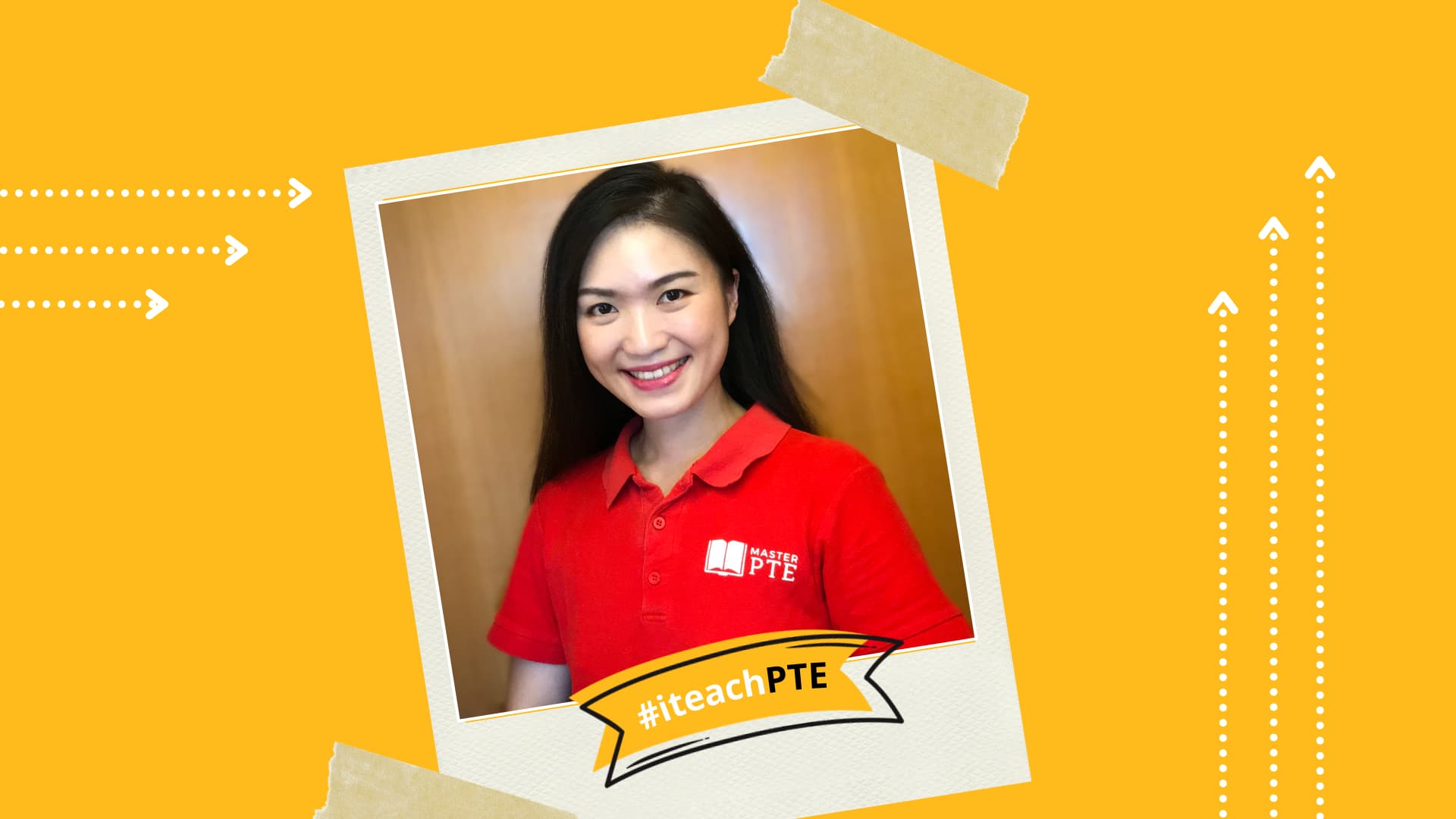

Teacher profile: Sharing the learning journey with PTE teacher Kelly Hoo

PTE Author
PTE Author
Image - Kelly Hoo #iteachPTE
Reading time: 6 minutes

Kelly Hoo is an English teacher based in Malaysia. She works with people from all over the world, helping them to prepare for PTE. But when Kelly first began learning English, she found it really difficult. She certainly never dreamed that one day she would be teaching English and running her own company!  

From student to teacher  

So how did Kelly go from learning English, to teaching other people how to get the score they need in PTE?  

Kelly’s first language was Mandarin, and she struggled a lot when first learning English. “I started my journey with IELTS,” she explains, “and then I discovered PTE.”  

Kelly was learning English in order to attend the University of Melbourne, where she studied for a Bachelor of Commerce. “I always thought I’d be an accountant,” she laughs. “But it wasn’t meant to be!”  

After graduating, Kelly went to work for Unilever, a big multinational corporation. But she found herself giving advice to people learning English, and being able to help people on their language-learning journey was really rewarding.  

“It started with sharing tips with other people who were learning English,” she says. “I’d been through the journey, so when I saw people struggling, I would always give them recommendations and advice.”  

Starting her own company 

From those small beginnings, Kelly went on to become a full-time teacher. The next step was starting her own English teaching company, Master PTE, where she is able to combine her passion for teaching with the expertise she gained in her business degree.   

But Kelly credits her success to the people around her. “It’s not just my own hard work,” she says. “Our team at Master PTE is amazing. My colleagues work so hard and do such a good job. Without them, I wouldn't be here, sharing my experience.”  

The company is now four years old, and in that time Kelly and her colleagues have helped lots of students build their English skills, prepare to sit PTE, and get the score they need.  

Helping students set manageable goals  

The team at Master PTE teaches students of all ages and levels, from all over the world, in a mix of online and in-person classes.  

“Thanks to Covid, we’re now doing hybrid classes,” explains Kelly, “a mix of online and face to face. Our clients are mainly working adults or students, so they’re very busy, and they need that flexibility.”  

At Master PTE, Kelly and her colleagues help students to break the big goal of getting the PTE score they need into smaller, more manageable goals.  

“We don’t ask them to do ten exam tasks in a day, because it’s impossible,” says Kelly. “We focus on what’s doable - a little bit of preparation each day, to make it easier for our students and give them a feeling of achievement, and the satisfaction that comes from that.”  

The skill that Kelly’s students struggle with the most is speaking. It’s a cultural problem, Kelly says, as in Malaysia, people are worried about making mistakes. “We want to boost their confidence and tell them to express themselves. I always tell students, Don’t be afraid to make a mistake. Just say what’s on your mind - it’s ok, we don’t judge people at Master PTE!”  

Speaking to a computer can also be a challenge for some students, but for others, a computer-based exam like PTE helps with their confidence. They prefer to speak to a computer rather than a human examiner.  

Kelly’s students are her inspiration  

One of the things Kelly loves about her job is meeting people from all over the world. “We have students from Japan, from Botswana, from India. It's amazing to connect with people and learn about their culture, their stories. The learning is definitely a two-way street in our classes!” she laughs.  

One of Kelly’s most inspirational students was from India. He was planning to sit PTE in order to move to Australia with his wife and young children. “When I first spoke to him, his English was at a really low level,” she explains. “I thought he would need a lot of preparation.”  

He started studying with Kelly, preparing for the test, and working hard every evening. “He was really burning the midnight oil,” she says, “as he was working full time too. He put in so much hard work, but he was doing it for his family, for his kids’ future, to give them a better life. I really admired his spirit - and I was so happy in the end when he got the score he needed after just two months of studying!”  

The importance of perspective 

Kelly has one piece of advice for other PTE teachers: always try to think from the students perspective.  

“Teaching English is easy for us,” she says. “We use English everyday. That’s why it’s so important to put yourself in your student’s shoes. Make sure they can absorb and retain the information you are teaching them.”  

From time to time, Kelly studies a new language like German, or Japanese, just to remind herself what it’s like to learn a new language.  

“I understand where the students are coming from,” she says. “I’ve been a learner too, and learning English as a second language isn’t easy.”  

That’s why Kelly is so focused on understanding each student’s situation, and making things a little easier for them by supporting them and creating a community that they are part of.  

“I always tell them, Don’t give up!” she says. “Learning can be fun and interesting.”  

Learn more 

For more insights into PTE preparation, have a look at the PTE blog, where you’ll find inspiration, advice, and lots of useful resources such as free lesson plans and preparation tools. And if you’d like to be featured on our PTE teacher profile series, just fill out this form!

Related Content

  • Image - Australian city hall- 800px
    How to find work in Australia
    By PTE Author
    Reading time: 3 minutes

    Have you ever dreamt of migrating to Australia for work or study? As one of the world’s most attractive places to both work and live, you’re not alone, however, there are a number of things to keep in mind before you start planning to apply for jobs in Australia.

    Let’s explore some of the major things that you need to keep in mind when looking to find work in Australia.

    Organizing your visa

    In order to legally apply for work in Australia, you’re going to need a visa that gives you permission to enter the country with a view to seeking employment.

    It’s important to remember that the appropriate visa depends on your career type and industry that you’re applying to. To understand what visa applies to your specific skills, use the visa finder on the government’s Home Affairs site.

    Learn the culture

    The workplace culture in Australia is unique for many reasons. Whilst Australian’s are known to be laid-back, this isn’t to be confused with their approach to hard work. Australian’s work hard though also have strict workplace laws that protect the health and wellbeing of all employees.

    Australian’s like to keep things casual in the workplace and it is common that everyone is encouraged to speak up during meetings. This can cause culture shock for those that migrate from countries where the workplace hierarchy dictates your ability to speak up.

    In-demand skills

    As with all countries, certain professions are in demand in Australia. It’s important to remember that seasonality can impact the demand for certain jobs at different times of the year so it’s important to do your own research to understand job availability in your specific area of expertise.

    To learn more about careers in demand in Australia, visit the government’s Job Outlook site.

    Choosing where to work in Australia

    If you’re looking to migrate to Australia for work, you’ve probably done some research on where you’d like to live. The major capital cities in Australia are:

    • Adelaide, South Australia

    • Brisbane, Queensland

    • Canberra, Australian Capital Territory

    • Darwin, Northern Territory

    • Hobart, Tasmania

    • Melbourne, Victoria

    • Perth, Western Australia

    • Sydney, New South Wales

    Whilst Sydney is best known for tourism, each capital city has a unique look and feel and all have unique attributes. The major Australian universities are largely spread across Adelaide, Sydney and Melbourne and the two most dominant cities for professional careers are Sydney and Melbourne.

    Writing a resume and cover letter

    It’s a common misconception that applying for a job in a new country requires a unique resume and cover letter style. Whilst there isn’t a specific formula when applying for a job in Australia, it’s important to consider that an employer in Australia may not have any context around the businesses that you’ve worked with in your home country. As a result, it’s a good idea to ensure that this context is shared in your cover letter to ensure that key skills aren’t overlooked.

    Applying for jobs in Australia

    As is the case in virtually all major job markets, applying for jobs in Australia is largely an online experience. The Australian market has a number of major job listing sites and it’s on these sites that you’ll also be required to file job applications. In addition to the major job listing sites, LinkedIn is commonly used in Australia for connecting with recruiters and applying for jobs too, however, this can vary depending on your job category and what you’re hoping to apply for.

    The most appropriate site to apply for jobs really depends on what industry you’re applying for, so it’s best to do your own research to find what job site best suits your needs.

  • Image- Study group - 800px
    Speaking: Core English Skills
    By PTE Author
    Reading time: 3 minutes

    In Part 1 of the PTE Academic test, you require certain skills to answer the questions within the test to the best of your ability.

    We’ve put together some tips and advice on how to practice and improve your core skills.

    Oral Fluency

    Oral fluency applies to the Read Aloud, Repeat SentenceDescribe Image and Re-tell Lecture question types.

    To improve your oral fluency before your test, we recommend that you speak English as often as you can. If you don’t have anyone you can speak English with, join an English-speaking club or take a short course.

    As soon as you’ve booked the test, we suggest that you try to read, listen and write in English as much as you can.

    If you’re having trouble with speaking too slow or too fast, record yourself and listen back to identify where you need to improve.

    You can also use Tiny Texts to help improve your speaking. Read the text silently to yourself, then listen to a recording while you read and have a try afterward to read at a similar pace.

    Pronunciation

    Pronunciation skills are required for the Read Aloud, Repeat SentenceDescribe Image and Re-tell Lecture question types.

    In PTE Academic you do not have to speak like a fluent speaker of English to do well. However, you do need to use a pronunciation that can be understood by a regular speaker of English.

    This means you need to make sure your vowel and consonant sounds are pronounced in a fluent-like way with the correct words. You also need to use the correct sentence stress to convey meaning.

    Luckily, there are many online tools that can help with your pronunciation, such as:

    Vocabulary

    The only question type in the speaking section that will require strong vocabulary skills is Answer Short Question.

    The easiest way to improve your vocabulary is to keep a vocabulary notebook to use as your own personal dictionary. When you hear or see new words, add them along with the meaning and put them in a sentence.

    Want more prep ideas?

    Explore Smart Prep, which combines all our practice materials in one place, so it's easier for you to stay on track with your PTE preparation.

    • Smart Prep is a clear path to test day, guiding you through the official paid and free resources available for your test

    • It can be accessed whether you’ve booked a test or not – just create, or sign in to your myPTE account

    • Preparation materials include guided practice tests, introductory videos, video courses and test tips.

    Ready to get started?

  • Image- Students at library- 800px
    Part 3: Listening Test Introduction
    By PTE Author
    Reading time: 4 minutes

    Part 3 of PTE Academic will take 45-57 minutes to test your listening skills.

    This section is designed to test your ability to listen, read and write. PTE Academic is an integrated skills test, therefore, this test contains multiple question types that test up to 2 skills each.

    There are eight question types in the listening section. A breakdown of these question types is as below.

    Summarize Spoken Text

    The first question type you will need to complete is Summarize Spoken Text, which will tests listening and writing skills.

    To complete the task, a recording between 60-90 seconds long will be played for you to listen to. As you listen, try to use the Erasable Noteboard Booklet to take notes of key points to help you understand the context.

    After the recording, you will have 10 minutes to write a summary of what you heard.

    To answer this question type, you must write a minimum of 50 words but no more than 70 words.

    You can receive a maximum of 2 points for content, 2 for form, 2 for grammar, 2 for vocabulary and 2 for spelling.

    Multiple-choice, multiple answer

    The second question type, Multiple-Choice, Multiple Answer will test listening skills.

    First, you will be given information to help answer the question. You only have 7 seconds to read this. A recording will then play that is between 40-90 seconds long.

    Select all the response options that you think are correct.

    In this question type, you can receive 1 point for each correct option, but will lose -1 point for each incorrect option. You cannot score below 0.

    Fill in the blanks

    In the third question type, Fill in the Blanks, listening and writing skills will be tested.

    Similar to the previous task, you will be given 7 seconds to read some information before hearing the recording.

    A recording between 30-60 seconds will play. As you listen, type each word in the blank spaces as you hear them so that you do not miss any.

    Do not leave any spaces blank, you can review them at the end.

    You receive 1 point for each correct word which is spelled correctly.

    Highlight correct summary

    The fourth question type, Highlight Correct Summary, will test listening and reading skills.

    You will be given 10 seconds before the recording starts to read the options. A recording will be played that is between 30-90 seconds long.

    To complete the task, select only one correct response. If unsure, choose the one you think is correct as you cannot lose points in this question.

    Your response will either be marked as correct or incorrect.

    Multiple-choice, single answer

    The fifth question type, Multiple-Choice, Single Answer will test listening skills.

    To complete this task, you will be given information to read for context, you will then need to listen to a recording between 30-60 seconds long.

    Choose the option that best suits.

    Your response to this question type will be marked as correct or incorrect.

    Select missing word

    In the sixth question type, Select Missing Word, will test your listening skills.

    A recording between 20-70 seconds long will be played and you will need to predict the last word or words of the text to complete the task.

    You will be marked on this question type as either correct or incorrect.

    Highlight incorrect words

    In the seventh question type, Highlight Incorrect Words, your listening and reading skills will be tested.

    In this question type, you will be shown information and have 10 seconds to read it before a recording starts.

    A recording between 15-50 seconds will play and you will need to select the words that are incorrect and do not match the recording.

    You can receive 1 point for each correct word and lose -1 point for each incorrect word. You cannot score below 0.

    Write from dictation

    The eighth and final question type, Write from Dictation, tests listening and writing skills.

    You will have 7 seconds to read the instructions before the recording starts. The recording is between 3-5 seconds long and once it starts, listen and type the sentence in the response box.

    You can receive 1 point for each correct word you write. Write the words in the right order and spell them correctly in order to receive 1 point. Points are not lost for incorrect words.

    What's next?

    We recommend reviewing the core listening skills required for PTE Academic.

    Want more prep ideas?

    Plus, explore Smart Prep, which combines all our practice materials in one place, so it's easier for you to stay on track with your PTE preparation.

    • Smart Prep is a clear path to test day, guiding you through the official paid and free resources available for your test

    • It can be accessed whether you’ve booked a test or not – just create, or sign in to your myPTE account

    • Preparation materials include guided practice tests, introductory videos, video courses and test tips.

    Ready to get started?