US financial aid for international students: your guide to what’s available and where to apply

PTE Author
PTE Author
[Asset] Women laughing with phone

Studying in the United States is a dream for many international students, but with the price tag of a four-year degree hitting more than six figures, cost can be a significant barrier.

Whether it’s kickstarting your career with a degree from an internationally recognized university or becoming more specialized in your current field, there are lots of different financial aid options to help make your American dream a reality.

Who offers scholarships for international students studying in the US?

Based on merit, need, or specific talents, scholarships and grants are one of the most sought-after forms of financial aid. These financial awards cover part or all of the tuition fees and don’t require repayment.

Most students focus on university scholarships, but there are also government, private, and sector-specific options to explore, as well as work-study programs where students can offset fees by working on campus.

1. University scholarships

Many US universities offer scholarships specifically for international students, such as New York University or the California State University International Programs.

2. Government scholarships

The US government also provides funding for international students to study in the US through programs like the Hubert Humphrey Fellowship Program and the Fulbright Foreign Student Program which helps 4,000 students each year.

3. State scholarships

More rare than federal scholarships, there are some state-level programs such as the California State University International Programs that work across the 23 different institutions to offer scholarships for international students.

4. Private scholarships

Various organizations and foundations offer scholarships to international students, such as the AAUW International Fellowships, for women who are not U.S. citizens or permanent residents, and the Aga Khan Foundation’s International Scholarship Programme, for academically outstanding students from a range of countries who wouldn’t otherwise be able to afford to study.

5. Sector-based scholarships

There’s a shortage of workers in key sectors like leisure, hospitality, and nursing in the US. If you’re planning to study an in-demand field, research sector-specific scholarships like the Nurse Corps Scholarship Program to find financial support.

How to find US scholarships for international students

With so many different financial aid and scholarship options available for international students wanting to study in America, it can be hard to know where to start.

A great first step is contacting the Financial Aid team at the universities you’re interested in, as well as searching online databases for relevant scholarship opportunities.

1. University financial aid offices

Almost every university in the US has a financial aid office. They’ll have many years' experience helping international students with funding options and be able to provide detailed information about available scholarships, grants, and work-study opportunities specifically for international students.

2. Online scholarship databases

Don’t limit yourself to what’s available from your university. Online scholarship databases can help find more specific financial aid from a wide variety of sources.

Popular databases include:

  • StudyPortals is one of the largest databases and brings together everything you need to know to explore your study options all in one place. They have dedicated scholarship portals for bachelors, masters and PHD study.

  • International Education Financial Aid (IEFA): A resource for financial aid, college scholarships, and grant information for international students.

  • The US Department of Labor has a scholarship search tool where you can filter by level of study.

  • Scholarships.com: Offers a searchable database of scholarships for international students.

3. EducationUSA

EducationUSA is a US Department of State network with advice centers in more than 170 countries — check if there’s a center near you with their online search tool. From financial aid right through to the documents you’ll need for immigration, they offer advice and support with all aspects of studying in the US.

Which US universities offer the best financial aid for international students?

If you’re looking for universities with great support for international students, the East Coast is the place to start.

With the exception of a few institutions in California, the U.S. News “Best Value Schools” research found that institutions in Massachusetts, New York, and Connecticut gave the most generous support to international students.

Here are just a few of universities offering specific support for international students:

Narrowing down your university search to institutions with a strong track record of supporting international students can help maximize your chance of receiving financial aid.

Applying for financial aid

The most important thing to remember when applying for financial aid is to allow plenty of time.

Researching the different options, writing applications, and waiting to hear back can be a long process, and many scholarships and grants have early deadlines.

You’ll also want enough time to tailor each application to the institution, as well as getting important documents translated and completing English proficiency tests, such as the Pearson Test of English (PTE) — the faster, fairer, simpler English test. The test only takes 2 hours with results typically in less than 2 days and is approved by most universities across the US.

Related Content

  • Video thumbnail for the video, 'Learn how PTE Academic uses AI to mark tests'
    How do you know PTE Academic’s computer marking works?
    By PTE Author
    Reading time: 2 minutes

    How do we know automated scoring works

    Are you thinking of taking PTE Academic, or have you recently taken it, but you are wondering how it is that a computer can mark your test?

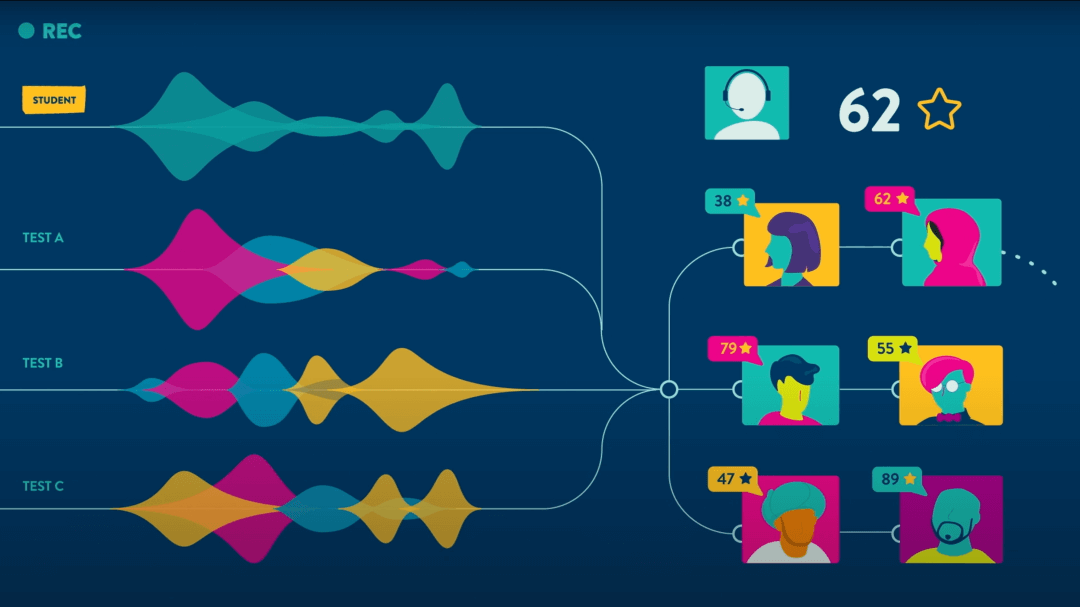
    Well, firstly the test has been designed by humans, all leading experts in their field. Our human experts design and write the questions, quality assure them, and then score them. At this point, computers are trained to use the patterns of highly trained language experts to attribute scores to questions. When the computer marks correlate highly with the human scores, we then allow the computer to mark test scripts from across the world.

    As a result of our processes and technology, the computer behaves like an expert human examiner – but without any possible bias, lack of concentration, or variation between individual examiners.

    The scoring criteria are exactly the same as human scoring – test takers are marked on their delivery, clarity, relevance, the accuracy of grammar, and appropriateness of vocabulary.

    Want to hear more?

    Take a couple of minutes and listen to one of our leading independent advisors, Dr. Alistair Van Moere, a member of Pearson’s Technical Advisory Group, as he explains how it all works.

  • Image- student at class 800px
    Reviewing Test Performance
    By PTE Author
    Reading time: 2 minutes

    If you have completed PTE Academic, you would know by now that it is scored against the Global Scale of English and that you need to practice many skills for each part of the test: Speaking & Writing, Reading, and Listening.

    After completing PTE Academic you will receive an email notification that your results are available online. Typically within 2 days. Learn how to access your Score Report.

    What does my Score Report mean?

    When you receive your Score Report it will show you your overall score, which is based on your performance across all test items. Your communicative skills that are measured are listening, reading, speaking and writing.

    This is an example of what your Score Report may look like.

    The enabling skills are those skills that are required to fulfill the question types in the test. It’s important to know what each of these skills refers to.

    Grammar

    Correct use of language with respect to word form and word order at the sentence level.

    Oral Fluency

    Smooth, effortless and natural-paced delivery of speech.

    Pronunciation

    Production of speech sounds in a way that is easily understandable to most regular speakers of the language. Regional or national varieties of English pronunciation are considered correct to the degree that they are easily understandable to most regular speakers of the language.

    Spelling

    Writing of words according to the spelling rules of the language. All national variations are considered correct, but one spelling convention should be used consistently in a given response.

    Vocabulary

    Appropriate choice of words used to express meaning, as well as lexical range.

    Written Discourse

    Correct and communicatively efficient production of written language at a textual level. Written discourse skills are represented in the structure of a written text, its internal coherence, logical development, and the range of linguistic resources used to express meaning precisely.

    How do I identify my areas of weakness?

    From the visual graph on your Score Report, you will be able to see areas you need to improve on. You should aim to develop your core (enabling) skills required across all areas of the test.

    The following resources will help you develop your enabling skills:

    How can I improve in each part of the test?

    It’s also worth focusing on particular parts of the test or questions you think you had trouble with. The following articles may help you improve your skills across questions:

    If you don’t already have one, it’s recommended to work with an English teacher to work through areas that may need improvement.

    Good luck!

  • Image- A guy with headphones and laptop
    Listening: Self-Improvement Part 1
    By PTE Author
    Reading time: 3 minutes

    After working through the strategies to improve your English listening skills, you can work on specific areas of the test. In this part, you will need to apply a number of listening and writing skills.

    Below are improvement tips on the question types that combine writing and listening skills.

    Summarize Spoken Text

    In the Summarize Spoken Text questions you will be scored on content, form, grammar, vocabulary, and spelling.

    Content and Form

    Make sure you write a good, clear summary of all the key points in the text and also condense the most important supporting points.

    In this question, you will not be given the context of the recording before it starts. Make sure to listen carefully from the start to help understand the context and the information given.

    Some helpful tips for the content and form, to maximize your score are:

    • Take notes on your Erasable Noteboard Booklet or in the response box on the screen

    • Do not try to write down sentences (you will not have enough time)

    • Use symbols and abbreviations in your notes

    • Write down key points and their relationships with others

    • Start with an overview sentence to introduce your summary

    • Use cohesive devices to link the information as you write

    • Try to write between 50 and 70 words

    Overall, make sure you summarize the text in your own words as this will show that you have understood the purpose of the text. If you do not write in your own words, you will score zero for content.

    If you write less than 40 or more than 100 words, you will score zero.

    Grammar

    It is important that grammar is correct as you will be tested on sentence structure, punctuation and capitalization.

    Try not to be too ambitious with your grammar to avoid making mistakes. Try to use grammatical structures you feel comfortable with.

    In this question type you should:

    • Communicate meaning clearly and concisely

    • Use complex sentences where possible to score more points

    • Write sentences between 18 and 30 words – long sentences are hard to control grammar

    • Check your response for common errors before submitting

    Vocabulary and Spelling

    You will score points if you use the correct and appropriate vocabulary in the Summarize Spoken Text question type. Use words from the recording if you use them appropriately, however, try to use synonyms to replace words already used.

    You will also need to make sure to spell every word correctly to receive maximum points. Try to type as carefully as possible during this question. If you can not remember how to spell a word, guess as it is better to include the word than leave it out, even if it is incorrect.

    Don’t forget to use the space bar to show the end of each word.

    Write from Dictation

    Another question that tests both listening and writing is the Write from Dictation question type.

    In this question type, you will need to write the words in the correct order with the correct spelling in order to score points.

    Before the recording starts, place your cursor in the response box and get ready to type as soon as you hear the recording. Make sure to reproduce what you hear exactly as you heard it as the recording will only be played once.

    Remember to start the sentence with a capital letter and end it with a full stop (period).

    Type as you hear it and when finished, check for any mistakes. Always make sure that to read over your answer before clicking next.

    Continue improving your listening skills by reading our Listening: Self-Improvement Part 2 article.