Writing: core English skills part 1

PTE Author
PTE Author
Image- writing 1080px
Reading time: 4 minutes

Part 1 of PTE Academic includes a variety of speaking and writing question types. For writing questions, you may need to improve your skills, such as grammar, spelling, and vocabulary.

To help practice these skills, we’ve put together some tips on how to improve for this part of the test.

Grammar

To help improve grammar, get into the habit of reading something in English every day.

Create a reading plan and a reading goal to improve your grammar. Start by reading for at least 30 minutes a day.

It’s recommended that you read a range of texts that you find interesting. Also read news articles on English news sites such as:

It is hard to use correct grammar in long sentences, so try to keep sentences short: about 18 to 30 words. You should also practice with a variety of short and long sentences.

Always remember to:

  • End sentences with a full stop (period)

  • Use uppercase and lowercase correctly

Try to avoid run-on sentences. These are sentences which should be cut to make a shorter sentence, or properly joined to make a grammatically correct sentence.

You can avoid run-on sentences by using compound and complex sentences, which will also help improve your score. Use commas when writing complex sentences. Some examples of the compound and complex sentences can be found through the British Council’s Learn English website.

To perform well, learn to proofread your writing so that you can complete the question types as correctly as possible.

If you can identify areas that you often get wrong, you should work on improving these areas. Ask your English teacher for help, or if you don’t have an English teacher, you can look up your common errors on the internet.

Spelling

PTE Academic recognizes and accepts US, UK, Australian and Canadian spelling. However, you should be careful with your spelling. Once you have chosen a spelling convention for one question, keep using it within that question. You can change the spelling format in answers to other questions if you like.

Vocabulary

To do well in the writing test, you need to have a broad vocabulary. You should have a good dictionary to help you. A good dictionary will have the meaning, related forms of the word, and example sentences.

Longman Dictionaries are a great resource to help you improve your vocabulary.

You should expose yourself to new words at least ten times a day to expand your vocabulary. To learn a new word you should read it, write it and listen to it many times over a couple of days so you can understand the word and use the correct pronunciation.

Another way to expand your vocabulary is to learn the word forms of words you already know.

For example, climate (noun), acclimatization (noun), climatic (adjective), acclimatize (verb) etc.

Each of the above word forms mean something slightly different, so try to learn all the meanings of each word.

In PTE Academic you will score higher points for vocabulary if by using academic words in your writing. Try to learn some of the most frequent academic words used in writing.

Also, think about using synonyms in your writing to avoid repetition of words. A thesaurus can help you find synonyms for common academic words.

The other elements of your vocabulary to consider are correct common prefixes and suffixes, which are added to the base words. Prefixes can change the meaning of a word, for example, expensive and inexpensive.

Adding a suffix, however, can change the part of speech of the word. A common suffix used is ly, which can change an adjective into an adverb (quick/quickly), ment can change a verb into a noun (entertain/entertainment).

There are also collocations, which help you use the right word combinations, as some English words just don’t work well together. To identify collocations, read the PTE Academic collocation list.

PTE Academic is not very strict about accepting only academic vocabulary. You will not lose points for the use of personal pronouns. You will, however, score more points by using higher-level academic vocabulary in the correct way.

You should try to keep a notebook of new words you learn, their meanings, synonyms, and all the parts of vocabulary that may help you in the test.

The last core skill required for the writing test is written discourse.

Want more prep ideas?

Plus, explore Smart Prep, which combines all our practice materials in one place, so it's easier for you to stay on track with your PTE preparation.

  • Smart Prep is a clear path to test day, guiding you through the official paid and free resources available for your test

  • It can be accessed whether you’ve booked a test or not – just create, or sign in to your myPTE account

  • Preparation materials include guided practice tests, introductory videos, video courses and test tips.

Ready to get started?

Related Content

  • A man using a laptop
    Prepare online with E2Language
    By PTE Author
    Reading time: 1 minute

    Are you preparing to take PTE Academic?

    Good news! We have added a new test preparation company to our existing list of providers. This will give you even more options and support in your test preparation.

    Try E2Language with a free trial

    E2Language is a global online tutorial and test preparation provider. They offer good quality practice services and materials for PTE Academic. E2Language offers online tuition through group and 1-1 learning, supported by a range of YouTube videos that share tips and advice. They offer a set of online preparation materials.

    We are always looking to expand and enhance the services we offer our test takers and we believe the addition of E2Language helps us achieve this goal.

    Give yourself the best chance of performing well on the day with E2Language – try for free.

  • Video thumbnail for the video, 'Learn how PTE Academic uses AI to mark tests'
    How do you know PTE Academic’s computer marking works?
    By PTE Author
    Reading time: 2 minutes

    How do we know automated scoring works

    Are you thinking of taking PTE Academic, or have you recently taken it, but you are wondering how it is that a computer can mark your test?

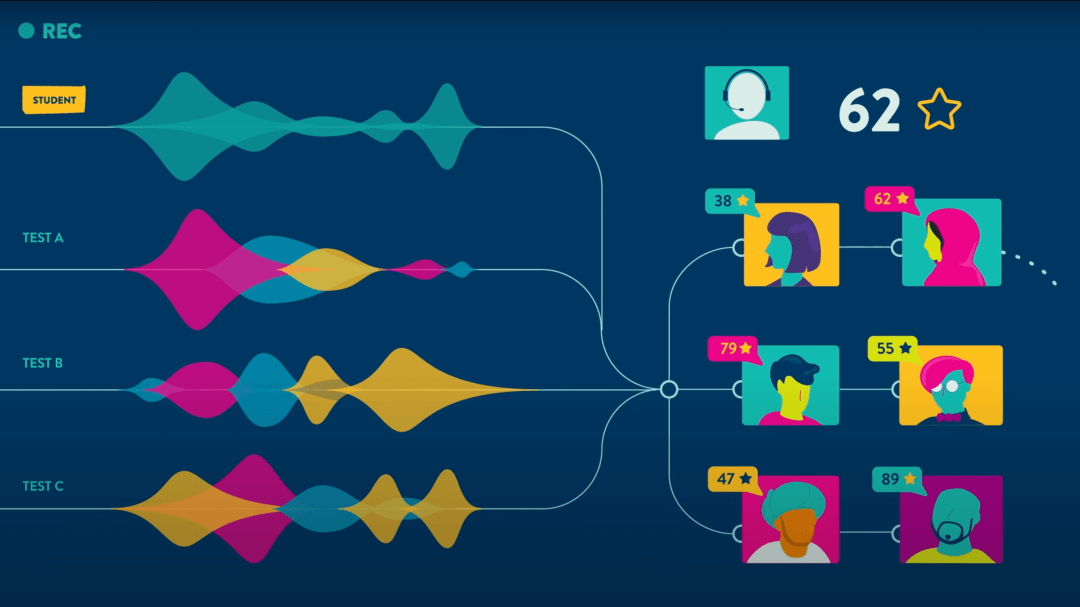
    Well, firstly the test has been designed by humans, all leading experts in their field. Our human experts design and write the questions, quality assure them, and then score them. At this point, computers are trained to use the patterns of highly trained language experts to attribute scores to questions. When the computer marks correlate highly with the human scores, we then allow the computer to mark test scripts from across the world.

    As a result of our processes and technology, the computer behaves like an expert human examiner – but without any possible bias, lack of concentration, or variation between individual examiners.

    The scoring criteria are exactly the same as human scoring – test takers are marked on their delivery, clarity, relevance, the accuracy of grammar, and appropriateness of vocabulary.

    Want to hear more?

    Take a couple of minutes and listen to one of our leading independent advisors, Dr. Alistair Van Moere, a member of Pearson’s Technical Advisory Group, as he explains how it all works.

  • Image- student at class 800px
    Reviewing Test Performance
    By PTE Author
    Reading time: 2 minutes

    If you have completed PTE Academic, you would know by now that it is scored against the Global Scale of English and that you need to practice many skills for each part of the test: Speaking & Writing, Reading, and Listening.

    After completing PTE Academic you will receive an email notification that your results are available online. Typically within 2 days. Learn how to access your Score Report.

    What does my Score Report mean?

    When you receive your Score Report it will show you your overall score, which is based on your performance across all test items. Your communicative skills that are measured are listening, reading, speaking and writing.

    This is an example of what your Score Report may look like.

    The enabling skills are those skills that are required to fulfill the question types in the test. It’s important to know what each of these skills refers to.

    Grammar

    Correct use of language with respect to word form and word order at the sentence level.

    Oral Fluency

    Smooth, effortless and natural-paced delivery of speech.

    Pronunciation

    Production of speech sounds in a way that is easily understandable to most regular speakers of the language. Regional or national varieties of English pronunciation are considered correct to the degree that they are easily understandable to most regular speakers of the language.

    Spelling

    Writing of words according to the spelling rules of the language. All national variations are considered correct, but one spelling convention should be used consistently in a given response.

    Vocabulary

    Appropriate choice of words used to express meaning, as well as lexical range.

    Written Discourse

    Correct and communicatively efficient production of written language at a textual level. Written discourse skills are represented in the structure of a written text, its internal coherence, logical development, and the range of linguistic resources used to express meaning precisely.

    How do I identify my areas of weakness?

    From the visual graph on your Score Report, you will be able to see areas you need to improve on. You should aim to develop your core (enabling) skills required across all areas of the test.

    The following resources will help you develop your enabling skills:

    How can I improve in each part of the test?

    It’s also worth focusing on particular parts of the test or questions you think you had trouble with. The following articles may help you improve your skills across questions:

    If you don’t already have one, it’s recommended to work with an English teacher to work through areas that may need improvement.

    Good luck!