What makes a great English test?

Abi Fordham
Reading time: 5 minutes

A great English test should do more than produce a score. It should measure how people use English in the real world and provide a result that helps them move forward with confidence.

Key takeaways

  • A great English test should measure real communication, not isolated language knowledge alone.
  • A meaningful score should be clear, useful and connected to real-world English ability.
  • Good English assessment helps test takers, institutions and partners make better decisions.

A great English test measures how well someone can use English in real communication. It should assess a range of skills, be built on fair scoring principles and provide a result that test takers, institutions and organisations can understand and use with confidence.

What is an English test really trying to measure?

Short answer: It should measure whether someone can use English effectively in situations that matter. 

If we were to ask ten people what makes a great English test, we would probably get ten different answers. 

Some people might say speed. Some might say fairness. Some might say convenience. And many would say, very reasonably, that the score needs to be accepted where they want to study, work or move. 

All of these things matter. But from an assessment perspective, there is an even bigger question: does the test produce a score that meaningfully reflects someone’s ability to use English? 

That is where great assessment begins.

Why should a test reflect real-life communication?

Short answer: Because English is not used in neat, separate boxes in real life. 

In real life, English is rarely just grammar, vocabulary, listening or speaking on its own. 

A student might listen to a lecture, read supporting materials and write an assignment. A professional might receive an email, discuss it in a meeting and explain the next steps to someone else. 

A great English test should be built around that reality. It should recognise that communication often involves understanding information, organising ideas and responding clearly. 

This is why tests with integrated skills can be so valuable. They are closer to the way English language is actually used. 

Why does fairness matter in language assessment?

Short answer: Because a score can support important decisions about study, work and migration. 

A language test is not just an academic exercise. For many people, it is connected to a real goal: getting into a university, applying for a visa, moving into a profession or starting a life in a new country. 

That means the assessment has to be designed carefully. It should give test takers a consistent opportunity to demonstrate their ability and give institutions a score they can interpret with confidence. 

Fairness in assessment does not mean making the test easy. It means making the result meaningful, consistent and appropriate for the decisions it supports. 

What makes a score meaningful?

Short answer: A meaningful score tells you more than whether you reached a number.

A meaningful score should give useful information about ability.

It should help answer questions like: ‘What can this person do in English?’, ‘How strong is their communication across different skills?’ and ‘What does this result suggest about readiness for the next step?’.

That is why a Score Report matters. The result should not feel like a mystery. It should help test takers understand what was measured and how they can use that information.

This is the kind of thinking behind our You Know the Score series: not simply explaining scores, but helping people understand why those scores matter.

Why is a great English test more than a test format?

Short answer: Because format is only one part of the assessment experience.

Test format matters. Speed, availability and ease of booking matter too.

But none of these things replace the deeper question of what the test is actually measuring.

A good format can make the experience smoother. Great assessment makes the result valuable. 

For test takers, the best outcome is both: a test that is practical to take and a score that gives meaningful information about English ability.

How does good assessment help test takers move forward?

Short answer: It gives them clearer information and greater confidence in their next steps.

The best English tests do more than measure performance. They provide meaningful insights that help people make informed decisions about their next steps.

For some, that means achieving the score they need. For others, it might mean using detailed skill scores to focus their preparation. It can also help teachers, agents and institutions explain results clearly and confidently.

Good assessment is useful because it gives people information they can act on.

And when so much depends on a test result, people deserve more than just a score. They deserve information that helps them make confident decisions about what comes next.

Related Content

  • Higher-Education-Students-in-the-UK
    New DHA visa requirements for PTE Academic
    By PTE Author
    Reading time: 5 minutes

    The Australian Department for Home Affairs (DHA) recently updated their score requirements for all accepted tests of language proficiency. The new score requirements take effect from 7 August 2025.

    What are the new score requirements? 

    From 7 August, anyone who takes the test for DHA visa purposes will need to meet updated score requirements.

    The table below shows the old and new score requirements for each score.

    We have also created a more accessible version of this table at the end of this article.

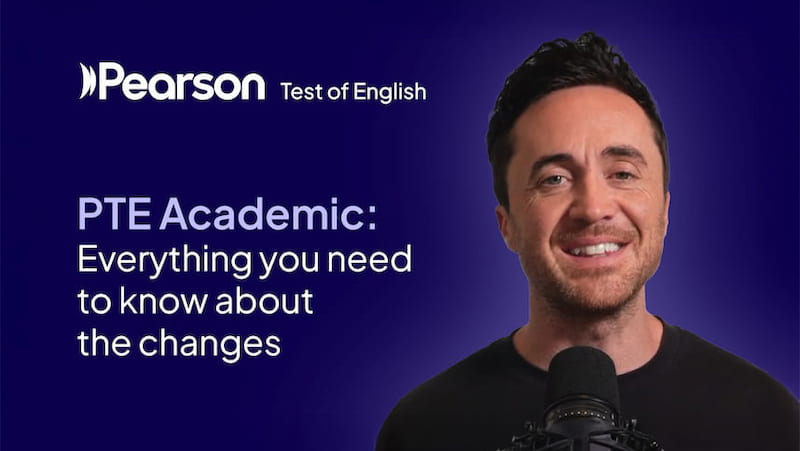
  • PTE changes 2025: everything you need to know
    By PTE Author

    We’ve made a few updates to the PTE Academic and PTE Academic UKVI tests. To make sure you’ve got the facts, we’ve created a short video that walks you through everything you need to know.

    Hosted by Jarrad, one of our product managers, this video covers what’s being updated, what’s staying the same, and how it all benefits you as a test taker.

    What’s covered in the video? 

    • The original 20 question types are still in the test.

    • We are adding two new speaking question types to give you even more chance to demonstrate your skills.  

    • Tips on how to prepare for the new speaking question types.

    • There are no changes to pricing, ID requirements, or score delivery time.

    • There are no changes to the way the test is taken (including the Speaking section).

  • [Asset] On test day during the test - 800 x 451 - for article use
    Busting the myths about English test centers
    By PTE Author
    Reading time: 5 mins

    By: Dan Doyle, Vice President, Assessments & Certifications, Pearson English Language Learning

    Every day, English tests help decide whether someone can start a new life abroad.

    For those taking a language test as part of a visa or migration process, the stakes couldn’t be higher. These are moments that decide futures, whether it’s studying at university, reuniting with family, or landing a first job overseas. That’s why, for tests like PTE Academic and PTE Core, test centers offer a secure, accurate, and trusted experience that governments can rely upon.

    But a few myths still persist, so let’s set the record straight.

    Myth one: “Test centers aren’t that secure”

    Reality: a test center environment provides security that starts before the test begins:

    • Biometric ID checks. Every test taker must show valid ID (like a passport) and confirm their identity with photos, palm-vein scans, and digital signatures.

    • Physical security checks. Trained staff check clothing and personal items before entry, stopping hidden notes or unauthorised materials from getting in.

    Once the test has begun, test centers combine secure-by-design exams with digital and human supervision to create a secure, fair environment:

    • Unique exams. Every PTE test is different. No two test takers get the same questions, and proctors can’t access the content.

    • Secure systems. The test runs on software and hardware fully controlled by Pearson, so it can’t be tampered with.

    • Multiple cameras, full visibility. Test centers use wide-angle CCTV to monitor the entire room.

    • Proctors in the room. Trained staff can spot hidden notes, off-screen help, and respond to anything suspicious straight away.

    Myth two: “Test centers rely on human proctors”

    Reality: human proctors play a key role, but they’re just one piece of what makes test centers secure.

    Test centers provide multiple types of security and supervision, all managed by the testing body — not the student — making them the most secure testing environment.

    As well as cameras, test centers can provide identity verification, physical checks, and in-person supervision needed for a high-stakes test.

    This real-time, multi-layered monitoring means if anything suspicious is flagged, a full investigation can be carried out centrally by Pearson, using CCTV footage, audio, AI checks, and human review.

    Myth three: “Test centers can’t detect cheating afterwards”

    Reality: Pearson carefully analyses every single test result using a combination of AI and trained human experts.

    After the test is completed, it goes through fraud analytics to identify unusual patterns or behaviours. If anything looks suspicious, the result is placed on hold and reviewed in detail by our security experts before it’s released.

    A quick summary: how test centers support high-stakes English testing

    • Biometric checks to confirm identity

    • Physical security checks to ensure no materials enter the test

    • Randomised computer-based test content for every candidate

    • Multiple cameras and full-room visibility

    • Real-time supervision by trained staff

    • AI and human experts working together to spot unusual patterns

    • A consistent environment and equipment for all test takers

    These measures make sure that every candidate has the same opportunity to succeed, and every institution can rely on the result. Behind every test is someone with a dream of a new life abroad, and PTE has the great privilege of helping them get there.

    Want to know more?

    Take a look at our latest PTE security whitepaper.