Canada is easily one of the most multicultural countries in the world. The northern nation draws people from far and wide - and, for most Canadians, the international scene is a major source of pride.
There are approximately 7.5 million people from abroad living in Canada today. Walkthrough one of the country’s many amazing cities and you’ll see people from anywhere from Jamaica to China to India. You’ll also experience celebrations, customs, music, food, and art from all over the world. Honoring the backgrounds of its citizens is just part of the Canadian way.
The North American country invites immigrants for a variety of reasons: population growth, economic growth, and cultural diversity being some of the biggest ones. A 2020 Canadian Government report noted that immigration accounted for more than 80% of Canada’s population growth in 2019. That year, Canada recorded 341,000 permanent residents as well.
In fact, workers from other countries represent 26% of the workforce. As for students, in 2019, more than 800,000 international students held valid study permits in Canada.
But with so many great cities from coast to coast, many wonders: “Which are the most multicultural cities in Canada?” Below, a look at five Canadian cities that are home to the largest percentages of people from abroad.
1. Toronto: Canada’s most diverse city
Among Canada’s most diverse cities, Toronto easily wins first place. It’s nearly impossible to spend a day in Toronto without mixing with people from around the world. A Statistics Canada report examined the geographic distribution of the Canadian immigrant population and found Toronto to be the top destination for new Canadians.
Toronto’s 2.7 million immigrants actually account for nearly half—46% to be exact—of the city’s entire population. This group represents 35.9% of Canada’s entire immigrant population.
That’s exactly why The BBC named Toronto the most multicultural city in the world a few years ago. In Toronto, the bustling Chinatown takes up a prominent part of the city’s downtown that it’s pretty hard to miss. Koreatown is a great place for food and fashion. Little Italy always has dozens of restaurants with mouth-watering pizzas and pastas on offer. There are also festivals like Taste of the Danforth (Canada’s largest street festival) that celebrates all things Greek, the Tamil Festival, and the Chinese Lantern Festival.
Studying in Toronto with a PTE Academic Score
If Toronto appeals to you, there are a number of excellent universities in Toronto that accept PTE: York University, Ryerson University, Ontario College of Art & Design University, George Brown College, Humber College.
2. Montreal: An incredible arts scene
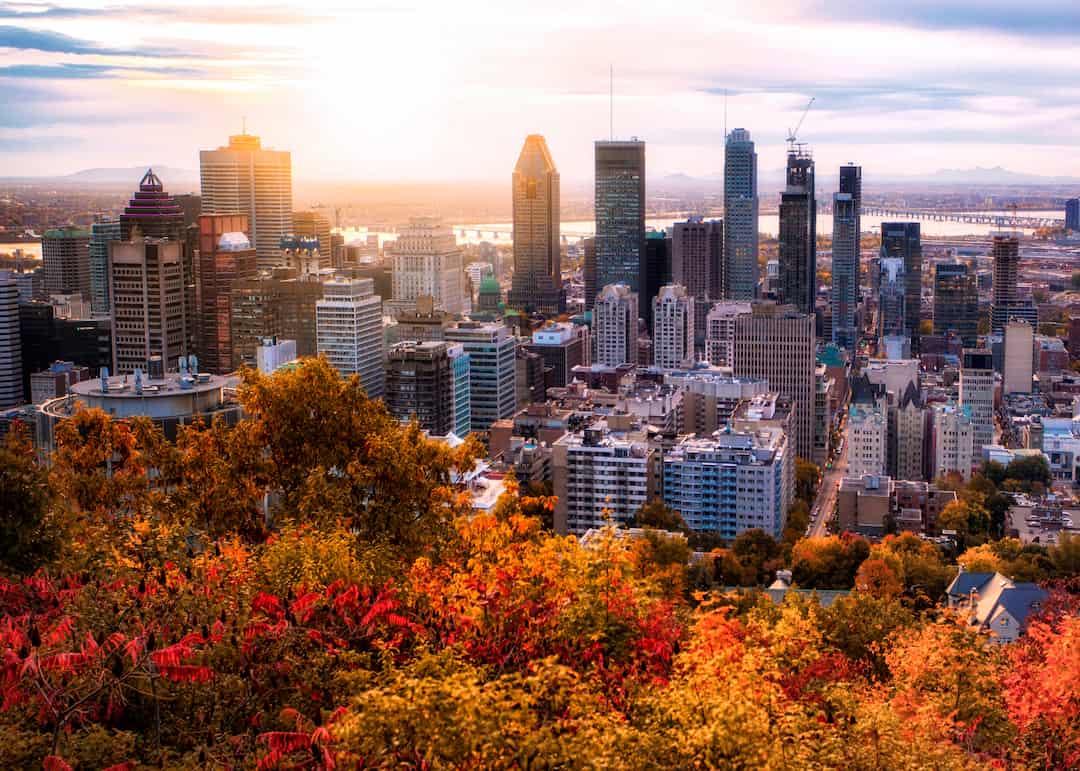
Located in the French-speaking province of Quebec, Montreal is the home to 936,305 immigrants. It’s the second most diverse city in Canada. It has 12.4% of Canada’s immigrant population with folks from abroad representing 23.4% of the city’s total population. The ministry of immigration in Quebec reports that they are mostly European, Asian, or from other parts of the Americas.
Montreal is a great city for a variety of reasons: its arts scene is incredible, it has amazing cuisine, it’s affordable and it’s located in the culturally-rich province of Quebec.
And, if any newcomers want to experience this cultural diversity, the city puts on a number of festivals in summer in order to do so. There are entire weeks devoted to celebrating Japanese and Italian culture in June, for example.
There is also a festival of world music in early summer where bystanders can hear instruments and music styles from all over the world. The Festival International Nuits d’Afrique is also a well-known festival in which more than 100 performers put on shows celebrating culture from Africa, the Caribbean, and Latin America.
Studying in Montreal with a PTE Academic Score
If Montreal appeals to you, there are a number of excellent universities in Montreal that accept PTE: McGill University, Concordia University, Montreal College of Information Technology.
3. Vancouver: Combining city life with nature
Vancouver’s 989,545 immigrants represent nearly 41% of the city’s population and just over 13% of the Canadian immigrant population. Many of those people come from places like China, India, The UK, the Philippines, and Hong Kong.
Vancouver is arguably Canada’s most beautiful city. Those who live there get the best of both city life and nature. This is because Vancouver sits on the shores of the Pacific Ocean and in the mountains. It’s entirely possible to go trekking or sea kayaking during the day and settle in for cocktails and a fancy dinner in the evening. And thanks to the international community, you can expect to sit down to Chinese, Indian, or fusion foods at one of Vancouver’s many ethnically diverse restaurants.
Studying in Vancouver with a PTE Academic Score
If Vancouver appeals to you, there are a number of excellent universities in Vancouver that accept PTE: Simon Fraser University, University of British Columbia.
4. Calgary: Close to tourist hotspots
Calgary (nicknamed “Cowtown”) is one of Alberta’s most thriving areas. Statistics Canada has reported that about 5.4% of Canada’s immigrant population live in Calgary. That translates to nearly 405,000 and over 29% of the city’s total population.
While the Calgary Stampede festival is Calgary’s claim to fame, many other events highlight the international cultures present in the neighborhoods of Cowtown. Examples include GlobalFest, Omatsuri (a Japanese event), Fiestaval (which celebrates Latin American identity), Serbian Fest, and the Calgary International Film Festival which screens works from more than 40 countries worldwide.
Another huge draw for those from abroad: Calgary provides the comforts of city life but is just a short road trip from main Canadian tourist destinations like Banff, Lake Louise and Kootenay National Park.
Studying in Calgary with a PTE Academic Score
If Calgary appeals to you, there are a number of excellent universities in Calgary that accept PTE: University of Calgary, Bow Valley College, Mount Royal University.
5. Edmonton: A city of parks
Edmonton has become a hub for immigrants seeking a new home in Canada. About 4% of Canada’s immigrant population lives in the northern city representing nearly a quarter of the Edmonton population overall. Move here and you can expect dry weather and long days with late sunsets in the summer. The winter, by contrast, is very snowy and cold.
Edmonton locals also brag that more than 150 languages are spoken there. French, Punjabi, Cantonese, Mandarin, Arabic, and Spanish are the most prevalent.
Edmonton is also a fairly green city with more than 460 parks. For day trips, newcomers can experience iconic locations nearby like Jasper National Park and UNESCO site Dinosaur Provincial Park—a spot famous for its dinosaur fossils.
Studying in Edmonton with a PTE Academic Score
If Edmonton appeals to you, there are a number of excellent universities in Edmonton that accept PTE: University of Alberta, The King’s University, Northern Alberta Institute of Technology, Macewan University.
PTE can make your Canadian dream a reality
If you’re thinking about studying in any of these top five most multicultural Canadian cities, consider using PTE as your stepping stone. The English proficiency test is recognized by some of Canada’s most prestigious colleges and universities. It also has testing centers in or near each of the cities listed above. Currently, international students can complete a test in Toronto, Montreal, Calgary, Edmonton, Burnaby (right next door to Vancouver), and Ottawa.
Discover where PTE can take you in Canada.