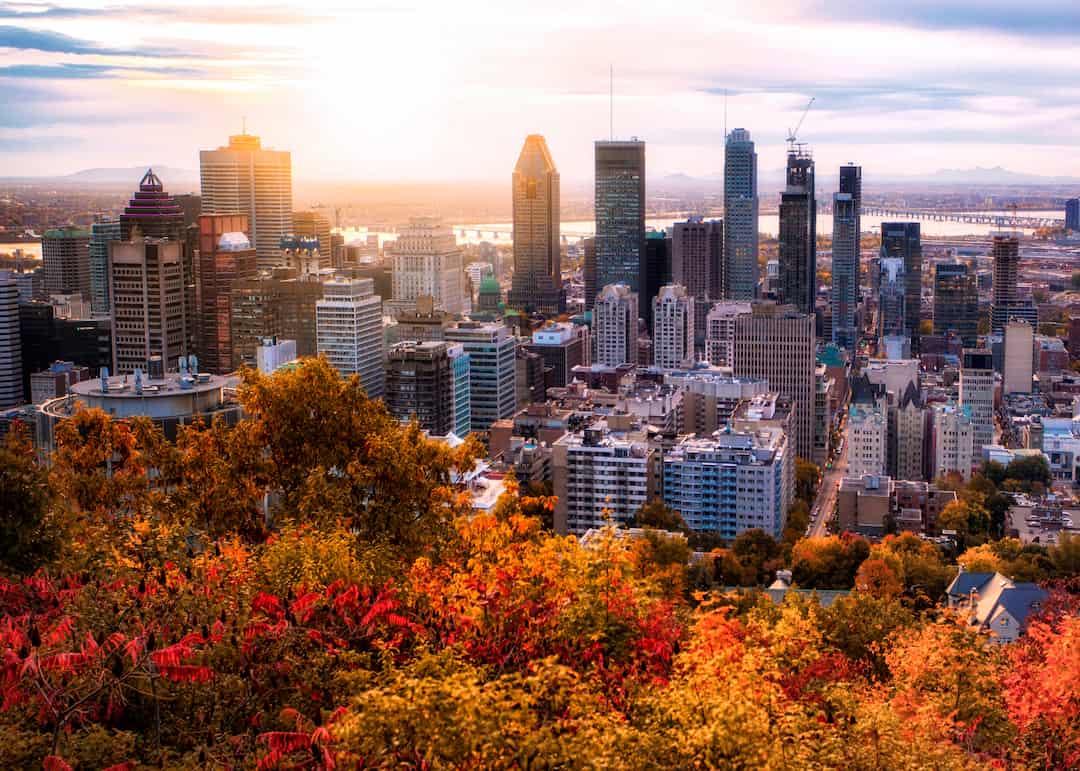

Top 5 multicultural cities in Canada for international students

PTE Author
PTE Author
Image- Canada, 1080px
Reading time: 7 minutes

Canada is easily one of the most multicultural countries in the world. The northern nation draws people from far and wide - and, for most Canadians, the international scene is a major source of pride.

There are approximately 7.5 million people from abroad living in Canada today. Walkthrough one of the country’s many amazing cities and you’ll see people from anywhere from Jamaica to China to India. You’ll also experience celebrations, customs, music, food, and art from all over the world. Honoring the backgrounds of its citizens is just part of the Canadian way.

The North American country invites immigrants for a variety of reasons: population growth, economic growth, and cultural diversity being some of the biggest ones. A 2020 Canadian Government report noted that immigration accounted for more than 80% of Canada’s population growth in 2019. That year, Canada recorded 341,000 permanent residents as well.

In fact, workers from other countries represent 26% of the workforce. As for students, in 2019, more than 800,000 international students held valid study permits in Canada.

But with so many great cities from coast to coast, many wonders: “Which are the most multicultural cities in Canada?” Below, a look at five Canadian cities that are home to the largest percentages of people from abroad.

1. Toronto: Canada’s most diverse city 

Among Canada’s most diverse cities, Toronto easily wins first place. It’s nearly impossible to spend a day in Toronto without mixing with people from around the world. A Statistics Canada report examined the geographic distribution of the Canadian immigrant population and found Toronto to be the top destination for new Canadians.  

Toronto’s 2.7 million immigrants actually account for nearly half—46% to be exact—of the city’s entire population. This group represents 35.9% of Canada’s entire immigrant population.  

That’s exactly why The BBC named Toronto the most multicultural city in the world a few years ago. In Toronto, the bustling Chinatown takes up a prominent part of the city’s downtown that it’s pretty hard to miss. Koreatown is a great place for food and fashion. Little Italy always has dozens of restaurants with mouth-watering pizzas and pastas on offer. There are also festivals like Taste of the Danforth (Canada’s largest street festival) that celebrates all things Greek, the Tamil Festival, and the Chinese Lantern Festival.  

Studying in Toronto with a PTE Academic Score 

If Toronto appeals to you, there are a number of excellent universities in Toronto that accept PTE: York University, Ryerson University, Ontario College of Art & Design University, George Brown College, Humber College.  

2. Montreal: An incredible arts scene  

Located in the French-speaking province of Quebec, Montreal is the home to 936,305 immigrants. It’s the second most diverse city in Canada. It has 12.4% of Canada’s immigrant population with folks from abroad representing 23.4% of the city’s total population. The ministry of immigration in Quebec reports that they are mostly European, Asian, or from other parts of the Americas.  

Montreal is a great city for a variety of reasons: its arts scene is incredible, it has amazing cuisine, it’s affordable and it’s located in the culturally-rich province of Quebec.  

And, if any newcomers want to experience this cultural diversity, the city puts on a number of festivals in summer in order to do so. There are entire weeks devoted to celebrating Japanese and Italian culture in June, for example.  

There is also a festival of world music in early summer where bystanders can hear instruments and music styles from all over the world. The Festival International Nuits d’Afrique is also a well-known festival in which more than 100 performers put on shows celebrating culture from Africa, the Caribbean, and Latin America.  

Studying in Montreal with a PTE Academic Score 

If Montreal appeals to you, there are a number of excellent universities in Montreal that accept PTE: McGill University, Concordia University, Montreal College of Information Technology. 

3. Vancouver: Combining city life with nature 

Vancouver’s 989,545 immigrants represent nearly 41% of the city’s population and just over 13% of the Canadian immigrant population. Many of those people come from places like China, India, The UK, the Philippines, and Hong Kong.  

Vancouver is arguably Canada’s most beautiful city. Those who live there get the best of both city life and nature. This is because Vancouver sits on the shores of the Pacific Ocean and in the mountains. It’s entirely possible to go trekking or sea kayaking during the day and settle in for cocktails and a fancy dinner in the evening. And thanks to the international community, you can expect to sit down to Chinese, Indian, or fusion foods at one of Vancouver’s many ethnically diverse restaurants.  

Studying in Vancouver with a PTE Academic Score 

If Vancouver appeals to you, there are a number of excellent universities in Vancouver that accept PTE: Simon Fraser University, University of British Columbia.  

4. Calgary: Close to tourist hotspots 

Calgary (nicknamed “Cowtown”) is one of Alberta’s most thriving areas. Statistics Canada has reported that about 5.4% of Canada’s immigrant population live in Calgary. That translates to nearly 405,000 and over 29% of the city’s total population. 

While the Calgary Stampede festival is Calgary’s claim to fame, many other events highlight the international cultures present in the neighborhoods of Cowtown. Examples include GlobalFest, Omatsuri (a Japanese event), Fiestaval (which celebrates Latin American identity), Serbian Fest, and the Calgary International Film Festival which screens works from more than 40 countries worldwide.

Another huge draw for those from abroad: Calgary provides the comforts of city life but is just a short road trip from main Canadian tourist destinations like Banff, Lake Louise and Kootenay National Park.  

Studying in Calgary with a PTE Academic Score 

If Calgary appeals to you, there are a number of excellent universities in Calgary that accept PTE: University of Calgary, Bow Valley College, Mount Royal University. 

5. Edmonton: A city of parks  

Edmonton has become a hub for immigrants seeking a new home in Canada. About 4% of Canada’s immigrant population lives in the northern city representing nearly a quarter of the Edmonton population overall. Move here and you can expect dry weather and long days with late sunsets in the summer. The winter, by contrast, is very snowy and cold.  

Edmonton locals also brag that more than 150 languages are spoken there. French, Punjabi, Cantonese, Mandarin, Arabic, and Spanish are the most prevalent.  

Edmonton is also a fairly green city with more than 460 parks. For day trips, newcomers can experience iconic locations nearby like Jasper National Park and UNESCO site Dinosaur Provincial Park—a spot famous for its dinosaur fossils.  

Studying in Edmonton with a PTE Academic Score 

If Edmonton appeals to you, there are a number of excellent universities in Edmonton that accept PTE: University of Alberta, The King’s University, Northern Alberta Institute of Technology, Macewan University.  

PTE can make your Canadian dream a reality 

If you’re thinking about studying in any of these top five most multicultural Canadian cities, consider using PTE as your stepping stone. The English proficiency test is recognized by some of Canada’s most prestigious colleges and universities. It also has testing centers in or near each of the cities listed above. Currently, international students can complete a test in Toronto, Montreal, Calgary, Edmonton, Burnaby (right next door to Vancouver), and Ottawa.  

Discover where PTE can take you in Canada.

Related Content

  • [Asset] Girl smiling into distance
    How to be conversation ready for your US student visa interview
    By PTE Author
    Reading time: 6 mins

    Getting a student visa for the US can be a long and stressful process, and one of the final hurdles is the visa interview.

    Conducted in English, it’s one of the parts of the US visa application process that causes international students the most stress.

    We’ll briefly recap the US student visa types and application process before sharing top tips on how to prepare and build your speaking confidence for a stress-free interview experience.

    Understanding the different types US student visas 

    To enter the US to study, you’ll need an F-1 or M-1 visa.

    F-1 visas are intended for international students looking to study at colleges or universities. This visa category also covers other academic institutions, such as language schools.

    M-1 visas are for vocational studies, such as culinary school, trade school programs, and healthcare technician courses.

    If you’re not sure what type of visa you need and want to understand more about the different criteria, there’s an official US Visas website with a useful Visa Wizard tool to point you in the right direction.

    How to apply for a US student visa

    To study in the US, you’ll need to apply for and be accepted on a course at a Student Exchange and Visitor Program (SEVP) approved school before starting the visa process.

    Once accepted, you’ll receive Form I-20 and need to pay the SEVIS (Student and Exchange Visitor Information System) fee.

    There’s another round of forms and fees (DS-160 and the visa application fee), before it’s time to schedule that all-important visa interview at the US embassy or consulate in your home country.

    On interview day, you’ll need to bring documents, such as your passport, academic transcripts, and travel history, as well as details of your intended travel to the US.

    You’ll have an interview with a consulate officer and your visa will either be approved or may require further “administrative processing”.

    The visa application process does vary depending on the local embassy or consulate, so check your local branch’s process on their website.

    What is the US visa interview about?

    Most applicants aged 13-80 must attend an in-person visa interview at a US consulate or embassy.

    The interviewer is looking to understand your qualifications, study plans, and ability to support yourself during your time in the US.

    They also want to make sure that anyone applying for a student visa intends to return to their home country after completing their studies.

    You can find more information on what questions to expect at a US student visa interview on the International Student website.

    Building your speaking confidence

    A high-stakes English interview can be daunting, often making it tough to speak as confidently as you normally would when you’re in the classroom or chatting with friends. Here are four ways to build your speaking confidence ahead of a US visa interview.

    1. Prepare answers to likely questions

    Knowing the purpose of the interview makes it easier to anticipate the types of questions you’ll be asked. Make a list of anticipated topic areas and spend some time crafting concise answers. Once you’ve written your responses, it’s time to speak up! Practice saying the answers aloud every couple of days so that they feel familiar on the day. You don’t have to memorize the responses, but by planning out roughly what you’d like to say, you’re removing that extra pressure of thinking on the spot.

    2. Immerse yourself in English

    Confident speaking starts with great listening. The run-up to your visa interview is the perfect time to revisit that US sitcom you love or to start listening to an audiobook in English on your daily walk. You could even try repeating back new phrases or idioms that you hear to build your vocabulary and practice your pronunciation. If you’re listening to English shows, podcasts, and even following English social media accounts on a regular basis, then being faced with questions in English will feel less new and different on the day.

    3. Find a language exchange partner

    One of the most effective ways to brush up on your speaking skills is to find a language exchange partner. This could be a language swap, where you find someone who speaks English as their first language and who is learning your language, or conversation clubs where everyone is working on learning English. If you can’t find a local tandem partner, take a look at online communities, such as MeetUp, InterNations, or even Facebook, to find someone you can practice with online.

    4. Use speech recognition technology 

    If you can’t find a language tandem partner or are short on time, several language learning apps now include speech recognition — a technology first introduced by Mondly by Pearson.

    This technology allows you to practice pronunciation and conversation without the pressure of another human waiting on or judging your responses.

    In Mondly, for example, the app offers over 500 minutes of conversation practice with Augmented Reality (AR) and Virtual Reality (VR) options to allow you to practice conversations in realistic scenarios.

    With less pressure and instant feedback, virtual conversations using speech recognition can be a great way to build your confidence ahead of real-life challenges like visa interviews.


    It’s natural to feel the pressure with interviews — especially when your dreams of studying in the US hang in the balance.

    Remember, interviewers aren’t looking for flawless language skills, just that your English is at a high enough level to fully participate in your course and enjoy life in the US.

    By thinking through the likely topics and actively finding more opportunities to practice speaking English, you’ll be able to head into your visa interview with confidence.

  • [Asset] Two friends, students smiling
    Which US state matches your personality?
    By PTE Author
    Reading time: 6 minutes

    With 50 states to pick from, choosing where to study in the US can be overwhelming.  

    There’s lots of information out there about the different universities and courses, but sometimes it just comes down to fit and feel. 

    Whether you’re weighing up two different options or not sure where to start, we've matched some major states with personality types to help you find your perfect fit.  

    1. California: The Free Spirit 

    Are you creative, laid-back, and always chasing the next big trend? California might be your ideal destination. With its buzzing cities, beautiful beaches, and world-renowned tech scene, it's perfect for those who love variety and aren't afraid to think outside the box.  

    If you’re at home in the water, then California is the state for you. Surfing is the official state sport and the consistent year-round swells mean it’s home to 29% of surfers in the US.   

    There are more than 30 public colleges in the Golden State. The University of California, Los Angeles (UCLA) is the largest university in the state with almost half a million students a year between its 23 colleges.  

    2. New York: The Go-Getter 

    If you thrive in fast-paced environments and dream big, the Empire State could be calling your name.  

    With multiple urban universities threaded throughout the concrete jungle, New York offers world-class opportunities in fields like finance, fashion, and the arts.   

    It's ideal for ambitious types who love the energy of big city life. Over 800 languages are spoken in New York, making it the most linguistically diverse city in the world and the perfect home away from home.   

    The State University of New York at Buffalo is the largest public university in New York, and it’s also home to big names like Cornell and Columbia.  

    3. Texas: The Bold Adventurer 

    For those with a big personality and an even bigger heart, Texas might be the perfect new home.  

    The Lone Star State offers a unique blend of modern cities and cowboy culture. And when we say big, we mean big: with more than 30 million inhabitants over almost 700,000 km², Texas is larger than many countries, including France, Germany, and Japan! 

    Texas A&M University is the largest university in the state, while the University of Texas at Austin takes the crown for the number one public university in Texas and 32nd best in the US.  

    4. Massachusetts: The Academic 

    Home to some of the world's top universities, Massachusetts is perfect for the intellectually curious. If you consider yourself a history geek and don't mind a little New England weather, this could be your scholarly paradise.  

    Pick Massachusetts and you'll be studying in the birthplace of American sports — both volleyball and basketball were invented here. 

    The University of Massachusetts Amherst is the largest public university, but the state is also home to two of the global top five best universities: Massachusetts Institute of Technology and Harvard.  

    5. Florida: The Social Butterfly 

    Do you live for sunny days, love meeting new people, and enjoy a good party? Florida might be your match.  

    Don’t let the jokes about retiring to Florida fool you; the state capital, Miami, is known for its buzzing nightlife. With its beautiful beaches and famous theme parks, it's great for outgoing types who want to mix study and play.

    The University of Central Florida in Orlando is one of the largest universities in the country. Alongside the University of Miami and Florida State University, that means Florida has three institutions that rank in the top 100 US universities.  

    6. Colorado: The Nature Enthusiast 

    If you're happiest outdoors and love staying active, consider Colorado.  

    Home to the Rocky Mountains, its stunning landscapes, including the world's largest flat-top mountain (Grand Mesa, covering about 500 square miles), mean Colorado is ideal for those who want to hit the trails or slopes when they're not hitting the books. 

    There are nearly 50 institutions to pick from in The Centennial State. Colorado State University is the largest in the state and University of Colorado Boulder is considered to be one of the leading public research universities in the US.   

    7. Illinois: The Balanced Achiever 

    If you're looking for a place that balances career prospects with a manageable cost of living and four distinct seasons, the Prairie State might be for you. Illinois offers a blend of Midwestern friendliness and big-city opportunities.  

    Its state capital, Chicago, is one of the largest cities in the US. Perfect for those who want to combine big-city living with lazy lakeside days, the “Windy City” is right on the edge of Lake Michigan, one of the five “Great Lakes”.   

    The state's largest university is the University of Illinois at Urbana-Champaign, and it’s also home to global #28, Northwestern University.  

    8. Washington: The Tech-Savvy Innovator 

    Are you passionate about technology, love a good cup of coffee, and don't mind a little rain? Washington state might be your perfect match.  

    With its booming tech industry, stunning natural beauty, and eco-friendly mindset, it's ideal for forward-thinkers. The only state named after a US president, Washington is home to the world's first Starbucks, which opened in Seattle in 1971. 

    The University of Washington in Seattle, the largest university in the state, is consistently ranked as one of the most innovative public universities in the world.   

    Whether you’re happiest on a sun-drenched beach or exploring windswept mountains, catching a wave or catching up with a good book, there’s a state for you.  

    These are just top-level introductions to some of the defining state characteristics. The best way to find your perfect match is to research thoroughly and, if possible, visit before making your decision. 

    The US is an incredibly varied, diverse country, and whichever state you pick, we’re sure it will soon feel like home.  

  • [Asset] Women laughing with phone
    US financial aid for international students: your guide to what’s available and where to apply
    By PTE Author

    Studying in the United States is a dream for many international students, but with the price tag of a four-year degree hitting more than six figures, cost can be a significant barrier.

    Whether it’s kickstarting your career with a degree from an internationally recognized university or becoming more specialized in your current field, there are lots of different financial aid options to help make your American dream a reality.

    Who offers scholarships for international students studying in the US?

    Based on merit, need, or specific talents, scholarships and grants are one of the most sought-after forms of financial aid. These financial awards cover part or all of the tuition fees and don’t require repayment.

    Most students focus on university scholarships, but there are also government, private, and sector-specific options to explore, as well as work-study programs where students can offset fees by working on campus.

    1. University scholarships

    Many US universities offer scholarships specifically for international students, such as New York University or the California State University International Programs.

    2. Government scholarships

    The US government also provides funding for international students to study in the US through programs like the Hubert Humphrey Fellowship Program and the Fulbright Foreign Student Program which helps 4,000 students each year.

    3. State scholarships

    More rare than federal scholarships, there are some state-level programs such as the California State University International Programs that work across the 23 different institutions to offer scholarships for international students.

    4. Private scholarships

    Various organizations and foundations offer scholarships to international students, such as the AAUW International Fellowships, for women who are not U.S. citizens or permanent residents, and the Aga Khan Foundation’s International Scholarship Programme, for academically outstanding students from a range of countries who wouldn’t otherwise be able to afford to study.

    5. Sector-based scholarships

    There’s a shortage of workers in key sectors like leisure, hospitality, and nursing in the US. If you’re planning to study an in-demand field, research sector-specific scholarships like the Nurse Corps Scholarship Program to find financial support.

    How to find US scholarships for international students

    With so many different financial aid and scholarship options available for international students wanting to study in America, it can be hard to know where to start.

    A great first step is contacting the Financial Aid team at the universities you’re interested in, as well as searching online databases for relevant scholarship opportunities.

    1. University financial aid offices

    Almost every university in the US has a financial aid office. They’ll have many years' experience helping international students with funding options and be able to provide detailed information about available scholarships, grants, and work-study opportunities specifically for international students.

    2. Online scholarship databases

    Don’t limit yourself to what’s available from your university. Online scholarship databases can help find more specific financial aid from a wide variety of sources.

    Popular databases include:

    • StudyPortals is one of the largest databases and brings together everything you need to know to explore your study options all in one place. They have dedicated scholarship portals for bachelors, masters and PHD study.

    • International Education Financial Aid (IEFA): A resource for financial aid, college scholarships, and grant information for international students.

    • The US Department of Labor has a scholarship search tool where you can filter by level of study.

    • Scholarships.com: Offers a searchable database of scholarships for international students.

    3. EducationUSA

    EducationUSA is a US Department of State network with advice centers in more than 170 countries — check if there’s a center near you with their online search tool. From financial aid right through to the documents you’ll need for immigration, they offer advice and support with all aspects of studying in the US.

    Which US universities offer the best financial aid for international students?

    If you’re looking for universities with great support for international students, the East Coast is the place to start.

    With the exception of a few institutions in California, the U.S. News “Best Value Schools” research found that institutions in Massachusetts, New York, and Connecticut gave the most generous support to international students.

    Here are just a few of universities offering specific support for international students:

    Narrowing down your university search to institutions with a strong track record of supporting international students can help maximize your chance of receiving financial aid.

    Applying for financial aid

    The most important thing to remember when applying for financial aid is to allow plenty of time.

    Researching the different options, writing applications, and waiting to hear back can be a long process, and many scholarships and grants have early deadlines.

    You’ll also want enough time to tailor each application to the institution, as well as getting important documents translated and completing English proficiency tests, such as the Pearson Test of English (PTE) — the faster, fairer, simpler English test. The test only takes 2 hours with results typically in less than 2 days and is approved by most universities across the US.