The best universities in the UK for international students

PTE Author
PTE Author
Image of Cambridge University
Reading time: 4 minutes

The UK has plenty of respected and renowned universities. Most of these schools are welcoming to foreign students, but some are particularly good at providing a world-class education for students coming from abroad.  

In this article for international students in the UK, we cover: 

  • An overview of the British education system

  • The best universities in the UK for international students

  • Some of the best unis in the UK for specific fields (e.g. law, medicine, business, psychology).

The UK education system: A quick overview 

Higher-Education-Students-in-the-UK

There technically isn’t one overarching United Kingdom education system. Rather, each nation (England, Scotland, Wales, and Northern Ireland) has its own system.  

For simplicity, we’ll just cover the English higher education system, and this is what we’re referring to when we use “British education system” or “the education system of Great Britain” here.

The system of education in Great Britain

There are four types of schools in England that can provide higher education. These are: 

  • Universities

  • University colleges

  • Higher Education (HE) colleges

  • Private colleges.

Students can usually enter undergraduate courses from age 18. These courses range from certificates of higher education and diplomas to bachelor’s degrees and foundation degrees. These awards are ranked in levels. For example, a diploma of higher education is level 5, whereas a degree in dentistry, medicine, or veterinary science is level 7.  

Postgraduate study is available to any student who has completed a degree. These come in a variety of forms including graduate diplomas, postgraduate certificates, and master's degrees. 

Many English schools also offer integrated masters degrees, which automatically bridge the gap between undergraduate and postgraduate studies.

Once you have both an undergraduate and postgraduate qualification, you may be able to study a PhD or professional doctorate (the highest level of university education in England).  

Other countries in the UK have a similar higher education system to this, but you might notice some slight differences if you study in Wales, Scotland, or Northern Ireland.  

The best universities in the UK for international students 

Image - Oxford University

With so many prestigious colleges in the UK, it’s difficult to identify the “best”. But these five universities are consistently ranked among the top schools around the world: 

  • University of Oxford

     The English-speaking world’s oldest university is perhaps the UK’s most well-known and reputable institution. Over 20,000 students attend Oxford, with around 40% of them being international students.


  • University of Cambridge

     This storied school caters to over 18,000 students with six academic schools. It has over 100 libraries, more than 80 sports offerings, and a plethora of extracurricular activities and societies. 


  • University College London

    UCL has a reputation worldwide for high-quality teaching and research. Its location in central London is convenient and ideal for international students who wish to embrace English culture between lessons. The University of London’s international programmes are among the best available in the UK, and this college is commonly regarded as one of the best universities in London.


  • University of Edinburgh

    From industry pioneers to Nobel Prize winners, the University of Edinburgh attracts top talent from around the globe. About 30% of the cohort here is comprised of international students. 


  • University of Manchester

    This university offers over 1,000 degrees ranging from foundation courses to PhDs. It’s at the forefront of research in several industries including science, engineering, and medicine. 


The best unis in the UK by academic field

Studying-Law-or-Medicine

Some universities in the UK have particularly strong offerings in specific fields. Here’s a brief overview of some schools that stand out in certain areas, based primarily on league tables from the Complete University Guide.  

Keep in mind that these lists are far from exhaustive. Speaking with an international education agent may help you find the most appropriate institute for your studies. 

Some of the best universities for law in the UK 

Some of the best universities for medicine in the UK 

Some of the best engineering universities in the UK 

Some of the best universities for economics in the UK 

Some of the best universities for psychology in the UK 

Some of the best business universities in the UK 

As the two top-ranked UK universities in general, it’s unsurprising to see Oxford and Cambridge represented in most of these lists. But, as you can see, there’s a wide range of prestigious universities in the UK to consider – no matter what field you’re looking to study.

Related Content

  • Video thumbnail for the video, 'Learn how PTE Academic uses AI to mark tests'
    How do you know PTE Academic’s computer marking works?
    By PTE Author
    Reading time: 2 minutes

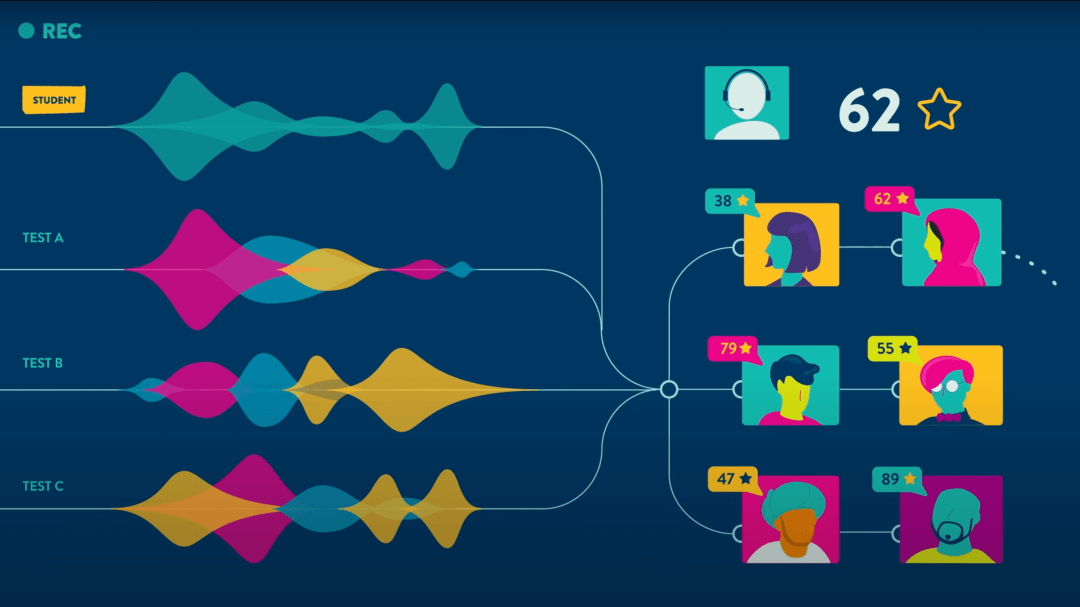
    How do we know automated scoring works

    Are you thinking of taking PTE Academic, or have you recently taken it, but you are wondering how it is that a computer can mark your test?

    Well, firstly the test has been designed by humans, all leading experts in their field. Our human experts design and write the questions, quality assure them, and then score them. At this point, computers are trained to use the patterns of highly trained language experts to attribute scores to questions. When the computer marks correlate highly with the human scores, we then allow the computer to mark test scripts from across the world.

    As a result of our processes and technology, the computer behaves like an expert human examiner – but without any possible bias, lack of concentration, or variation between individual examiners.

    The scoring criteria are exactly the same as human scoring – test takers are marked on their delivery, clarity, relevance, the accuracy of grammar, and appropriateness of vocabulary.

    Want to hear more?

    Take a couple of minutes and listen to one of our leading independent advisors, Dr. Alistair Van Moere, a member of Pearson’s Technical Advisory Group, as he explains how it all works.

  • Image- student at class 800px
    Reviewing Test Performance
    By PTE Author
    Reading time: 2 minutes

    If you have completed PTE Academic, you would know by now that it is scored against the Global Scale of English and that you need to practice many skills for each part of the test: Speaking & Writing, Reading, and Listening.

    After completing PTE Academic you will receive an email notification that your results are available online. Typically within 2 days. Learn how to access your Score Report.

    What does my Score Report mean?

    When you receive your Score Report it will show you your overall score, which is based on your performance across all test items. Your communicative skills that are measured are listening, reading, speaking and writing.

    This is an example of what your Score Report may look like.

    The enabling skills are those skills that are required to fulfill the question types in the test. It’s important to know what each of these skills refers to.

    Grammar

    Correct use of language with respect to word form and word order at the sentence level.

    Oral Fluency

    Smooth, effortless and natural-paced delivery of speech.

    Pronunciation

    Production of speech sounds in a way that is easily understandable to most regular speakers of the language. Regional or national varieties of English pronunciation are considered correct to the degree that they are easily understandable to most regular speakers of the language.

    Spelling

    Writing of words according to the spelling rules of the language. All national variations are considered correct, but one spelling convention should be used consistently in a given response.

    Vocabulary

    Appropriate choice of words used to express meaning, as well as lexical range.

    Written Discourse

    Correct and communicatively efficient production of written language at a textual level. Written discourse skills are represented in the structure of a written text, its internal coherence, logical development, and the range of linguistic resources used to express meaning precisely.

    How do I identify my areas of weakness?

    From the visual graph on your Score Report, you will be able to see areas you need to improve on. You should aim to develop your core (enabling) skills required across all areas of the test.

    The following resources will help you develop your enabling skills:

    How can I improve in each part of the test?

    It’s also worth focusing on particular parts of the test or questions you think you had trouble with. The following articles may help you improve your skills across questions:

    If you don’t already have one, it’s recommended to work with an English teacher to work through areas that may need improvement.

    Good luck!

  • Image- A guy with headphones and laptop
    Listening: Self-Improvement Part 1
    By PTE Author
    Reading time: 3 minutes

    After working through the strategies to improve your English listening skills, you can work on specific areas of the test. In this part, you will need to apply a number of listening and writing skills.

    Below are improvement tips on the question types that combine writing and listening skills.

    Summarize Spoken Text

    In the Summarize Spoken Text questions you will be scored on content, form, grammar, vocabulary, and spelling.

    Content and Form

    Make sure you write a good, clear summary of all the key points in the text and also condense the most important supporting points.

    In this question, you will not be given the context of the recording before it starts. Make sure to listen carefully from the start to help understand the context and the information given.

    Some helpful tips for the content and form, to maximize your score are:

    • Take notes on your Erasable Noteboard Booklet or in the response box on the screen

    • Do not try to write down sentences (you will not have enough time)

    • Use symbols and abbreviations in your notes

    • Write down key points and their relationships with others

    • Start with an overview sentence to introduce your summary

    • Use cohesive devices to link the information as you write

    • Try to write between 50 and 70 words

    Overall, make sure you summarize the text in your own words as this will show that you have understood the purpose of the text. If you do not write in your own words, you will score zero for content.

    If you write less than 40 or more than 100 words, you will score zero.

    Grammar

    It is important that grammar is correct as you will be tested on sentence structure, punctuation and capitalization.

    Try not to be too ambitious with your grammar to avoid making mistakes. Try to use grammatical structures you feel comfortable with.

    In this question type you should:

    • Communicate meaning clearly and concisely

    • Use complex sentences where possible to score more points

    • Write sentences between 18 and 30 words – long sentences are hard to control grammar

    • Check your response for common errors before submitting

    Vocabulary and Spelling

    You will score points if you use the correct and appropriate vocabulary in the Summarize Spoken Text question type. Use words from the recording if you use them appropriately, however, try to use synonyms to replace words already used.

    You will also need to make sure to spell every word correctly to receive maximum points. Try to type as carefully as possible during this question. If you can not remember how to spell a word, guess as it is better to include the word than leave it out, even if it is incorrect.

    Don’t forget to use the space bar to show the end of each word.

    Write from Dictation

    Another question that tests both listening and writing is the Write from Dictation question type.

    In this question type, you will need to write the words in the correct order with the correct spelling in order to score points.

    Before the recording starts, place your cursor in the response box and get ready to type as soon as you hear the recording. Make sure to reproduce what you hear exactly as you heard it as the recording will only be played once.

    Remember to start the sentence with a capital letter and end it with a full stop (period).

    Type as you hear it and when finished, check for any mistakes. Always make sure that to read over your answer before clicking next.

    Continue improving your listening skills by reading our Listening: Self-Improvement Part 2 article.