Teacher profile: Building a learning community in Dhaka

PTE Author
PTE Author
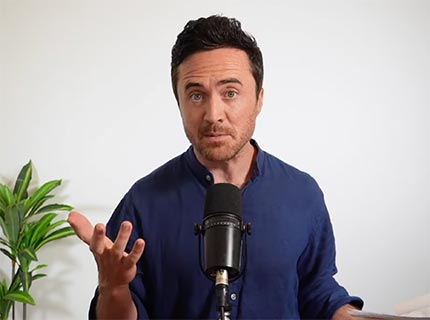
Image - iteachPTE Syed Wasi
Reading time: 5 minutes

Syed Wasi is a pioneer in many ways. He was the first PTE trainer in Bangladesh, and the first Bangladeshi to score 90 in PTE – no mean feat in a country of 166 million people! Syed is the founder of the Center for Innovative Language Learning (CILL) where students come for his help in preparing for PTE. The center is renowned for its high student success rate.  

So, how does Syed help his students to get the scores they need in PTE? Let’s find out.  

How Syed teaches PTE  

When a student arrives at CILL, their first step towards PTE success starts with a language assessment. “If we find that their language skills aren’t particularly strong,” says Syed, “the first thing we do is create a course which includes general language classes. We go step by step through the levels, helping them to improve their language skills – and once they are ready for PTE, they join a PTE preparation class.”  

Once Syed’s students are part of a preparation class, they follow a carefully designed curriculum. Each language skill tested in PTE (speaking, writing, reading and listening) is covered in a module of three classes. The first class introduces the type of exam questions that students can expect. The second class gives students the practical tools and techniques that they’ll need to answer the exam questions, and the third class is a practice session. But the secret to Syed’s success? He doesn’t let the students sit PTE before they’re ready:  

"The final step in PTE preparation is the mock test. We don’t let them take the test until they’re ready for the test, which is why we have a very high success rate.”  

Flexibility is also important. The PTE preparation courses at CILL are blended courses; some students attend the center in person, and others join online. When the pandemic began, there was a massive shift to teaching online, and many schools had to adapt quickly. But Syed’s language school was ahead of the curve when it came to blended learning. “I did my masters in online teaching back in 2012,” says Syed. “We’ve been teaching with a blended learning model since 2016, so it was easy for us to adapt. Now, students are returning to the classroom, but we still offer the blended learning option.”  

Building a community of learners  

An important part of the school culture at CILL is the accessibility of the teachers. Learning isn’t confined to the classroom – the teachers are available to answer questions outside of class times. “We create WhatsApp groups for different classes, and it’s like a virtual hub,” Syed explains. What’s more, the teachers follow up with students after class. This dedicated service has helped Syed to build a loyal community of learners around the world. “Many of our students have moved to Australia, to the UK, or to other countries,” he says. “And wherever they go, if they meet anyone interested in PTE preparation, they refer them to our school. They’ll say, there’s a person in Bangladesh who can give you the support you’ll need to pass the test.”  

Syed’s advice for PTE teachers 

“If you’re new to PTE teaching, the most important thing is to make sure you have the expertise you need to prepare students for the test,” Syed says. After all, there’s a lot on the line when it comes to PTE. Students often need a certain score for a university application or a visa. So if you don’t prepare students thoroughly, it could have an impact not only on their score but on their careers. Syed recommends taking the test yourself in order to gain real insight into PTE.  

And for more experienced teachers, Syed believes that honesty is the best policy when it comes to test preparation. “Tell your students exactly what they’ll need to do in order to get the score they need. Be honest with them, and that way they know what they have to do.”  

PTE is a high stakes test. When you’re helping students to prepare for the exam, you’re helping them to change their lives, to do something new. “It’s not just a business,” says Syed. “We are helping students to reach their goals. It’s my passion, and my vocation.”  

Learn more

Each month, we feature the profile of a teacher from our PTE community. If you have advice and insights to share with other PTE preparation teachers, we’d like to hear from you! Fill out this form and we’ll be in touch shortly.  

In previous months, we featured Jurine Ruperto, who teaches in Cebu in the Philippines, and Ramesh Thapa, a PTE teacher in Kathmandu. You can read all about them on our blog, where you’ll also find lots of resources for PTE preparation classes. And don’t forget to sign up to our monthly newsletter.

Related Content

  • Mastering the ‘summarize group discussion’ task for PTE Academic success
    By PTE Author

    The Summarize Group Discussion task is one of the most comprehensive speaking challenges in PTE Academic. It tests your ability to listen actively, take effective notes, and deliver a coherent summary that captures multiple perspectives.

    Understanding how to approach this task strategically can significantly boost your speaking score.

  • Mastering PTE Academic: A guide to the "Respond to a Situation" task
    By PTE Author

    The "Respond to a Situation" task in the Speaking section of PTE Academic tests your ability to handle real-world university scenarios using appropriate language. This task simulates everyday campus interactions, requiring you to respond naturally and effectively to common situations you might encounter as a student.

  • [asset] Understanding your English proficiency - woman studying on laptop
    Understanding your English proficiency
    By PTE Author
    Reading time: 5 minutes

    Knowing your English level helps you pick the right course, get visas, and make strong applications for work or school. In short: proficiency levels are standard descriptions of what you can do in reading, listening, speaking, and writing.

    You can check your level with trusted online tests or official exams like PTE Academic or PTE Core, which give scores based on global standards. Below, we explain how levels are defined, how they’re tested, how to estimate your current ability, and what different goals usually need, so you can plan your next step with confidence.

    What are English proficiency levels?

    Language proficiency levels show how well you can read, listen, speak, and write. These levels follow shared standards so schools, employers, and governments around the world can easily understand your skills.

    The most common system is the Common European Framework of Reference for Languages (CEFR), which rates language ability from beginner (A1) to highly advanced (C2). A recent overview explains CEFR’s role as a standard for designing tests and interpreting scores across countries and programs and notes ongoing efforts to keep it up to date for modern assessments.

    Pearson’s Global Scale of English (GSE) provides a more granular 10–90 scale that also aligns to CEFR tiers. This makes it easier to see fine-grained progress and map scores to CEFR bands.

    Typical CEFR levels at a glance:

    • A1: Understand and use everyday expressions; introduce yourself; ask and answer simple questions

    • A2: Handle routine tasks; describe immediate needs and simple aspects of daily life

    • B1: Understand main points of clear standard input; produce simple connected text; manage travel or work situations

    • B2: Interact with fluency on familiar topics; write clear, detailed text; follow lectures with some support

    • C1: Use English flexibly and effectively in academic and professional contexts; understand demanding texts

    • C2: Understand virtually everything heard or read; summarize information coherently; express nuanced ideas precisely

    Common uses:

    • A1-A2: Mainly used for basic immigration visas, family reunification, entry-level work or training programs, and integration courses where simple everyday communication is sufficient.

    • B1–B2: Many vocational programs, initial professional roles, and some visa pathways

    • B2–C1: Most undergraduate admissions and professional certifications

    • C1–C2: Postgraduate study, specialized professions, and roles requiring complex communication

    How English proficiency levels are measured

    Proficiency is measured across four core skills:

    • Reading:Understanding texts, identifying main ideas and details, and interpreting vocabulary in context

    • Listening : Following speech at natural speed, recognizing key information, and inferring meaning

    • Speaking: Producing clear, organized speech; using accurate grammar, vocabulary, and pronunciation

    • Writing: Composing well-structured texts suited to purpose and audience; demonstrating control of grammar and cohesion

    The scoring for most English language tests is measured against the CEFR. For The scores for PTE Academic (for studying and work) and PTE Core (for general use and migration), align to CEFR with scoring between 10 and 90. Learn more about PTE scoring alignment.

    How to assess your current English language ability

    Build a reliable picture by mixing official tests with quick checks and reflective habits:

    • Take a recognized practice test: Use an official Pearson PTE Scored Practice materials Test

      or other reputable online assessments to estimate your CEFR level and identify strengths and gaps

    • Practice with PTE-style items: Work through sample reading tasks (e.g., fill-in-the-blanks), listening summaries, and short spoken responses to simulate real test conditions.

    • Use self-analysis prompts that match the CEFR level you are aiming for: For example, ask, “Can I follow a university lecture?”, “Can I write a formal email with clear structure?”, “Can I explain a process or opinion for 60–90 seconds?”

    What English proficiency level do you need for visa applications?

    Requirements vary, but many universities, colleges, professional bodies, and visa authorities set minimum thresholds around B1–C1, or the equivalent GSE score range of 43-84 for PTE Academic and PTE Core. . Some UK family and settlement visas require A1 or A2 level. Always confirm details with the program or government authority.

    Typical requirement ranges (illustrative):

    • University / College admission:

      • Undergraduate: Often B2; competitive programs may prefer C1

      • Postgraduate: Commonly C1

    • Professional certification:

      • General professional registration: Frequently B2–C1

    • Visa/migration pathways:

      • Skilled migration: Typically B1–B2+ equivalents; some routes require higher levels depending on occupation

      • Family visas: Often A1-A2.

    For Canadian migration scenarios, explore PTE Core requirements and pathways here.

    For UK migration, consider PTE UK visa SELT tests.

    The role English proficiency in career and certification

    For many learners, English isn't just the goal; it’s the way to get degrees, licenses, and international jobs. Universities and employers look at test scores to decide who to admit or hire. Once students are in university or at work, success depends on great communication (reading, listening, speaking, and writing) skills, whether it's doing research or talking to clients.

    Research indicates that higher English proficiency supports academic performance and integration for international students, improving classroom participation and social engagement. In the workplace, clear communication underpins teamwork, safety, and advancement, making ongoing skill development a career investment, not just a test goal.

    Practical tips for improving your English proficiency

    Target all four skills with short, consistent practice:

    • Daily core routine (20–40 minutes):

      • Listening: Listen to 2–3 minutes of a podcast or lecture; note new phrases

      • Speaking: Answer one daily Q&A aloud (60–90 seconds) on familiar topics

      • Reading: Skim a news article; summarize the main idea in two sentences

      • Writing: Draft a short email or 120–150 word paragraph; focus on structure and linking words

    • Quick wins:

      • Grammar and vocabulary: Do 10 fill-in-the-blank or sentence completion items; build a personal word bank with examples

      • Reading for context: Underline signal words (however, therefore) and infer meaning of three unknown words from context

      • Listening focus: Practice identifying the overarching meaning first, then the key details and numbers

      • Feedback loop: Swap writing with a friend or use self-scoring checklists; act on one improvement point per day

    To prepare for your English exam, practice with practice tests that are similar to your actual test and check the scoring guidelines to make sure your answers meet the expectations. If you aren't sure where to start take our 'Which test is right for me?' tool. You can also read our article 'How to pick an English test that works for you'.

    Frequently asked questions
    What daily conversation questions help build speaking confidence?

    Practice short answers to everyday prompts like “What did you do today?” and “What do you like to eat?” to build fluency and reduce hesitation.

    How do I check understanding during English conversations?

    Use clarifiers such as “Could you repeat that more slowly?” or “Do you mean…?” to confirm meaning and keep the conversation clear.

    What types of excercises improve grammar and voacbulary?

    Do fill-in-the-blanks, sentence completion, and synonym/antonym matching to reinforce patterns and expand word choice.

    How should I prepare for English proficiency test formats?

    Study common task types (reading comprehension, short writing, gap-fill, brief speaking responses) and practice them under timed conditions to build accuracy and pacing. You can also try practice tests to get used to the format of a specific test, like PTE.