Teacher profile: Building a learning community in Dhaka

PTE Author
PTE Author
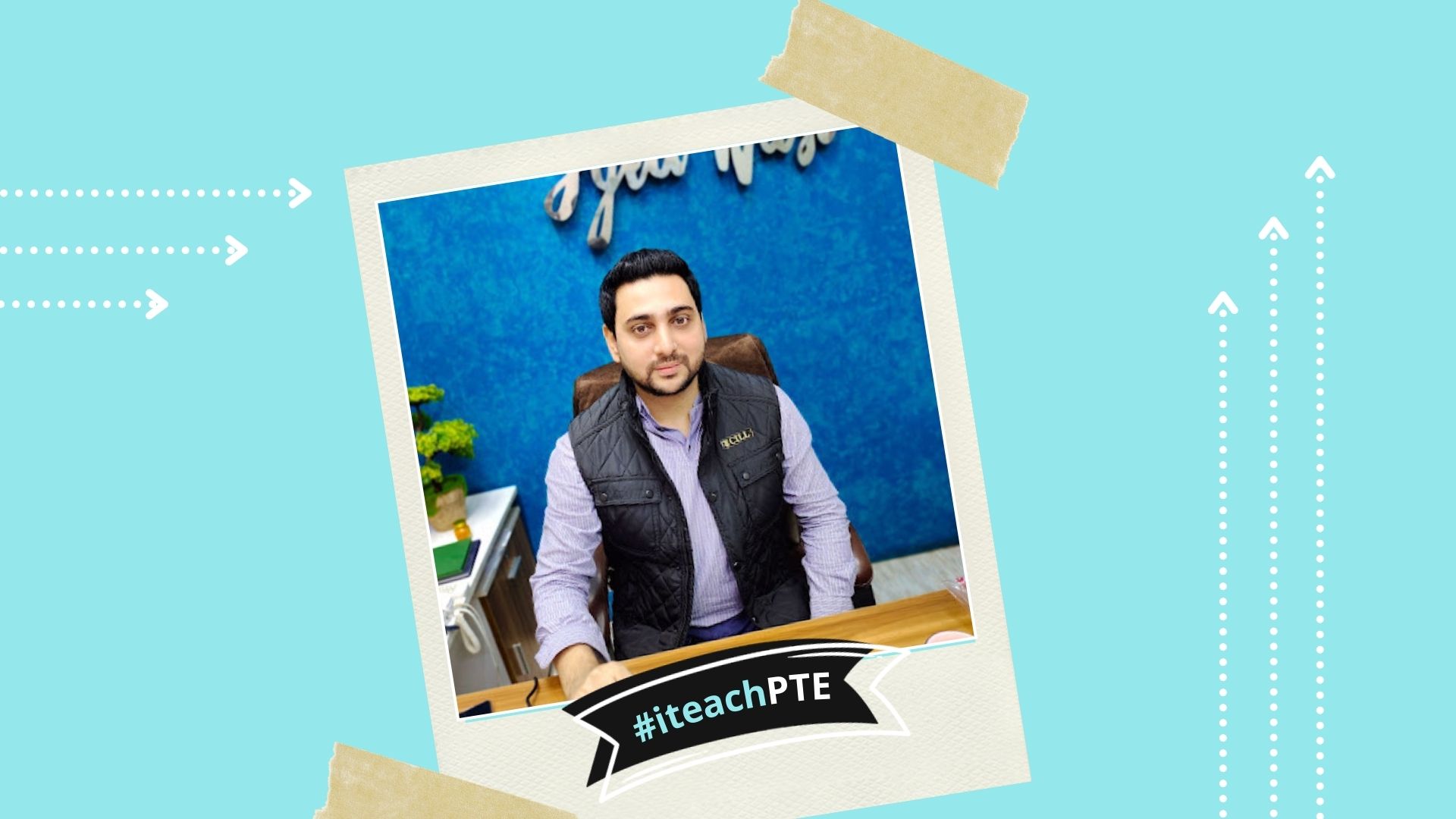
Image - iteachPTE Syed Wasi
Reading time: 5 minutes

Syed Wasi is a pioneer in many ways. He was the first PTE trainer in Bangladesh, and the first Bangladeshi to score 90 in PTE – no mean feat in a country of 166 million people! Syed is the founder of the Center for Innovative Language Learning (CILL) where students come for his help in preparing for PTE. The center is renowned for its high student success rate.  

So, how does Syed help his students to get the scores they need in PTE? Let’s find out.  

How Syed teaches PTE  

When a student arrives at CILL, their first step towards PTE success starts with a language assessment. “If we find that their language skills aren’t particularly strong,” says Syed, “the first thing we do is create a course which includes general language classes. We go step by step through the levels, helping them to improve their language skills – and once they are ready for PTE, they join a PTE preparation class.”  

Once Syed’s students are part of a preparation class, they follow a carefully designed curriculum. Each language skill tested in PTE (speaking, writing, reading and listening) is covered in a module of three classes. The first class introduces the type of exam questions that students can expect. The second class gives students the practical tools and techniques that they’ll need to answer the exam questions, and the third class is a practice session. But the secret to Syed’s success? He doesn’t let the students sit PTE before they’re ready:  

"The final step in PTE preparation is the mock test. We don’t let them take the test until they’re ready for the test, which is why we have a very high success rate.”  

Flexibility is also important. The PTE preparation courses at CILL are blended courses; some students attend the center in person, and others join online. When the pandemic began, there was a massive shift to teaching online, and many schools had to adapt quickly. But Syed’s language school was ahead of the curve when it came to blended learning. “I did my masters in online teaching back in 2012,” says Syed. “We’ve been teaching with a blended learning model since 2016, so it was easy for us to adapt. Now, students are returning to the classroom, but we still offer the blended learning option.”  

Building a community of learners  

An important part of the school culture at CILL is the accessibility of the teachers. Learning isn’t confined to the classroom – the teachers are available to answer questions outside of class times. “We create WhatsApp groups for different classes, and it’s like a virtual hub,” Syed explains. What’s more, the teachers follow up with students after class. This dedicated service has helped Syed to build a loyal community of learners around the world. “Many of our students have moved to Australia, to the UK, or to other countries,” he says. “And wherever they go, if they meet anyone interested in PTE preparation, they refer them to our school. They’ll say, there’s a person in Bangladesh who can give you the support you’ll need to pass the test.”  

Syed’s advice for PTE teachers 

“If you’re new to PTE teaching, the most important thing is to make sure you have the expertise you need to prepare students for the test,” Syed says. After all, there’s a lot on the line when it comes to PTE. Students often need a certain score for a university application or a visa. So if you don’t prepare students thoroughly, it could have an impact not only on their score but on their careers. Syed recommends taking the test yourself in order to gain real insight into PTE.  

And for more experienced teachers, Syed believes that honesty is the best policy when it comes to test preparation. “Tell your students exactly what they’ll need to do in order to get the score they need. Be honest with them, and that way they know what they have to do.”  

PTE is a high stakes test. When you’re helping students to prepare for the exam, you’re helping them to change their lives, to do something new. “It’s not just a business,” says Syed. “We are helping students to reach their goals. It’s my passion, and my vocation.”  

Learn more

Each month, we feature the profile of a teacher from our PTE community. If you have advice and insights to share with other PTE preparation teachers, we’d like to hear from you! Fill out this form and we’ll be in touch shortly.  

In previous months, we featured Jurine Ruperto, who teaches in Cebu in the Philippines, and Ramesh Thapa, a PTE teacher in Kathmandu. You can read all about them on our blog, where you’ll also find lots of resources for PTE preparation classes. And don’t forget to sign up to our monthly newsletter.

Related Content

  • Image- study group, 750px
    Why fluent English speakers don’t always get a perfect score
    By PTE Author
    Reading time: 2 minutes

    Being an experienced English speaker does not guarantee you a high score

    It can come as a surprise to test takers, who consider themselves to be fluent in English, that they can score less well in an English test than they expect.

    Dr. Alistair Van Moere, a member of Pearson’s Technical Advisory Group, explains that it’s not unusual for people who have recently learned English to score higher than those that have spoken English for a long time. This happens on all high-stakes tests, not just on PTE Academic, as fluent speakers are often not prepared to do the test. PTE Academic contains question types that a fluent English speaker may not have done for a long time, for example, writing an essay.

    This is why all test takers, including fluent English speakers, should prepare before test day.

  • Image - 2 Asian students - 800x600px
    Sitting PTE Academic for the first time
    By PTE Author
    Reading time: 3 minutes

    Choosing to study or migrate abroad is a big decision and may require you to demonstrate your skills in English.

    The Pearson Test of English Academic (PTE Academic) is widely trusted by universities, colleges, and governments around the world. Taking PTE Academic can create opportunities for you around the world.

    If you are taking the test for the first time, study each part of the test thoroughly to demonstrate your English skills as best you can.

    Even people that consider themselves to be fluent in English need to prepare as they can sometimes score fewer points than they should have as they have not prepared.

    We can help you achieve your best!

    What should I expect on test day?

  • Image - Woman reading- 800px
    Reading: Core English skills part 1
    By PTE Author
    Reading time: 5 minutes

    In PTE Academic Part 2: Reading, you will be required to read a text in each question to understand what it means in order to answer the question.

    To identify and develop your reading skills we’ve put together some information to help you.

    Grammar

    Grammar skills are important as they help you understand what you are reading. In Part 2: Reading you need to understand the meaning of the tense system, how articles work and how to use pronouns.

    Tense

    The tense system refers to the way in which you write about situations in the past, present or future. It’s important to be able to understand how time is expressed in reading texts in order to understand the meaning of the text.

    To learn more about the tense system view the Anglo-Link’s video on tenses.

    Articles

    In the reading section, you will also need to understand how articles work in English. Articles are words such as ‘the’, ‘a’ and ‘an’.

    Knowing how articles work will help you to understand the topic sentence in a paragraph and that will help locate an answer in a reading passage. This will help you with the Re-order Paragraphs question types in the test.

    Indefinite articles (or an) usually come before the definite article (the) before the same noun.

    For example, An eminent scientist worked for years trying to find a new species of exotic bird. She led team of three field researchers. One of the team members found the bird in tropical forest. Two years later the same team found another new species in the forest.

    You can learn how to use the correctly in this Oxford Online English video.

    Pronouns

    It’s important to also know what pronouns are to better understand the text you are reading. Pronouns are used to replace nouns so we do not have to keep repeating the same noun.

    Knowing how to use pronouns will help in the test, particularly in the Re-order Paragraph questions, as they help you identify the correct position of sentences within a paragraph.

    For example, Dr Gomez felt he needed to spend more time with his students when they were new to his faculty. There was so much information that he wanted to give them that he needed to spend more than a whole day with them, which surprised even himself.

    To learn more and practice using pronouns, visit Ginger Software’s pronoun page.

    Vocabulary

    Having a wide vocabulary will help you succeed in the PTE Academic test as you will not need to slow down for as many words that you do not understand.

    To widen your vocabulary you should:

    • Choose reading texts across a wide range of topics. Tip: Do not choose difficult texts.

    • Try to read the text and find words you do not understand, then try to work out the meaning from the context first. If you are still not sure, look the words up in a


    Word families

    When it comes to learning vocabulary, make sure to learn the word family of a word.

    For example, progress (noun/verb), progressive (adjective), progression (noun). To learn the words, use it ten times, in different ways, such as writing, speaking and reading within a short time.

    In PTE Academic you will need to know and demonstrate how to read a word, pronounce it correctly and how to spell it. You will also need to know if it is an academic or informal word and how to use it in a sentence.

    Learn more about three aspects of academic vocabulary in the Griffith University’s Learn English- Academic Vocabulary video.

    Context

    Another important skill to improve vocabulary is inferring unknown vocabulary from context. You should be able to guess the meaning of new words or phrases based on the words around it (the context).

    For example, you can guess the meaning of profligate from this sentence: The young man who spent all his money on expensive cars and holidays was so profligate that he wasted his whole fortune.

    Sometimes you will be unable to work out the meaning of a word from the context and will need to look it up in a dictionary.

    Collocations

    Lastly, you will need to understand collocations. Collocations are words that often go together. You will need to have a good understanding of collocations in order to answer the Reading: Fill in the Blanks and Reading & Writing: Fill in the Blanks questions.

    The more you read and listen to English, the more collocations you will learn. The PTE Academic Collocation List will also help you to learn these.

    You’ll also need to learn reading methods and styles of writing in order to do well in this part of the test. Read some helpful tips on how to improve these skills.