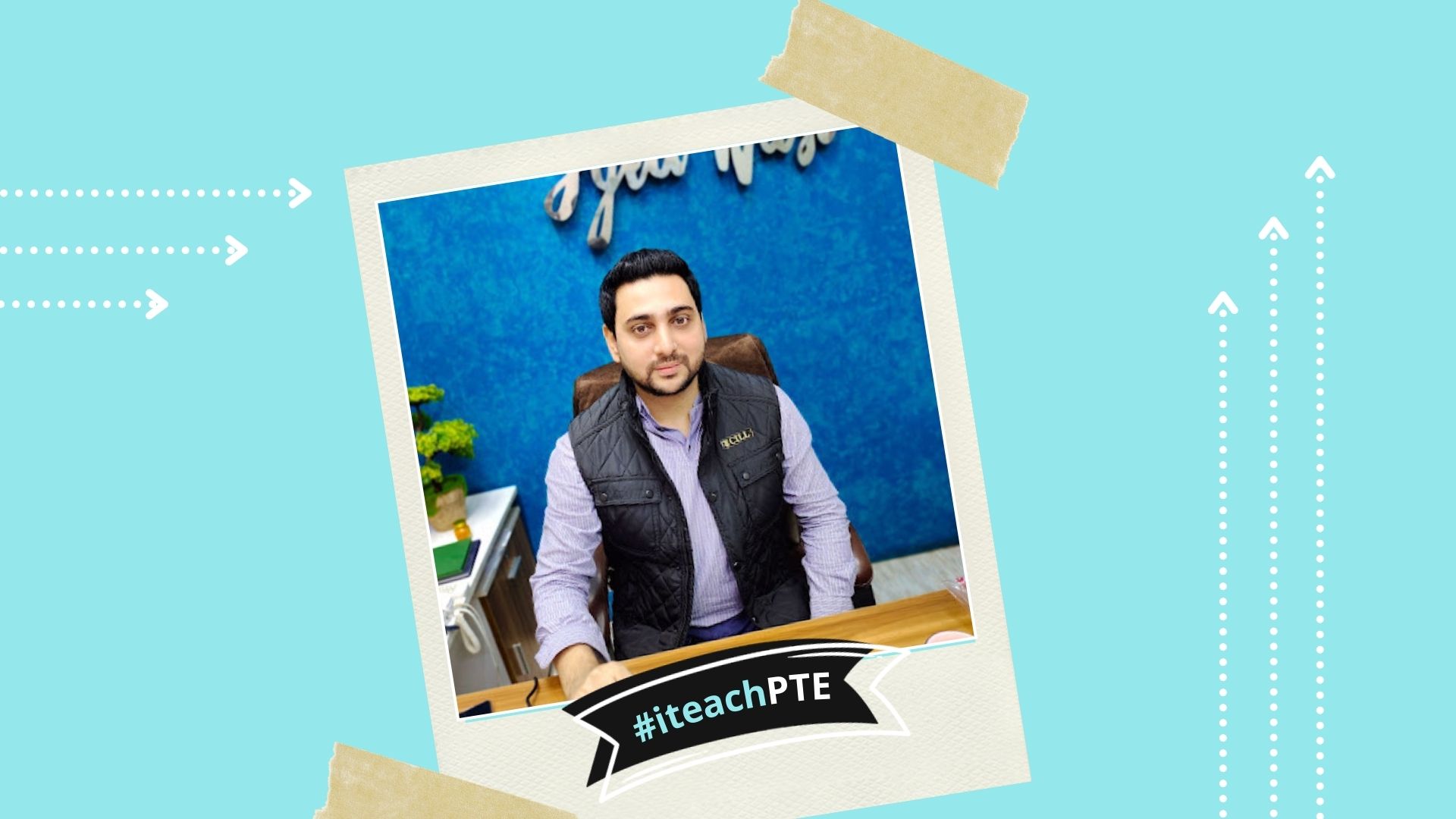

Teacher profile: Building a learning community in Dhaka

PTE Author
PTE Author
Image - iteachPTE Syed Wasi
Reading time: 5 minutes

Syed Wasi is a pioneer in many ways. He was the first PTE trainer in Bangladesh, and the first Bangladeshi to score 90 in PTE – no mean feat in a country of 166 million people! Syed is the founder of the Center for Innovative Language Learning (CILL) where students come for his help in preparing for PTE. The center is renowned for its high student success rate.  

So, how does Syed help his students to get the scores they need in PTE? Let’s find out.  

How Syed teaches PTE  

When a student arrives at CILL, their first step towards PTE success starts with a language assessment. “If we find that their language skills aren’t particularly strong,” says Syed, “the first thing we do is create a course which includes general language classes. We go step by step through the levels, helping them to improve their language skills – and once they are ready for PTE, they join a PTE preparation class.”  

Once Syed’s students are part of a preparation class, they follow a carefully designed curriculum. Each language skill tested in PTE (speaking, writing, reading and listening) is covered in a module of three classes. The first class introduces the type of exam questions that students can expect. The second class gives students the practical tools and techniques that they’ll need to answer the exam questions, and the third class is a practice session. But the secret to Syed’s success? He doesn’t let the students sit PTE before they’re ready:  

"The final step in PTE preparation is the mock test. We don’t let them take the test until they’re ready for the test, which is why we have a very high success rate.”  

Flexibility is also important. The PTE preparation courses at CILL are blended courses; some students attend the center in person, and others join online. When the pandemic began, there was a massive shift to teaching online, and many schools had to adapt quickly. But Syed’s language school was ahead of the curve when it came to blended learning. “I did my masters in online teaching back in 2012,” says Syed. “We’ve been teaching with a blended learning model since 2016, so it was easy for us to adapt. Now, students are returning to the classroom, but we still offer the blended learning option.”  

Building a community of learners  

An important part of the school culture at CILL is the accessibility of the teachers. Learning isn’t confined to the classroom – the teachers are available to answer questions outside of class times. “We create WhatsApp groups for different classes, and it’s like a virtual hub,” Syed explains. What’s more, the teachers follow up with students after class. This dedicated service has helped Syed to build a loyal community of learners around the world. “Many of our students have moved to Australia, to the UK, or to other countries,” he says. “And wherever they go, if they meet anyone interested in PTE preparation, they refer them to our school. They’ll say, there’s a person in Bangladesh who can give you the support you’ll need to pass the test.”  

Syed’s advice for PTE teachers 

“If you’re new to PTE teaching, the most important thing is to make sure you have the expertise you need to prepare students for the test,” Syed says. After all, there’s a lot on the line when it comes to PTE. Students often need a certain score for a university application or a visa. So if you don’t prepare students thoroughly, it could have an impact not only on their score but on their careers. Syed recommends taking the test yourself in order to gain real insight into PTE.  

And for more experienced teachers, Syed believes that honesty is the best policy when it comes to test preparation. “Tell your students exactly what they’ll need to do in order to get the score they need. Be honest with them, and that way they know what they have to do.”  

PTE is a high stakes test. When you’re helping students to prepare for the exam, you’re helping them to change their lives, to do something new. “It’s not just a business,” says Syed. “We are helping students to reach their goals. It’s my passion, and my vocation.”  

Learn more

Each month, we feature the profile of a teacher from our PTE community. If you have advice and insights to share with other PTE preparation teachers, we’d like to hear from you! Fill out this form and we’ll be in touch shortly.  

In previous months, we featured Jurine Ruperto, who teaches in Cebu in the Philippines, and Ramesh Thapa, a PTE teacher in Kathmandu. You can read all about them on our blog, where you’ll also find lots of resources for PTE preparation classes. And don’t forget to sign up to our monthly newsletter.

Related Content

  • Image- At cafe
    Speaking: Self-Improvement Part 1
    By PTE Author
    Reading time: 3 minutes

    In Part 1 of PTE Academic, you will require many core English skills to pass. It is very important that you prepare and look at ways you can maximize your score.

    We’ve put together some tips to help based on each question type.

    Read aloud

    In the Read Aloud question type, you will be scored based on content, oral fluency and pronunciation.

    As part of this question type, you will need to speak aloud and say all the words in the correct order.

    Here are some tips to help maximize your chances of receiving points:

    • Make sure you do not replace any words, leave any words out or add any. If you make a mistake and try to correct it, it will be counted as added words.

    • Once prompted, you must speak into the microphone right away and read with a smooth, easy natural speed. Try not to speak too fast or too slow.

    • Use English rhythm with chunking and sentence stress used correctly.

    • Try not to hesitate or repeat words as you will lose points.

    Repeat sentence

    The Repeat Sentence question type is scored based on the same elements as the Read Aloud question type: content, oral fluency and pronunciation.

    Here are some tips to help gain points in this question type:

    • Say all of the words in the exact same order. Do not rush.

    • Do not use the Erasable Noteboard Booklet, keep the sentence in your head.

    • It’s easier to keep the sentence in your mind if you understand the meaning. Try to understand the meaning.

    • If unsure of a word the speaker used, say what you think you heard.

    • Do not speak too fast or slow.

    • Similar to read aloud, use English rhythm with chunking and sentence stress. You will also lose points in this question type if you hesitate, repeat words or stumble to start.

    • Speak with the sounds of an English speaker and copy the intonation pattern of the speaker, but do not change your accent.

    Describe image

    In the Describe Image question type, you will be scored based on content, oral fluency and pronunciation.

    To be able to describe the image, you will need to understand it as it could be a graph, picture, map, chart or table. Always read the title and make sure you understand the parts that make up the image.

    Some extra tips include:

    • Use the Erasable Noteboard Booklet to take notes about the image, which you can use in your answer. For example, if the image is a graph, chart or table, is there a trend you can comment on? If it’s a map or picture, what are the important features?

    • Include all aspects and elements of the image in your answer.

    • Start with a general statement about the image then summarize the most important points.

    • If there are words on the image you want to use but are unsure how to pronounce them, don’t worry, just say them how you think they should be said.

    • Try using connector words to link the information you give. For example, use words such as: also, however, as or besides.

    You can receive up to 5 points based on your content. In order to score above 1, you will need to include the relationships between parts of the image, possible developments and conclusions or implications of the information in the image.

    Don’t forget to talk with a smooth, natural speed at all times during the speaking test.

    In total, there are five speaking sections of Part 1: Speaking and Writing.

    We recommend that you read more about the other question types such as Re-tell Lecture and Short Answer Question types and learn how to pick up points for these.

    Want to learn more about the smart way to prepare for PTE?

    Smart Prep brings all our free and paid preparation into one convenient place, so you can mix and match to fit your unique needs.

    • Smart Prep provides a clear path to test day, guiding you through the official paid and free resources available for your test

    • It can be accessed whether you’ve booked a test or not – just create, or sign in to your myPTE account

    • Preparation materials include guided practice tests, introductory videos, video courses and test tips.


  • Image- study group, 750px
    Why fluent English speakers don’t always get a perfect score
    By PTE Author
    Reading time: 2 minutes

    Being an experienced English speaker does not guarantee you a high score

    It can come as a surprise to test takers, who consider themselves to be fluent in English, that they can score less well in an English test than they expect.

    Dr. Alistair Van Moere, a member of Pearson’s Technical Advisory Group, explains that it’s not unusual for people who have recently learned English to score higher than those that have spoken English for a long time. This happens on all high-stakes tests, not just on PTE Academic, as fluent speakers are often not prepared to do the test. PTE Academic contains question types that a fluent English speaker may not have done for a long time, for example, writing an essay.

    This is why all test takers, including fluent English speakers, should prepare before test day.

  • Image - 2 Asian students - 800x600px
    Sitting PTE Academic for the first time
    By PTE Author
    Reading time: 3 minutes

    Choosing to study or migrate abroad is a big decision and may require you to demonstrate your skills in English.

    The Pearson Test of English Academic (PTE Academic) is widely trusted by universities, colleges, and governments around the world. Taking PTE Academic can create opportunities for you around the world.

    If you are taking the test for the first time, study each part of the test thoroughly to demonstrate your English skills as best you can.

    Even people that consider themselves to be fluent in English need to prepare as they can sometimes score fewer points than they should have as they have not prepared.

    We can help you achieve your best!

    What should I expect on test day?