
Teacher profile: Building a learning community in Dhaka

PTE Author
PTE Author
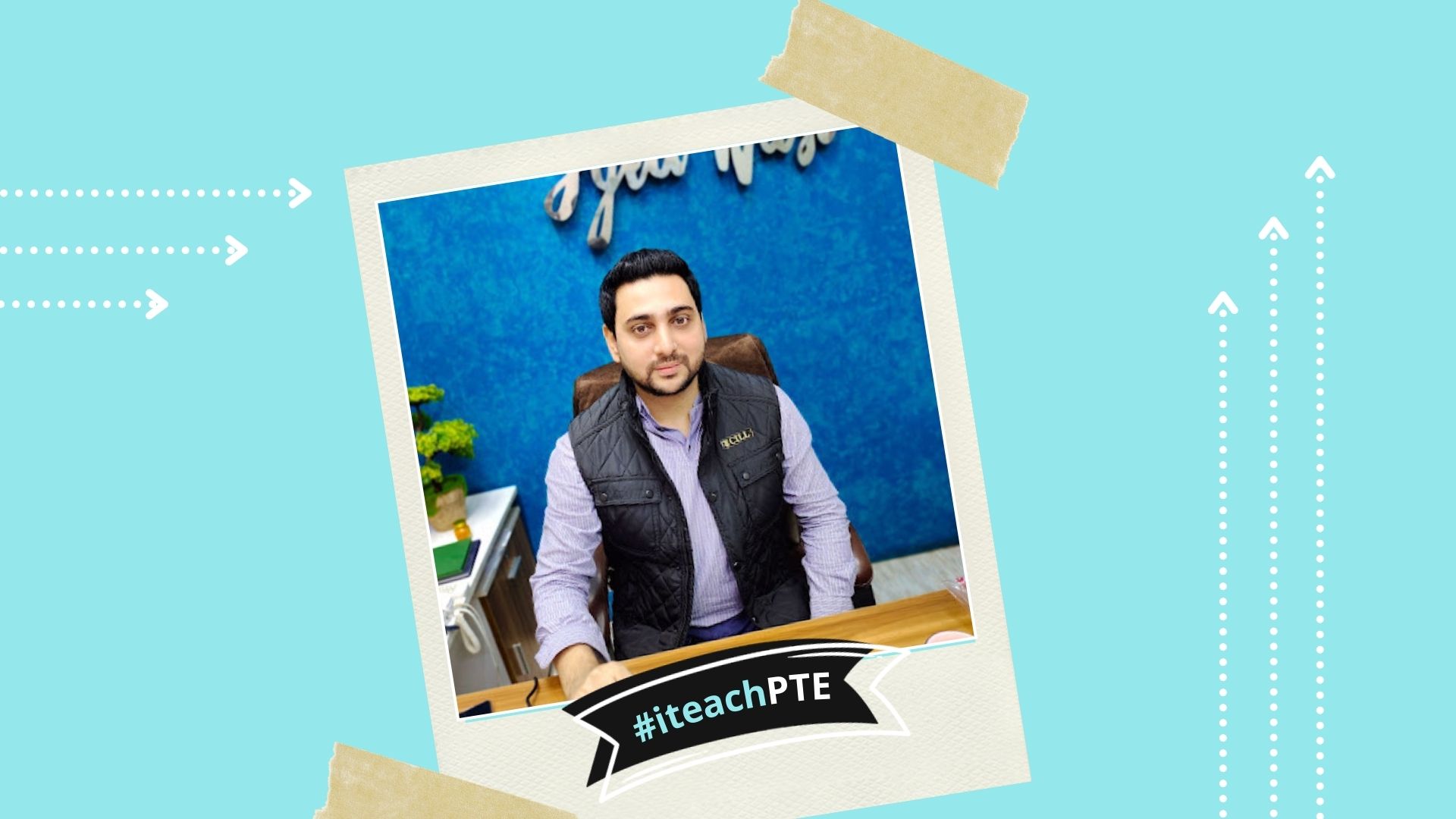
Image - iteachPTE Syed Wasi
Reading time: 5 minutes

Syed Wasi is a pioneer in many ways. He was the first PTE trainer in Bangladesh, and the first Bangladeshi to score 90 in PTE – no mean feat in a country of 166 million people! Syed is the founder of the Center for Innovative Language Learning (CILL) where students come for his help in preparing for PTE. The center is renowned for its high student success rate.  

So, how does Syed help his students to get the scores they need in PTE? Let’s find out.  

How Syed teaches PTE  

When a student arrives at CILL, their first step towards PTE success starts with a language assessment. “If we find that their language skills aren’t particularly strong,” says Syed, “the first thing we do is create a course which includes general language classes. We go step by step through the levels, helping them to improve their language skills – and once they are ready for PTE, they join a PTE preparation class.”  

Once Syed’s students are part of a preparation class, they follow a carefully designed curriculum. Each language skill tested in PTE (speaking, writing, reading and listening) is covered in a module of three classes. The first class introduces the type of exam questions that students can expect. The second class gives students the practical tools and techniques that they’ll need to answer the exam questions, and the third class is a practice session. But the secret to Syed’s success? He doesn’t let the students sit PTE before they’re ready:  

"The final step in PTE preparation is the mock test. We don’t let them take the test until they’re ready for the test, which is why we have a very high success rate.”  

Flexibility is also important. The PTE preparation courses at CILL are blended courses; some students attend the center in person, and others join online. When the pandemic began, there was a massive shift to teaching online, and many schools had to adapt quickly. But Syed’s language school was ahead of the curve when it came to blended learning. “I did my masters in online teaching back in 2012,” says Syed. “We’ve been teaching with a blended learning model since 2016, so it was easy for us to adapt. Now, students are returning to the classroom, but we still offer the blended learning option.”  

Building a community of learners  

An important part of the school culture at CILL is the accessibility of the teachers. Learning isn’t confined to the classroom – the teachers are available to answer questions outside of class times. “We create WhatsApp groups for different classes, and it’s like a virtual hub,” Syed explains. What’s more, the teachers follow up with students after class. This dedicated service has helped Syed to build a loyal community of learners around the world. “Many of our students have moved to Australia, to the UK, or to other countries,” he says. “And wherever they go, if they meet anyone interested in PTE preparation, they refer them to our school. They’ll say, there’s a person in Bangladesh who can give you the support you’ll need to pass the test.”  

Syed’s advice for PTE teachers 

“If you’re new to PTE teaching, the most important thing is to make sure you have the expertise you need to prepare students for the test,” Syed says. After all, there’s a lot on the line when it comes to PTE. Students often need a certain score for a university application or a visa. So if you don’t prepare students thoroughly, it could have an impact not only on their score but on their careers. Syed recommends taking the test yourself in order to gain real insight into PTE.  

And for more experienced teachers, Syed believes that honesty is the best policy when it comes to test preparation. “Tell your students exactly what they’ll need to do in order to get the score they need. Be honest with them, and that way they know what they have to do.”  

PTE is a high stakes test. When you’re helping students to prepare for the exam, you’re helping them to change their lives, to do something new. “It’s not just a business,” says Syed. “We are helping students to reach their goals. It’s my passion, and my vocation.”  

Learn more

Each month, we feature the profile of a teacher from our PTE community. If you have advice and insights to share with other PTE preparation teachers, we’d like to hear from you! Fill out this form and we’ll be in touch shortly.  

In previous months, we featured Jurine Ruperto, who teaches in Cebu in the Philippines, and Ramesh Thapa, a PTE teacher in Kathmandu. You can read all about them on our blog, where you’ll also find lots of resources for PTE preparation classes. And don’t forget to sign up to our monthly newsletter.

Related Content

  • Image- KL twin tower, 624px
    How to study in Malaysia
    By PTE Author
    Reading time: 5 minutes

    With high-quality universities, more affordable tuition, and the fastest growing regional economy in the world, Asia has become a popular destination for international students. This includes students from within the region itself.

    Western countries still attract a large number of students each year. “But the idea that a Western degree is automatically better and more advantageous than one obtained in Asia is losing ground.” states by ICEF Monitor.

    In fact, countries like China, South Korea, Japan, Singapore, and Malaysia have all been competing to attract more international students in recent years. As a result, Asian students now have the opportunity to receive a world-class education and international study experience much closer to home. This is especially important for many families today, as uncertainty surrounding the pandemic is expected to continue.

    Now, let’s take a look at what one Asian country – Malaysia – has to offer international students. We’ll also go into what students should keep in mind as they plans their studies:

    Malaysia at a glance

    Malaysia boasts innovative universities and excellent intra-regional mobility, making it a great place for students to consider. The country has worked to put itself on the map as a destination for international learners. It hopes to welcome 250,000 students from abroad by 2025. Students come from a variety of countries including Bangladesh, China, Indonesia, Yemen, and Nigeria.

    Bahasa Malaysia is the country’s official language. However many university courses are taught in English.

    Universities in Malaysia

    Malaysia boasts more than 100 higher education institutions. Many universities here are also ranked amongst the top in the world by the QS World University Rankings. Included in the ranking are: 

    • University of Malaya (UM): Ranked 60th globally. 

    • Universiti Putra Malaysia (UPM): Ranked 148th globally. 

    • Universiti Kebangsaan Malaysia (UKM): Ranked 138th globally. 

    • Universiti Sains Malaysia (USM): Ranked 146th globally. 

    A number of international universities have also opened branches in Malaysia. These include the University of Nottingham, Heriot Watt University, Monash University, Xiamen University, and Newcastle University, to name a few. They provide students with the chance to earn a degree from Western universities without having to leave the region.

    If you're looking to explore your study options, the government has a great tool for students to find the program that suits them best. You can also learn more about diploma studies with this useful guide.

    In order to study in Malaysia, students will need to prove they are proficient in English and PTE Academic is the ready choice for you to do so. PTE Academic is a computer-based language test that provides unbiased and secure proof of a candidate’s English skills for study, professional, and migration purposes.

    According to language requirements set by Malaysian Qualifications Agency (MQA), students who plan to undertake a Bachelor’s degree and above at university or college must score a minimum of 47 for PTE Academic, which is equivalent to CEFR High B1 level.

    Students who wish to undertake a diploma course will need to have a minimum PTE Academic score of 36, which is equivalent to CEFR Low B1 level. However, students should always check with their respective university or college to confirm their language score requirements.

    Getting your visa

    Applying for a Student Pass to study in Malaysia is relatively simple and can be done online. Before starting your application, you must have a letter of acceptance from your university. The whole visa process takes about one month. You’ll find out how to apply on the Education Malaysia website.

    With a Student Pass you can work up to 20 hours a week, but only during school breaks that last longer than 8 days.

    Cost of living

    Malaysia draws the attention of students all around the world because it offers an affordable, yet still top class education. A bachelor degree, for example, costs between $10,000-20,000 USD. This is a lot less than in the United States or the U.K. In fact, Malaysia’s booming capital city Kuala Lumpur was named the second most affordable city in the world for students by the QS Best Student Cities ranking.

    Financial aid

    International students in Malaysia can apply for financial aid. Universities offer scholarships directly to students. To get an idea of what these might be like, you can take a look at the scholarships offered by University of Malaya.

    The Malaysian government also provides scholarships to international students. The Malaysia International Scholarship – which offers air tickets, tuition, and a monthly allowance, among other benefits – is one scholarship to look into. The Malaysian Commonwealth Scholarship and Fellowship Plan also offers international students some generous financial support.

    Want an international study experience in Malaysia?

    PTE Academic – a fast, flexible, fair, and secure English assessment can help you get there. Book the test now and get the result within 2 days.

    View prices in your country and find your local test center.

    Last updated 20 December 2024.

  • A man using a laptop
    Prepare online with E2Language
    By PTE Author
    Reading time: 1 minute

    Are you preparing to take PTE Academic?

    Good news! We have added a new test preparation company to our existing list of providers. This will give you even more options and support in your test preparation.

    Try E2Language with a free trial

    E2Language is a global online tutorial and test preparation provider. They offer good quality practice services and materials for PTE Academic. E2Language offers online tuition through group and 1-1 learning, supported by a range of YouTube videos that share tips and advice. They offer a set of online preparation materials.

    We are always looking to expand and enhance the services we offer our test takers and we believe the addition of E2Language helps us achieve this goal.

    Give yourself the best chance of performing well on the day with E2Language – try for free.

  • Video thumbnail for the video, 'Learn how PTE Academic uses AI to mark tests'
    How do you know PTE Academic’s computer marking works?
    By PTE Author
    Reading time: 2 minutes

    How do we know automated scoring works

    Are you thinking of taking PTE Academic, or have you recently taken it, but you are wondering how it is that a computer can mark your test?

    Well, firstly the test has been designed by humans, all leading experts in their field. Our human experts design and write the questions, quality assure them, and then score them. At this point, computers are trained to use the patterns of highly trained language experts to attribute scores to questions. When the computer marks correlate highly with the human scores, we then allow the computer to mark test scripts from across the world.

    As a result of our processes and technology, the computer behaves like an expert human examiner – but without any possible bias, lack of concentration, or variation between individual examiners.

    The scoring criteria are exactly the same as human scoring – test takers are marked on their delivery, clarity, relevance, the accuracy of grammar, and appropriateness of vocabulary.

    Want to hear more?

    Take a couple of minutes and listen to one of our leading independent advisors, Dr. Alistair Van Moere, a member of Pearson’s Technical Advisory Group, as he explains how it all works.