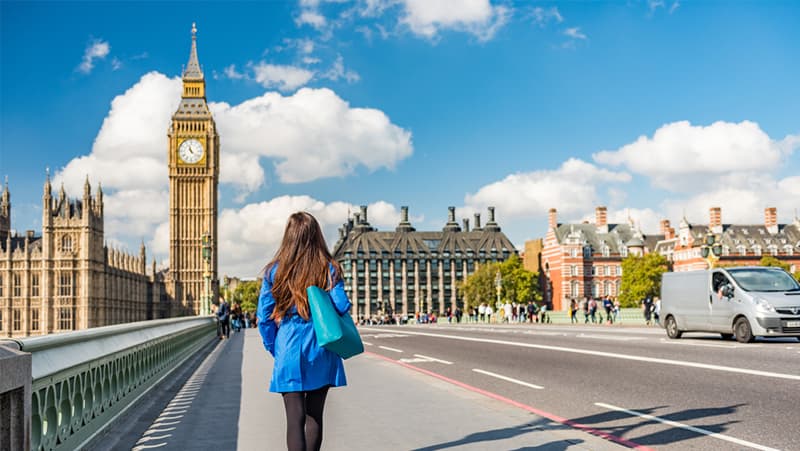
Studying in the UK provides a great opportunity to immerse yourself in British culture and traditions. Not only can you meet new people, try new food and explore different cities, you can also experience a range of different festivals that you might not celebrate in your own country.
While there are many British traditions and festivals, here are some of the oldest and most widely celebrated festivals that you can get involved in while you’re studying in the UK:
The top 5 British festivals
1. Halloween
So what is Halloween? Also known as All Saints’ Eve, Halloween is a celebration in many countries on 31st October, which honours religious Saints and the dead.
The tradition dates back to an ancient Celtic festival held on this day, where people would light bonfires and wear costumes to frighten away spirits. Later, in the 8th century, Pope Gregory III chose November 1st as a time to honour the saints.
While it remained a religious festival for many years, in the last century it has turned into a fun, yet spooky, holiday to celebrate. Children and young adults particularly enjoy Halloween and take part in a number of activities.
These include trick-or-treating where they knock on neighbours’ doors and ask for sweets, carving faces into pumpkins and watching horror movies. Let’s not forget dressing up in scary costumes, like a vampire, witch or zombie, and attending a fancy dress party!
There are lots of different ways to take part in this festival as a university student. In the UK, most universities normally organize Halloween parties on October 31st. And if you don’t like dressing up, it’s also a common tradition for cinemas to show horror films as an alternative Halloween celebration.
2. Bonfire Night
Also known as Guy Fawkes’ Night, Bonfire Night is a British festival that takes place on November 5th each year. So why do people celebrate bonfire night? It is a day that commemorates the anniversary of the Gunpowder Plot of 1605.
Guy Fawkes was a Catholic who didn’t agree with the King’s persecution of Catholics at the time. So, he developed a plan to blow up Westminster Palace in London while King James I and the members of parliament were inside. However, the plot was unsuccessful and he was sentenced to death.
When the people of London realized that the king had escaped assassination, they lit bonfires to celebrate. After this, King James I declared that November the 5th would be a public day of thanksgiving for the plot's failure. Nowadays, people celebrate this night with bonfires, fireworks, sparklers and toffee apples.
If you’d like to experience Bonfire Night, you’ll be able to attend organized outdoor gatherings with bonfires and fireworks displays around cities and in public spaces. Make sure to wrap up warm, as it gets cold during November evenings in the UK!
3. Christmas
Christmas is an annual religious festival celebrating the birth of Jesus on December 25th. However, both religious and non-religious people across the country celebrate this holiday. Although Christmas Day on December 25th is the main event, British people also celebrate Christmas Eve on December 24th and Boxing Day on December 26th.
There are a number of British Christmas traditions associated with this holiday. For instance, people eat turkey, hang up decorations and stockings, pull crackers, eat mince pies, give each other presents and even watch the Queen give a televised speech on Christmas Day.
If this is something that you’d like to experience you’ll have plenty of options in the UK. Many pubs and restaurants allow you to book a traditional Christmas meal. Moreover, many cities have a Christmas market in December where you can try mulled wine and buy gifts. It’s truly a magical time of year!
4. New Year's Eve
Shortly after Christmas, people in the UK and other countries around the world celebrate New Year's Eve on December 31st. It is the last day of the year before New Year’s Day, which marks the start of a new calendar year.
A festival that has been celebrated for centuries, British people recognise it as a night where they can welcome in a new year. At midnight on New Year’s Eve, it is tradition to set off fireworks and firecrackers, as well as celebrate with food and drink. Some families dance to Auld Lang Syne, a Scottish folk song which means ‘long long ago’ and is traditionally sung to farewell the old year.
Cities and towns around the country hold fireworks displays, parties and other events to celebrate this festival. If you’d like to join in you’ll be able to search for an event near you. Similarly, you can watch the BBC or another major television channel from your home - each year they broadcast live performances, interviews with celebrities and the countdown to midnight.
5. Easter
The end of winter and beginning of spring is celebrated in many countries across the world, and Britain is no different. In the UK, Easter heralds a week of celebrations for those who are both religious and non-religious.
Easter begins with Palm Sunday, which marks the beginning of Holy Week. This week includes Good Friday, a public holiday, Easter Sunday and ends with Easter Monday, also a public holiday. The date of Easter Sunday varies from year to year - in 2022 it will be on April 17th.
Nowadays, this festival offers an opportunity for families to get together and eat a traditional roast dinner. Some people decorate the dinner table with painted eggs, little yellow chicks, bunnies and spring flowers like daffodils, white lilies and tulips. It’s also tradition to buy family and friends chocolate eggs from supermarkets or chocolatiers.
If you’re interested in celebrating Easter in the UK, you’ll be able to book an Easter roast dinner at most pubs and restaurants, as well as buy chocolate eggs. There are also a number of Easter egg hunts that you can try. In London, for example, there’s an event where you have to search for chocolate eggs around the city. You can check your local area to see what they have organized.
Study in the UK
The opportunity to study in another country is an invaluable experience. If you choose the UK as a study destination, not only will you improve your English, you’ll also learn about UK culture, celebrate British traditions, and make some memories that will last a lifetime!
If you’re interested in experiencing life as a student in the UK, PTE Academic may just be what you need. This test is recognized as an official language certificate that can be used for UK visas to access 99% of British universities.
Discover how PTE Academic can help you achieve your goals.