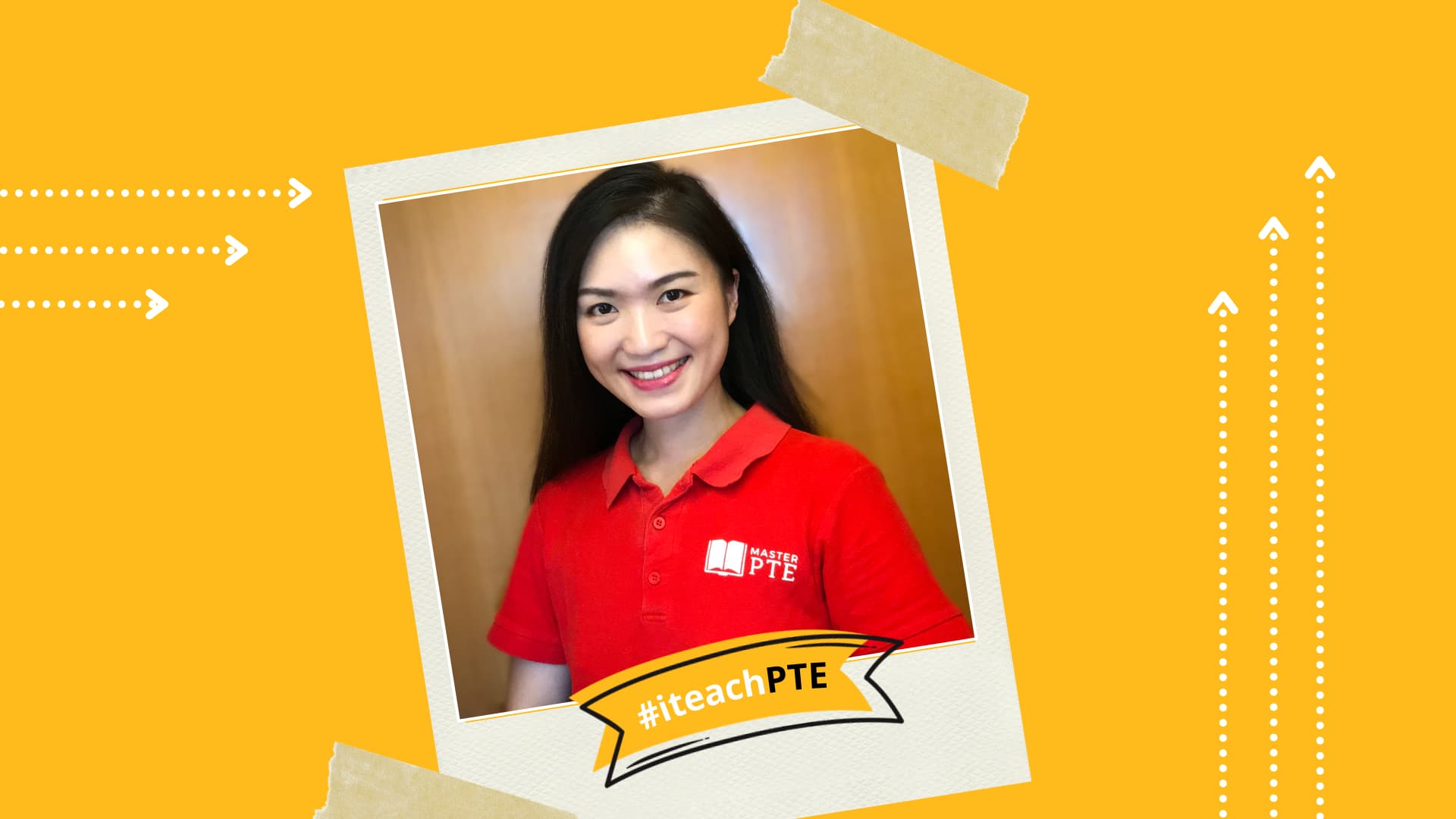

Teacher profile: Sharing the learning journey with PTE teacher Kelly Hoo

PTE Author
PTE Author
Image - Kelly Hoo #iteachPTE
Reading time: 6 minutes

Kelly Hoo is an English teacher based in Malaysia. She works with people from all over the world, helping them to prepare for PTE. But when Kelly first began learning English, she found it really difficult. She certainly never dreamed that one day she would be teaching English and running her own company!  

From student to teacher  

So how did Kelly go from learning English, to teaching other people how to get the score they need in PTE?  

Kelly’s first language was Mandarin, and she struggled a lot when first learning English. “I started my journey with IELTS,” she explains, “and then I discovered PTE.”  

Kelly was learning English in order to attend the University of Melbourne, where she studied for a Bachelor of Commerce. “I always thought I’d be an accountant,” she laughs. “But it wasn’t meant to be!”  

After graduating, Kelly went to work for Unilever, a big multinational corporation. But she found herself giving advice to people learning English, and being able to help people on their language-learning journey was really rewarding.  

“It started with sharing tips with other people who were learning English,” she says. “I’d been through the journey, so when I saw people struggling, I would always give them recommendations and advice.”  

Starting her own company 

From those small beginnings, Kelly went on to become a full-time teacher. The next step was starting her own English teaching company, Master PTE, where she is able to combine her passion for teaching with the expertise she gained in her business degree.   

But Kelly credits her success to the people around her. “It’s not just my own hard work,” she says. “Our team at Master PTE is amazing. My colleagues work so hard and do such a good job. Without them, I wouldn't be here, sharing my experience.”  

The company is now four years old, and in that time Kelly and her colleagues have helped lots of students build their English skills, prepare to sit PTE, and get the score they need.  

Helping students set manageable goals  

The team at Master PTE teaches students of all ages and levels, from all over the world, in a mix of online and in-person classes.  

“Thanks to Covid, we’re now doing hybrid classes,” explains Kelly, “a mix of online and face to face. Our clients are mainly working adults or students, so they’re very busy, and they need that flexibility.”  

At Master PTE, Kelly and her colleagues help students to break the big goal of getting the PTE score they need into smaller, more manageable goals.  

“We don’t ask them to do ten exam tasks in a day, because it’s impossible,” says Kelly. “We focus on what’s doable - a little bit of preparation each day, to make it easier for our students and give them a feeling of achievement, and the satisfaction that comes from that.”  

The skill that Kelly’s students struggle with the most is speaking. It’s a cultural problem, Kelly says, as in Malaysia, people are worried about making mistakes. “We want to boost their confidence and tell them to express themselves. I always tell students, Don’t be afraid to make a mistake. Just say what’s on your mind - it’s ok, we don’t judge people at Master PTE!”  

Speaking to a computer can also be a challenge for some students, but for others, a computer-based exam like PTE helps with their confidence. They prefer to speak to a computer rather than a human examiner.  

Kelly’s students are her inspiration  

One of the things Kelly loves about her job is meeting people from all over the world. “We have students from Japan, from Botswana, from India. It's amazing to connect with people and learn about their culture, their stories. The learning is definitely a two-way street in our classes!” she laughs.  

One of Kelly’s most inspirational students was from India. He was planning to sit PTE in order to move to Australia with his wife and young children. “When I first spoke to him, his English was at a really low level,” she explains. “I thought he would need a lot of preparation.”  

He started studying with Kelly, preparing for the test, and working hard every evening. “He was really burning the midnight oil,” she says, “as he was working full time too. He put in so much hard work, but he was doing it for his family, for his kids’ future, to give them a better life. I really admired his spirit - and I was so happy in the end when he got the score he needed after just two months of studying!”  

The importance of perspective 

Kelly has one piece of advice for other PTE teachers: always try to think from the students perspective.  

“Teaching English is easy for us,” she says. “We use English everyday. That’s why it’s so important to put yourself in your student’s shoes. Make sure they can absorb and retain the information you are teaching them.”  

From time to time, Kelly studies a new language like German, or Japanese, just to remind herself what it’s like to learn a new language.  

“I understand where the students are coming from,” she says. “I’ve been a learner too, and learning English as a second language isn’t easy.”  

That’s why Kelly is so focused on understanding each student’s situation, and making things a little easier for them by supporting them and creating a community that they are part of.  

“I always tell them, Don’t give up!” she says. “Learning can be fun and interesting.”  

Learn more 

For more insights into PTE preparation, have a look at the PTE blog, where you’ll find inspiration, advice, and lots of useful resources such as free lesson plans and preparation tools. And if you’d like to be featured on our PTE teacher profile series, just fill out this form!

Related Content

  • Do you need hospital experience to work as a nurse in the USA?
    Reading time: 4 minutes


    One of the most common questions asked by nurses considering employment in the United States is: 

    “Do I need hospital experience before I can apply?” 

    The answer is not always straightforward. Requirements can vary depending on the employer, healthcare facility, staffing agency, and state. 

    Understanding the difference between immigration requirements and employer requirements is critical.

    Immigration requirements vs. employer requirements 

     Many nurses assume that hospital experience is a mandatory requirement for US immigration. Eligibility and employer hiring criteria are often separate considerations. 

     While immigration pathways focus on professional qualifications and documentation, individual employers may establish their own separate hiring standards.

    Why employers value clinical experience 

    Healthcare employers often prefer candidates who have clinical experience, as it can help demonstrate that they can adapt quickly to patient care environments and clinical workflows. 

     Relevant experience may demonstrate: 

    • clinical competence 
    • confidence in patient care 
    • familiarity with healthcare systems 
    • ability to work in high-pressure environments 
    • professional maturity.

    Some employers may require specific amounts of recent bedside nursing experience, while others may offer opportunities to nurses with more limited experience.

    Common areas of experience sought by employers 

    Depending on staffing needs, employers may seek nurses with backgrounds in: 

    • medical-surgical nursing 
    • critical care 
    • emergency nursing 
    • operating theatre services 
    • long-term care 
    • specialty nursing fields.

     Demand can vary significantly by location and employer. 

    What if you have limited experience? 

    If you are early in your nursing career, don’t assume your US plans are impossible. Instead: 

    • continue building skills – seek opportunities to develop clinical confidence and broaden your patient care experience.  
    • Prepare other requirements – focus on completing English language testing, credential evaluations, and licensing requirements.  
    • Research potential employers – different employers have different expectations. Understanding these requirements early can help you plan your career development effectively.  
    • Speak with trusted recruitment partners – reputable recruiters can provide guidance on current market expectations and employer preferences. 

    Avoid making decisions based on rumors 

    One of the biggest challenges for aspiring US-bound nurses is the amount of conflicting information available online. It's important that you always verify information through official sources and trusted industry professionals before making major career decisions, so you can be assured that those decisions are based on accurate information. 

    Key takeaway

    Hospital experience can strengthen your application and expand your employment options, but requirements vary widely. The most effective approach is to understand your target employers, build your professional skills, and ensure your application remains as competitive as possible.

    We have more articles to support you on your nursing journey, so keep checking our inspiration and advice page for more. 

  • PTE vs IELTS vs TOEFL: Which English test is right for you?
    Reading time: 7 minutes

    If you’re applying to study, work or migrate abroad, you may need to prove your English level with an accepted test. PTE Academic, TOEFL iBT and IELTS Academic are three of the most widely used English proficiency tests, and all assess speaking, writing, reading and listening. 

    Short answer: start with acceptance. Choose a test your university, employer or visa authority accepts for your exact application. If more than one option works, compare the test format, speaking style, result speed, score requirements and available test dates before you book.

  • What makes a great English test?
    By Abi Fordham
    Reading time: 5 minutes

    A great English test should do more than produce a score. It should measure how people use English in the real world and provide a result that helps them move forward with confidence.