
5 part time jobs for international students in Australia

PTE Author
PTE Author
Card- Barista- part time job
Reading time: 5 minutes

Studying in Australia is a dream for many students. The country is known for its long stretches of white sandy beaches, rugged outback, and charming people. 

It’s also home to more than 1,100 world-class institutions - earning Australia a reputation for being a top study abroad destination. And don’t just take our word for it: 90% of international students reported being happy studying and living in Australia, according to a 2018 government report.  

For many international students, working in-between studies to pay for living expenses is also part of life in Australia. So what kinds of jobs are popular for students in the country? And what is the pay like? Let’s take a look:

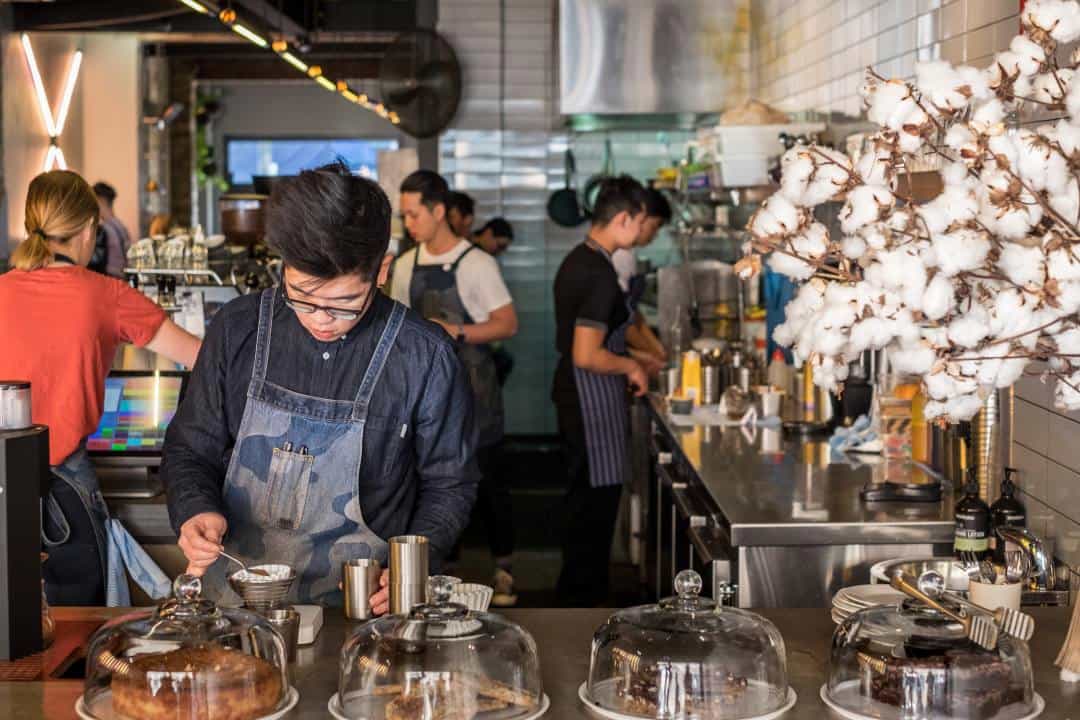
1. Barista 

Coffee culture is huge in Australia. Because the country is famous for its “flat white” drinks and quality coffees, there are many different cafes for international students to apply at. After all, where there is a demand, there will always be jobs! 

Of course, working as a barista requires that you have strong customer service skills, are proficient in English, and are familiar with popular coffee orders and how to make them (although your workplace will likely also train you). Because cafe culture is so important to Australians, a job serving coffee is arguably one of the best ways to feel immersed in the local culture.  

2. Bartender  

For students, being a bartender has many perks. The hours you work rarely conflict with regular university class schedules. Being a bartender is a great way to meet new people. You could also earn tips. Tipping isn’t part of Australian culture per se, however it is becoming more common to tip service staff a small amount to thank them for good service.  

If you’re interested in serving drinks, you could also consider getting a job at an Australian winery. Because Australia has so many wineries (about 2,361 in total), wine culture is not only a prevalent part of life in Australia. It’s also always usually a thriving industry with lots of job opportunities. 

3. Server 

Keen on the hospitality industry? Serving is another great job. And, even better if you get to work at a beachside restaurant. The University of AdelaideThe University of the Sunshine Coast, and The University of Melbourne are all institutions located by the coast, where international students have the opportunity to earn a living part-time while also experiencing Australia’s beautiful beaches.  

4. Hotel and hostel jobs 

A bonus of studying in a place that happens to be an internationally-famous vacation spot is that there are many jobs in hospitality. Students studying at institutions like The University of Tasmania, for example, can benefit from the local tourism industry by applying for jobs cleaning in hotels or cooking in hotel kitchens.  

Australia’s hostels are also great spots to look for a job. Foreign students would be a great fit for hostel jobs like receptionists because of their international experience, age, and language skills. The bonus here is that you will find yourself working amongst like-minded and fun travelers.  

5. Fruit picking 

Australia has plenty of fruit picking jobs throughout the country. Strawberry, blueberry, and avocado picking jobs, for example, are all common jobs available to students in Australia. They’re also quite common to come across. Recently, the government also announced they’d allow students working in agriculture to work more hours every week - which is a big plus! We share more on that below.  

How many hours can I work? 

When studying in Australia, one of the main regulations for international student visa holders is that  they can work up to 48 hours every two weeks while studying and unlimited hours during study breaks on an Australian student visa. 

The government changed those restrictions for students working in certain industries to support these sectors during the pandemic. Now, students can work unlimited hours in healthcare, disability care, aged care, agriculture, and tourism. 

What’s the minimum wage in Australia? 

Australia is known for its high minimum wage. The minimum wage in Australia is $24.10 per hour or $915.90 per week - this is a huge draw for many international students.   

Where should I look for work?

Your institution in Australia should have a career center to help you look for work. They should provide you with resume and interview tips, as well as a job board that lists open positions. We always recommend visiting your institution’s career centre when beginning your job search.  

There are also job sites like IndeedSeek, and Jobactive from the Australian Government’s Department of Education, Skills, and Employment. All of these sites list thousands of part-time jobs for international students to consider.  

Last updated 20 December 2024.

Ready to go? 

PTE can help you secure a spot at an Australian institution. Our test is faster, fairer, simpler, and accepted by all universities in Australia.   

Learn more about PTE Academic.

Related Content

  • Image- study group, 750px
    Why fluent English speakers don’t always get a perfect score
    By PTE Author
    Reading time: 2 minutes

    Being an experienced English speaker does not guarantee you a high score

    It can come as a surprise to test takers, who consider themselves to be fluent in English, that they can score less well in an English test than they expect.

    Dr. Alistair Van Moere, a member of Pearson’s Technical Advisory Group, explains that it’s not unusual for people who have recently learned English to score higher than those that have spoken English for a long time. This happens on all high-stakes tests, not just on PTE Academic, as fluent speakers are often not prepared to do the test. PTE Academic contains question types that a fluent English speaker may not have done for a long time, for example, writing an essay.

    This is why all test takers, including fluent English speakers, should prepare before test day.

  • Image - 2 Asian students - 800x600px
    Sitting PTE Academic for the first time
    By PTE Author
    Reading time: 3 minutes

    Choosing to study or migrate abroad is a big decision and may require you to demonstrate your skills in English.

    The Pearson Test of English Academic (PTE Academic) is widely trusted by universities, colleges, and governments around the world. Taking PTE Academic can create opportunities for you around the world.

    If you are taking the test for the first time, study each part of the test thoroughly to demonstrate your English skills as best you can.

    Even people that consider themselves to be fluent in English need to prepare as they can sometimes score fewer points than they should have as they have not prepared.

    We can help you achieve your best!

    What should I expect on test day?

  • Image - Woman reading- 800px
    Reading: Core English skills part 1
    By PTE Author
    Reading time: 5 minutes

    In PTE Academic Part 2: Reading, you will be required to read a text in each question to understand what it means in order to answer the question.

    To identify and develop your reading skills we’ve put together some information to help you.

    Grammar

    Grammar skills are important as they help you understand what you are reading. In Part 2: Reading you need to understand the meaning of the tense system, how articles work and how to use pronouns.

    Tense

    The tense system refers to the way in which you write about situations in the past, present or future. It’s important to be able to understand how time is expressed in reading texts in order to understand the meaning of the text.

    To learn more about the tense system view the Anglo-Link’s video on tenses.

    Articles

    In the reading section, you will also need to understand how articles work in English. Articles are words such as ‘the’, ‘a’ and ‘an’.

    Knowing how articles work will help you to understand the topic sentence in a paragraph and that will help locate an answer in a reading passage. This will help you with the Re-order Paragraphs question types in the test.

    Indefinite articles (or an) usually come before the definite article (the) before the same noun.

    For example, An eminent scientist worked for years trying to find a new species of exotic bird. She led team of three field researchers. One of the team members found the bird in tropical forest. Two years later the same team found another new species in the forest.

    You can learn how to use the correctly in this Oxford Online English video.

    Pronouns

    It’s important to also know what pronouns are to better understand the text you are reading. Pronouns are used to replace nouns so we do not have to keep repeating the same noun.

    Knowing how to use pronouns will help in the test, particularly in the Re-order Paragraph questions, as they help you identify the correct position of sentences within a paragraph.

    For example, Dr Gomez felt he needed to spend more time with his students when they were new to his faculty. There was so much information that he wanted to give them that he needed to spend more than a whole day with them, which surprised even himself.

    To learn more and practice using pronouns, visit Ginger Software’s pronoun page.

    Vocabulary

    Having a wide vocabulary will help you succeed in the PTE Academic test as you will not need to slow down for as many words that you do not understand.

    To widen your vocabulary you should:

    • Choose reading texts across a wide range of topics. Tip: Do not choose difficult texts.

    • Try to read the text and find words you do not understand, then try to work out the meaning from the context first. If you are still not sure, look the words up in a


    Word families

    When it comes to learning vocabulary, make sure to learn the word family of a word.

    For example, progress (noun/verb), progressive (adjective), progression (noun). To learn the words, use it ten times, in different ways, such as writing, speaking and reading within a short time.

    In PTE Academic you will need to know and demonstrate how to read a word, pronounce it correctly and how to spell it. You will also need to know if it is an academic or informal word and how to use it in a sentence.

    Learn more about three aspects of academic vocabulary in the Griffith University’s Learn English- Academic Vocabulary video.

    Context

    Another important skill to improve vocabulary is inferring unknown vocabulary from context. You should be able to guess the meaning of new words or phrases based on the words around it (the context).

    For example, you can guess the meaning of profligate from this sentence: The young man who spent all his money on expensive cars and holidays was so profligate that he wasted his whole fortune.

    Sometimes you will be unable to work out the meaning of a word from the context and will need to look it up in a dictionary.

    Collocations

    Lastly, you will need to understand collocations. Collocations are words that often go together. You will need to have a good understanding of collocations in order to answer the Reading: Fill in the Blanks and Reading & Writing: Fill in the Blanks questions.

    The more you read and listen to English, the more collocations you will learn. The PTE Academic Collocation List will also help you to learn these.

    You’ll also need to learn reading methods and styles of writing in order to do well in this part of the test. Read some helpful tips on how to improve these skills.