

Part 3: Listening Test Introduction

PTE Author
PTE Author
Image- Students at library- 800px
Reading time: 4 minutes

Part 3 of PTE Academic will take 45-57 minutes to test your listening skills.

This section is designed to test your ability to listen, read and write. PTE Academic is an integrated skills test, therefore, this test contains multiple question types that test up to 2 skills each.

There are eight question types in the listening section. A breakdown of these question types is as below.

Summarize Spoken Text

The first question type you will need to complete is Summarize Spoken Text, which will tests listening and writing skills.

To complete the task, a recording between 60-90 seconds long will be played for you to listen to. As you listen, try to use the Erasable Noteboard Booklet to take notes of key points to help you understand the context.

After the recording, you will have 10 minutes to write a summary of what you heard.

To answer this question type, you must write a minimum of 50 words but no more than 70 words.

You can receive a maximum of 2 points for content, 2 for form, 2 for grammar, 2 for vocabulary and 2 for spelling.

Multiple-choice, multiple answer

The second question type, Multiple-Choice, Multiple Answer will test listening skills.

First, you will be given information to help answer the question. You only have 7 seconds to read this. A recording will then play that is between 40-90 seconds long.

Select all the response options that you think are correct.

In this question type, you can receive 1 point for each correct option, but will lose -1 point for each incorrect option. You cannot score below 0.

Fill in the blanks

In the third question type, Fill in the Blanks, listening and writing skills will be tested.

Similar to the previous task, you will be given 7 seconds to read some information before hearing the recording.

A recording between 30-60 seconds will play. As you listen, type each word in the blank spaces as you hear them so that you do not miss any.

Do not leave any spaces blank, you can review them at the end.

You receive 1 point for each correct word which is spelled correctly.

Highlight correct summary

The fourth question type, Highlight Correct Summary, will test listening and reading skills.

You will be given 10 seconds before the recording starts to read the options. A recording will be played that is between 30-90 seconds long.

To complete the task, select only one correct response. If unsure, choose the one you think is correct as you cannot lose points in this question.

Your response will either be marked as correct or incorrect.

Multiple-choice, single answer

The fifth question type, Multiple-Choice, Single Answer will test listening skills.

To complete this task, you will be given information to read for context, you will then need to listen to a recording between 30-60 seconds long.

Choose the option that best suits.

Your response to this question type will be marked as correct or incorrect.

Select missing word

In the sixth question type, Select Missing Word, will test your listening skills.

A recording between 20-70 seconds long will be played and you will need to predict the last word or words of the text to complete the task.

You will be marked on this question type as either correct or incorrect.

Highlight incorrect words

In the seventh question type, Highlight Incorrect Words, your listening and reading skills will be tested.

In this question type, you will be shown information and have 10 seconds to read it before a recording starts.

A recording between 15-50 seconds will play and you will need to select the words that are incorrect and do not match the recording.

You can receive 1 point for each correct word and lose -1 point for each incorrect word. You cannot score below 0.

Write from dictation

The eighth and final question type, Write from Dictation, tests listening and writing skills.

You will have 7 seconds to read the instructions before the recording starts. The recording is between 3-5 seconds long and once it starts, listen and type the sentence in the response box.

You can receive 1 point for each correct word you write. Write the words in the right order and spell them correctly in order to receive 1 point. Points are not lost for incorrect words.

What's next?

We recommend reviewing the core listening skills required for PTE Academic.

Want more prep ideas?

Plus, explore Smart Prep, which combines all our practice materials in one place, so it's easier for you to stay on track with your PTE preparation.

  • Smart Prep is a clear path to test day, guiding you through the official paid and free resources available for your test

  • It can be accessed whether you’ve booked a test or not – just create, or sign in to your myPTE account

  • Preparation materials include guided practice tests, introductory videos, video courses and test tips.

Ready to get started?

Related Content

  • Image - woman on hill in Canada - 800px w
    Student guide: What is the cost of living in Canada?
    By PTE Author
    Reading time: 6 minutes

    Many students dream of studying in Canada. The country has world-renowned teaching facilities and universities, an open immigration system, metropolitan cities, and scenic landscapes. Altogether, it’s a great choice for international students.  

    Studying in Canada is not as expensive as studying in other countries, like the U.S. or U.K. However it is still a big investment. International students pay between $1,800-20,000 CAD per year to attend a Canadian university or college.  

    But, what’s the cost of living in Canada? Canada is a big country and prices vary by region. Nevertheless, the EduCanada government website estimates the average cost of living for foreign students is about $12,000 CAD a year.  

    In this guide, we outline how much students across Canada pay for things like rent, transportation, entertainment, and food – and look into some hidden costs that everyone should keep in mind. 

    Here is our student guide on the cost of living in Canada: 

    Accommodation costs by city  

    When you’re studying in Canada, you can choose between living on-campus or off-campus. Living on-campus is a great opportunity to socialize with other students and make friends. Most institutions also give students on-campus the option to buy a meal plan. But, keep in mind that many universities and colleges prioritize first-year students for on-campus housing.  

    You might also decide to rent an apartment or room off-campus instead. There are lots of housing options in neighborhoods close to universities and colleges – and these are often advertised specifically for students.  

    To give you an idea about how much accommodation will cost, we take a look at some popular Canadian study destinations. Keep in mind, off-campus housing prices might fluctuate because of the pandemic. 

    Toronto  

    At the University of Toronto, on-campus housing for eight months ranges from about $6500- $20,500 CAD, depending on the room and meal-plan. A one-bedroom apartment in Toronto costs about $2,100 CAD/month on average.  

    Vancouver 

    At the University of British Columbia in Vancouver, a room and meal-plan will cost you between $10,700-$13,850 CAD for two terms. A one-bedroom apartment in the city center costs $2,050 CAD/month on average.  

    Montreal 

    At McGill University in Montreal, a single room for 1st-year undergraduate students costs between about $9,700-$12,700 CAD/academic year, without a meal plan. A one-bedroom apartment costs 1,300 CAD/month on average. 

    Halifax 

    At Dalhousie University in Halifax, a single room costs between $8,130-$9,450 CAD/academic year with a meal plan. A one-bedroom apartment costs about $1,400 CAD/month on average.  

    Waterloo 

    At the University of Waterloo, a single room in a traditional-style dorm costs between about $6,700-$7,000 CAD for the fall and winter term, not including a mandatory meal-plan. A one-bedroom apartment costs about $1,500 CAD/month on average.  

    Food costs  

    If you don’t have a meal plan and live off-campus, you must include grocery shopping in your budget. Of course, food prices are different across the country and depend on where you decide to shop.  

    Let’s take a quick look at how much essential items may cost in Canada’s largest city, Toronto:  

    • Milk (about $3 CAD)

    • Rice, 1kg (about $3.50 CAD)

    • Apples, 1kg (about $4 CAD)

    • Red meat, 1kg (about $16 CAD)

    • 12 eggs (about $3.50 CAD)

    According to the City of Toronto’s Nutritious Food Basket Calculator, a male aged 19-30 must spend a minimum of $65.50/week to buy healthy food. A female the same age living in Toronto must spend about $51 CAD/week to buy healthy food.  

    Transportation costs in Canada 

    How much is the average cost of transportation in Canada? Many international students rely on public transportation to get around. And oftentimes, transport costs are included in tuition fees – giving you unlimited access to the city’s whole transportation system.  

    But in some cities – like Toronto and Montreal – you can buy your own pass at a reduced fare. In Montreal, a student pass costs $53 CAD/month. In Toronto, which is a much more expensive city, a pass costs $128 CAD/month.  

    Outside of larger cities, it can also be useful to have a car, especially if you are used to driving at home. But, keep in mind this can cost a lot extra. To get an idea of how much it costs to drive a car in Canada, check out this driving costs calculator by the Canadian Automobile Association (CAA).  

    Entertainment costs 

    Canada offers many cultural and outdoor activities for you to enjoy. You can find world-class music festivals, skiing and snowboarding, and giant sporting events like basketball, hockey, and baseball games.  

    Of course, you will also still get to enjoy many things you did at home. Here are a few things you might like to do in Canada, along with how much each costs:  

    • Visit a renowned museum (many offer free evenings, and entrance for young people or students) 

    • Meet a friend for coffee ($1.76 CAD at coffee chain Tim Hortons) 

    • Rent skates and go ice-skating outdoors (about $10 CAD)

    • Watch a movie in theaters (about $15 CAD)

    • Eat dinner at a casual restaurant (about $15-25 CAD)

    Insurance costs 

    Canada has a publicly-funded health system. However, each province and territory administers its own healthcare. Whether or not you can receive publicly-funded medical coverage will depend on where you are in Canada.  

    If you don’t qualify for public healthcare, your institution might require you to enroll in a specific insurance plan or find your own private coverage. You should check with your institutions about exactly what coverage you need to study safety in Canada.  

    Hidden costs 

    Lots of hidden costs arise when studying abroad, and there are a few things students in Canada should keep in mind.  

    For one, it is expensive to own a cellphone in Canada. In fact, cell phone bills in Canada are among the highest in the world. Canadians pay $101 CAD/month, on average, for a cellphone plan.  

    You will also need to buy warm winter clothing – including a jacket, boots, socks, gloves, hat, and scarf. You can expect to pay about $300-$400 CAD for these items brand new. However, thrift stores might also carry winter clothing for much cheaper.  

    Finally, you shouldn’t forget about Canadian sales taxes. Taxes in Canada are higher than many places in the world and range from about 12%-15%.
  • Image- UK, 800px x 451px
    Cost of living in the UK
    By PTE Author
    Reading time: 4 minutes

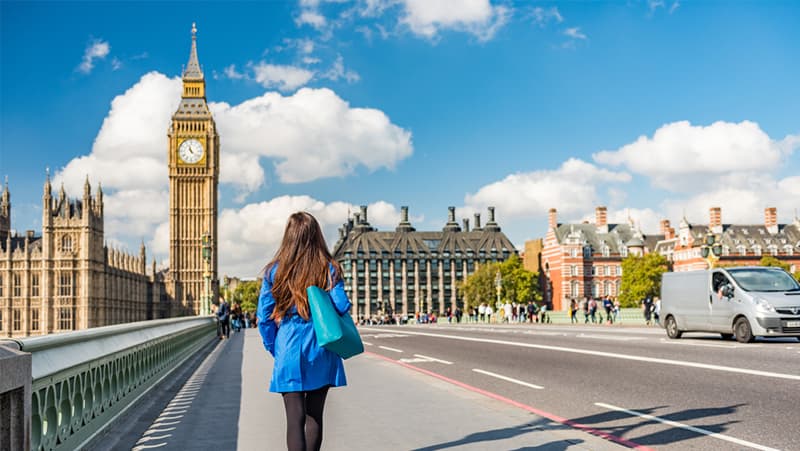
    You may have heard that London is one of the most expensive places in the world to live in, but fortunately, London, and by extension, England, does not equate to the whole of the UK. In fact, many UK towns and cities are very liveable when compared to other cities across the globe.  

    There is quite a bit to look at when considering the cost of living in the UK. Apart from tuition fees, there’s also the cost of rent, transport, and even entertainment – because if you’re living in the UK, there’s no way you should miss out on everything that this great country has to offer- from the food to the culture.  

    Let’s look at some aspects of the UK cost of living, so you can best adjust your budget and prepare yourself for a new life abroad. 

    Calculating living costs in The UK 

    When looking at the cost of living in the UK, it’s best to use an online currency calculator to convert your currency to the British pound – that will give you a better idea of the true cost of living in relation to your country. 

    Here’s a rough guide to the currency conversions we have used in this article, dated March 27th, 2020:

    • AU$1,000 = £500

    • US$1,000 = £805

    • €1000 = £895

    Once you have a better understanding of the conversion rate, you can better interpret how much rent, utilities and other everyday costs will affect your budget.  

    A weekly UK budget 

    There are so many factors that contribute to the UK cost of living that it’s impossible to give you a set cost for each week. But a recommended starting point for a budget for a single student in the UK, per week, averages out to about £300. Let’s see how we got to this number (please note these costs are an average from across UK metropolitan cities, outside of the city center). 

  • Image- Australia, 609px
    12 Aussie slang words you need to know
    By PTE Author
    Reading time: 5 minutes

    If you dream of studying in Australia, be prepared to learn some slang. Aussies are known for their use of informal language. Many consider it part of their national identity.

    As this article by two Monash University linguists points out, Australia’s attachment to slang actually goes all the way back to some of the earliest English settlements in the country. 

     So, what slang words should you know before traveling “down under”? Here are 12 popular Australian slang words to get started: 

    1. Arvo

    “Arvo” means afternoon. According to the Australian National Dictionary Centre, the word was first recorded in 1920. In Australian English, an “-o” is commonly added to shortened words. Two examples are “ambo” (ambulance driver) or “rello” (relative) – but there are many more. 

    How to use it: I’m meeting my sister in the park on Sunday arvo.  

    2. Barbie

    “Barbie” is a short form of barbeque. In Australian English, “-ie” is also added to lots of abbreviated words. The word “selfie” is a good example of this; it was coined by an Australian man in 2002!  

    How to use it: We’re having a barbie tomorrow – do you want to come?  

     3. Chucking a sickie 

    “Chucking a sickie” means to take a sick day from work when you are not sick – or without a proper reason. Look, there’s that “–ie” again. 

    According to a 2018 study, nearly half of Australians who take off sick are actually chucking a sickie.  

    How to use it: I’m going to chuck a sickie on Monday to spend an extra day with my family. 

    4. Give someone a bell

    “To give someone a bell” simply means to call someone on the phone. It’s a term used both in Australia and the U.K.  

    How to use it: I’ll give you a bell tomorrow when I’m out of class. 

    5. Hard yakka

    “Hard yakka” means work hard. The word “yakka” – which first appeared in the 1840s – derives from the word for work (yaga). It comes from Yagara, an Indigenous language in Australia. 

    In fact, many Australian English words derive from Indigenous languages. Take a look at some more examples on ABC Learn English. 

    How to use it: Studying for my final English exam was hard yakka, but worth it.  

    6. Macca’s

    “Macca’s” is a nickname for Mcdonald’s. If you used the term Macca’s in the U.S. or Canada, you’d get some funny looks. But the term is very common in Australia. In fact, McDonald’s changed its name to Macca’s at stores across the country for Australia Day in 2013 – and still refers to itself as Macca’s today.  

    How to use it: I’m craving a cheeseburger. Where’s the closest Macca’s?  

    7. Mate

    “Mate” is a popular word for friend. And while it’s used in other English-speaking countries around the world, it has a special connection to Australia. In the past, mate has been used to address men,  but it can be gender-neutral.  

    In Australia, you’ll also hear mate used in an ironic sense. If someone is upset with an athlete’s play, for example, they might yell at the T.V.: “maattee!”  

    How to use it: G’day mate, how are you doing? 

    8. No worries 

    “No worries” is a common way to say that something is no bother – or even to say you’re welcome. It’s often used to assure people that everyone will be alright, and not to worry.  

    How to use it: “Thanks for taking that shift at work for me!” – No worries, I don’t mind at all.  

     9. She’ll be right

    “She’ll be right” is an optimistic way to say that everything will turn out okay in the end.  

    Now, why is the pronoun she used? “Australian English often uses the feminine pronoun she where standard English would use it. For example, instead of ‘it’ll be right’ Australians say ‘she’ll be right’,” explains the Australian National Dictionary Centre.  

     How to use it: I’m worried about applying to a university abroad. But I know if I work hard, she’ll be right.  

    10. Uey

    A “uey” is a U-turn. When you say it, it sounds like “You E”. Instead of saying make a uey, you’re more likely to hear an Australian say chuck a uey.

    How to use it: We’re going in the wrong direction! Chuck a uey up ahead to turn around.  

     11. Uni

    “Uni” is an abbreviation for – you guessed it – university. The word uni is used in both Australia, New Zealand, and the U.K.; and while it’s not very common in Canada or the U.S., most people would still understand you if you said it. There are 43 unis in Australia – you can take a look at them here. 

    How to use it: My best mate from uni just had a baby. She looks just like him!  

     12. Veggo

    A “veggo” is a vegetarian. About 3% of the population in Australia say they’re vegetarian, while just 1% are vegan. But if you’re a veggo, you won’t have any issues shopping. There are lots of meat and dairy-free options available in supermarkets and restaurants.  

    How to use it: My brother is a veggo. He cooked some amazing veggie burgers on the barbie last weekend.