Consider these 6 destinations to study abroad

PTE Author
PTE Author
Image- Norway -800px
Reading time: 5 minutes

You can still study abroad and stick to a budget. In fact, many of the cheapest countries to attend university are also some of the most beautiful places in the world.

In this blog, we’ll explore 6 affordable international study destinations. And the great news is PTE Academic – our English language proficiency exam can help you achieve your study abroad dream at these amazing places. Let’s delve in:  

1. Norway 

Norway isn’t just picturesque. It’s also one of the cheapest countries to study in for international students. Most universities in Norway are publicly funded and don’t charge tuition fees – even for foreign learners. While some private universities do charge tuition – between €7000-€19,000 – international students aren’t required to pay more than Norwegians.  

It is important to keep in mind, however, that the living costs in Norway are high. It can cost international students between €800 –€1400 per month to live in the country. But there are some grants and scholarships available to help students fund their time abroad. You can check them out here.  

Overall, Norway offers world-class education and an excellent standard of living. Medical services are usually free for international students and many courses are taught in English, making it a great place to study abroad. 

PTE Academic is accepted at top institutions in Norway including University of Oslo, UiT The Arctic University of Norway, Norwegian University of Science and Technology (NTNU). 

Find out where else PTE Academic can take you in Norway.

 2. Malaysia 

With high-ranked universities and the fastest growing regional economy in the world, Malaysia is also an excellent destination to consider. The country boasts more than 100 higher education institutions – including branches of universities like Monash University and the University of Nottingham.  

A bachelor’s degree for international students (not studying medicine) costs about $10,000-$20,000 USD at a public institution, and significantly more at an international branch campus.  

However, the thing that makes Malaysia attractive is its low cost of living. Kuala Lumpur, the country’s capital city, is ranked by QS Best Student Cities Rankings as the second most affordable student city in the world. Rent in a shared apartment in Malaysia can cost as little as $50-$250 USD per month.  

To learn more about how much it costs to live in Malaysia, visit the government’s website here.  

PTE Academic is accepted at top institutions in Malaysia including Universiti Malaya (UM), Universiti Sains Malaysia (USM), and Universiti Teknologi Malaysia (UTM). Find out where else PTE Academic can take you in Malaysia. 

 3. Spain 

Spain has a great climate, a relaxed lifestyle, and more than 70 universities to choose from. And yes, it also offers affordable tuition fees. Tuition for EU/EAA students at a public university can range from just €150-€3500.  Keep in mind though, if you’re coming from a country outside the EU/EAA, your tuition fees could be higher.  

The cost of living for international students in Spain ranges from €700-€1,100 a month. Many courses here are also taught in English, making Spain a good choice if you’re interested in improving both your English and Spanish skills.  

PTE Academic is accepted at top institutions in Spain including Universidad de Granada. Find out where else PTE Academic can take you in Spain.

 4. France 

France is a surprisingly affordable place for international students to study. It’s also incredibly popular – more than 350,000 students enroll in the university there each year. France’s public universities charge just €170 per year for a bachelor’s degree for EU/EAA students. But like in Spain, if you’re a non-EU/EAA citizen, fees are likely to cost more.  

The cost of living is more expensive in larger cities like Paris. But in smaller cities, you can expect to pay around €650 per month.  

PTE Academic is accepted at top institutions in France including Université Paris 1 Panthéon-Sorbonne. Find out where else PTE Academic can take you in France. 

5. South Africa

South Africa is renowned for its natural beauty and rich culture – it has 11 official languages, which is more than any other country in the world. It’s also home to the top-rated university in Africa: University of Cape Town.  

Tuition for a bachelor’s degree in South Africa is reasonably inexpensive compared to locations and will cost international students between €6000–€7000 per year. Living costs are also only about €550 per month. 

Find out how PTE Academic can help you to study at University of Cape Town. 

6. Greece 

Last but not least, Greece is one of the most affordable study destinations in Europe.  Most students from the EU/EEA can study for free, while all other students could pay up to €2000 per year. 

Greece also boasts low costs of living. Students can expect to pay between €450-€750 per month – and some students in financial need can live on campus for free. Better yet, between studies, international learners can soak up the sun while spending time on Greece’s beautiful beaches. What’s not to love?  

Ready to kickstart your dream of studying abroad?

Many top-rated international institutions offer courses in English and require you to take an English language test.  

PTE Academic is recognized by universities around the world – find out who accepts PTE Academic.

Related Content

  • Video thumbnail for the video, 'Learn how PTE Academic uses AI to mark tests'
    How do you know PTE Academic’s computer marking works?
    By PTE Author
    Reading time: 2 minutes

    How do we know automated scoring works

    Are you thinking of taking PTE Academic, or have you recently taken it, but you are wondering how it is that a computer can mark your test?

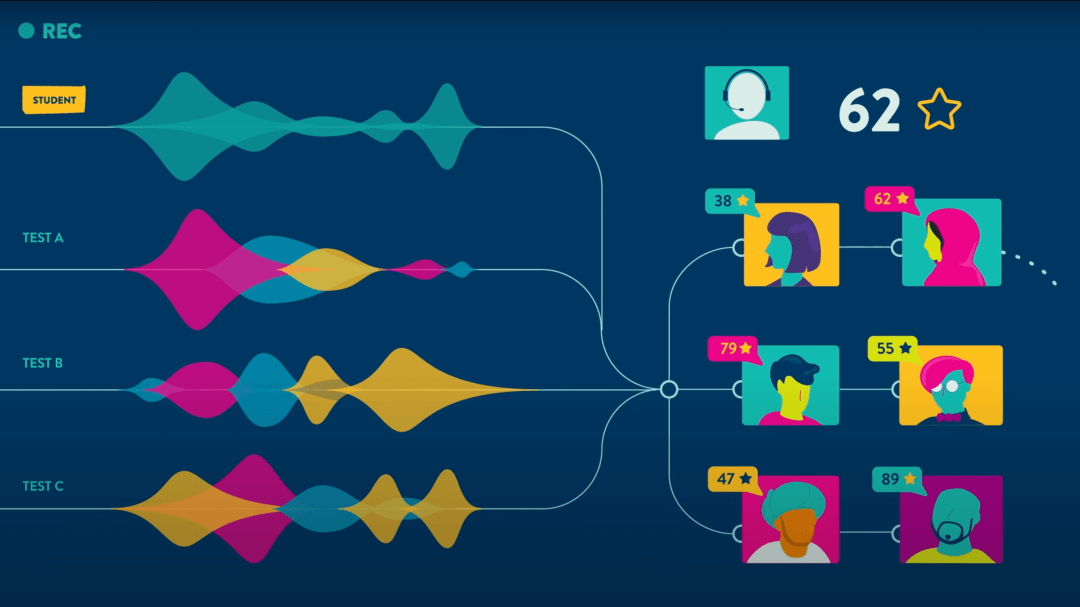
    Well, firstly the test has been designed by humans, all leading experts in their field. Our human experts design and write the questions, quality assure them, and then score them. At this point, computers are trained to use the patterns of highly trained language experts to attribute scores to questions. When the computer marks correlate highly with the human scores, we then allow the computer to mark test scripts from across the world.

    As a result of our processes and technology, the computer behaves like an expert human examiner – but without any possible bias, lack of concentration, or variation between individual examiners.

    The scoring criteria are exactly the same as human scoring – test takers are marked on their delivery, clarity, relevance, the accuracy of grammar, and appropriateness of vocabulary.

    Want to hear more?

    Take a couple of minutes and listen to one of our leading independent advisors, Dr. Alistair Van Moere, a member of Pearson’s Technical Advisory Group, as he explains how it all works.

  • Image- student at class 800px
    Reviewing Test Performance
    By PTE Author
    Reading time: 2 minutes

    If you have completed PTE Academic, you would know by now that it is scored against the Global Scale of English and that you need to practice many skills for each part of the test: Speaking & Writing, Reading, and Listening.

    After completing PTE Academic you will receive an email notification that your results are available online. Typically within 2 days. Learn how to access your Score Report.

    What does my Score Report mean?

    When you receive your Score Report it will show you your overall score, which is based on your performance across all test items. Your communicative skills that are measured are listening, reading, speaking and writing.

    This is an example of what your Score Report may look like.

    The enabling skills are those skills that are required to fulfill the question types in the test. It’s important to know what each of these skills refers to.

    Grammar

    Correct use of language with respect to word form and word order at the sentence level.

    Oral Fluency

    Smooth, effortless and natural-paced delivery of speech.

    Pronunciation

    Production of speech sounds in a way that is easily understandable to most regular speakers of the language. Regional or national varieties of English pronunciation are considered correct to the degree that they are easily understandable to most regular speakers of the language.

    Spelling

    Writing of words according to the spelling rules of the language. All national variations are considered correct, but one spelling convention should be used consistently in a given response.

    Vocabulary

    Appropriate choice of words used to express meaning, as well as lexical range.

    Written Discourse

    Correct and communicatively efficient production of written language at a textual level. Written discourse skills are represented in the structure of a written text, its internal coherence, logical development, and the range of linguistic resources used to express meaning precisely.

    How do I identify my areas of weakness?

    From the visual graph on your Score Report, you will be able to see areas you need to improve on. You should aim to develop your core (enabling) skills required across all areas of the test.

    The following resources will help you develop your enabling skills:

    How can I improve in each part of the test?

    It’s also worth focusing on particular parts of the test or questions you think you had trouble with. The following articles may help you improve your skills across questions:

    If you don’t already have one, it’s recommended to work with an English teacher to work through areas that may need improvement.

    Good luck!

  • Image- A guy with headphones and laptop
    Listening: Self-Improvement Part 1
    By PTE Author
    Reading time: 3 minutes

    After working through the strategies to improve your English listening skills, you can work on specific areas of the test. In this part, you will need to apply a number of listening and writing skills.

    Below are improvement tips on the question types that combine writing and listening skills.

    Summarize Spoken Text

    In the Summarize Spoken Text questions you will be scored on content, form, grammar, vocabulary, and spelling.

    Content and Form

    Make sure you write a good, clear summary of all the key points in the text and also condense the most important supporting points.

    In this question, you will not be given the context of the recording before it starts. Make sure to listen carefully from the start to help understand the context and the information given.

    Some helpful tips for the content and form, to maximize your score are:

    • Take notes on your Erasable Noteboard Booklet or in the response box on the screen

    • Do not try to write down sentences (you will not have enough time)

    • Use symbols and abbreviations in your notes

    • Write down key points and their relationships with others

    • Start with an overview sentence to introduce your summary

    • Use cohesive devices to link the information as you write

    • Try to write between 50 and 70 words

    Overall, make sure you summarize the text in your own words as this will show that you have understood the purpose of the text. If you do not write in your own words, you will score zero for content.

    If you write less than 40 or more than 100 words, you will score zero.

    Grammar

    It is important that grammar is correct as you will be tested on sentence structure, punctuation and capitalization.

    Try not to be too ambitious with your grammar to avoid making mistakes. Try to use grammatical structures you feel comfortable with.

    In this question type you should:

    • Communicate meaning clearly and concisely

    • Use complex sentences where possible to score more points

    • Write sentences between 18 and 30 words – long sentences are hard to control grammar

    • Check your response for common errors before submitting

    Vocabulary and Spelling

    You will score points if you use the correct and appropriate vocabulary in the Summarize Spoken Text question type. Use words from the recording if you use them appropriately, however, try to use synonyms to replace words already used.

    You will also need to make sure to spell every word correctly to receive maximum points. Try to type as carefully as possible during this question. If you can not remember how to spell a word, guess as it is better to include the word than leave it out, even if it is incorrect.

    Don’t forget to use the space bar to show the end of each word.

    Write from Dictation

    Another question that tests both listening and writing is the Write from Dictation question type.

    In this question type, you will need to write the words in the correct order with the correct spelling in order to score points.

    Before the recording starts, place your cursor in the response box and get ready to type as soon as you hear the recording. Make sure to reproduce what you hear exactly as you heard it as the recording will only be played once.

    Remember to start the sentence with a capital letter and end it with a full stop (period).

    Type as you hear it and when finished, check for any mistakes. Always make sure that to read over your answer before clicking next.

    Continue improving your listening skills by reading our Listening: Self-Improvement Part 2 article.