Which English test should I take to migrate to Australia or New Zealand?

PTE Author
PTE Author
Image- Cornell university 800px
Reading time: 3 minutes

PTE Academic can help you get there

If you want to migrate to Australia or New Zealand you may be required to sit an English test as part of your visa application. Or you may need to sit a test as part of a  skills assessment or for professional registration.

The question is “which test should I take?”

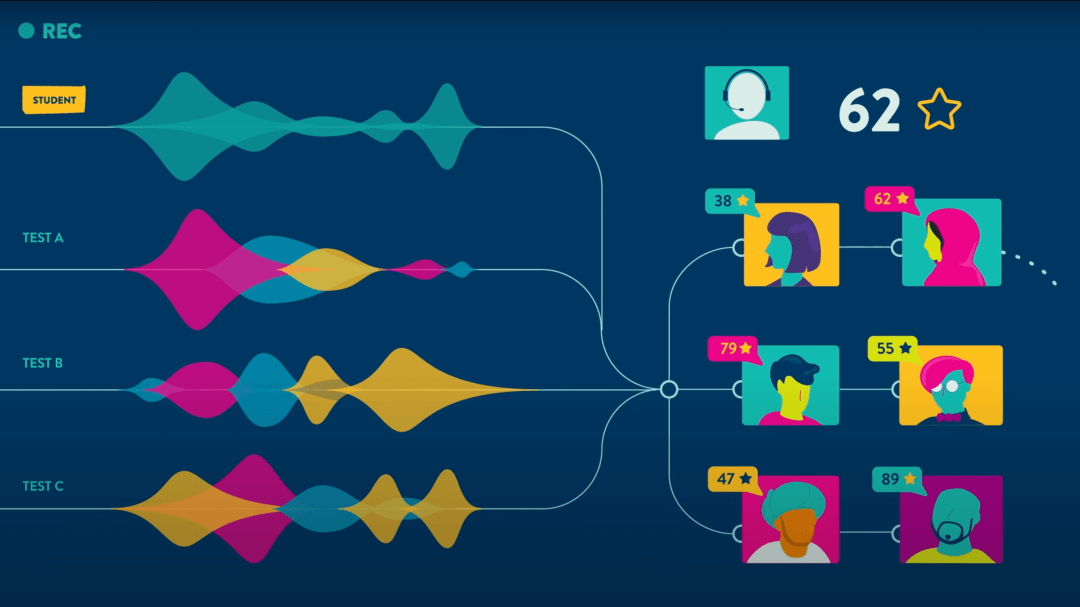
There are a range of language tests you can choose from. However, the Pearson Test of English Academic (PTE Academic) is the market leader in computer-based English language testing. PTE Academic is delivered entirely on a computer and then scored by a computer, using Pearson’s automated scoring technology.

The PTE Academic English test is accepted by Australia’s Department of Home Affairs (DHA) and Immigration New Zealand (INZ) for all visa applications. This includes Permanent Residency, Employer- Sponsored/Work Visas, and Student Visas.

Further, PTE Academic is accepted by most Australian skills assessment authorities and professional registration bodies including:

  • Australian Health Practitioner Regulation Agency (AHPRA)

  • Australian Nursing and Midwifery Council (ANMAC)

  • Certified Practicing Accountants Australia (CPA Australia)

  • Chartered Accountants Australia and New Zealand

  • Australian Computer Society (ACS)

  • Engineers Australia

How does PTE Academic’s technology help me?

You will sit PTE Academic on a computer in one of Pearson’s secure test centers. Pearson then uses its automated scoring technology to ensure that your English skills are assessed with complete fairness. Your responses are scored objectively and consistently, no matter where in the world the test is taken, so it doesn’t matter where a test taker comes from or what they look like.

The use of the automated scoring technology also allows PTE Academic to deliver test results typically within2 days, in comparison to other English languages tests which take 2-3 weeks.

Where can I take the test?

Booking PTE Academic is a simple online process. Simply choose one of our 240+ test centers in 400+ test centers in 117 countries, then select a convenient test time and date. We test 365 days of the year around the world.

Plus you can also schedule your test up to 24 hours in advance where seats are available.

Interested in studying abroad?

When studying abroad in a course taught in English, you will often need to prove how your English language skills. With PTE Academic you can apply to thousands of universities and colleges around the world including:

  • All universities in Australia, Ireland, and New Zealand, including all New Zealand Institutes of Technology and Polytechnics.

  • All TAFE and Institutes of Technology and Polytechnics in Australia and New Zealand.

  • Prestigious institutions such as Stanford University, Harvard University, and Imperial College London accept PTE Academic scores.

  • In the USA, Canada, UK, Singapore, and Europe, PTE Academic is continuing to grow.

You can view a complete list of institutions that accept PTE Academic on the website.

Learn more

You should always check with government bodies and institutions for the latest score requirements and tests accepted.

Related Content

  • Image- At cafe
    Speaking: Self-Improvement Part 1
    By PTE Author
    Reading time: 3 minutes

    In Part 1 of PTE Academic, you will require many core English skills to pass. It is very important that you prepare and look at ways you can maximize your score.

    We’ve put together some tips to help based on each question type.

    Read aloud

    In the Read Aloud question type, you will be scored based on content, oral fluency and pronunciation.

    As part of this question type, you will need to speak aloud and say all the words in the correct order.

    Here are some tips to help maximize your chances of receiving points:

    • Make sure you do not replace any words, leave any words out or add any. If you make a mistake and try to correct it, it will be counted as added words.

    • Once prompted, you must speak into the microphone right away and read with a smooth, easy natural speed. Try not to speak too fast or too slow.

    • Use English rhythm with chunking and sentence stress used correctly.

    • Try not to hesitate or repeat words as you will lose points.

    Repeat sentence

    The Repeat Sentence question type is scored based on the same elements as the Read Aloud question type: content, oral fluency and pronunciation.

    Here are some tips to help gain points in this question type:

    • Say all of the words in the exact same order. Do not rush.

    • Do not use the Erasable Noteboard Booklet, keep the sentence in your head.

    • It’s easier to keep the sentence in your mind if you understand the meaning. Try to understand the meaning.

    • If unsure of a word the speaker used, say what you think you heard.

    • Do not speak too fast or slow.

    • Similar to read aloud, use English rhythm with chunking and sentence stress. You will also lose points in this question type if you hesitate, repeat words or stumble to start.

    • Speak with the sounds of an English speaker and copy the intonation pattern of the speaker, but do not change your accent.

    Describe image

    In the Describe Image question type, you will be scored based on content, oral fluency and pronunciation.

    To be able to describe the image, you will need to understand it as it could be a graph, picture, map, chart or table. Always read the title and make sure you understand the parts that make up the image.

    Some extra tips include:

    • Use the Erasable Noteboard Booklet to take notes about the image, which you can use in your answer. For example, if the image is a graph, chart or table, is there a trend you can comment on? If it’s a map or picture, what are the important features?

    • Include all aspects and elements of the image in your answer.

    • Start with a general statement about the image then summarize the most important points.

    • If there are words on the image you want to use but are unsure how to pronounce them, don’t worry, just say them how you think they should be said.

    • Try using connector words to link the information you give. For example, use words such as: also, however, as or besides.

    You can receive up to 5 points based on your content. In order to score above 1, you will need to include the relationships between parts of the image, possible developments and conclusions or implications of the information in the image.

    Don’t forget to talk with a smooth, natural speed at all times during the speaking test.

    In total, there are five speaking sections of Part 1: Speaking and Writing.

    We recommend that you read more about the other question types such as Re-tell Lecture and Short Answer Question types and learn how to pick up points for these.

    Want to learn more about the smart way to prepare for PTE?

    Smart Prep brings all our free and paid preparation into one convenient place, so you can mix and match to fit your unique needs.

    • Smart Prep provides a clear path to test day, guiding you through the official paid and free resources available for your test

    • It can be accessed whether you’ve booked a test or not – just create, or sign in to your myPTE account

    • Preparation materials include guided practice tests, introductory videos, video courses and test tips.

  • Image- study group, 750px
    Why fluent English speakers don’t always get a perfect score
    By PTE Author
    Reading time: 2 minutes

    Being an experienced English speaker does not guarantee you a high score

    It can come as a surprise to test takers, who consider themselves to be fluent in English, that they can score less well in an English test than they expect.

    Dr. Alistair Van Moere, a member of Pearson’s Technical Advisory Group, explains that it’s not unusual for people who have recently learned English to score higher than those that have spoken English for a long time. This happens on all high-stakes tests, not just on PTE Academic, as fluent speakers are often not prepared to do the test. PTE Academic contains question types that a fluent English speaker may not have done for a long time, for example, writing an essay.

    This is why all test takers, including fluent English speakers, should prepare before test day.

  • Image - 2 Asian students - 800x600px
    Sitting PTE Academic for the first time
    By PTE Author
    Reading time: 3 minutes

    Choosing to study or migrate abroad is a big decision and may require you to demonstrate your skills in English.

    The Pearson Test of English Academic (PTE Academic) is widely trusted by universities, colleges, and governments around the world. Taking PTE Academic can create opportunities for you around the world.

    If you are taking the test for the first time, study each part of the test thoroughly to demonstrate your English skills as best you can.

    Even people that consider themselves to be fluent in English need to prepare as they can sometimes score fewer points than they should have as they have not prepared.

    We can help you achieve your best!

    What should I expect on test day?