

How do we keep language testing fair for everyone?

PTE Author
PTE Author
man on laptop
Reading time: 5 minutes

Fair and accessible English language testing starts with a simple promise: your score should reflect your ability, not your background or circumstances. With PTE, we ensure fair language testing by clearly defining what we assess, designing the test to include everyone from the beginning, checking for bias through statistical and quality checks, and providing accommodations so all candidates can show their skills.

This candidate-focused approach is based on global best practices, clear validation, and ongoing monitoring. It means using simple language, fair content, strong scoring, and a process that makes things easier for test takers.

The goal is to create a trustworthy assessment experience that helps with important life decisions in education, work, and migration, while treating every test taker with respect and fairness.

The importance of fairness in language assessment

Fairness in language testing means treating everyone equally, avoiding bias, offering accessible tests and making sure scores are meaningful. This ensures that results show what the test is meant to measure, not irrelevant factors like culture or disability.

Decisions about immigration, jobs, and university placements depend on these scores, so fairness is essential.

When tests are unfair, they can embed cultural references, specialist knowledge, or delivery barriers that put some groups at a disadvantage and reduce trust in the results.

Recent discussions highlight problems with irrelevant content and inconsistent accommodations, emphasizing the need for clearer language and stronger checks in language testing.

What makes a test fair:

  • Equitable content that is accessible to diverse candidates

  • Unbiased design and delivery that removes irrelevant barriers

  • Valid, reliable scoring tied to clearly defined constructs

How Pearson PTE ensures fair assessment for all candidates

We build fairness in from the start and verify it throughout the test’s lifecycle:

  • Diverse expert review: Test content is created and checked by diverse panels in terms of gender, language background, and region to identify sensitive issues and reduce irrelevant differences, following fairness and inclusive design guidelines.

  • Clear construct definition: This task focuses on English skills like listening, reading, speaking, and writing, so knowledge of specific topics or culture doesn't affect the results.

  • Statistical monitoring for bias: We conduct Differential Item Functioning (DIF) and related analyses to check whether items behave differently for subgroups (e.g., gender, disability, ethnicity), a core practice for ensuring fairness.

  • Transparent validation and feedback: We publish key test information, scoring guidance, and policies, and invite feedback from candidates and institutions to inform updates.

Our language tests are designed to include everyone, avoid bias, and make sure all candidates are treated equally and can show their true abilities.

Addressing cultural and linguistic bias in test design

Test bias happens when content or methods unfairly favor or disadvantage certain groups because of language, culture, or experience, not because of actual skill. To prevent this, we include experts from target markets, follow sensitivity guidelines, and test items with representative samples.

Localization is used carefully to make content clearer and more culturally relevant without changing the original English meaning, as cultural and language differences can affect test fairness.

Accessibility and accommodations in language testing

Accessibility in language testing makes sure all candidates, including those with disabilities, can show their skills. This is done through simple design, helpful accommodations, and easy-to-access testing methods. Using clear design, assistive technology, and standards-compliant interfaces helps fairly measure ability.

Under many legal frameworks, candidates are entitled to reasonable testing accommodations (see our information on accommodations).

We evaluate accessibility requirements in language testing on a case-by-case basis to ensure accommodations are appropriate and do not change the test's intent. All of our test centers adhere to local disability laws. Accessible testing benefits both universities and applicants by broadening participation and reducing.

The role of technology in promoting fairness and inclusion

AI and automation help deliver personalized results and detailed scoring by covering more real-world language use. However, they need careful bias checks and human oversight to ensure fairness.

How to utilize technology fairly:

  • Define the constructs first, then select the technology that measures them accurately.

  • Build inclusive, standards-aligned interfaces and test for assistive tech compatibility.

  • Pilot with diverse users across a range of devices and bandwidths.

  • Apply bias checks to AI models and item pools and document the decisions.

  • Offer secure, flexible access at our test centers with clear privacy controls.

  • Monitor operational data and candidate feedback; iterate quickly.

In short, making language testing fair and accessible is a complex task that needs ongoing effort, careful thinking and responsible use of technology. By maintaining high standards, including different viewpoints, and paying attention to ethics, testing organizations can build more trust and welcome more people, helping individuals and the broader education community.

Explore our published research and find out more.

Frequently asked questions

How do language tests identify and reduce cultural bias?

Language tests use diverse expert panels, sensitivity reviews, piloting, and statistical analyses like DIF to detect and remove biased content so it reflects proficiency, not background.

How does technology impact access to language testing for all candidates?

Technology makes access easier through online and remote tests, but programs must ensure fair device use, good internet, accessibility, and privacy to prevent new obstacles.

Why is fairness important in high-stakes language assessments?

A fair test makes sure your scores show your real language skills, not influenced by things like your culture, looks, accent, gender, or a disability. This also helps governments and organizations trust that your results are accurate and reliable.

How do testing organizations monitor fairness over time?

This will vary by company, but with PTE, we continually conduct statistical and qualitative research, publish findings, gather candidate feedback, and update content, delivery, and policies to address evolving needs.

Related Content

  • Man-looking-at-plane-airport-1026x580
    How to move to the UK with a Skilled Worker visa
    By PTE Author
    Reading time: 5 minutes

    Would you like to live and work in the UK? You’re not alone. The number of people who apply to work in the UK rises year after year. But if you’re planning to move to the UK, you’ll need a visa. There are lots of different types of visas available – and one of the most popular is the Skilled Worker visa.

    Let’s take a look at the details of who can apply, the English language requirements, and the test you have to take in order to show you have the right level of English for the Skilled Worker visa.

    1. What are the latest UK work immigration trends?

    Apart from a pandemic-related dip in 2020, immigration to the UK has been steadily rising for the last decade. In 2021, there were 239,987 work-related visas granted – a 110% increase on the previous year, and a 25% increase on 2019. 

    Of these 239,987 visas, 63% were Skilled Worker visas. This type of visa saw the largest growth from 2019 at an increase of 33%. That means that, of all the people moving to the UK to work, the majority of them (almost two thirds, in fact) apply for the Skilled Worker visa. 

    India, the Philippines, Nigeria, the United States and Pakistan were the top five countries of origin for people who were granted Skilled Worker visas in 2021. 

    2. What is the UK Skilled Worker visa?

    The UK Skilled Worker visa is a visa that allows you to come to the UK and work for an approved company. You can live in the UK for up to five years before you need to renew your visa. You can apply for the visa up to three months from your starting date of work, and you should receive a decision in around three weeks if you’re outside the UK. The visa application fee is between £610 and £1,408, depending on your personal circumstances. 

    If you work in healthcare – for example as a doctor or a nurse – you can apply for the Health and Care Worker visa instead, which is cheaper to apply for, and doesn’t require you to pay an annual immigration health surcharge. 

    3. What kinds of workers can apply?

    An extensive number of careers and professions are covered by the Skilled Worker visa, from architects to bakers, and hairdressers to chefs. You can see if your profession is eligible by checking the full list of occupations. 

    In order to meet the requirements to be eligible for a Skilled Worker visa, you’ll need to make sure not only that your job is eligible for the visa, but also that your employer has been approved by the Home Office. 

    You also need to ensure that you’ll be paid at least the minimum salary for the type of work you’ll be doing in the UK. You’ll be expected to earn:

    • £25,600 per year

    • £10.10 per hour

    • the ‘going rate’ for the type of work you’ll be doing

    Whichever of these three options is the highest, that’s the information you’ll use for your visa form. 

    However, if your job is on the list of Skilled Worker visa shortage occupations, you will only have to be paid 80% of the job’s usual going rate. 

    4. What are the English requirements for the UK Skilled Worker visa?

    In order to apply for the Skilled Worker visa, you’ll need to show that you have recently passed a secure English language test at the right level to be able to live and work in the UK. There is a list of countries that are exempt, but everyone else will need to show that they speak English to at least a B1 level on the CEFR scale. It’s a key requirement when it comes to a successful visa application! 

    The only exemption is if you have a qualification at degree level in English (either a Bachelors, Masters or PhD); if you have a degree, you don’t need to sit an English test. 

    5. What is PTE Academic UKVI?

    PTE Academic UKVI is an English test which is approved by the UK Home Office for visa applications. It tests you on all four language skills: writing, speaking, reading, and listening. 

    To sit the test, you will attend an official test center, where you will take PTE Academic UKVI on a computer. The entire test is computer-based, and takes around two hours. After sitting the test, you will typically receive your results within 48 hours. 

    6. How can you get the score you need in PTE Academic UKVI?

    In order to meet the requirements of the Skilled Worker visa, you will need to score a minimum of 43 on your PTE Academic UKVI test. The best way to make sure you get the score you need is to prepare as thoroughly as possible for the test: 

    Get to know the test format

    It’s really important to get to know the test format very well before you sit PTE Academic UKVI. The test content is exactly the same as PTE Academic. The test is split into three sections: Speaking and Writing, Reading, and Listening. There are 20 different types of questions across the three different sections. Each question type follows a specific structure. It’s important to learn about the different question types. You will need to use specific techniques for each question to make sure you get the highest possible score.  

    Learn how the questions are scored

    In the test, different questions are scored in different ways. On some questions, you’ll be marked on whether you’ve given a correct answer. But in others, your score will be affected by how closely you followed the instructions (i.e. did you go over the word limit) and the quality of your response, which is affected by things like pronunciation and oral fluency. You can find out how we score each question in our test format guide.

    Study with official preparation materials

    There are lots of different preparation materials for PTE Academic UKVI. You will be able to prepare using Scored Practice Tests which will allow you to sit a mock test and see what score you would receive. This will tell you what questions and skills you need to work on.

    There’s also the Official Guide to PTE Academic, a textbook which offers an in-depth guide to the test and gives you detailed advice on the techniques and strategies you will need to get the right score. The PTE Academic Question Bank has over 300 questions for you to practice with. Explore our preparation materials in our preparation guide.

    Take a preparation course

    Lots of people prepare for PTE Academic UKVI on their own, but others find it helpful to do a preparation course. You could also do the six hour online speaking course run by Pearson partner Macquarie University. Or, look for a preparation course near you.

    With the right preparation, you’ll be sure to get the score you need to apply for your UK Skilled Worker visa and achieve your dream of living and working in the UK!

  • Image- Big Ben
    Olivia’s Chevening dream: a decade in the making
    By PTE Author
    Reading time: 5 minutes

    The Chevening scholarship is a route to studying in the UK for people all over the world. It offers the brightest and best the opportunity to study for a Master’s at a British university. Since 1983, Chevening has helped over 50,000 professionals pursue their studies and become leaders within their communities and sectors.  

    Chevening scholar Olivia Rondonuwu grew up in Jakarta, Indonesia. Her background was in journalism and she dreamed of studying social policy in the UK. But her path to becoming an international Master’s student wasn’t a straightforward one.  

    The importance of determination 

    Olivia knew several successful people working in journalism who’d been awarded Chevening scholarships. As a journalist, she’d interviewed high profile people who were alumni of LSE. Her ambition was to become one of the female leaders in the Indonesian media, focusing on Indonesian social policy.  

    “I had been thinking about the scholarship for ten years,” she says. “My dream was to study social policy at the London School of Economics, but of course, I couldn’t afford it.”  

    Competition for the scholarships is fierce, as Olivia discovered the first time she applied to the Chevening scholarship. She got to the interview stage, but she wasn’t successful. Then she applied again - and this time, she didn’t reach the interview stage.  

    However, Olivia wasn’t deterred from pursuing her dream of studying in the UK - and on her third application for the Chevening scholarship, her persistence paid off. “I couldn’t believe it,” she says. “It didn’t seem real until I got on the plane to London. It had been such a long process - I was so happy to finally be going to study in the UK.”  

    Studying at the London School of Economics  

    So how was Olivia’s first day in London? “It was horrible,” she laughs. “The weather was awful, and my bus got stuck in a traffic jam. In Indonesia, if you’re in a traffic jam, you can just get off the bus and jump on a motorbike taxi – but in London, you can’t do that! And at lunchtime, it seemed like the only option was cold sandwiches – British people love bread!” 

    As Olivia started the MSc in Social Policy and Development, doubts started creeping in. Had moving to London to study been the right choice for her after all?  

    Imposter syndrome affects a lot of students who are studying at top universities. At times, they can feel that they don’t belong there. And Olivia felt that, as an older student, she was at a disadvantage, compared to other students who’d gone straight into the Master’s from their undergraduate degree. “I was thirty six,” she explains, “so I was older than a lot of the other students. I felt that I was too old to be there.”  

    Luckily, it didn’t take Olivia long to shake off these doubts. As the course went on, she was able to recognise the value of her experience as a journalist, and gain in confidence and self-belief.  

    “You have to look inside yourself,” she explains, “and find the confidence to say, I’m a future leader.” And of course, she’d been waiting for so long to study at LSE -  meaning that she really appreciated every moment, and was able to make the most of this amazing opportunity.  

    A personal transformation and a new network 

    Once Olivia got over her imposter syndrome, she found herself gaining more and more confidence, thanks in part to the academic culture at LSE and the focus on critical thinking. “It was quite different from Indonesian academic culture,” Olivia explains.  

    “Here, you are encouraged to think more critically about your opinion on a topic.” She found that building her critical thinking skills helped with her self-belief. “Once you have the confidence in yourself, it helps you to dare to be different,” she says.  

    The other thing that Olivia loved about her Chevening experience was meeting other students from all over the world. “I was amazed by how international the group was - there were students from Latin America, from Afghanistan,” she says. “It was very competitive, but very international.”  

    Studying in the melting pot of a London university was a fantastic way to build a global, professional network. 

    Advice for other international students 

    Before Olivia travelled to London, she was given lots of advice by the UK embassy in Jakarta. “They warned us about the weather,” she says. “They even recommended getting a special lamp in case we suffered from seasonal affective disorder!”  

    But when Olivia is asked what her words of advice were for other international students, her answer is perhaps surprising. “Be brave and embrace it, the bad and the good,” she says. “Enjoy every minute. Yeah, some days the weather will be grey, but enjoy it! It’s all part of the experience of studying in the UK. So enjoy every minute - learning, networking, living in London.”  

    Though she will admit – she still doesn’t like sandwiches for lunch!  

    Learn more 

    In order to study at a UK university and apply for a UK student visa, you’ll need to prove your level of English. PTE Academic is a fast, reliable, computer-based test that is accepted by 99% of UK universities and the UK Home Office as proof of your English language skills. You’ll typically receive your scores in just two days - so you won’t have a long wait for your results, and can get on with the application process!  

    Learn more about how PTE Academic can help you study in the UK.

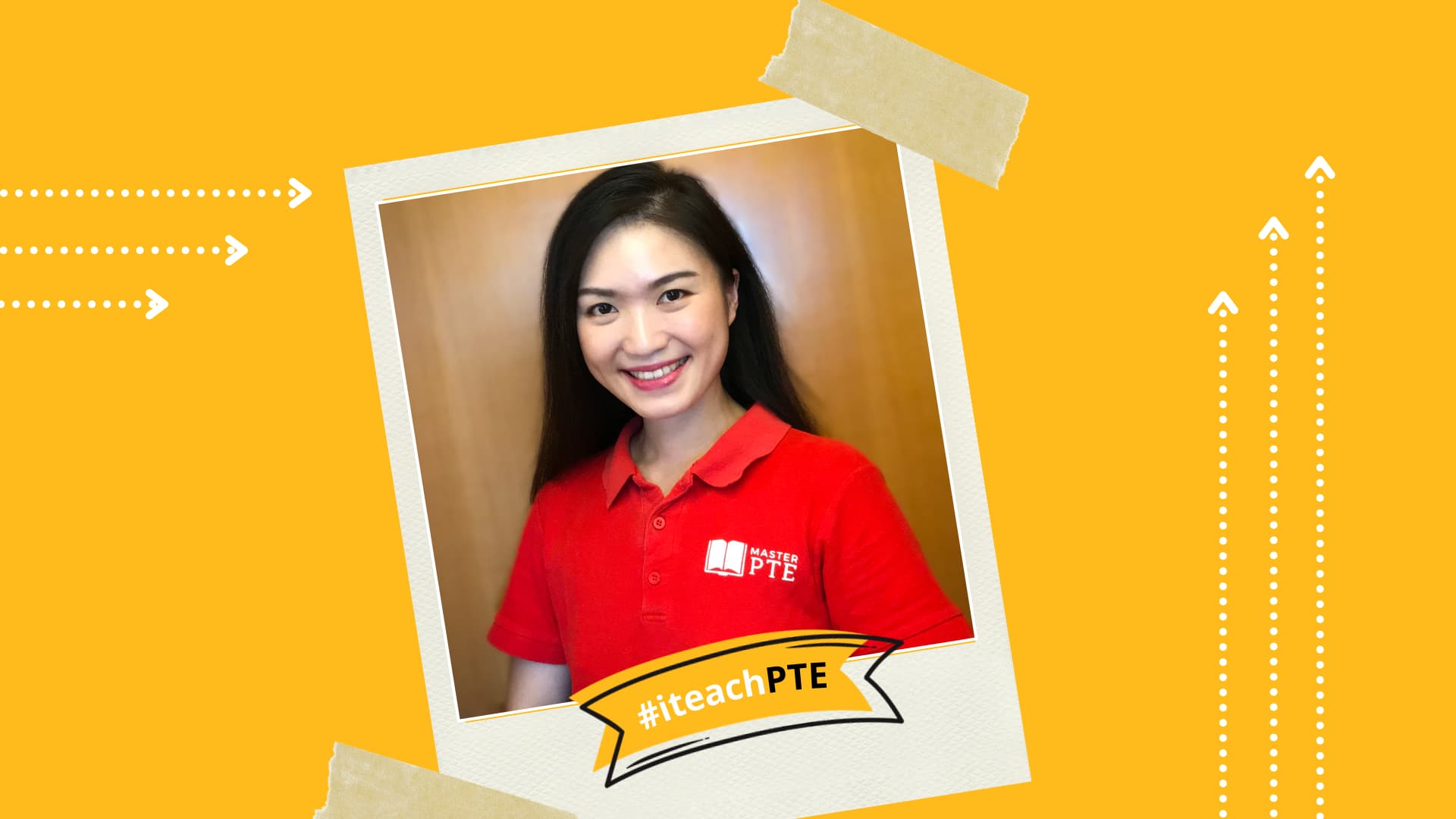
  • Image - Kelly Hoo #iteachPTE
    Teacher profile: Sharing the learning journey with PTE teacher Kelly Hoo
    By PTE Author
    Reading time: 6 minutes

    Kelly Hoo is an English teacher based in Malaysia. She works with people from all over the world, helping them to prepare for PTE. But when Kelly first began learning English, she found it really difficult. She certainly never dreamed that one day she would be teaching English and running her own company!  

    From student to teacher  

    So how did Kelly go from learning English, to teaching other people how to get the score they need in PTE?  

    Kelly’s first language was Mandarin, and she struggled a lot when first learning English. “I started my journey with IELTS,” she explains, “and then I discovered PTE.”  

    Kelly was learning English in order to attend the University of Melbourne, where she studied for a Bachelor of Commerce. “I always thought I’d be an accountant,” she laughs. “But it wasn’t meant to be!”  

    After graduating, Kelly went to work for Unilever, a big multinational corporation. But she found herself giving advice to people learning English, and being able to help people on their language-learning journey was really rewarding.  

    “It started with sharing tips with other people who were learning English,” she says. “I’d been through the journey, so when I saw people struggling, I would always give them recommendations and advice.”  

    Starting her own company 

    From those small beginnings, Kelly went on to become a full-time teacher. The next step was starting her own English teaching company, Master PTE, where she is able to combine her passion for teaching with the expertise she gained in her business degree.   

    But Kelly credits her success to the people around her. “It’s not just my own hard work,” she says. “Our team at Master PTE is amazing. My colleagues work so hard and do such a good job. Without them, I wouldn't be here, sharing my experience.”  

    The company is now four years old, and in that time Kelly and her colleagues have helped lots of students build their English skills, prepare to sit PTE, and get the score they need.  

    Helping students set manageable goals  

    The team at Master PTE teaches students of all ages and levels, from all over the world, in a mix of online and in-person classes.  

    “Thanks to Covid, we’re now doing hybrid classes,” explains Kelly, “a mix of online and face to face. Our clients are mainly working adults or students, so they’re very busy, and they need that flexibility.”  

    At Master PTE, Kelly and her colleagues help students to break the big goal of getting the PTE score they need into smaller, more manageable goals.  

    “We don’t ask them to do ten exam tasks in a day, because it’s impossible,” says Kelly. “We focus on what’s doable - a little bit of preparation each day, to make it easier for our students and give them a feeling of achievement, and the satisfaction that comes from that.”  

    The skill that Kelly’s students struggle with the most is speaking. It’s a cultural problem, Kelly says, as in Malaysia, people are worried about making mistakes. “We want to boost their confidence and tell them to express themselves. I always tell students, Don’t be afraid to make a mistake. Just say what’s on your mind - it’s ok, we don’t judge people at Master PTE!”  

    Speaking to a computer can also be a challenge for some students, but for others, a computer-based exam like PTE helps with their confidence. They prefer to speak to a computer rather than a human examiner.  

    Kelly’s students are her inspiration  

    One of the things Kelly loves about her job is meeting people from all over the world. “We have students from Japan, from Botswana, from India. It's amazing to connect with people and learn about their culture, their stories. The learning is definitely a two-way street in our classes!” she laughs.  

    One of Kelly’s most inspirational students was from India. He was planning to sit PTE in order to move to Australia with his wife and young children. “When I first spoke to him, his English was at a really low level,” she explains. “I thought he would need a lot of preparation.”  

    He started studying with Kelly, preparing for the test, and working hard every evening. “He was really burning the midnight oil,” she says, “as he was working full time too. He put in so much hard work, but he was doing it for his family, for his kids’ future, to give them a better life. I really admired his spirit - and I was so happy in the end when he got the score he needed after just two months of studying!”  

    The importance of perspective 

    Kelly has one piece of advice for other PTE teachers: always try to think from the students perspective.  

    “Teaching English is easy for us,” she says. “We use English everyday. That’s why it’s so important to put yourself in your student’s shoes. Make sure they can absorb and retain the information you are teaching them.”  

    From time to time, Kelly studies a new language like German, or Japanese, just to remind herself what it’s like to learn a new language.  

    “I understand where the students are coming from,” she says. “I’ve been a learner too, and learning English as a second language isn’t easy.”  

    That’s why Kelly is so focused on understanding each student’s situation, and making things a little easier for them by supporting them and creating a community that they are part of.  

    “I always tell them, Don’t give up!” she says. “Learning can be fun and interesting.”  

    Learn more 

    For more insights into PTE preparation, have a look at the PTE blog, where you’ll find inspiration, advice, and lots of useful resources such as free lesson plans and preparation tools. And if you’d like to be featured on our PTE teacher profile series, just fill out this form!