

How your English test score can improve in a short time

PTE Author
PTE Author
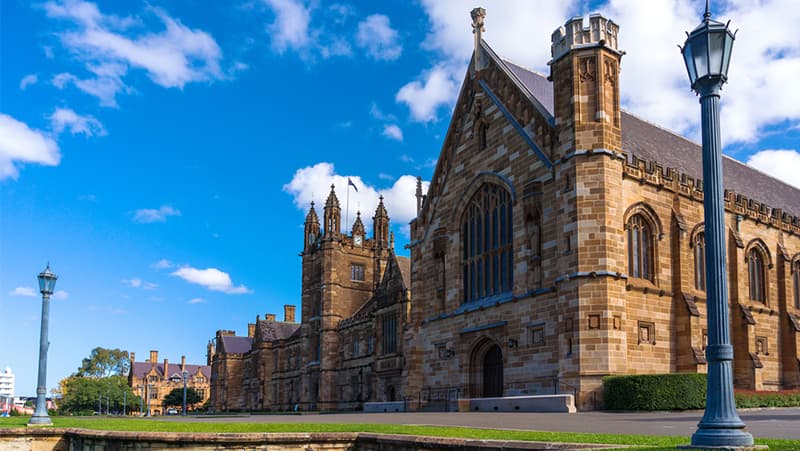
Aerial image of Oxford University

If you need to improve your English test score quickly, the biggest gains usually come from using your time more precisely, not from spending more hours studying. When time is tight, improvement depends on how well you understand:

  • what to expect from the test experience,

  • how your responses are scored, and

  • where you can most improve your current performance.

In this article, we explain how you can prepare more efficiently for Pearson Test of English (PTE) Academic by focusing on test understanding and targeted practice that aligns to your own strengths and weaknesses.

How will familiarity with the test save me time?

When time is limited, lack of familiarity with the test is one of the most common reasons scores do not reflect true language ability. PTE Academic is fully computer-based and uses a defined set of task types. Within each task type, you’ll see a consistent structure, including how information is presented, how you respond, and how much time you’re given.

Knowing and becoming comfortable with the test format reduces hesitation and lost time during the test. This matters because the scoring system can only evaluate the language evidence you produce. When you spend less mental effort on navigation and timing, you are more likely to give complete, continuous responses, which leads to better scoring outcomes.

Further reading:


How will understanding scoring help me focus efficiently?

Your test score will improve when you give responses that align more closely with what the scoring system is designed to measure.

PTE Academic uses automated scoring for all tasks, with different approaches depending on the task type. Some tasks are scored as correct or incorrect, while others award partial credit across multiple traits, such as oral fluency, pronunciation, grammar, vocabulary, spelling, and written organization.

This scoring design is important for short-term improvement because partial-credit tasks allow you to gain points even when responses are not perfect.

Clear meaning, continuous delivery, and relevant content can raise several skill scores at the same time. Understanding this helps you avoid spending limited time on areas that have little influence on your overall result.

Further reading:


How do scored practice tests help when time is limited?

Mock tests are one of the most effective tools for improving English test scores quickly because not only do they give you valuable test practice, they also show your likely current score under real test conditions.

PTE Academic has Scored Practice Tests that reflect official task types and scoring behaviour. They help you understand two critical things: your starting score range and where you might be losing scoring marks.

These insights allow you to distinguish between language gaps and performance issues related to timing, task understanding, or response length. When preparation time is short, this distinction is essential. It prevents unfocused study and allows you to concentrate on the skills and traits that are actually holding your score below your target.

Further reading:


How do I know if my target score is realistic?

Start by understanding what scores you need for your chosen visa or study application, then find out what your own score potential is currently. PTE’s official Scored Practice Tests can help you understand your current overall score and individual skill scores – giving you insight into how near you are to your target and where any gaps remain.

Reaching your target may depend on improving your performance for one or more specific skills. For example, if your target is 65, but your listening is currently at 45, you will need to raise that skill significantly; it would make sense to focus your study time in this area. To improve your English skill, a realistic pace for most learners is:

  • 5-10 PTE points: 4-6 weeks of consistent practice

  • 11-20 points: 2-3 months

  • 20+ points: 4-6 months or more

If your timeline is shorter than what your score gap requires, you may need to adjust either your target or your timeline. But do bear in mind that you can often close smaller gaps by focusing on understanding the test format and scoring.

Further reading:


Pulling familiarity, scoring, and practice together

The fastest score improvements usually happen when these three elements work together.

  1. Familiarity with the test format ensures you can demonstrate your ability smoothly.

  2. Understanding how scoring works helps you prioritise responses that generate more usable language evidence.

  3. Scored practice tests show whether changes in familiarity and response quality are moving your performance toward your target score.

Because PTE Academic uses consistent task design and scoring logic, improvements in how you respond tend to carry forward from practice into the live test. This makes it possible to improve your score within a relatively short period, even if your underlying proficiency has not changed dramatically.


What to focus on when time is short

  • Get comfortable with the test experience so time and attention stay on language, not navigation

  • Understand how scoring works so effort aligns with impact

  • Use scored practice tests to identify your starting score and weakest areas

  • Focus preparation on pulling your performance toward the next realistic score band


Frequently asked questions


How can you improve English test scores quickly?

You improve scores fastest by reducing wasted effort. This means becoming familiar with the test format, understanding how responses are scored, and focusing your time on the skills and traits that most affect your result.


Can improving test familiarity really change your score?

Yes. In PTE Academic, unfamiliarity with task flow, timing, or response expectations can limit how much language evidence you produce. When you are familiar with the format, you are more likely to complete responses fully, which allows the scoring system to evaluate your ability more accurately.


What does a scored practice test tell you that study alone does not?

A scored practice test shows how your current English performs under test conditions. It helps you see whether your score is limited by language ability, by specific skills such as listening or speaking, or by performance factors like timing and task understanding.


Why do some improvements affect more than one score?

Many PTE Academic tasks assess multiple skills in a single response. When you improve clarity, fluency, or accuracy in these tasks, the same response can contribute to more than one skill score, which can accelerate overall improvement.


Is it possible to improve your score without improving your overall English level?

To some extent, yes. Scores often improve because you present your existing ability more clearly and consistently, not because your underlying proficiency has changed significantly. This is especially true when familiarity and pacing improve.


How do I know if I’m close to my required PTE score?

Taking a Scored Practice Test will help you identify how close you are to the score you need. It will also give you insights to help you focus on improving the skills or question types that will make the biggest impact for you.

Related Content

  • Image- international students, 1080px
    The UK’s new Graduate route: post-study work visa requirements
    By PTE Author
    Reading time: 5 minutes

    International students in the UK now have the option to stay longer after graduation. 

    Back in March, the UK’s Home Office announced the Graduate route. This will let students continue living in the UK for two to three years after finishing their studies. It’s a big deal, giving students the opportunity to begin their careers, as well as set long-term goals for themselves abroad.

    “As we rebuild from the global pandemic we want the world’s brightest talent, who aspire to a career at the highest levels of business, science, the arts and technology to see our United Kingdom as the natural place to fulfill their aspirations,” said Minister for Future Border and Immigration Kevin Foster in a statement.

    In this article, we’ll take a look at everything graduates and prospective students need to know about the new UK visa.

    The Graduate route: how will it work?

    The UK hopes to welcome 600,000 international higher education students per year by 2030. The Graduate Route contributes to this plan. It is designed to attract students to study in countries throughout the UK. In fact, since the route was announced back in 2019, enrolments from students outside the EU hit a new high – increasing 17% year-over-year.

    So, how will the new UK visa work? International students who’ve completed an undergraduate degree (or above) should be able to apply. With the route, bachelor’s and master’s students will be able to stay in the UK to work or look for work for two years after graduation. Doctorate students will be able to stay for three years.

    The new Graduate route within the UK immigration system is meant to be flexible. That means you won’t need a job offer to apply. There’s no salary limit and you can change jobs whenever you want. However, if you find a job you like, you can apply for a Skilled Worker visa from inside the UK.

    It’s important to keep in mind that the Graduate route doesn’t count for settlement. So if you want to stay in the UK permanently, you may consider applying for a work visa which does count toward settlement sooner.

    Who is eligible?

    If you’ve finished your undergraduate, master, or doctorate degree and have a valid student visa when you apply, you are likely to be eligible for the Graduate route.

    People studying remotely outside the UK during the pandemic are also eligible, at least for a time:

    • If you began university in fall 2020, you’ll have until June 21st of this year to enter the UK on your Student visa. Do so and you will be eligible for the Graduate route later on.

    •  If you started in winter 2021, you’ll have until September 27th.

    How can you apply?

    The cost to apply to the Graduate route is £700 for both two and three-year Graduate route applications. On top of this, there will be an extra Immigration Health Surcharge of £624 each year. This gives you access to the UK’s National Health Service on generally the same basis as a UK permanent resident.     To discover more about the visa application process and the UK visa requirements, be sure to check the UK Visas and Immigration website.

    Other visa options

    The Graduate route is welcome news for international students in the UK. However, it’s not the only option when it comes to UK work visas. For example, after graduating you might also be able to apply for a:

    Start-up or innovator visa

    If you have an innovative business idea and plan, you might be eligible for a Start-up visa. This lets you stay in the UK for up to two years. To apply, you need to be endorsed by either a UK university or a business organization. There’s also the UK Innovator visa, which lets you stay in the UK for three years.

    Global Talent visa

    The Global Talent visa is made for people who are leaders (or potential leaders) in digital technology, arts and culture, and academia.

    Getting this type of visa isn’t easy. You need to apply for an endorsement through the Home Office, which experts in your industry will review. If you get granted the visa, you’ll be able to stay in the UK for up to five years. You will only be required to renew your visa each time you want to stay longer.

    Skilled Worker visa

    The Skilled Worker visa lets you stay in the UK for up to five years to work for a UK employer. To apply, an employer needs to sponsor you. Your job will also need to be eligible for the visa.

    That said, there is a long list of occupations in the UK that need filling including nurses, teachers and engineers so if you work in these jobs, you’ll have a big advantage when applying.

    Learn more on our blog, “The great UK skills shortage:5 occupations that can help you move abroad”.

    Why stay to work in the UK?

    There’s no doubt that having a UK degree is valuable. But getting UK work experience afterwards? That’s priceless.

    The UK is also an excellent place to settle. According to the OECD Better Life Index, the UK ranks above average in important areas like health status, civic engagement, jobs and earnings, education and skills, and environmental quality.

    Not to mention, people who work 5 days a week get lots of holiday time – 5.6 weeks a year!

    If you want to move to the UK to study and work, PTE Academic can help you get there. Our computer-based, unbiased English language proficiency test at PTE Academic is approved by the UK Home Office for all visas including student and post-study work visas.

    Learn more about PTE Academic UKVI.

  • Image- Canada, 800px x 451px
    Canadian scholarships: What international students need to know
    By PTE Author
    Reading time: 7 minutes

    For students wishing to study abroad, it doesn’t get much better than Canada. It is an incredible country with endless opportunities. Study in Canada and you’ll find a rich culture, world-famous universities, and generous Canadian scholarships to help you with costs and tuition.  

    It’s no wonder that the North American nation is a magnet for intelligent, international students. In fact, a Statistics Canada study of the 2018-2019 school year found that Canada hosts students from 225 countries. The study also found that Chinese and Indian students represent more than 50% of that population.  

    What’s more, Canada has been attracting more and more international talent in the past decade. The number of students from abroad has tripled in the past 10 years. International students account for 57.2% of the growth in all program enrollments.    

    Canada is a global leader in terms of university education. But, with more than 100 universities and 15,000 programs of study, it can be difficult to know which are the best and most reputable.  

    Read our guide about how to study in Canada. We’ll break down more about the best universities in Canada and their top programs. Most importantly, we’ll also explore ways to find a Canadian scholarship to fund your studies.  

    Canadian scholarships: What to look for 

    Of course, it’s important to have a plan to finance studies and the cost of living in Canada. That’s where Canadian scholarships come in. Whether you’re looking to fund your undergraduate program or you’re seeking a master's degree scholarship in Canada (or beyond), there are plenty of options.  

    The Canadian government, foundations, and not-for-profit organizations all offer a number of scholarships and grants. The most common place to score scholarships in Canada though is likely from the university itself.  

    Firstly, when looking for Canadian scholarships, international students need to know about the entrance scholarships. Most universities offer these scholarships, which are based on academic history. You’ll be pleased to read that entrance scholarships operate on an automatic consideration basis as part of the admissions process. This means you don’t have to apply for them.

    To understand what those scholarships look like, consider what’s offered by top universities in Canada: 

    The University of Waterloo

    The University of Waterloo in Ontario offers 20 entrance scholarships. These are worth $10,000 and are for international students who have at least a 90% average. In addition, you must demonstrate academic excellence and be starting year one of an undergraduate program.  

    McGill University 

    McGill University in Montreal, Quebec is another of Canada’s best universities. It gives entrance scholarships worth $3,000 to first-time university students starting their undergraduate program. The major entrance scholarship is worth more with some students being awarded as much as $12,000. These scholarships are renewable for three or four years for students who continue to meet scholarship criteria. International students can get this scholarship but short-term exchange students cannot.

    McGill’s in-course awards are awarded automatically by each faculty. Students with excellent academic merit may earn one of these after the academic year is completed.

    University of British Columbia 

    The University of British Columbia is another reputable school. It gives $30 million annually in grants to international undergraduate students. Study there and you could be up for its International Major Entrance Scholarship, which is renewable for three years.  

    Or you might even win its Outstanding International Student Award. This is a one-time award for a student with a strong academic background and involvement in activities beyond the classroom.  

    Government grants 

    The Canada-ASEAN Scholarships and Educational Exchanges for Development program gives support to students from Southeast Asian nations. To be eligible you need to be studying short-term at the college, undergraduate, and graduate levels.  

    They are awarded based on applications submitted by Canadian universities on a candidate’s behalf. These scholarships are part of Canada’s effort to reduce poverty and support sustainable development in the region.  

    The Canadian Commonwealth Scholarship Program is for academically talented students from Commonwealth countries studying at the masters or PhD level. The scholarship is worth $10,000. This helps students pay for transportation, cost of living fees, and any expenses related to their studies in Canada.  

    For students studying in Ontario, the Ontario Graduate Scholarship Program is for those at the masters or doctoral level. To qualify, you must be attending a participating Ontario university, be enrolled for at least two consecutive terms and be studying full-time. Students can get $10,000 for two consecutive terms or $15,000 if they are enrolled in three consecutive terms. This scholarship is funded by the province of Ontario and the participating universities.

    A glimpse at the top universities in Canada 

    One of the best sources that ranks Canada’s best universities is Maclean’s magazine. Each year, the Canadian publication surveys faculty members, senior administration, and successful business people across the country.  

    The aim of the report is to find out their opinions in regards to quality and innovation at Canada’s academic institutions. The result is a published list of rankings of the best overall universities in Canada. In addition, it shares the best programs and best schools based on students’ experiences.  

    In 2021, Maclean’s found the top five Canadian universities to be: 

    Top-ranking specialist schools in Canada 

    Of the international students in Canada, 47% study in the province of Ontario. Their most popular areas of study are business and management, followed by engineering. Considering this, it’s worth looking at the top-ranked schools in those categories as well.  

    After the in-depth surveying of 1,000 professors, deans, and chairs at 80 Canadian institutions, Maclean’s found The University of British Columbia to be the best school for business. The University of Toronto followed in second place. As for engineering, University of Waterloo and The University of Toronto tied for first place.

    How PTE can help you apply for a Visa 

    Canada’s student visa requirements for international students include proof that you have: 

    • a university placement; 

    • the financial ability to live in Canada;

    • your high school transcript and a high level of English.  

    On that last point, you will need to have taken an English language test to prove your abilities in speaking, listening, reading, and writing in order to get your visa.  

    PTE Academic is a trusted English language test accepted by top institutions in Canada including The University of British Columbia, University of Waterloo, McGill University, and McMaster University. PTE Academic can help students study abroad in Canada because Immigration, Refugees, and Citizenship Canada (IRCC) recognizes its tests as being one of the mandatory English tests for a study permit application.  

    If you are planning to take a PTE Academic test to complete your Canada student Visa application, an exam center will not be far away. In Canada, centers currently exist in Toronto, Ottawa, Montreal, Edmonton, Calgary, and Burnaby. 

    Find your nearest exam center now!  

    A home away from home 

    There’s no doubt about it: Canada is a world-class country for getting a university education. It’s also a very multi-culturally diverse place. This means, for international students, it’s a country that offers rich experiences beyond just the classroom.  

    With the recent increase in students coming from countries like India, China, and beyond, many international students find that Canada is an easy place to adjust to. It feels like a home away from home.  

    Canadian universities offer not just top-quality academic institutions and programs, but also scholarships offering students a means to finance their education. That makes Canada an easy choice for furthering your education goals overseas.

  • Image- Australian university, 800px x 451px
    Australian student visa application guide
    By PTE Author
    Reading time: 4 minutes

    Australia is known for its beautiful landscapes, quality of life, and excellent standard of education. If you’re interested in studying in Australia, you’ll first need to understand the Australian student visa application process.  This will set the stage for the exciting new chapter in your education. 

    However, there can be a lot to remember when it comes to Australian student visa requirements. That’s why we’ve put together this informative guide, which breaks down everything you need to know. Let’s get started!  

    Australian student visa requirements 

    In order to apply for an Australian student visa – called the Subclass 500 Student visa – you must be enrolled in a course of study at an Australian institution. You’ll need to complete an application form, gather important documents, and prove to the Australian Government that you meet a list of requirements, including:  

    • The Genuine Temporary Entrant (GTE) requirement

    • Financial requirements

    • English proficiency requirements

    • Health and characteristic requirements

    You can also use the Document Checklist Tool to which documents need to be attached to the application. 

    The Genuine Temporary Entrant (GTE) requirement

    To fulfill the GTE requirement, you must prove you’re coming to Australia temporarily to receive a quality education. To do this, you’ll need to provide a personal statement in English, or translated it into English. This should include information and evidence about your:  

    • Previous studies (with academic transcripts)

    • Current employment

    • Ties to your home country 

    • Economic situation  

    • Immigration history

    Overall, Australia wants to ensure you’re entering the country to further your education, and not for other motives.

    Financial requirements

    This is an important part of the Australian student visa application process. Many applicants need to prove they have sufficient funds to pay for life in Australia, including living costs and tuition fees. There are a few options to do this; for example, you can show you’ve received government loans or scholarships. Evidence of 12-months fund or evidence that you meet the annual income requirement will also work.  The requirements range from $29,710 AUD (about $19,000 USD) to $102,500 AUD (about $65,500 USD). For detailed and most updated information, please refer to Department of Home Affairs.  

    Learn more about financial requirements.  

    English language requirements

    Australia is a very diverse country. Approximately 73% of the population in Australia speaks English at home. To meet Australian student visa requirements, applicants who aren’t from an English-speaking country need to show English language proficiency.  And, our computer-based and unbiased English language test at PTE Academic is accepted by the Australian government for every visa category.  

    To be eligible for a student visa in Australia, you must achieve:

    • At least 50 for each of the 4 components for PTE Academic 

    • At least 36 for each of the 4 test components of PTE Academic if you undertake an English Language Intensive Course for Overseas Students (ELICOS) course before your main course 

    View a full breakdown of Australian study visa PTE requirements. 

    Health & characteristic requirements 

    Most visa applicants need to do a medical exam to prove that they are healthy. In addition to the medical exam, the majority of applicants must buy Overseas Student Health Cover (OSHC) from an approved Australian provider. 

    To get an Australian student visa, you also need to be of good character. You shouldn’t have a substantial criminal record or be a member of a criminal group, for example. To prove this, you might have to supply a police certificate.  

    Fees  

    A Subclass 500 Student visa starts at $1,600 AUD ($1,020 USD) unless you are exempt. There are also added charges for each family member who applies for the visa.  For more information on visa costs, check out the Australian government’s visa pricing estimator.  

    Processing times 

    For an indication of processing times for this visa, use the visa processing time guide tool. This will show the processing times for recently decided applications. It is a guide only and not specific to your application. 

    To find out if you’re eligible for an Australian student visa, be sure to review all the requirements on the government website. You can see all the documents you’ll need for your application using the government’s documents checklist tool. 

    Learn more about working in Australia on a post-study work visa.

    Last updated 20 December 2024.