
Mastering PTE Academic: A guide to the "Respond to a Situation" task

PTE Author
PTE Author

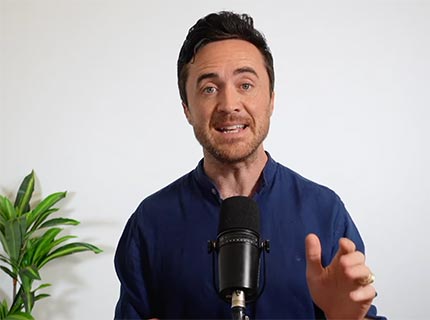
The "Respond to a Situation" task in the Speaking section of PTE Academic tests your ability to handle real-world university scenarios using appropriate language. This task simulates everyday campus interactions, requiring you to respond naturally and effectively to common situations you might encounter as a student.

Play
Privacy and cookies
By watching, you agree Pearson can share your viewership data for marketing and analytics for one year, revocable upon changing cookie preferences. Disabling cookies may affect video functionality. More info...

Understanding the task format

In this task, you'll be presented with a realistic university scenario and asked to provide a spoken response. The situations typically involve:

  • Asking your lecturer for clarification

  • Requesting help from another student

  • Resolving an issue with library staff

  • Other common campus interactions

Task structure and timing

When the task appears on your screen, you'll see:

  1. Standard instructions at the top

  2. A description of the situation and task question

  3. An audio box

  4. Recording status at the bottom

The task follows a clear three-step process:

Step 1: Read and Listen (a few seconds)  You'll have time to read the instructions while simultaneously hearing the audio description of the situation.

Step 2: Prepare (10 seconds)  After the audio stops, you have 10 seconds to organize your thoughts before the microphone opens.

Step 3: Record (40 seconds)  When you hear the tone, begin speaking. You have 40 seconds in total to deliver your complete response.

How your response is scored

The "Respond to a Situation" task uses ‘partial credit’ scoring, meaning you earn points on the quality of your answer, rather than receiving a simple right or wrong mark. Your response is evaluated on three key criteria:

1. Content

This is the most critical aspect for this particular task. To score well on content, your response must:

  • Address the situation effectively by responding to what's being asked

  • Stay on topic and achieve the goal described in the task

  • Be original and relevant using your own ideas and language, not memorized responses

  • Use a variety of appropriate expressions that suit the situation

2. Pronunciation

Your ability to produce clear, understandable speech.

3. Oral fluency

The smoothness and natural rhythm of your spoken response.

Analyzing the task description

Every task description contains three essential elements that guide your response:

1. The Situation

This tells you what's happening and provides context for your conversation.

Example: "You're working on an essay for your course and you're having difficulty organizing your ideas."

2. The Person

This identifies who you're speaking to, which directly influences the tone and formality of your response.

Example: "You approach your professor after class."

3. The Goal

This reveals what you need to achieve in the conversation.

Example: "Ask her if you could come to her office to discuss your essay." Understanding these three components is crucial for crafting an effective response that earns a high content score.

Crafting a high-scoring response

Let's examine a sample task and a high-scoring response:

Task

You're working on an essay for your course and you're having difficulty organizing your ideas. You approach your professor after class and ask her if you could come to her office to discuss your essay. What do you say to her?

Sample response

"Excuse me, professor. Would I be able to book in some time to visit you in your office and talk about the essay for our course that's due next week? I'm really struggling with how to organize my ideas in the essay. I feel I'm doing a good job with identifying the main topics in my writing, but I'm finding it difficult to come up with supporting ideas and therefore the essay is badly organized. Could I come to your office tomorrow morning to discuss this?"

Why this response scores well

Clear and polite opening  The response begins with "Excuse me, professor," which directly addresses the person and sets an appropriate tone.

Immediate main request  The speaker states the primary request early: "Would I be able to book in some time to visit you in your office?" This uses appropriate, polite language.

Clear problem description  The difficulty is explained succinctly: "I'm really struggling with how to organize my ideas."

Detailed and relevant explanation  The speaker demonstrates understanding of the issue and adds relevant details that show engagement with the problem.

Polite closing  The request is repeated with a polite question: "Could I come to your office tomorrow morning to discuss this?"

Structural strengths This response succeeds because it:

  • Meets the primary communication goal by clearly stating the request and explaining the situation

  • Demonstrates polite and appropriate language for the context (modal verbs like "Would I be able to" and "Could I come")

  • Shows flexibility in language use, including natural contractions ("I'm really," "I'm doing")

Essential tips for success

Structure your response effectively

Speak in the first person  use "I" rather than "he" or "she." Speak from your own experience as if you're actually in the situation.

Start with an appropriate opening  Choose greetings that match the context, such as "Excuse me" for formal situations or "Hi" for more casual interactions.

Explain the situation accurately  Avoid factual mistakes and ensure your explanation aligns with the prompt.

Make the request early  State your main goal clearly at the beginning of your response, and consider repeating it at the end for emphasis.

Content guidelines

Cover the main points  Include all essential details from the prompt to ensure you're addressing the task requirements.

Add relevant details  Feel free to expand your answer with extra information that demonstrates your ability to develop ideas and communicate effectively.

Stay consistent with the prompt  All added details must match the scenario. For example, if the prompt says "ask her if you can come to her office," don't say "Can I meet you in the library?" Inconsistencies will lower your content score.

Key takeaways

There isn't a single correct answer for the "Respond to a Situation" task. You can use different language and express yourself in various ways, as long as you meet the task requirements.

The most effective approach is to imagine you're actually in the moment, speaking directly with the person in the situation. This mindset will make your response flow more naturally and sound authentic.

Remember that this task reflects real-life communication skills you'll need in an academic environment. The scenarios are designed to mirror actual university interactions, so responding as you would in real life using appropriate, polite language is the key to success.

Practice is essential. The more you rehearse different scenarios before test day, the more comfortable and confident you'll become at delivering clear, effective responses under timed conditions.

Related Content

  • Image- a model in front of Big Ben - 800px x 451px
    What PTE Academic score will I need to study in the UK?
    By PTE Author
    Reading time: 5 minutes

    Are you thinking about studying in the UK? If so, you’re not alone. Each year, over 500,000 international students enrolled at a UK university. In fact, after the United States, the UK is the second most popular destination for higher education students.  

    UK universities are renowned for excellent teaching and cutting-edge research, and UK degrees are highly valued by academics and employers worldwide. But to study there, you’ll need to demonstrate you have an appropriate level of English.  

    Our PTE Academic secure language test is accepted by nearly every university in the UK – as well as for all immigration applications. So, what score will you need to earn a spot in a university? Let’s find out:  

    What it’s like to study in the UK

    When it comes to world rankings, UK universities consistently perform well. According to this year’s QS World University Rankings, four of the top 10 universities around the globe are located in the UK.  

    Going to a UK university isn’t just a good move as far as your education goes. It’s also a great way to immerse yourself in a new culture and meet lots of different people.  

    The UK is small, but it’s also very diverse. This means your student experience will be quite different, depending on whether you choose to study in a big multicultural city like London or Glasgow, or a smaller university town like St. Andrews or Exeter.  

    The amount of money you’ll need to study in the UK will also vary. Student fees differ from institution to institution. At the same time, your accommodation and day-to-day living expenses will depend on where your university is located.  

    Check out our guide on the cost of living in the UK.

    English language requirements  

    To secure a student visa and attend a UK university, you’ll need to prove you have the English speaking, reading, writing and listening skills needed to succeed in your studies.

    The PTE Academic English test is accepted by 99% of universities across the UK.

    Still, each has slightly different entry requirements. But as a general UK government rule, for programs below degree level – such as a  foundation program – you will need to demonstrate a CEFR B1 level of English. For programs at degree level and above, you will need to demonstrate CEFR B2 level of English.

    How does PTE Academic scoring work? 

    PTE Academic provides transparent and easy to understand scoring. After taking the test you will receive an overall English score, as well as see how you performed in the Listening, Reading, Speaking, and writing areas of the exam.  

    You’ll also get a: 

    • Grammar score

    • Spelling score

    • Oral Fluency score

    • Vocabulary score

    • Written Discourse score

    If you’re happy with your results, you can assign your scores to the universities or institutions you are applying to directly from the myPTE account you created when registering. If you want to improve your scores, you can re-book the test after some more practice.  

    Find out how PTE Academic scoring compares with other English tests.

  • Image- A man working with laptop 950px
    How to excel in PTE Academic speaking & writing with David Booth
    By PTE Author
    Reading time: 5 minutes

    We recently had the opportunity to speak with David Booth about the ways you can excel when it comes to taking the PTE Academic Speaking and Writing sections. If you weren’t able to join us for the webinar, here are the highlights from the conversation.  

    Let’s take a look at David’s tips for the Speaking portion of the test first.  

    Pitch and accent 

    When asked if the pitch of the test-taker makes a difference to the score, David had this to say: ‘Pitch is a critical part of intonation. Having natural intonation is important in order to get a good score.’ Having an exaggerated pitch, however, will not help. It needs to be natural. The same can be said for accent, and it’s important to note that your accent will not affect the score.  

    Improving the ‘repeat sentences’ and ‘read aloud sections’ 

    If you’re wondering how you can improve your score in the ‘repeat sentences’ and ‘read aloud sections,’ the best thing you can do is to speak naturally. It’s important to understand how different words are stressed within sentences, so working on any pronunciation exercises that will allow you to identify and practice this will help.  

    The scoring system for both sections  

    We know many of you are curious about how the scoring system for both sections works. Because this is such a hot topic, we’re going to run another webinar in the future that will address this. In the meantime, the PTE Academic score guide provides a comprehensive break-down of the scores for each task, so we encourage you to take a look at the website for more information.  

    Summarizing spoken text 

    We asked David if there’s any structure that test-takers need to follow in order to summarize the spoken text. The key element here is to ensure that the main context points are addressed. It might feel easier to summarize the points in order, but you should be sure to identify the key point early on in your answer.  

    There were lots of questions about the Writing portion of the test which we asked David to explain more about. You can read about his top tips for this section of the test below.  

    Standard spelling 

    Test takers were curious to know which type of standard spelling the PTE Academic follows and if they should use the British or American versions and how that impacts their score. You’ll be glad to know that you can use any standard spelling conventions.  

    Using the IELTS template  

    We know that many test takers have practiced with multiple types of tests, so you want to know if your score will be impacted by choosing to use the IELTS template or method of writing. The important thing to remember here is that no test taker is penalized. To get a high score on the test, you need to think about how proficient writers in English would present their writing. The scoring engines are trained by using answers from a wide range of students. The answers which will receive higher scores are those that will have similar characteristics to other examples of writing that have also been given high scores by highly trained examiners.  

    Paraphrasing  

    We received a question around whether or not you should paraphrase the ‘summarize written text’ and ‘re-tell the lecture’ sections of the test in order to get a better score. David’s recommendation here is that you should be able to write in the same way that a highly proficient learner of English would write. Paraphrasing is very likely to be a characteristic of that writing, but just repeating key lexis is likely to be indicative of a lower proficiency learner.  

    Keywords in the writing summary 

    How can you find keywords in the writing summary and is there a certain number of conjunctions that should be used? Here, the advice is again that PTE Academic is primarily meaning-focused. When connecting ideas, you should think about how meaning is referenced in a text. In technical language, this is referred to as anaphoric or cataphoric referencing, referencing forward or backward in a text. You can also use different nouns and pronouns to connect ideas. Moreover, it’s important to remember that merely using common conjunctions would not necessarily indicate a high level of proficiency.  

    We hope these tips and techniques are useful to you! Learn more about ways you can improve your score in the Speaking & Writing Section.

  • Image- At cafe
    Speaking: Self-Improvement Part 1
    By PTE Author
    Reading time: 3 minutes

    In Part 1 of PTE Academic, you will require many core English skills to pass. It is very important that you prepare and look at ways you can maximize your score.

    We’ve put together some tips to help based on each question type.

    Read aloud

    In the Read Aloud question type, you will be scored based on content, oral fluency and pronunciation.

    As part of this question type, you will need to speak aloud and say all the words in the correct order.

    Here are some tips to help maximize your chances of receiving points:

    • Make sure you do not replace any words, leave any words out or add any. If you make a mistake and try to correct it, it will be counted as added words.

    • Once prompted, you must speak into the microphone right away and read with a smooth, easy natural speed. Try not to speak too fast or too slow.

    • Use English rhythm with chunking and sentence stress used correctly.

    • Try not to hesitate or repeat words as you will lose points.

    Repeat sentence

    The Repeat Sentence question type is scored based on the same elements as the Read Aloud question type: content, oral fluency and pronunciation.

    Here are some tips to help gain points in this question type:

    • Say all of the words in the exact same order. Do not rush.

    • Do not use the Erasable Noteboard Booklet, keep the sentence in your head.

    • It’s easier to keep the sentence in your mind if you understand the meaning. Try to understand the meaning.

    • If unsure of a word the speaker used, say what you think you heard.

    • Do not speak too fast or slow.

    • Similar to read aloud, use English rhythm with chunking and sentence stress. You will also lose points in this question type if you hesitate, repeat words or stumble to start.

    • Speak with the sounds of an English speaker and copy the intonation pattern of the speaker, but do not change your accent.

    Describe image

    In the Describe Image question type, you will be scored based on content, oral fluency and pronunciation.

    To be able to describe the image, you will need to understand it as it could be a graph, picture, map, chart or table. Always read the title and make sure you understand the parts that make up the image.

    Some extra tips include:

    • Use the Erasable Noteboard Booklet to take notes about the image, which you can use in your answer. For example, if the image is a graph, chart or table, is there a trend you can comment on? If it’s a map or picture, what are the important features?

    • Include all aspects and elements of the image in your answer.

    • Start with a general statement about the image then summarize the most important points.

    • If there are words on the image you want to use but are unsure how to pronounce them, don’t worry, just say them how you think they should be said.

    • Try using connector words to link the information you give. For example, use words such as: also, however, as or besides.

    You can receive up to 5 points based on your content. In order to score above 1, you will need to include the relationships between parts of the image, possible developments and conclusions or implications of the information in the image.

    Don’t forget to talk with a smooth, natural speed at all times during the speaking test.

    In total, there are five speaking sections of Part 1: Speaking and Writing.

    We recommend that you read more about the other question types such as Re-tell Lecture and Short Answer Question types and learn how to pick up points for these.

    Want to learn more about the smart way to prepare for PTE?

    Smart Prep brings all our free and paid preparation into one convenient place, so you can mix and match to fit your unique needs.

    • Smart Prep provides a clear path to test day, guiding you through the official paid and free resources available for your test

    • It can be accessed whether you’ve booked a test or not – just create, or sign in to your myPTE account

    • Preparation materials include guided practice tests, introductory videos, video courses and test tips.