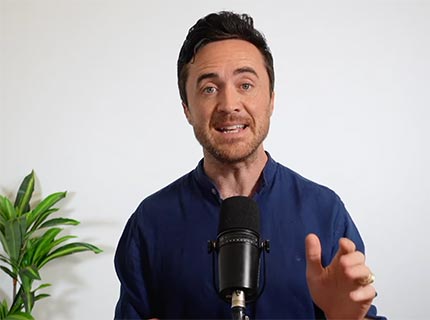
Mastering PTE Academic: A guide to the "Respond to a Situation" task

PTE Author
PTE Author

The "Respond to a Situation" task in the Speaking section of PTE Academic tests your ability to handle real-world university scenarios using appropriate language. This task simulates everyday campus interactions, requiring you to respond naturally and effectively to common situations you might encounter as a student.

Play
Privacy and cookies
By watching, you agree Pearson can share your viewership data for marketing and analytics for one year, revocable upon changing cookie preferences. Disabling cookies may affect video functionality. More info...

Understanding the task format

In this task, you'll be presented with a realistic university scenario and asked to provide a spoken response. The situations typically involve:

  • Asking your lecturer for clarification

  • Requesting help from another student

  • Resolving an issue with library staff

  • Other common campus interactions

Task structure and timing

When the task appears on your screen, you'll see:

  1. Standard instructions at the top

  2. A description of the situation and task question

  3. An audio box

  4. Recording status at the bottom

The task follows a clear three-step process:

Step 1: Read and Listen (a few seconds)  You'll have time to read the instructions while simultaneously hearing the audio description of the situation.

Step 2: Prepare (10 seconds)  After the audio stops, you have 10 seconds to organize your thoughts before the microphone opens.

Step 3: Record (40 seconds)  When you hear the tone, begin speaking. You have 40 seconds in total to deliver your complete response.

How your response is scored

The "Respond to a Situation" task uses ‘partial credit’ scoring, meaning you earn points on the quality of your answer, rather than receiving a simple right or wrong mark. Your response is evaluated on three key criteria:

1. Content

This is the most critical aspect for this particular task. To score well on content, your response must:

  • Address the situation effectively by responding to what's being asked

  • Stay on topic and achieve the goal described in the task

  • Be original and relevant using your own ideas and language, not memorized responses

  • Use a variety of appropriate expressions that suit the situation

2. Pronunciation

Your ability to produce clear, understandable speech.

3. Oral fluency

The smoothness and natural rhythm of your spoken response.

Analyzing the task description

Every task description contains three essential elements that guide your response:

1. The Situation

This tells you what's happening and provides context for your conversation.

Example: "You're working on an essay for your course and you're having difficulty organizing your ideas."

2. The Person

This identifies who you're speaking to, which directly influences the tone and formality of your response.

Example: "You approach your professor after class."

3. The Goal

This reveals what you need to achieve in the conversation.

Example: "Ask her if you could come to her office to discuss your essay." Understanding these three components is crucial for crafting an effective response that earns a high content score.

Crafting a high-scoring response

Let's examine a sample task and a high-scoring response:

Task

You're working on an essay for your course and you're having difficulty organizing your ideas. You approach your professor after class and ask her if you could come to her office to discuss your essay. What do you say to her?

Sample response

"Excuse me, professor. Would I be able to book in some time to visit you in your office and talk about the essay for our course that's due next week? I'm really struggling with how to organize my ideas in the essay. I feel I'm doing a good job with identifying the main topics in my writing, but I'm finding it difficult to come up with supporting ideas and therefore the essay is badly organized. Could I come to your office tomorrow morning to discuss this?"

Why this response scores well

Clear and polite opening  The response begins with "Excuse me, professor," which directly addresses the person and sets an appropriate tone.

Immediate main request  The speaker states the primary request early: "Would I be able to book in some time to visit you in your office?" This uses appropriate, polite language.

Clear problem description  The difficulty is explained succinctly: "I'm really struggling with how to organize my ideas."

Detailed and relevant explanation  The speaker demonstrates understanding of the issue and adds relevant details that show engagement with the problem.

Polite closing  The request is repeated with a polite question: "Could I come to your office tomorrow morning to discuss this?"

Structural strengths This response succeeds because it:

  • Meets the primary communication goal by clearly stating the request and explaining the situation

  • Demonstrates polite and appropriate language for the context (modal verbs like "Would I be able to" and "Could I come")

  • Shows flexibility in language use, including natural contractions ("I'm really," "I'm doing")

Essential tips for success

Structure your response effectively

Speak in the first person  use "I" rather than "he" or "she." Speak from your own experience as if you're actually in the situation.

Start with an appropriate opening  Choose greetings that match the context, such as "Excuse me" for formal situations or "Hi" for more casual interactions.

Explain the situation accurately  Avoid factual mistakes and ensure your explanation aligns with the prompt.

Make the request early  State your main goal clearly at the beginning of your response, and consider repeating it at the end for emphasis.

Content guidelines

Cover the main points  Include all essential details from the prompt to ensure you're addressing the task requirements.

Add relevant details  Feel free to expand your answer with extra information that demonstrates your ability to develop ideas and communicate effectively.

Stay consistent with the prompt  All added details must match the scenario. For example, if the prompt says "ask her if you can come to her office," don't say "Can I meet you in the library?" Inconsistencies will lower your content score.

Key takeaways

There isn't a single correct answer for the "Respond to a Situation" task. You can use different language and express yourself in various ways, as long as you meet the task requirements.

The most effective approach is to imagine you're actually in the moment, speaking directly with the person in the situation. This mindset will make your response flow more naturally and sound authentic.

Remember that this task reflects real-life communication skills you'll need in an academic environment. The scenarios are designed to mirror actual university interactions, so responding as you would in real life using appropriate, polite language is the key to success.

Practice is essential. The more you rehearse different scenarios before test day, the more comfortable and confident you'll become at delivering clear, effective responses under timed conditions.

Related Content

  • Image- Asian student writing
    How long will I wait for my PTE Academic results?
    By PTE Author
    Reading time: 3 minutes

    Most test scores are now returned within just 2 days

    During 2018 students, migrants, and professionals that sat PTE Academic received their scores in even less time than ever before. In fact, during 2018, 85.7% of PTE Academic test takers received their results within just 2 days.

  • A female model watching movie
    Great movies to help you learn English
    By PTE Author
    Reading time: 5 minutes

    Learning a language is much easier when you’re enjoying yourself – which is why watching movies can be a great way to immerse yourself in the language.

    What better way is there to pick up new phrases and slang terms that you would not learn in the classroom, all with popcorn in hand?

    It can be hard to know which movie to choose so here are our top ten to help you get started. These films are chosen for their language clarity and cultural insights, offering a fun way to improve English skills for beginners and advanced learners alike.

    If you are not feeling confident, watch with subtitles and you will soon pick things up.

    1. Forrest Gump (1994)

    A fantastic choice for beginners, this film teaches English while taking you through the heart of American history. This movie is one of the best English movies for learners as Forrest speaks so slowly throughout the entire movie. It is also an iconic 90’s movie which will make you laugh and cry in equal measure.

    2. Harry Potter series

    Perfect for all ages, these films are a treasure trove of rich vocabulary set in a magical world. Many things make the Harry Potter series great for your linguistics skills! Aside from the rich vocabulary, due to the sheer number of films in the series you will get to build up your understanding of different characters, their personalities, accents and ways of communicating.

    3. The King's Speech (2010)

    What a great idea for learning English – watching a film where the main character – a historic British figure – is learning to speak! King George VI struggles to communicate due to a speech impediment, which means pronunciation is a very big focus in this movie.

    4. Pride and Prejudice (2005)

    For lovers of classic literature, this film offers a window into historical British English. The movie adaptation of Pride and Prejudice will also expose you to societal norms, colloquial expressions, formal language and phrases as this movie is set in the early 19th century England.

    5. Home Alone (1990)

    This is one of the best English movies to watch, especially for beginners. It is full of day-to-day phrases and a slower pace, so it is easier to follow along. It is also a Christmas classic for all the family.

    6. Love Actually (2010)

    Great for picking up informal turns of phrases, slang and expressions used by British people. It also showcases a variety of British (and Irish) accents, so you can expose yourself to a breadth of British ways of speaking.

    7. Little Miss Sunshine (2006)

    A charming film for mastering conversational American English.

    8. The Pursuit of Happyness (2006)

    Immerse in everyday conversational English set in contemporary America.

    9. Brave (2012)

    Animated and perfect for beginners, this film is set in Medieval Scotland so you will get to experience the Scottish accent and culture as well as learning some everyday phrases and idioms.

    10. Inception (2010)

    This movie should be on your list if you are focusing on advanced language learning. The language and the plot are both really complex. You will be exposed to advanced vocabulary and narratives which are really thought-provoking.

    These films offer an immersive, engaging, and often emotionally resonant context for language learning. Whether you're just starting or looking to refine your skills, each movie is a step forward in your language-learning adventure.

    More ways to prep

    Ready to prepare for your English language test? Explore Smart Prep, which combines all our practice materials in one place, so it's easier for you to stay on track with your PTE preparation.

    • Smart Prep is a clear path to test day, guiding you through the official paid and free resources available for your test

    • It can be accessed whether you’ve booked a test or not – just create, or sign in to your myPTE account

    • Preparation materials include guided practice tests, introductory videos, video courses and test tips.

  • Portrait of student learning online with headphones and laptop taking notes in notebook sitting at her desk at home - mixed race Asian Chinese model
    Build all-round confidence with Smart Prep
    By PTE Author
    Reading time: 4 minutes

    Smart Prep brings all our free and paid preparation into one convenient place, so you can mix and match to fit your unique needs. Perfect if you have booked your test and are not sure where to start with your preparation journey.

    Here are four top tips to help you get started:

    1. Explore Smart Prep

    All you need to do is set up your free myPTE account, and you will have access to all our free and official prep resources — so everything you need to be ready ace your test is at your fingertips.

    2. Use Scored Practice Tests to track your progress

    As close as you can get to the test without taking the real thing. Our unique Scored Practice Tests are just like a mock test and are marked in the same way as your PTE test. So you can see how you score and then focus on the areas you need to improve.

    With five to choose from, we recommend you use them throughout your prep journey to check your progress.

    3. Practice with 300+ questions

    Practice makes perfect and our PTE Academic Question Bank is packed full of questions with model answers, plus samples for speaking and writing. So you have plenty of opportunity to practice before the real thing.

    4. Read our handbook and Score Guide

    Finally, don’t forget to download our free PTE Academic Handbook and Score Guide.

    The handbook covers everything you need to know about taking PTE Academic - from how to prepare and test day policies, to how to retake your test if necessary.

    And, the PTE Score Guide helps you understand things like what you’re graded on, how automated scores work, and how our scores compare with those of other English language tests.

    Ready to achieve your dreams?

    PTE is more than an English language test. It’s your ticket to studying abroad.