How to find student accommodation in Australia

Image- student accommodation, 800px
Reading time: 6 minutes

Have you been accepted to study in Australia? Looking for a place to live can be one of the most enjoyable parts of planning your move abroad. There are lots of housing opportunities for international students – and in this blog, we’ll take you through a few options.

We’ll explore accommodation around two popular universities – The University of Adelaide and The University of Melbourne to help you begin your search. We’ll also give you an idea about where you might look for housing in other cities around the country. 

What’s important to you? 

There are a number of things you should consider when deciding on a place to live. We recommend making a list of everything you want in a home. Having a clear idea about what kind of place you want to live in will help you to narrow down your housing options – and ensure you have the best possible experience abroad. Ask yourself:  

  • Do you want to live close to campus? 

  • Do you want to live in a house or an apartment?

  • Do you want to live in a social setting with roommates?

  • What amenities can’t you live without? (like air conditioning or high-speed internet)

  • And, of course, what is your budget? 

You might be interested in our blog: Australian loans for international students 

On-campus housing 

Nearly all major institutions in Australia offer on-campus accommodation for international students. Lots of people choose to live in these residences because they’re convenient and it’s really easy to get to class. University residences also provide international students with a supportive place to call home right upon arriving from abroad.

Living on-campus is a great opportunity to meet fellow students, too, because there are usually lots of social events planned throughout the semester. Accommodation can range from shared dorm rooms, single rooms, or private studio apartments, and can cost between $110-$280 AUD a week.

So, what do The University of Adelaide and The University of Melbourne offer?

Off-campus housing 

There is a whole range of housing options off-campus, too. Let’s explore:  

Student accommodation 

There are lots of private student accommodation options located close to universities. They are usually not managed by universities themselves. But they are designed specifically for students and usually have many of the same facilities as a student residence – such as food halls or study rooms.

Remember, even if you don’t live in a university residence, you can still have a full social life and take part in activities with fellow students.

Check out these resources to help find off-campus student accommodation in Melbourne and Adelaide: 

  • Adelaide Student Housing is a website made to help international students look for accommodation in the city. It’s run by the Government of South Australia and features more than two dozen student housing options – including places like UniLodge, Y Suites, and Atira Student Living. The website also lists weekly prices for each property, making it easy for international students to compare. Prices range between $105-$690 AUD a week.

  • Close to the University of Melbourne, you can also find places like UniLodge and Infinity Place. Prices for these two options range between $173-$589 AUD a week. If you want to look for more student housing locations check out the website University Living, which lists accommodation for students in hundreds of cities around the world.

Private rentals  

When you finally arrive in Australia, you might also decide to live on your own in an apartment. There are definitely some benefits to living in a private rental. You get more independence and privacy. You can also choose to live anywhere you like in your new city or town.

According to the government website Study Australia, rent can cost between $185-$440 AUD a week. You might also be asked to sign a lease for an extended period, which could give you less flexibility during your time abroad.

You can look for private rentals in Melbourne, Adelaide, and across Australia using websites like DomainGumtree, or realestate.com.au

Living with roommates  

Sharing a house or apartment is a popular option for local and international students alike. It’s common for three or more people to share the same living space.

Overall, this arrangement gives you a great chance to meet other students or young professionals – and perhaps even form lasting friendships. Shared accommodation can cost between $95-$215 AUD a week. Just make sure to sign a contract so everyone is aware of their rights and responsibilities.

You can search for roommates on websites like flatmates.com.au or Flatmate Finders. Also check out university-specific community Facebook groups, where students often post rooms for rent.  

Homestays 

You might choose a homestay option, which means you’ll live with a local family. This might help you feel more supported and less isolated. You’ll also get the chance to practice your English skills in a home environment and possibly go on trips to visit local attractions, celebrate holidays, and experience your host family’s culture.

Homestays usually include meals, which can be a big plus for busy students. They can be arranged by an education agent in Australia, but there are a range of organizations you can look into for more information, as well – including  Australia Home Stay Network, and Study Vision.

As you can see, there are lots of accommodation options for international students across Australia. And the best part? Many are designed to support students’ needs and make them feel at home while abroad.

At PTE Academic, we’re also committed to helping students succeed. We have tons of resources for international students moving across borders – including articles on Australian student visas, the benefits and costs of studying in Australia, and scholarships around the worldCheck them out!

Related Content

  • Video thumbnail for the video, 'Learn how PTE Academic uses AI to mark tests'
    How do you know PTE Academic’s computer marking works?
    By PTE Author
    Reading time: 2 minutes

    How do we know automated scoring works

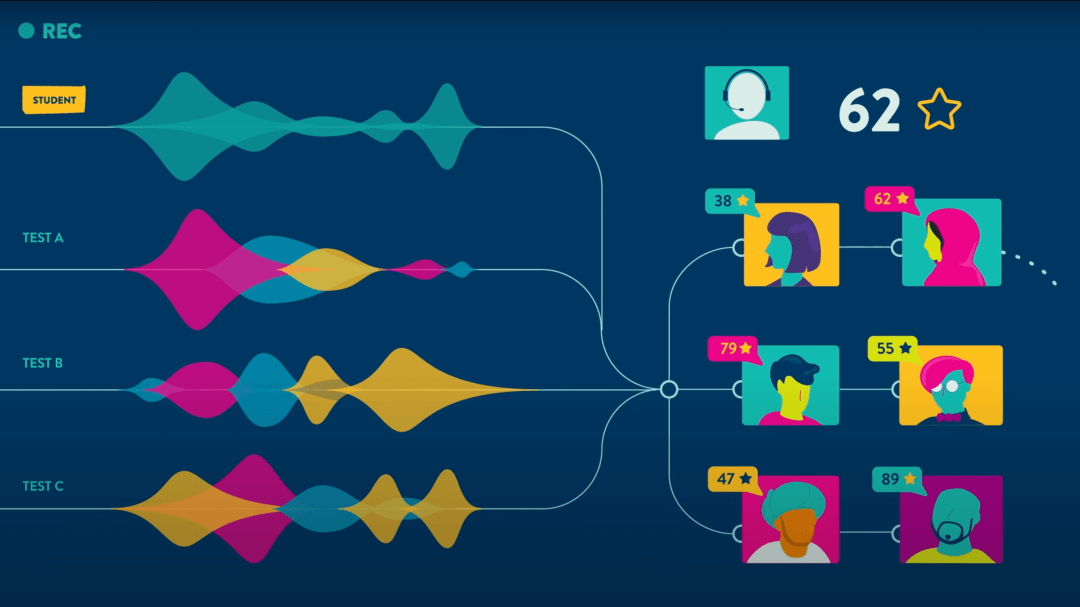
    Are you thinking of taking PTE Academic, or have you recently taken it, but you are wondering how it is that a computer can mark your test?

    Well, firstly the test has been designed by humans, all leading experts in their field. Our human experts design and write the questions, quality assure them, and then score them. At this point, computers are trained to use the patterns of highly trained language experts to attribute scores to questions. When the computer marks correlate highly with the human scores, we then allow the computer to mark test scripts from across the world.

    As a result of our processes and technology, the computer behaves like an expert human examiner – but without any possible bias, lack of concentration, or variation between individual examiners.

    The scoring criteria are exactly the same as human scoring – test takers are marked on their delivery, clarity, relevance, the accuracy of grammar, and appropriateness of vocabulary.

    Want to hear more?

    Take a couple of minutes and listen to one of our leading independent advisors, Dr. Alistair Van Moere, a member of Pearson’s Technical Advisory Group, as he explains how it all works.

  • Image- student at class 800px
    Reviewing Test Performance
    By PTE Author
    Reading time: 2 minutes

    If you have completed PTE Academic, you would know by now that it is scored against the Global Scale of English and that you need to practice many skills for each part of the test: Speaking & Writing, Reading, and Listening.

    After completing PTE Academic you will receive an email notification that your results are available online. Typically within 2 days. Learn how to access your Score Report.

    What does my Score Report mean?

    When you receive your Score Report it will show you your overall score, which is based on your performance across all test items. Your communicative skills that are measured are listening, reading, speaking and writing.

    This is an example of what your Score Report may look like.

    The enabling skills are those skills that are required to fulfill the question types in the test. It’s important to know what each of these skills refers to.

    Grammar

    Correct use of language with respect to word form and word order at the sentence level.

    Oral Fluency

    Smooth, effortless and natural-paced delivery of speech.

    Pronunciation

    Production of speech sounds in a way that is easily understandable to most regular speakers of the language. Regional or national varieties of English pronunciation are considered correct to the degree that they are easily understandable to most regular speakers of the language.

    Spelling

    Writing of words according to the spelling rules of the language. All national variations are considered correct, but one spelling convention should be used consistently in a given response.

    Vocabulary

    Appropriate choice of words used to express meaning, as well as lexical range.

    Written Discourse

    Correct and communicatively efficient production of written language at a textual level. Written discourse skills are represented in the structure of a written text, its internal coherence, logical development, and the range of linguistic resources used to express meaning precisely.

    How do I identify my areas of weakness?

    From the visual graph on your Score Report, you will be able to see areas you need to improve on. You should aim to develop your core (enabling) skills required across all areas of the test.

    The following resources will help you develop your enabling skills:

    How can I improve in each part of the test?

    It’s also worth focusing on particular parts of the test or questions you think you had trouble with. The following articles may help you improve your skills across questions:

    If you don’t already have one, it’s recommended to work with an English teacher to work through areas that may need improvement.

    Good luck!

  • Image- A guy with headphones and laptop
    Listening: Self-Improvement Part 1
    By PTE Author
    Reading time: 3 minutes

    After working through the strategies to improve your English listening skills, you can work on specific areas of the test. In this part, you will need to apply a number of listening and writing skills.

    Below are improvement tips on the question types that combine writing and listening skills.

    Summarize Spoken Text

    In the Summarize Spoken Text questions you will be scored on content, form, grammar, vocabulary, and spelling.

    Content and Form

    Make sure you write a good, clear summary of all the key points in the text and also condense the most important supporting points.

    In this question, you will not be given the context of the recording before it starts. Make sure to listen carefully from the start to help understand the context and the information given.

    Some helpful tips for the content and form, to maximize your score are:

    • Take notes on your Erasable Noteboard Booklet or in the response box on the screen

    • Do not try to write down sentences (you will not have enough time)

    • Use symbols and abbreviations in your notes

    • Write down key points and their relationships with others

    • Start with an overview sentence to introduce your summary

    • Use cohesive devices to link the information as you write

    • Try to write between 50 and 70 words

    Overall, make sure you summarize the text in your own words as this will show that you have understood the purpose of the text. If you do not write in your own words, you will score zero for content.

    If you write less than 40 or more than 100 words, you will score zero.

    Grammar

    It is important that grammar is correct as you will be tested on sentence structure, punctuation and capitalization.

    Try not to be too ambitious with your grammar to avoid making mistakes. Try to use grammatical structures you feel comfortable with.

    In this question type you should:

    • Communicate meaning clearly and concisely

    • Use complex sentences where possible to score more points

    • Write sentences between 18 and 30 words – long sentences are hard to control grammar

    • Check your response for common errors before submitting

    Vocabulary and Spelling

    You will score points if you use the correct and appropriate vocabulary in the Summarize Spoken Text question type. Use words from the recording if you use them appropriately, however, try to use synonyms to replace words already used.

    You will also need to make sure to spell every word correctly to receive maximum points. Try to type as carefully as possible during this question. If you can not remember how to spell a word, guess as it is better to include the word than leave it out, even if it is incorrect.

    Don’t forget to use the space bar to show the end of each word.

    Write from Dictation

    Another question that tests both listening and writing is the Write from Dictation question type.

    In this question type, you will need to write the words in the correct order with the correct spelling in order to score points.

    Before the recording starts, place your cursor in the response box and get ready to type as soon as you hear the recording. Make sure to reproduce what you hear exactly as you heard it as the recording will only be played once.

    Remember to start the sentence with a capital letter and end it with a full stop (period).

    Type as you hear it and when finished, check for any mistakes. Always make sure that to read over your answer before clicking next.

    Continue improving your listening skills by reading our Listening: Self-Improvement Part 2 article.