Getting a student visa for the US can be a long and stressful process, and one of the final hurdles is the visa interview.
Conducted in English, it’s one of the parts of the US visa application process that causes international students the most stress.
We’ll briefly recap the US student visa types and application process before sharing top tips on how to prepare and build your speaking confidence for a stress-free interview experience.
Understanding the different types US student visas
To enter the US to study, you’ll need an F-1 or M-1 visa.
F-1 visas are intended for international students looking to study at colleges or universities. This visa category also covers other academic institutions, such as language schools.
M-1 visas are for vocational studies, such as culinary school, trade school programs, and healthcare technician courses.
If you’re not sure what type of visa you need and want to understand more about the different criteria, there’s an official US Visas website with a useful Visa Wizard tool to point you in the right direction.
How to apply for a US student visa
To study in the US, you’ll need to apply for and be accepted on a course at a Student Exchange and Visitor Program (SEVP) approved school before starting the visa process.
Once accepted, you’ll receive Form I-20 and need to pay the SEVIS (Student and Exchange Visitor Information System) fee.
There’s another round of forms and fees (DS-160 and the visa application fee), before it’s time to schedule that all-important visa interview at the US embassy or consulate in your home country.
On interview day, you’ll need to bring documents, such as your passport, academic transcripts, and travel history, as well as details of your intended travel to the US.
You’ll have an interview with a consulate officer and your visa will either be approved or may require further “administrative processing”.
The visa application process does vary depending on the local embassy or consulate, so check your local branch’s process on their website.
What is the US visa interview about?
Most applicants aged 13-80 must attend an in-person visa interview at a US consulate or embassy.
The interviewer is looking to understand your qualifications, study plans, and ability to support yourself during your time in the US.
They also want to make sure that anyone applying for a student visa intends to return to their home country after completing their studies.
You can find more information on what questions to expect at a US student visa interview on the International Student website.
Building your speaking confidence
A high-stakes English interview can be daunting, often making it tough to speak as confidently as you normally would when you’re in the classroom or chatting with friends. Here are four ways to build your speaking confidence ahead of a US visa interview.
1. Prepare answers to likely questions
Knowing the purpose of the interview makes it easier to anticipate the types of questions you’ll be asked. Make a list of anticipated topic areas and spend some time crafting concise answers. Once you’ve written your responses, it’s time to speak up! Practice saying the answers aloud every couple of days so that they feel familiar on the day. You don’t have to memorize the responses, but by planning out roughly what you’d like to say, you’re removing that extra pressure of thinking on the spot.
2. Immerse yourself in English
Confident speaking starts with great listening. The run-up to your visa interview is the perfect time to revisit that US sitcom you love or to start listening to an audiobook in English on your daily walk. You could even try repeating back new phrases or idioms that you hear to build your vocabulary and practice your pronunciation. If you’re listening to English shows, podcasts, and even following English social media accounts on a regular basis, then being faced with questions in English will feel less new and different on the day.
3. Find a language exchange partner
One of the most effective ways to brush up on your speaking skills is to find a language exchange partner. This could be a language swap, where you find someone who speaks English as their first language and who is learning your language, or conversation clubs where everyone is working on learning English. If you can’t find a local tandem partner, take a look at online communities, such as MeetUp, InterNations, or even Facebook, to find someone you can practice with online.
4. Use speech recognition technology
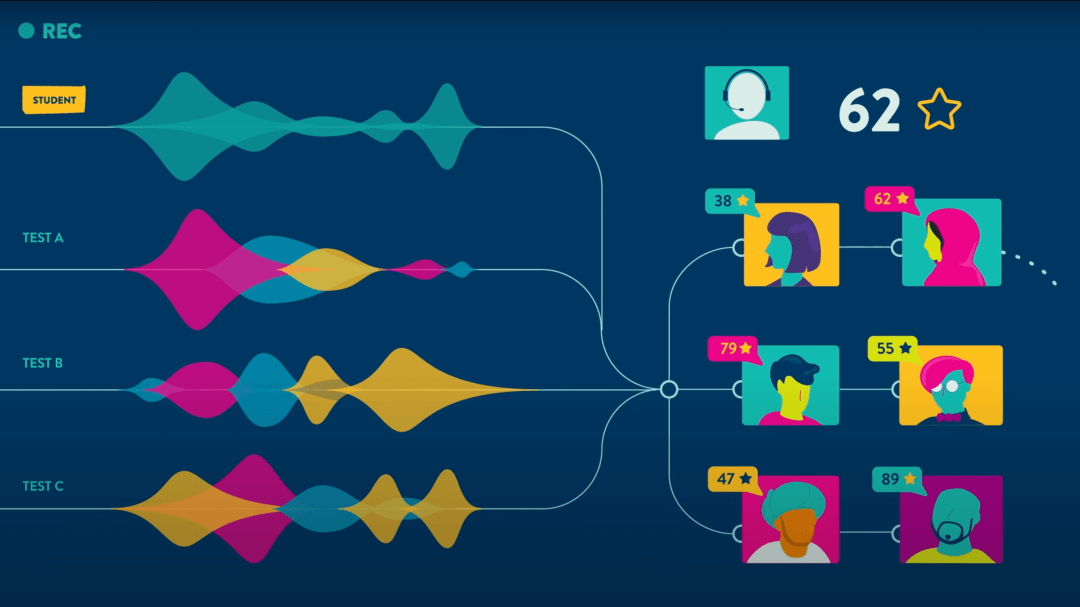
If you can’t find a language tandem partner or are short on time, several language learning apps now include speech recognition — a technology first introduced by Mondly by Pearson.
This technology allows you to practice pronunciation and conversation without the pressure of another human waiting on or judging your responses.
In Mondly, for example, the app offers over 500 minutes of conversation practice with Augmented Reality (AR) and Virtual Reality (VR) options to allow you to practice conversations in realistic scenarios.
With less pressure and instant feedback, virtual conversations using speech recognition can be a great way to build your confidence ahead of real-life challenges like visa interviews.
It’s natural to feel the pressure with interviews — especially when your dreams of studying in the US hang in the balance.
Remember, interviewers aren’t looking for flawless language skills, just that your English is at a high enough level to fully participate in your course and enjoy life in the US.
By thinking through the likely topics and actively finding more opportunities to practice speaking English, you’ll be able to head into your visa interview with confidence.


![[Asset] Girl smiling into distance](/content/dam/ELL/pte/pearsonpte/articles/girl-smiling-into-distance.jpg)