
How do you know PTE Academic’s computer marking works?

PTE Author
PTE Author
Video thumbnail for the video, 'Learn how PTE Academic uses AI to mark tests'
Reading time: 2 minutes

How do we know automated scoring works

Are you thinking of taking PTE Academic, or have you recently taken it, but you are wondering how it is that a computer can mark your test?

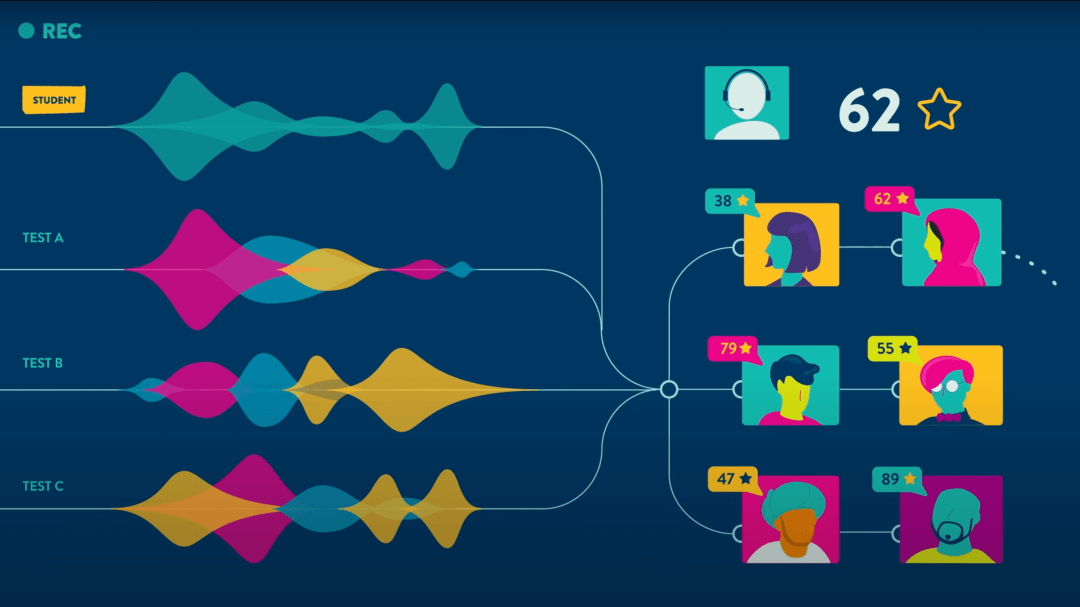
Well, firstly the test has been designed by humans, all leading experts in their field. Our human experts design and write the questions, quality assure them, and then score them. At this point, computers are trained to use the patterns of highly trained language experts to attribute scores to questions. When the computer marks correlate highly with the human scores, we then allow the computer to mark test scripts from across the world.

As a result of our processes and technology, the computer behaves like an expert human examiner – but without any possible bias, lack of concentration, or variation between individual examiners.

The scoring criteria are exactly the same as human scoring – test takers are marked on their delivery, clarity, relevance, the accuracy of grammar, and appropriateness of vocabulary.

Want to hear more?

Take a couple of minutes and listen to one of our leading independent advisors, Dr. Alistair Van Moere, a member of Pearson’s Technical Advisory Group, as he explains how it all works.

Play
Privacy and cookies
By watching, you agree Pearson can share your viewership data for marketing and analytics for one year, revocable upon changing cookie preferences. Disabling cookies may affect video functionality. More info...

About the Author

Dr. Alistair Van Moere is the Chief Product Officer at MetaMetrics Inc. where his role is to drive innovation in assessments and learning and to help individuals and organizations make sense of measurement and test scores. Through the Lexile® Framework for Reading, Alistair’s work extends to over 35 million learners in 180 countries, who get connected with learning resources at their level and have their progress monitored against standards. 

Learn more about the PTE Technical Advisory Group.

Related Content

  • man on laptop
    How do we keep language testing fair for everyone?
    By PTE Author
    Reading time: 5 minutes

    Fair and accessible English language testing starts with a simple promise: your score should reflect your ability, not your background or circumstances. With PTE, we ensure fair language testing by clearly defining what we assess, designing the test to include everyone from the beginning, checking for bias through statistical and quality checks, and providing accommodations so all candidates can show their skills.

    This candidate-focused approach is based on global best practices, clear validation, and ongoing monitoring. It means using simple language, fair content, strong scoring, and a process that makes things easier for test takers.

    The goal is to create a trustworthy assessment experience that helps with important life decisions in education, work, and migration, while treating every test taker with respect and fairness.

    The importance of fairness in language assessment

    Fairness in language testing means treating everyone equally, avoiding bias, offering accessible tests and making sure scores are meaningful. This ensures that results show what the test is meant to measure, not irrelevant factors like culture or disability.

    Decisions about immigration, jobs, and university placements depend on these scores, so fairness is essential.

    When tests are unfair, they can embed cultural references, specialist knowledge, or delivery barriers that put some groups at a disadvantage and reduce trust in the results.

    Recent discussions highlight problems with irrelevant content and inconsistent accommodations, emphasizing the need for clearer language and stronger checks in language testing.

    What makes a test fair:

    • Equitable content that is accessible to diverse candidates

    • Unbiased design and delivery that removes irrelevant barriers

    • Valid, reliable scoring tied to clearly defined constructs

    How Pearson PTE ensures fair assessment for all candidates

    We build fairness in from the start and verify it throughout the test’s lifecycle:

    • Diverse expert review: Test content is created and checked by diverse panels in terms of gender, language background, and region to identify sensitive issues and reduce irrelevant differences, following fairness and inclusive design guidelines.

    • Clear construct definition: This task focuses on English skills like listening, reading, speaking, and writing, so knowledge of specific topics or culture doesn't affect the results.

    • Statistical monitoring for bias: We conduct Differential Item Functioning (DIF) and related analyses to check whether items behave differently for subgroups (e.g., gender, disability, ethnicity), a core practice for ensuring fairness.

    • Transparent validation and feedback: We publish key test information, scoring guidance, and policies, and invite feedback from candidates and institutions to inform updates.

    Our language tests are designed to include everyone, avoid bias, and make sure all candidates are treated equally and can show their true abilities.

    Addressing cultural and linguistic bias in test design

    Test bias happens when content or methods unfairly favor or disadvantage certain groups because of language, culture, or experience, not because of actual skill. To prevent this, we include experts from target markets, follow sensitivity guidelines, and test items with representative samples.

    Localization is used carefully to make content clearer and more culturally relevant without changing the original English meaning, as cultural and language differences can affect test fairness.

    Accessibility and accommodations in language testing

    Accessibility in language testing makes sure all candidates, including those with disabilities, can show their skills. This is done through simple design, helpful accommodations, and easy-to-access testing methods. Using clear design, assistive technology, and standards-compliant interfaces helps fairly measure ability.

    Under many legal frameworks, candidates are entitled to reasonable testing accommodations (see our information on accommodations).

    We evaluate accessibility requirements in language testing on a case-by-case basis to ensure accommodations are appropriate and do not change the test's intent. All of our test centers adhere to local disability laws. Accessible testing benefits both universities and applicants by broadening participation and reducing.

    The role of technology in promoting fairness and inclusion

    AI and automation help deliver personalized results and detailed scoring by covering more real-world language use. However, they need careful bias checks and human oversight to ensure fairness.

    How to utilize technology fairly:

    • Define the constructs first, then select the technology that measures them accurately.

    • Build inclusive, standards-aligned interfaces and test for assistive tech compatibility.

    • Pilot with diverse users across a range of devices and bandwidths.

    • Apply bias checks to AI models and item pools and document the decisions.

    • Offer secure, flexible access at our test centers with clear privacy controls.

    • Monitor operational data and candidate feedback; iterate quickly.

    In short, making language testing fair and accessible is a complex task that needs ongoing effort, careful thinking and responsible use of technology. By maintaining high standards, including different viewpoints, and paying attention to ethics, testing organizations can build more trust and welcome more people, helping individuals and the broader education community.

    Explore our published research and find out more.

    Frequently asked questions

    How do language tests identify and reduce cultural bias?

    Language tests use diverse expert panels, sensitivity reviews, piloting, and statistical analyses like DIF to detect and remove biased content so it reflects proficiency, not background.

    How does technology impact access to language testing for all candidates?

    Technology makes access easier through online and remote tests, but programs must ensure fair device use, good internet, accessibility, and privacy to prevent new obstacles.

    Why is fairness important in high-stakes language assessments?

    A fair test makes sure your scores show your real language skills, not influenced by things like your culture, looks, accent, gender, or a disability. This also helps governments and organizations trust that your results are accurate and reliable.

    How do testing organizations monitor fairness over time?

    This will vary by company, but with PTE, we continually conduct statistical and qualitative research, publish findings, gather candidate feedback, and update content, delivery, and policies to address evolving needs.

  • man on laptop
    What strategies improve English test performance?
    By PTE Author
    Reading time: 5 minutes

    When you are taking a high-stakes English test, you want your result to reflect your real English ability. In standardized English testing, effective strategies are not shortcuts or tricks. They are ways of understanding how performance is measured and ensuring that your English can be evaluated clearly within the test design.For Pearson Test of English (PTE) Academic, the following five strategies help make sure your English is assessed clearly and accurately within the test format.


  • Mastering the ‘summarize group discussion’ task for PTE Academic success
    By PTE Author

    The Summarize Group Discussion task is one of the most comprehensive speaking challenges in PTE Academic. It tests your ability to listen actively, take effective notes, and deliver a coherent summary that captures multiple perspectives.

    Understanding how to approach this task strategically can significantly boost your speaking score.