

How are PTE and IELTS different? Here’s what you need to know

PTE Author
PTE Author
Image, teaching, 800px

Read Time: 6 minutes

PTE Academic is a real-world English test. This means it uses authentic source materials and a range of accents to assess natural real-world English proficiency. The test format is clearly structured, but students still need to understand the tasks in each section and know what they have to do to succeed on test day. 

The good news is that if you’re already used to preparing candidates for IELTS Academic, you’ll easily be able to adapt to help prepare them for their PTE Academic test. 

Let’s have a look at the similarities and differences between both tests and explore how you can adapt your test preparation classes for success in PTE Academic. 

The structure of the tests

The structure of PTE Academic and IELTS Academic is broadly similar. Both tests assess students on all four language skills: speaking, writing, reading and listening. The biggest difference in structure is that for PTE Academic there is just one two-hour computed-based test for all four skills. Whereas with IELTS Academic you need to book a separate face-to-face speaking test. More on that below. The order that skills are tested in, and the way the tasks are timed and organized, is also different:

Overall test structure

PTE Academic IELTS Academic
Listening: 30 - 43 minutes Listening: 30 minutes
Reading: 29 - 30 minutes Reading: 60 minutes
Speaking and Writing: 54 - 67 minutes (tested together) Writing: 60 minutes
  Speaking: 11 - 14 minutes
Test duration: Approximately 2 hours Test duration: Approximately 2 hours 45 minutes

The speaking sections of PTE Academic and IELTS Academic are quite different. Firstly, PTE Academic tests the integrated skills of speaking and writing, whereas with IELTS Academic these skills are tested separately.  

Secondly, the PTE Academic speaking section is completed on a computer (and is machine scored). This is in contrast to the IELTS Academic speaking section, which is done face to face with a human examiner. Many students taking PTE Academic report feeling less nervous about completing the speaking section on a computer. This is because they feel confident that it is their English skills that are being scored, and nothing else.

What’s more, because the PTE Academic speaking section is computer-based, the whole test can be completed on the same day in a single test session. In IELTS Academic, students may have to complete the speaking section on a different day – up to a week later.

Task types 

While some of the tasks within the tests might seem quite different, they often test the same skills. Let’s take a look:  

1. Writing 

In both PTE Academic and IELTS Academic, the 'Essay' tasks are very similar. This means you won’t need to adapt your preparation techniques much at all.

For the other writing task, the main point of difference between the tests is that PTE Academic asks students to summarize a written text, using a single sentence. For IELTS Academic, test takers must write a description/summary of a chart or graph: 

Writing

PTE Academic IELTS Academic
Speaking and Writing: 54 - 67 minutes Writing: 60 minutes
  • Task 1: Summarize Written Text - up to 75 words. Summarize a passage of text in one single sentence. Testing reading and writing.
  • Task 2: Essay - 20 - 40 minutes - 200- 300 words. Argumentative or persuasive essay.
  • Task 1: Written description or summary of a chart or graph - 150 words.
  • Task 2: Essay - 250 words. Point of view, argument or problem response.

There is also a great deal of overlap in the skills tested here. In order to score well in either test, students will need to: 

  • organize their sentences and paragraphs in a logical way

  • synthesize information for writing a summary

  • support an opinion with details, examples, and explanations

  • use correct grammar, spelling, and mechanics

  • use appropriate language for the context of their writing. 

2. Speaking  

The 'Describe Image' task in PTE Academic tests the same language abilities as the first writing task in IELTS Academic, where students are asked to describe a graph or chart. So you’ll be able to adapt your preparation technique for this task very easily. Students find it helpful to practise the 'Describe Image' task, so that they can become comfortable with the skill.

Speaking

PTE Academic IELTS Academic
Speaking and Writing: 54 - 67 minutes Speaking: 60 minutes

Multiple input texts - integrated tasks and skills tested.

5 item types - 25 - 33 questions:

  • Read Aloud
  • Repeat Sentence
  • Describe Image
  • Retell Lecture
  • Answer Short Question
Interview style in 3 parts. Number of questions may vary.
  • Task 1 - Introduction and interview
  • Task 2 - Long turn - speaking about a topic for 2 minutes
  • Task 3 - Discussion about task 2 topic, where examiner will ask questions related to the topic.

Both tests require students to speak fluently and use correct pronunciation, stress, and intonation. They’ll need to be capable of organizing an oral presentation in a logical way, and supporting their analysis of the image with details, examples, and explanations.

3. Reading 

The reading sections of IELTS Academic and PTE Academic differ in terms of structure and timing. In PTE Academic, students answer fewer questions over a significantly shorter time. There are more individual texts, but they’re shorter. Moreover, test takers are only asked one question per text. So, if they aren’t sure about the meaning of a text, they can move on to the next one, with more opportunities to demonstrate their proficiency. They won’t be asked five questions about one single text.

Learners will need to focus on the meaning of the text and be able to identify the main theme, purpose, and tone of the text. Skimming and scanning for information are also important skills, as is the ability to infer meaning. The best way to ensure success in this section is to make sure your students are reading widely and regularly.

Reading

PTE Academic IELTS Academic
Reading: 29 - 30 minutes Reading: 60 minutes

Multiple input texts - 13 - 18 questions

One reading text per question

Task types:

  • Multiple Choice (single and multiple answer)
  • Fill in the Blanks (two different types)
  • Reorder Paragraphs

3 input texts - 40 questions

One reading text, multiple questions

Task types:

  • Multiple choiceIdentifying information or writers' views or claims
  • Matching information or headings, features or sentence endings
  • Sentence completion or summary completion
  • Note or table, flow chart or diagram completion
  • Short answer

4. Listening  

The Listening sections in IELTS Academic and PTE Academic are significantly different. 

Listening

PTE Academic IELTS Academic
Listening: 30 - 43 minutes Listening: 30 minutes + 10 minutes

8 item types - 12 - 20 questionsIntegrated tasks (multiple skills tested).Recordings all from authentic academic sources.

Task types:

  • Summarize Spoken 
  • TextMultiple Choice (single and multiple answers)
  • Fill in the Blanks
  • Highlight Correct Summary
  • Select Missing Word
  • Highlight Incorrect Word
  • Write from Dictation

4 recordings - 40 questions

  • R1 - a conversation - two people set in an everyday social context
  • R2 - a monologue set in an everyday social context
  • R3 - a conversation between up to four people set in an educational or training context
  • R4 - a monologue on an academic subject

Task types include:

  • Multiple choice
  • MatchingPlan, map or diagram labelling
  • Form, note, table, flow chart or summary completion
  • Sentence completion
  • Short answer questions

IELTS Academic has conversations and monologues set in social contexts. In contrast, seven out of the eight PTE Academic recordings are from authentic academic sources. Similar to the Reading section, IELTS Academic has fewer recordings but more questions.

What’s more, the task types are quite different. Some of the IELTS Academic tasks require students to complete the sentence, label a map or diagram, and match answers. Some of the PTE Academic tasks ask students to highlight correct summaries, highlight incorrect words, and write from dictation.

Whether your students are working towards PTE Academic or IELTS Academic, you’ll be teaching them broadly similar skills. To score well in the Listening section, your learners will have to be able to listen for gist and for detail. They’ll need to identify words and phrases appropriate to the context. Note-taking skills can also contribute towards a student’s success. Therefore it’s important to make sure your learners are getting plenty of practice at taking notes of key, relevant information, while also listening for overall comprehension.

Smart Preparation resources

Smart Prep is a one-stop preparation portal where you can find everything you need to be confident and test ready for PTE Academic, PTE Core and PTE Home tests.

For PTE Academic this includes more information and links to:

  • Scored Practice Tests ($35.99 USD) — the closest you can get to the real test and scored in the same way, these five scored practice tests are perfect for giving an accurate indication of how you'll perform in the test.

  • Question Bank ($19.99 USD) — the Question Bank features 300 test questions, split by task type, as well as sample answers for the Speaking and Writing sections of the test.

  • The Official Guide to PTE Academic ($39.99 USD) — your official guide to PTE Academic with in-depth information and robust, practical advice on sitting each part of the test, along with an online practice bank of questions and additional online resources.

View our full range of free and paid preparation materials for PTE Academic.

Teacher resources

We also offer a huge number of helpful resources for teachers who are preparing students for the PTE Academic test. These include:

  • Our Teacher Preparation Pathway - A guide to all of our resources and a way for you to become more familiar with the test.

  • Classroom resources - Official coursebooks, free lesson plans, and our free PTE Academic preparation course outline are just some of the resources available to support your planning and teaching.

  • Teacher courses - We offer six, self-paced courses which can be accessed across devices, to support you anytime, anywhere.

View all PTE resources for teachers.

Ready to book?

Find a date and test center to suit you.

Book PTE Academic now


Related Content

  • Image - A man accepting job offer
    Employment opportunities for postgraduate students in the UK
    By PTE Author
    Reading time: 5 minutes

    Studying in the United Kingdom opens doors for international students. With the right to work during your studies, you’ll have the chance to gain valuable work experience before graduation.  

    But what if you decide you want to stay and work in the UK after your studies? Now, it’s easier than ever to find graduate jobs in the UK, thanks to recent visa changes.  

    Let’s explore what this new UK government initiative means for finding a job after graduating.  

    How to work in the UK after graduating

    You can start your career off with the Graduate Route. Since July 2021, International students have been allowed to spend an additional two years in the UK after successfully completing their degrees. It’s an unsponsored route: this means you don’t need a job offer or funding to apply. 

    You’ll be able to search for a job and get professional experience of the UK job market before returning to your own country.  

    If you decide to remain in the UK and pursue your career after your visa expires, you’ll be able to switch from the Graduate route to the Skilled Worker route.  

    As long as you meet the relevant requirements, the Skilled Worker route allows you to work in the UK for a further five years. It allows you to stay in the UK to do an eligible job with an approved employer. This visa also contributes to settlement rights – meaning you may be able to apply to live permanently in the UK.  

    Read more about the different types of Visas available in the UK.  

    Employment opportunities in the UK 

    Now that working in the UK after your degree is easier than ever before, what kind of graduate jobs are available?  

    The jobs market in the UK is full of opportunities for international students. After all, the UK economy is the fifth biggest in the world. And, there are certain fields which are crying out for workers.  

    It’s certainly helpful to know what’s available for you when it comes to your graduate job search in the UK. Science technology, engineering, and maths (STEM) careers in the UK are in especially high demand.  

    Let’s take a look at some of the STEM jobs on the UK Shortage Occupation list:  

    Graduate jobs in the sciences 

    If you have recently graduated with a degree in the sciences, then you’re in luck. There are lots of science jobs in the UK for graduates. The nuclear industry, the oil and gas industry, and the engineering industry need people in the following roles:  

    • Chemical scientists 

    • Biological scientists and biochemists 

    • Geologists and geophysicists 

    • Hydrogeologists  

    • Geoscientists and geochemists 

    It’s good news for students planning to study biology, physics, chemistry, or geology. Your knowledge and skills will be in demand after you graduate!  

    Find out more about studying the sciences in the UK.  

    Graduate jobs in engineering  

    Engineers of all kinds are always in high demand in a wide variety of industries, from manufacturing to construction to retail. Most undergraduate engineering degrees require you to specialize in mechanical engineering, for example, or electronic engineering. But there are some general engineering degrees where you can specialize later in your studies, once you’ve decided where your interests lie.  

    Once you graduate, there’s a shortage in the UK of the following:  

    • Civil engineers 

    • Mechanical engineers 

    • Electrical engineers 

    • Electronics engineers 

    • Design and development engineers 

    • Production and process engineers 

    Find out more about studying engineering in the UK.  

    Graduate jobs in the tech world 

    Studying computer science or software engineering is a good choice if you want to future-proof your career. Nowadays, technology is all around us, underpinning our everyday life.  

    With a computer science degree, you can work in virtually any sector. The following jobs are in high demand:  

    • IT business analysts, architects, and systems designers 

    •  Programmers and software development professionals 

    • Web design and development professionals 

    Learn more about studying computer science in the UK. 

    Graduate jobs in the arts   

    It’s not just science and technology jobs that are in demand in the UK. The creative industries are also looking for skilled practitioners to work within the UK in the following roles:  

    • Artists 

    • Classical ballet dancers 

    • Contemporary dancers  

    • Orchestral musicians  

    • Arts officers, producers, and directors  

    • Graphic designers 

    • Architects  

    If you’re studying in a creative field, you’ll have lots of opportunities to work in the UK after graduating. Learn more about studying the creative arts, designmusic, or architecture in the UK.  

    Discover 5 more graduate jobs in demand in the UK.  

    How PTE Academic can help you study in the UK 

    If you want to study at a university in the UK, you’ll need to attend lectures, participate in seminars and tutorials, write essays, and complete assignments — all in English. So, you’ll need to show that you have good language skills.  

    PTE Academic is a robust, reliable test of English that’s accepted by 99% of universities in the UK, as well as the UK Home Office. So, you can also use your PTE Academic score to apply for a UK student visa. 
    Learn more about studying in the UK with PTE Academic.

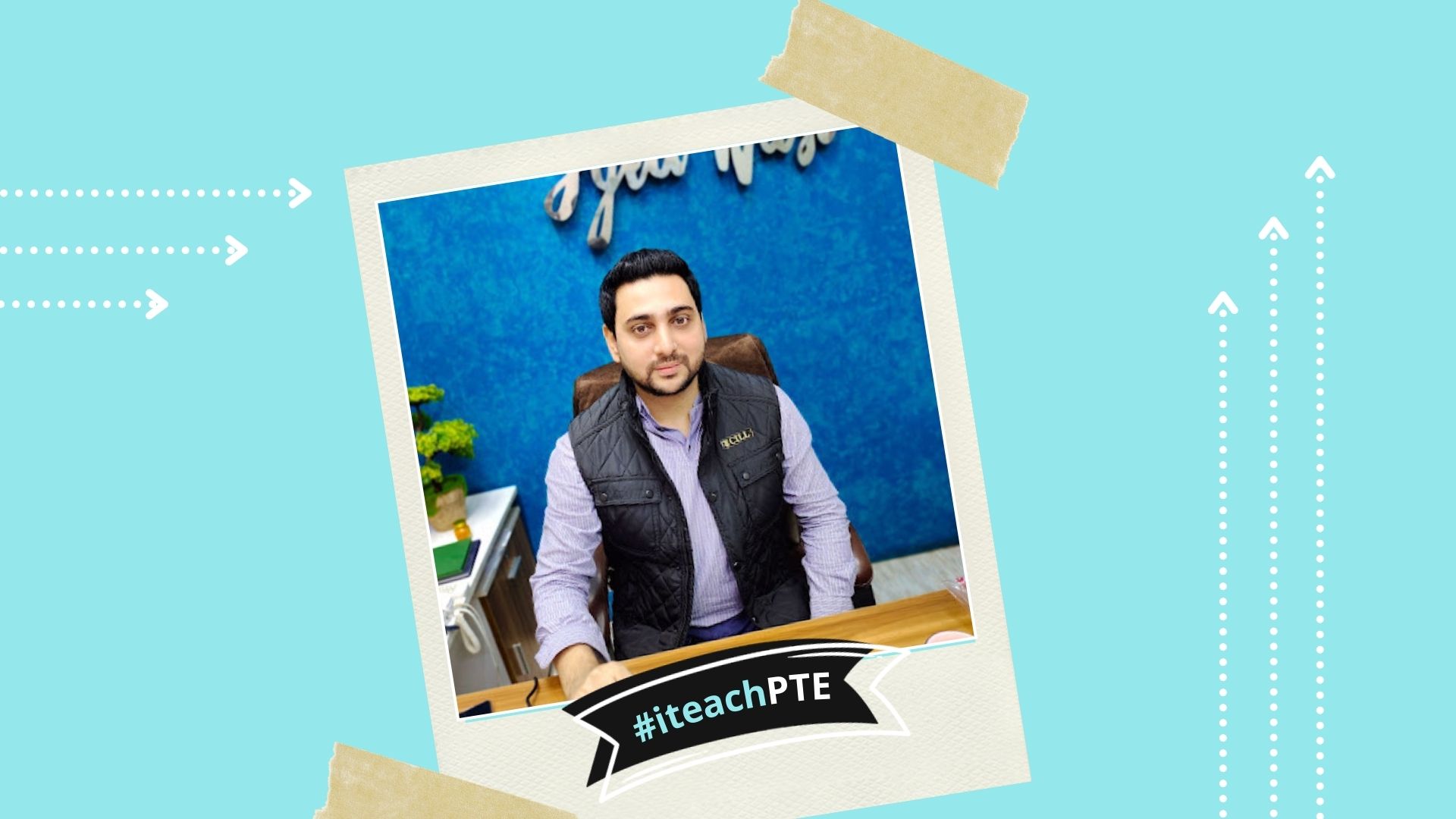
  • Image - iteachPTE Syed Wasi
    Teacher profile: Building a learning community in Dhaka
    By PTE Author
    Reading time: 5 minutes

    Syed Wasi is a pioneer in many ways. He was the first PTE trainer in Bangladesh, and the first Bangladeshi to score 90 in PTE – no mean feat in a country of 166 million people! Syed is the founder of the Center for Innovative Language Learning (CILL) where students come for his help in preparing for PTE. The center is renowned for its high student success rate.  

    So, how does Syed help his students to get the scores they need in PTE? Let’s find out.  

    How Syed teaches PTE  

    When a student arrives at CILL, their first step towards PTE success starts with a language assessment. “If we find that their language skills aren’t particularly strong,” says Syed, “the first thing we do is create a course which includes general language classes. We go step by step through the levels, helping them to improve their language skills – and once they are ready for PTE, they join a PTE preparation class.”  

    Once Syed’s students are part of a preparation class, they follow a carefully designed curriculum. Each language skill tested in PTE (speaking, writing, reading and listening) is covered in a module of three classes. The first class introduces the type of exam questions that students can expect. The second class gives students the practical tools and techniques that they’ll need to answer the exam questions, and the third class is a practice session. But the secret to Syed’s success? He doesn’t let the students sit PTE before they’re ready:  

    "The final step in PTE preparation is the mock test. We don’t let them take the test until they’re ready for the test, which is why we have a very high success rate.”  

    Flexibility is also important. The PTE preparation courses at CILL are blended courses; some students attend the center in person, and others join online. When the pandemic began, there was a massive shift to teaching online, and many schools had to adapt quickly. But Syed’s language school was ahead of the curve when it came to blended learning. “I did my masters in online teaching back in 2012,” says Syed. “We’ve been teaching with a blended learning model since 2016, so it was easy for us to adapt. Now, students are returning to the classroom, but we still offer the blended learning option.”  

    Building a community of learners  

    An important part of the school culture at CILL is the accessibility of the teachers. Learning isn’t confined to the classroom – the teachers are available to answer questions outside of class times. “We create WhatsApp groups for different classes, and it’s like a virtual hub,” Syed explains. What’s more, the teachers follow up with students after class. This dedicated service has helped Syed to build a loyal community of learners around the world. “Many of our students have moved to Australia, to the UK, or to other countries,” he says. “And wherever they go, if they meet anyone interested in PTE preparation, they refer them to our school. They’ll say, there’s a person in Bangladesh who can give you the support you’ll need to pass the test.”  

    Syed’s advice for PTE teachers 

    “If you’re new to PTE teaching, the most important thing is to make sure you have the expertise you need to prepare students for the test,” Syed says. After all, there’s a lot on the line when it comes to PTE. Students often need a certain score for a university application or a visa. So if you don’t prepare students thoroughly, it could have an impact not only on their score but on their careers. Syed recommends taking the test yourself in order to gain real insight into PTE.  

    And for more experienced teachers, Syed believes that honesty is the best policy when it comes to test preparation. “Tell your students exactly what they’ll need to do in order to get the score they need. Be honest with them, and that way they know what they have to do.”  

    PTE is a high stakes test. When you’re helping students to prepare for the exam, you’re helping them to change their lives, to do something new. “It’s not just a business,” says Syed. “We are helping students to reach their goals. It’s my passion, and my vocation.”  

    Learn more

    Each month, we feature the profile of a teacher from our PTE community. If you have advice and insights to share with other PTE preparation teachers, we’d like to hear from you! Fill out this form and we’ll be in touch shortly.  

    In previous months, we featured Jurine Ruperto, who teaches in Cebu in the Philippines, and Ramesh Thapa, a PTE teacher in Kathmandu. You can read all about them on our blog, where you’ll also find lots of resources for PTE preparation classes. And don’t forget to sign up to our monthly newsletter.

  • Image - Typing
    How to prepare for the PTE essay writing task
    By PTE Author
    Reading time: 6 minutes

    The PTE exam includes four main sections: reading, writing, speaking, and listening. You will do the speaking and writing tasks together in part one of the exams. While your writing will be assessed in your answers to other tasks, there are only two specific writing tasks: summarize a written text and write an essay.   

    The PTE essay writing task aims to test your grammar, spelling, vocabulary, and written discourse skills. Therefore, it’s important that you understand this section, and what’s expected before going into the exam.  

    If you’re looking for some tips and guidance on how to approach this part, look no further! 

    Read on to find out what the essay writing task is about, how to approach it, and what the examiners are looking for. 

    Essay Writing Task Structure 

    For this task, you will receive a 2 to 3 line prompt stating an opinion or statement. Prompts can be written in a number of ways.  

    For example, you may have to discuss problems or solutions, or argue for or against an opinion: