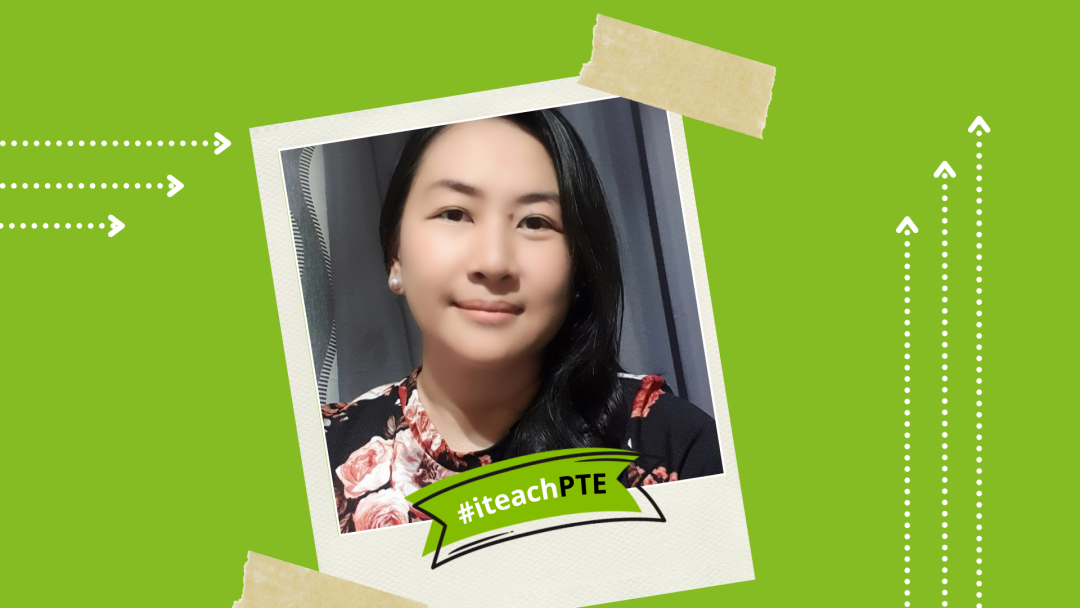

Teacher profile: Helping Filipino students achieve their goals

PTE Author
PTE Author
Image - iteachPTE: Juniper Ruperto
Reading time: 4 minutes

In the Philippines, there has long been a culture of emigration. It’s common for Filipinos to move overseas to work, study and live. In fact, there are more than 10 million Filipinos living and working around the world. What’s more, about 60,000 people have emigrated each month since the start of 2021!   

PTE teacher Jurine Ruperto helps students get ready for the linguistic challenge of moving overseas. She is the owner of Ace Review Center, a language school that prepares students to take the language tests they’ll need for working visas and university applications.  

We spoke to Jurine to find out about her experience of teaching PTE, and the advice she would offer to other teachers.  

How Jurine prepares her students for PTE  

Ace Review Center was one of the first language schools in the Philippines to offer PTE preparation, and they have been helping Filipino professionals and skilled workers prepare for the test for six years.  

Now, the teachers at Ace Review Center have years of experience in preparing students for the exam - and when it comes to results, their experience shows. 

“We have a high passing rate - and a good number of students who’ve scored a perfect 90,” says Jurine.  

So what’s her secret? According to Jurine, she builds her students’ skills slowly as they learn the basics of each task type, through a range of different activities.  

“One of my favorite activities is idea building or [creating] mind webs, which are very useful in writing tasks,” she says. “Students are given a topic and are encouraged to contribute ideas related to it and expounding with supporting details.” 

According to Jurine, one of the most common challenges for test takers is vocabulary. In order to help them achieve better results, she encourages them to increase their exposure to English in their everyday lives. “Reading and watching movies and TV shows helps to build their knowledge and familiarity with English terminologies and word usage.”  

Building student confidence  

We all have those teaching moments that stick with us, for one reason or another. For Jurine, it's an experience she had with a learner with low confidence that comes to mind. 

The student needed to build his confidence back up when he came to her for PTE preparation classes. “One of my very first students in PTE had a bad experience in another English test,” she says. “He took the test several times with no success - despite only needing a band score of 5.”   

So, she said, he signed up for a month of PTE test preparation. It was then that he really started to believe in his language abilities. Jurine thinks the fact that PTE is computer-based made a difference.  

“It must have helped that the test is through a computer because he would easily get intimidated when facing an examiner during the speaking test,” she explains. His minimum target score for PTE was 54 - but on the day of the test he actually scored above this!  “By now,” she muses, “he must have already finished his culinary studies in Australia.” 

Jurine’s top tip for PTE teachers  

When we asked Jurine to share her top tip for other PTE teachers to help their students achieve success, she underlined the importance of really knowing the test inside and out. “It is best for teachers to immerse themselves in PTE sample practice tests to familiarize themselves with the test format,” she says. “That way, they will understand their learners' needs.”  

Further resources

You can access preparation resources to help your students through the PTE website, where there are a range of materials available, from Scored Practice Tests to a question bank with over 300 sample questions and answers.  

The Official Guide to PTE Academic will give you all the information you need to prepare your students thoroughly - and there’s even free course modules available to give your exam preparation teaching skills a boost!  

Do you have advice and insights to share with other PTE teachers? If so, we’d like to hear from you! Each month we’ll be shining a spotlight on someone from our global teaching community.  

Don’t forget to sign up for our monthly teacher newsletter, which shares teaching tips for test preparation.

Related Content

  • Image- Study group - 800px
    Speaking: Core English Skills
    By PTE Author
    Reading time: 3 minutes

    In Part 1 of the PTE Academic test, you require certain skills to answer the questions within the test to the best of your ability.

    We’ve put together some tips and advice on how to practice and improve your core skills.

    Oral Fluency

    Oral fluency applies to the Read Aloud, Repeat SentenceDescribe Image and Re-tell Lecture question types.

    To improve your oral fluency before your test, we recommend that you speak English as often as you can. If you don’t have anyone you can speak English with, join an English-speaking club or take a short course.

    As soon as you’ve booked the test, we suggest that you try to read, listen and write in English as much as you can.

    If you’re having trouble with speaking too slow or too fast, record yourself and listen back to identify where you need to improve.

    You can also use Tiny Texts to help improve your speaking. Read the text silently to yourself, then listen to a recording while you read and have a try afterward to read at a similar pace.

    Pronunciation

    Pronunciation skills are required for the Read Aloud, Repeat SentenceDescribe Image and Re-tell Lecture question types.

    In PTE Academic you do not have to speak like a fluent speaker of English to do well. However, you do need to use a pronunciation that can be understood by a regular speaker of English.

    This means you need to make sure your vowel and consonant sounds are pronounced in a fluent-like way with the correct words. You also need to use the correct sentence stress to convey meaning.

    Luckily, there are many online tools that can help with your pronunciation, such as:

    Vocabulary

    The only question type in the speaking section that will require strong vocabulary skills is Answer Short Question.

    The easiest way to improve your vocabulary is to keep a vocabulary notebook to use as your own personal dictionary. When you hear or see new words, add them along with the meaning and put them in a sentence.

    Want more prep ideas?

    Explore Smart Prep, which combines all our practice materials in one place, so it's easier for you to stay on track with your PTE preparation.

    • Smart Prep is a clear path to test day, guiding you through the official paid and free resources available for your test

    • It can be accessed whether you’ve booked a test or not – just create, or sign in to your myPTE account

    • Preparation materials include guided practice tests, introductory videos, video courses and test tips.

    Ready to get started?

  • Image- Students at library- 800px
    Part 3: Listening Test Introduction
    By PTE Author
    Reading time: 4 minutes

    Part 3 of PTE Academic will take 45-57 minutes to test your listening skills.

    This section is designed to test your ability to listen, read and write. PTE Academic is an integrated skills test, therefore, this test contains multiple question types that test up to 2 skills each.

    There are eight question types in the listening section. A breakdown of these question types is as below.

    Summarize Spoken Text

    The first question type you will need to complete is Summarize Spoken Text, which will tests listening and writing skills.

    To complete the task, a recording between 60-90 seconds long will be played for you to listen to. As you listen, try to use the Erasable Noteboard Booklet to take notes of key points to help you understand the context.

    After the recording, you will have 10 minutes to write a summary of what you heard.

    To answer this question type, you must write a minimum of 50 words but no more than 70 words.

    You can receive a maximum of 2 points for content, 2 for form, 2 for grammar, 2 for vocabulary and 2 for spelling.

    Multiple-choice, multiple answer

    The second question type, Multiple-Choice, Multiple Answer will test listening skills.

    First, you will be given information to help answer the question. You only have 7 seconds to read this. A recording will then play that is between 40-90 seconds long.

    Select all the response options that you think are correct.

    In this question type, you can receive 1 point for each correct option, but will lose -1 point for each incorrect option. You cannot score below 0.

    Fill in the blanks

    In the third question type, Fill in the Blanks, listening and writing skills will be tested.

    Similar to the previous task, you will be given 7 seconds to read some information before hearing the recording.

    A recording between 30-60 seconds will play. As you listen, type each word in the blank spaces as you hear them so that you do not miss any.

    Do not leave any spaces blank, you can review them at the end.

    You receive 1 point for each correct word which is spelled correctly.

    Highlight correct summary

    The fourth question type, Highlight Correct Summary, will test listening and reading skills.

    You will be given 10 seconds before the recording starts to read the options. A recording will be played that is between 30-90 seconds long.

    To complete the task, select only one correct response. If unsure, choose the one you think is correct as you cannot lose points in this question.

    Your response will either be marked as correct or incorrect.

    Multiple-choice, single answer

    The fifth question type, Multiple-Choice, Single Answer will test listening skills.

    To complete this task, you will be given information to read for context, you will then need to listen to a recording between 30-60 seconds long.

    Choose the option that best suits.

    Your response to this question type will be marked as correct or incorrect.

    Select missing word

    In the sixth question type, Select Missing Word, will test your listening skills.

    A recording between 20-70 seconds long will be played and you will need to predict the last word or words of the text to complete the task.

    You will be marked on this question type as either correct or incorrect.

    Highlight incorrect words

    In the seventh question type, Highlight Incorrect Words, your listening and reading skills will be tested.

    In this question type, you will be shown information and have 10 seconds to read it before a recording starts.

    A recording between 15-50 seconds will play and you will need to select the words that are incorrect and do not match the recording.

    You can receive 1 point for each correct word and lose -1 point for each incorrect word. You cannot score below 0.

    Write from dictation

    The eighth and final question type, Write from Dictation, tests listening and writing skills.

    You will have 7 seconds to read the instructions before the recording starts. The recording is between 3-5 seconds long and once it starts, listen and type the sentence in the response box.

    You can receive 1 point for each correct word you write. Write the words in the right order and spell them correctly in order to receive 1 point. Points are not lost for incorrect words.

    What's next?

    We recommend reviewing the core listening skills required for PTE Academic.

    Want more prep ideas?

    Plus, explore Smart Prep, which combines all our practice materials in one place, so it's easier for you to stay on track with your PTE preparation.

    • Smart Prep is a clear path to test day, guiding you through the official paid and free resources available for your test

    • It can be accessed whether you’ve booked a test or not – just create, or sign in to your myPTE account

    • Preparation materials include guided practice tests, introductory videos, video courses and test tips.

    Ready to get started?

  • Image- Australian flag- 800px
    Australian post-study work visas
    By PTE Author
    Reading time: 5 minutes

    Are you an international student in Australia who has recently completed your degree? Congratulations! With your studies complete it is now time to think about your future in Australia. Did you know you can apply for a post-study work visa (also known as a Temporary Graduate visa or subclass 485) following the completion of your studies? This enables you to work, live and travel in Australia. Find out more about this visa below.

    What is the post-study work visa and what does it mean for you?

    Depending on the qualification you graduate with, this visa allows you to stay in Australia for up to 8 years following the completion of your studies, depending on your field of study and degree level. Recent changes have extended work rights for graduates in areas of workforce need. The Australian government currently estimates application processing times to range from 3 to 6 months. 

    Eligibility requirements  

    Before you apply, check to see if you meet the Australian government’s study requirements to ensure you meet eligibility requirements. A post-study work visa is only available if you successfully applied for your first student visa on or after November 5th, 2011. In order to ensure your application for this visa is processed by the Australian government, you’ll need to have held an Australian student visa for a period greater than 6 months before your application date and currently hold a substantive visa.

    Eligibility Requirements   

    Before you apply, check to see if you meet the Australian government’s study requirements to ensure you meet eligibility requirements. A post-study work visa is only available if you successfully applied for your first student visa on or after November 5th, 2011. In order to ensure your application for this visa is processed by the Australian government, you’ll need to have held an Australian student visa for a period greater than 6 months before your application date and currently hold a substantive visa. 

    Please note that you are not eligible for a post-study work visa if you have previously held a Temporary Graduate visa or a Recognised Graduate visa as a primary visa holder. However, graduates who studied at regional institutions may qualify for a second Post-Study Work visa. This second visa allows an additional 1–2 years of stay, provided that the applicant lived, worked, or studied in a regional area throughout their first PSW visa period. This initiative is part of the Australian government’s efforts to attract skilled graduates to regional areas and promote economic growth outside major cities. 

    Check your eligibility in full on the Australian Government Department of Home Affairs website

    The application process 

    The Australian government provides a useful step by step visa guide so students have a simple resource to follow once they’re in the position to apply for their Temporary Graduate visa.

    1. When should you start the application process? 

    It’s important that you start the application for your post-study work visa as soon as you receive confirmation from your education provider that you’ve successfully completed your studies. You must apply for this visa within 6 months of completing your eligible course.

    2. Ensure you have the required documents and paperwork 

    As with any application, you’ll need to provide documented evidence to support your application. It’s important that you thoroughly review all required documentation so you do not accidentally miss items essential to your application. Given that some documents may be harder to source than others, it’s important to get started on your application as soon as you receive notice of your successful completion. Please ensure you check the Australian Government Department of Home Affairs website to make sure you have up to date advice and a detailed list of required documentation.

    One of the most important documents to provide with your application is your English language test results to prove your proficiency. PTE Academic is accepted by the Australian Government Department of Home Affairs for all visa categories, including post-study visa applications.

    To use PTE Academic to apply for an Australian visa, you need to select ‘Australia’ on the country dropdown menu and ‘work’ on the current goal options. You can choose to have your scores allocated to the DHA when you register or simply provide the Score Report Code on your visa application form so they can access your result.

    Find out more about PTE Academic and the test centers near you.

    3. Applying for your post-study work visa 

    Once you’ve gathered the required documentation, you’ll apply for your visa through your Immi account. If your student visa features a ‘no further stay’ condition (either 8534 or 8503), you’ll need to apply for your visa via the paper form. It’s at this point of the process that you’ll pay the required fee for your visa, and it’s also from this point that the processing of your application actually commences.

    4. What happens after you file your application? 

    As is the case when applying for a student visa, the Australian government will notify you of any additional required documentation through your Immi account. It’s important to note that if you choose to leave Australia once you’ve filed your post-study work visa application, you’ll need to inform the government. If you’re not in Australia when the government makes the decision about the status of your application, you may run the risk of your visa expiring.

    5. Visa outcome 

    If you’re successful with your application, the Australian government will notify you of your new visa status as a Temporary Graduate visa holder in writing. It’s important to remember that all updates will be received through your Immi account and as such, there’s no need to call for updates regarding your application.

    Are you currently waiting to find out if your visa application has been successful? Whilst it can be stressful waiting for confirmation when professional opportunities are on the line, remember to keep an eye on your Immi account and stay on top of updates. Good luck!

    Last updated 20 December 2024.