
Cost of living in the UK

PTE Author
PTE Author
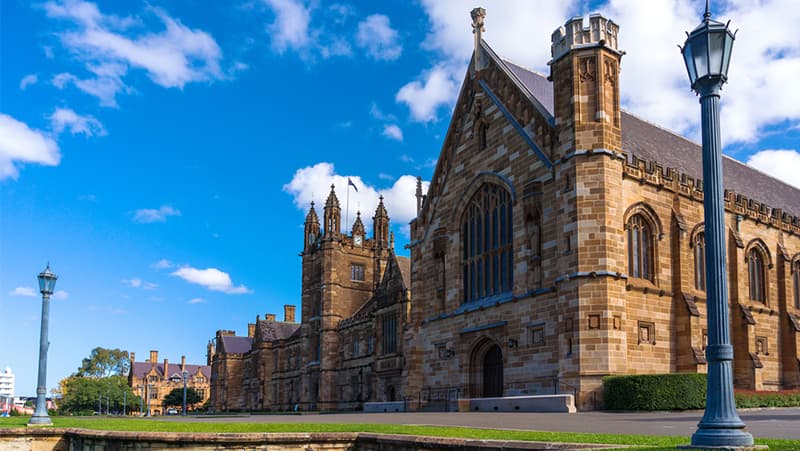
Image- UK, 800px x 451px
Reading time: 4 minutes

You may have heard that London is one of the most expensive places in the world to live in, but fortunately, London, and by extension, England, does not equate to the whole of the UK. In fact, many UK towns and cities are very liveable when compared to other cities across the globe.  

There is quite a bit to look at when considering the cost of living in the UK. Apart from tuition fees, there’s also the cost of rent, transport, and even entertainment – because if you’re living in the UK, there’s no way you should miss out on everything that this great country has to offer- from the food to the culture.  

Let’s look at some aspects of the UK cost of living, so you can best adjust your budget and prepare yourself for a new life abroad. 

Calculating living costs in The UK 

When looking at the cost of living in the UK, it’s best to use an online currency calculator to convert your currency to the British pound – that will give you a better idea of the true cost of living in relation to your country. 

Here’s a rough guide to the currency conversions we have used in this article, dated March 27th, 2020:

  • AU$1,000 = £500

  • US$1,000 = £805

  • €1000 = £895

Once you have a better understanding of the conversion rate, you can better interpret how much rent, utilities and other everyday costs will affect your budget.  

A weekly UK budget 

There are so many factors that contribute to the UK cost of living that it’s impossible to give you a set cost for each week. But a recommended starting point for a budget for a single student in the UK, per week, averages out to about £300. Let’s see how we got to this number (please note these costs are an average from across UK metropolitan cities, outside of the city center). 

Item Cost
Rent (one-bedroom flat)  £162 
Council Tax  £25
Other Utilities (Electricity, Gas etc.)  £40
Travel Costs (if not living on campus)  £14
Food £60
Total £301 

Students in the UK should always take advantage of student pricing to keep costs down. This can include student rates on monthly transportation passes, university dining halls, Halls of Residence living options (which are around £80 per week), and more. If you can work while studying in the UK, it will bring even further financial relief. 

Taking further costs into account, a single student should budget around £15,000 per annum for living in the UK 

This is of course not a comprehensive list, but it will give you a good starting point when it comes to determining your personal cost of living in the UK. 

Cost of living in different UK cities 

As stated earlier, there’s more to the UK than England and London, and the cost of living can vary greatly between cities and countries. If you’re living within a tight budget, you will be more comfortable in a major regional city or a smaller town. The UK standard of living is largely the same, no matter where you choose to call home.

Here are the variations in the cost of rent in London versus other major UK capitals. Price differences in food and other utilities are also similarly reflected across the UK (e.g. the cost of food in Liverpool can be up to 30% cheaper than the cost of food in London).

City Rent average (monthly)
London £1,665 
Edinburgh  £1545
Manchester  £1212
Birmingham £1082
Cardiff  £1014
Glasgow  £902
Belfast  £842 

How much does education cost in the UK? 

University tuition in the UK is another important factor in the cost of living. The UK has world-class education facilities and caps the amount that can be charged for resident students in the UK and the EU at £9,250 a year. International students will pay more – in London, the annual tuition fee ranges from £16,340 to £32,670 depending on the selected course.

How much is health care in the UK? 

Much like their education system, the UK also has an extensive and first-rate health care system known as the National Health Service (NHS). Citizens of the UK access the NHS for free, as do international students per their visa.  

If you prefer, you can sign up to a private health fund, which can lead to faster access to certain health services. This means that a GP check-up will set you back around £70. 

While expensive, living in the United Kingdom comes with many rewards – from its cultural melting pot to its proximity to Europe for the keen traveler. If you’re planning on making the UK your home in the near future, check out PTE English tests for the UK

Related Content

  • Image- Visa, 1080px
    How to apply for permanent residence in the UK
    By PTE Author
    Reading time: 4 minutes

    Do you want to settle in the UK? With great healthcare, world-class education, and lots of art, history, and culture, it’s an excellent place to call home.

    In this guide, we’ll explore how to take up permanent residence in the UK. We’ll delve into who can apply, and the online resources you’ll need to start your application.  

    Why Live in the UK 

    The UK is very multicultural. In fact, about 14% of the population in the UK was born abroad, according to the Migration Observatory at the University of Oxford.  About 35% of the immigrant population lives in London.  

    The UK has an excellent healthcare system, too. The National Health Service (NHS) is free for residents and has been ranked among the best in the world for its affordability, safety, and efficiency. UK countries also boast world-class research facilities, universities, and a strong education system in general. 

    How to apply for permanent residence in the UK  

    Permanent residence in the UK is also known as Indefinite Leave To Remain (ILR). With this, you can live and work in the UK permanently. You may also be able to apply for British citizenship after 12 months.

    There are different ways to apply to live permanently in the UK, depending on your situation. For example, you might be able to apply for ILR if: 

    You’ve lived in the UK for 5 years or more 

    If you have lived in the UK for 5 or more years, you should be able to apply for permanent residence in the UK. There are exceptions, though. For example, you won’t be able to apply for ILR if you’ve lived in the UK on a Tier 2 ICT work visa – given to people who’ve transferred to a UK company branch from abroad to work on a specific project.  

    You’re a family member of a UK citizen or permanent resident  

    If you’re the spouse, parent, or dependent relative to a UK citizen or permanent resident, you might also be eligible for ILR. Depending on the type of visa you’ve been living in the UK on, you might be able to apply for permanent residence as soon as 2 years.

    Check if you can get indefinite leave to remain and learn about the financial requirements needed to apply.   

    You have a work visa  

    You can apply for ILR if you’ve had a Tier 2 (General) work visa for five years. Your employer will need to sponsor you. You’ll also likely have to prove you earn at least £25,600 per year unless you work in healthcare or in a profession that’s in short supply in the UK.  

    Learn more about how to apply through ILR through your work visa

    Fees and processing times 

    According to UK Visas and Immigration, ILR takes about 6 months to process. The application for ILR costs £2,389. But keep in mind that many categories have financial requirements, which can make applying much for expensive. 

    English requirements 

    To apply for ILR, you might have to demonstrate your English skills are at least a B1 level. And, our PTE Academic UKVI secure English language test is recognized by the UK Home Office for all UK visas. The test is computer-based to reduce human bias, fast, and convenient – you get your results within 48 hours.  

    Discover how PTE Academic UKVI can help 

    The EU Settlement Scheme  

    If you’re an EU citizen – and don’t have IRL – you can apply for the EU Settlement Scheme.  

    Applying for the scheme is free, and with it, you’re granted either “settled” or “pre-settled status.” With settled status, you can stay in the UK indefinitely. With pre-settled status, you can stay for another 5 years – but can always apply for settled status later.  

    With both, you’ll get the right to work and study in the UK, access NHS, access public benefits and pensions, leave the UK to travel – and apply for British citizenship after 12 months.  

    Read our article about applying for the EU Settlement Scheme

    Ready to apply for permanent residence? 

    At PTE Academic, we’re here to help make your dream come true.

    Prepare for – and book – your approved English language test for permanent residence in the UK today.

  • Image- student, 1080px
    Scholarships for international students in Australia
    By PTE Author
    Reading time: 4 minutes

    Dreaming of studying in Australia? It’s never too early to start planning financially. Tuition fees for international undergraduate students typically range from AUD 35,000 to AUD 55,000 per year, depending on the university, course of study, and location. For example, STEM and medical programs are generally more expensive than humanities or social sciences​. However, there are lots of scholarships available to help pay for your studies. 

    In this article, we’ll look at what funding is available for international students in Australia. By the end, you’ll have a list of resources to explore to find the scholarship that’s right for you.  

    Are you eligible for a scholarship? 

    Australia offers grants, bursaries, and scholarships to people from around the world – including undergraduate, postgraduate, PhD, and vocational students. They’re funded by the government, universities, and private entities.  

    The Australian Government has an excellent scholarship search tool on its website. With it, you can search for funding opportunities based on a whole range of factors – like what country you come from, what university you’re attending, and your area and level of study. You’ll see how much each scholarship is worth, who it’s made for, and of course, whether you might be eligible.  

    Australian scholarship opportunities  

    Now, let’s cover a few scholarship opportunities for international students in Australia. 

    Australia Awards Scholarships 

    Australia Awards scholarships are offered to global student leaders from developing countries. They’re awarded by the Department of Foreign Affairs and Trade (DFAT), and support students with full tuition, airfare, living costs, and more. In 2021, 818 Australia Awards were given to students from 20 countries worldwide.  

    Destination Australia Awards  

    The Australian government introduced the Destination Australia program to provide both local and international students with the opportunity to study in more regional and remote areas of Australia – towns such as Ballarat (Victoria), Gatton (Queensland), and Lismore (New South Wales). The scholarships are given out through Australian universities and provide students with up to $15,000 AUD each year.  

    University-specific scholarships 

    In addition to government-provided scholarships, universities also offer their own scholarships to qualifying international students. There’s the James Rice Postgraduate Award at The Australian National University (ANU); International Stand Out Scholarship at Bond University, and the Adelaide Refugee & Humanitarian Postgraduate Coursework Scholarship at University of Adelaide.

    The point is, universities offer lots of scholarships for international students based on a long list of eligibility factors – like home country, area of study, and academic merit. 

    To search for funding opportunities at your own institution, use the search tool on the Australian Government website.

    A case study: Monash University scholarships 

    To get an idea of all the different scholarships that can be offered by Australian universities, we’ll take a closer look at one popular institution for international students: Monash University.  

    Monash University is recognized for its research and teaching, and offer more than 80 scholarships to international students, including:   

    Universities throughout Australia offer similar scholarships.  

    To apply for any scholarship or funding opportunity, you’ll need to contact the scholarship provider.  

    Other ways to fund your studies 

    As an international student, there are other options to pay for your studies in Australia.   

    One of the biggest perks of studying in Australia is that international students can work up to 48 hours every two weeks while studying and unlimited hours during study breaks on an Australian student visa. The minimum wage is $24.10 per hour or $915.90 per week,  meaning you’ll be able to put some money aside to help fund your education.

     Depending on where you are from, you might also be able to get a student loan or scholarship from your own country to study overseas.  

    Last updated 20 December 2024.

    PTE Academic can support you on your journey abroad. Our computer-based, bias-free English language proficiency test is accepted by all universities in Australia – as well as by the Department of Home Affairs for all visa categories. 

    Learn more about PTE Academic in Australia.

  • Image- calculator-800px x451px
    Living expenses in the UK for international students
    By PTE Author
    Reading time: 3 minutes

    Studying abroad in the UK can be expensive. International students need to budget for flights, tuition, textbooks, accommodation, and don’t forget the visa application.

    Of course, living costs in the UK for international students can vary depending on your lifestyle and where you live. So, in this blog, we’ll look at how much students in the UK spend on average each month – and explore how much it cost to live in a large city, compared to a smaller city.  

    Average student living expenses in the UK