Cost of living in the UK

PTE Author
PTE Author
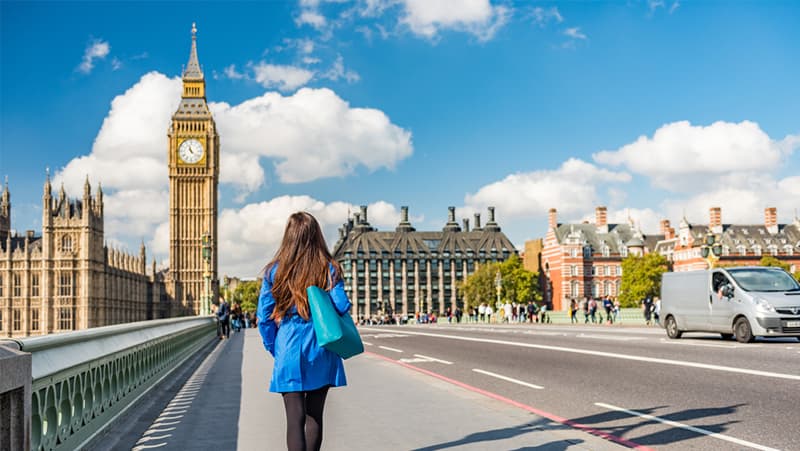
Image- UK, 800px x 451px
Reading time: 4 minutes

You may have heard that London is one of the most expensive places in the world to live in, but fortunately, London, and by extension, England, does not equate to the whole of the UK. In fact, many UK towns and cities are very liveable when compared to other cities across the globe.  

There is quite a bit to look at when considering the cost of living in the UK. Apart from tuition fees, there’s also the cost of rent, transport, and even entertainment – because if you’re living in the UK, there’s no way you should miss out on everything that this great country has to offer- from the food to the culture.  

Let’s look at some aspects of the UK cost of living, so you can best adjust your budget and prepare yourself for a new life abroad. 

Calculating living costs in The UK 

When looking at the cost of living in the UK, it’s best to use an online currency calculator to convert your currency to the British pound – that will give you a better idea of the true cost of living in relation to your country. 

Here’s a rough guide to the currency conversions we have used in this article, dated March 27th, 2020:

  • AU$1,000 = £500

  • US$1,000 = £805

  • €1000 = £895

Once you have a better understanding of the conversion rate, you can better interpret how much rent, utilities and other everyday costs will affect your budget.  

A weekly UK budget 

There are so many factors that contribute to the UK cost of living that it’s impossible to give you a set cost for each week. But a recommended starting point for a budget for a single student in the UK, per week, averages out to about £300. Let’s see how we got to this number (please note these costs are an average from across UK metropolitan cities, outside of the city center). 

Item Cost
Rent (one-bedroom flat)  £162 
Council Tax  £25
Other Utilities (Electricity, Gas etc.)  £40
Travel Costs (if not living on campus)  £14
Food £60
Total £301 

Students in the UK should always take advantage of student pricing to keep costs down. This can include student rates on monthly transportation passes, university dining halls, Halls of Residence living options (which are around £80 per week), and more. If you can work while studying in the UK, it will bring even further financial relief. 

Taking further costs into account, a single student should budget around £15,000 per annum for living in the UK 

This is of course not a comprehensive list, but it will give you a good starting point when it comes to determining your personal cost of living in the UK. 

Cost of living in different UK cities 

As stated earlier, there’s more to the UK than England and London, and the cost of living can vary greatly between cities and countries. If you’re living within a tight budget, you will be more comfortable in a major regional city or a smaller town. The UK standard of living is largely the same, no matter where you choose to call home.

Here are the variations in the cost of rent in London versus other major UK capitals. Price differences in food and other utilities are also similarly reflected across the UK (e.g. the cost of food in Liverpool can be up to 30% cheaper than the cost of food in London).

City Rent average (monthly)
London £1,665 
Edinburgh  £1545
Manchester  £1212
Birmingham £1082
Cardiff  £1014
Glasgow  £902
Belfast  £842 

How much does education cost in the UK? 

University tuition in the UK is another important factor in the cost of living. The UK has world-class education facilities and caps the amount that can be charged for resident students in the UK and the EU at £9,250 a year. International students will pay more – in London, the annual tuition fee ranges from £16,340 to £32,670 depending on the selected course.

How much is health care in the UK? 

Much like their education system, the UK also has an extensive and first-rate health care system known as the National Health Service (NHS). Citizens of the UK access the NHS for free, as do international students per their visa.  

If you prefer, you can sign up to a private health fund, which can lead to faster access to certain health services. This means that a GP check-up will set you back around £70. 

While expensive, living in the United Kingdom comes with many rewards – from its cultural melting pot to its proximity to Europe for the keen traveler. If you’re planning on making the UK your home in the near future, check out PTE English tests for the UK

Related Content

  • Card- Barista- part time job
    5 part time jobs for international students in Australia
    By PTE Author
    Reading time: 5 minutes

    Studying in Australia is a dream for many students. The country is known for its long stretches of white sandy beaches, rugged outback, and charming people. 

    It’s also home to more than 1,100 world-class institutions - earning Australia a reputation for being a top study abroad destination. And don’t just take our word for it: 90% of international students reported being happy studying and living in Australia, according to a 2018 government report.  

    For many international students, working in-between studies to pay for living expenses is also part of life in Australia. So what kinds of jobs are popular for students in the country? And what is the pay like? Let’s take a look:

    1. Barista 

    Coffee culture is huge in Australia. Because the country is famous for its “flat white” drinks and quality coffees, there are many different cafes for international students to apply at. After all, where there is a demand, there will always be jobs! 

    Of course, working as a barista requires that you have strong customer service skills, are proficient in English, and are familiar with popular coffee orders and how to make them (although your workplace will likely also train you). Because cafe culture is so important to Australians, a job serving coffee is arguably one of the best ways to feel immersed in the local culture.  

    2. Bartender  

    For students, being a bartender has many perks. The hours you work rarely conflict with regular university class schedules. Being a bartender is a great way to meet new people. You could also earn tips. Tipping isn’t part of Australian culture per se, however it is becoming more common to tip service staff a small amount to thank them for good service.  

    If you’re interested in serving drinks, you could also consider getting a job at an Australian winery. Because Australia has so many wineries (about 2,361 in total), wine culture is not only a prevalent part of life in Australia. It’s also always usually a thriving industry with lots of job opportunities. 

    3. Server 

    Keen on the hospitality industry? Serving is another great job. And, even better if you get to work at a beachside restaurant. The University of AdelaideThe University of the Sunshine Coast, and The University of Melbourne are all institutions located by the coast, where international students have the opportunity to earn a living part-time while also experiencing Australia’s beautiful beaches.  

    4. Hotel and hostel jobs 

    A bonus of studying in a place that happens to be an internationally-famous vacation spot is that there are many jobs in hospitality. Students studying at institutions like The University of Tasmania, for example, can benefit from the local tourism industry by applying for jobs cleaning in hotels or cooking in hotel kitchens.  

    Australia’s hostels are also great spots to look for a job. Foreign students would be a great fit for hostel jobs like receptionists because of their international experience, age, and language skills. The bonus here is that you will find yourself working amongst like-minded and fun travelers.  

    5. Fruit picking 

    Australia has plenty of fruit picking jobs throughout the country. Strawberry, blueberry, and avocado picking jobs, for example, are all common jobs available to students in Australia. They’re also quite common to come across. Recently, the government also announced they’d allow students working in agriculture to work more hours every week - which is a big plus! We share more on that below.  

    How many hours can I work? 

    When studying in Australia, one of the main regulations for international student visa holders is that  they can work up to 48 hours every two weeks while studying and unlimited hours during study breaks on an Australian student visa. 

    The government changed those restrictions for students working in certain industries to support these sectors during the pandemic. Now, students can work unlimited hours in healthcare, disability care, aged care, agriculture, and tourism. 

    What’s the minimum wage in Australia? 

    Australia is known for its high minimum wage. The minimum wage in Australia is $24.10 per hour or $915.90 per week - this is a huge draw for many international students.   

    Where should I look for work?

    Your institution in Australia should have a career center to help you look for work. They should provide you with resume and interview tips, as well as a job board that lists open positions. We always recommend visiting your institution’s career centre when beginning your job search.  

    There are also job sites like IndeedSeek, and Jobactive from the Australian Government’s Department of Education, Skills, and Employment. All of these sites list thousands of part-time jobs for international students to consider.  

    Last updated 20 December 2024.

    Ready to go? 

    PTE can help you secure a spot at an Australian institution. Our test is faster, fairer, simpler, and accepted by all universities in Australia.   

    Learn more about PTE Academic.

  • Image- study group 800px
    Part 1: English Speaking & Writing Test Introduction
    By PTE Author
    Reading time: 5 minutes

    Part 1 of PTE Academic will take 77-93 minutes and will test your speaking and writing skills.

    To test speaking skills, you will be assessed on your ability to produce spoken English in an academic environment.

    Your writing skills will be assessed by giving written responses in academic English using correct grammar, spelling, and structure.

    Personal Introduction

    First, you will be asked to give a personal introduction to give some information about yourself.

    You will have 25 seconds to read the prompt and prepare your response. You will only have 30 seconds to record a response and can only record this once.

    Don’t worry, your personal introduction is not scored but will be sent together with your score report to the institutions selected by you.

    For the speaking and writing test, there are seven types of questions that you will be scored on. Below, we will break down each part of this section of the test.

    Read Aloud

    The first question type to test your reading and speaking skills will be the Read Aloud assessment. In this test there are 6-7 questions.

    You will be shown a text prompt that will be up to 60 words. You will have 30-40 seconds to prepare by reading the passage. You will also have a set time to read aloud, which will vary by item, depending on the length of the text.

    To complete the question, speak clearly and straight away after you hear a tone. You must finish speaking before the progress bar on the screen reaches the end.

    You can receive a maximum of 3 points for the content spoken, a maximum of 5 points for oral fluency, and a maximum of 5 points for pronunciation.

    Repeat Sentence

    The second question type is Repeat Sentence, which will test listening and speaking skills.

    You will listen to a recording between 3-9 seconds and are given 15 seconds to answer.

    Once the microphone shows as recording, you will need to speak straight away and say all the words that the speaker uses, in the same order.

    For this question, you can receive a maximum score of 3 for content, a maximum 5 for oral fluency, and a maximum of 5 points for pronunciation.

    Describe Image

    The third question type will test speaking skills by describing an image. There are 6-7 questions.

    You will be shown an image and have 25 seconds to study the image and prepare your response. For this task, use the Erasable Noteboard Booklet to take short notes.

    After a short tone is heard, start speaking straight away. You will have 40 seconds to answer and must finish speaking before the progress bar reaches the end.

    In this question type, you can receive a maximum of 5 points for content, a maximum of 5 points for oral fluency, and a maximum of 5 points for pronunciation.

    Re-tell Lecture

    The fourth question type, Re-tell Lecture, will test your listening and speaking skills. There are 3-4 questions in this test.

    You will be given a prompt of up to 90 seconds and will have 40 seconds to answer.

    Audio will be played straight away and you may also see an image related to the audio. While you are listening use the Erasable Noteboard Booklet to take short notes.

    Once the audio finishes you have 10 seconds to prepare. To complete the task, in detail, you will need to cover the situation, characters, aspects, actions, and developments given in the recording.

    You can receive a maximum score of 5 points on content, a maximum of 5 points on your oral fluency, and a maximum of 5 points for pronunciation.

    Answer Short Question

    The fifth question type, Answer Short Question, will assess listening and speaking skills. There are 10-12 questions in this test.

    Here, you will be given a prompt of 3-9 seconds and will have 10 seconds to answer the question.

    You will be required to answer a short question with a clear, simple, single word or a few words. This will not test general knowledge, it will simply test your vocabulary.

    You will receive 1 point per correct word. No points are given for no response or incorrect response.

    Summarize Written Text

    In the first question type in the writing section, you will be required to Summarize Written Text, which will test reading and writing skills.

    You will read a text of up to 300 words and have 10 minutes to write your summary. You will do 2-3 of these questions depending on the combination of tasks in the given test.

    In this assessment, you must write just one sentence. Try using the Erasable Noteboard Booklet to take notes of the main points.

    Make sure to include the main points of the text in a full, single sentence of no more than 75 words.

    You can receive a maximum score of 2 points for content, maximum 1 point for the formal requirements, a maximum of 2 points for grammar and a maximum of 2 points for vocabulary.

    Essay

    The last question type of the Speaking and Writing Test will test writing skills.

    In this question type, you will be provided with 2-3 sentences of text prompt and have 20 minutes to answer, by writing a 200-300 word argumentative essay on a given topic.

    Time management is important for this task as you will need to plan, write and proofread your essay.

    In this question, there are many parts where you can receive points. You can receive a maximum of 3 points for the content, maximum of 2 points for the formal requirements and maximum 2 points for development, structure and coherence.

    You can also receive a maximum score of 2 points for grammar, maximum 2 points for general linguistic range, maximum 2 points for vocabulary range and a maximum of 2 points for no spelling errors.

    There is a total of 15 points that you can pick up in this question type.

    What's next?

    Read more about Part 2: Reading Test Introduction.

    Want more prep ideas?

    Plus, explore Smart Prep, which combines all our practice materials in one place, so it's easier for you to stay on track with your PTE preparation.

    • Smart Prep is a clear path to test day, guiding you through the official paid and free resources available for your test

    • It can be accessed whether you’ve booked a test or not – just create, or sign in to your myPTE account

    • Preparation materials include guided practice tests, introductory videos, video courses and test tips.

    Ready to get started?

  • Image, student, 800px x 451px
    Australian loans for international students
    By PTE Author
    Reading time: 5 minutes

    It’s not hard to understand why so many international students want to move to Australia. The country has a world-class education system, excellent climate, and high quality of life. But studying in Australia can be expensive – and you need to be financially prepared before you take the leap.  

    In this blog, we’ll help you get started. We’ll explore the student loan options available for international students in Australia, as well as other ways to fund your studies.  

    How much money will I need? 

    Before you begin to research student loans, it’s important to understand how much it costs to live and study in Australia. You can use the Course Search Tool to find out detailed tuition fee for your dream course and the Cost of Living Calculator to estimate the living cost based on the city you want to move to.  

    What student loans in Australia could I be eligible for? 

    Australia’s student loan system is known as the Higher Education Loan Program (HELP).  Unfortunately, HELP can only be accessed by Australian citizens or individuals who hold a humanitarian visa. However, there are still lots of other student loans available for international students in Australia.  

    University loans 

    Universities across Australia provide loans for local and international students. Most institutions offer both short-term and long-term loans; these can help students cover emergencies, as well as pay for bigger expenses.  

    Here are a few examples of what some universities offer:  

    • The University of Melbourne will loan eligible students up to$5,000 AUD ($3,883 USD) if they have an Australian co-signer. They’ll loan students up to $3,000 AUD ($2,330 USD) if their co-signer lives overseas or isn’t an Australian citizen/ permanent resident. 

    • The University of Sydney offers loans up to $2,000 ($1,550 USD), which can be paid back up to two years after graduation.  

    • Students in need of financial assistance at Monash University can take out loans between $750-$3,000 AUD ($544 – $2,330 USD), to be paid back within 6-12 months. 

    Universities across Australia offer similar loans. It’s best to check directly with your institution to see exactly what loans are available to students – and to make sure you’re eligible.  

    International student loan schemes  

    You might be eligible to take out federal student loans in your home country to study in Australia. For example, students from the U.S., Canada, Sweden, Norway, or Denmark who attend the University of Sydney can access government funding from home.  

    Private loans  

    A private loan is one of the simplest forms of international student loans in Australia: you borrow money from a bank or similar lender and repay the loan (with interest) over an agreed-upon period of time. These loans can be secured – which means they’re tied to collateral – or unsecured. But with unsecured loans, interest rates are usually higher. 

    How else can I pay for my studies? 

    Student loans aren’t the only way to pay for your education in Australia. Here are a few other options to consider:  

    Work in Australia  

    Many international students are attracted to Australia because they know they’ll be able to work. Unlike other studies abroad destinations, you can work up to 48 hours every two weeks while studying and unlimited hours during study breaks on an Australian student visa. Even more, the minimum wage in Australia is $24.10 per hour or $915.90 per week – meaning many international students are able to pay for some of the costs associated with living in Australia while they study.   

    Apply for scholarships 

    There are a number of scholarship opportunities for international students in Australia – both funded by the government, and universities. Some, like Australia Awards scholarships, support students with full tuition, living costs, and airfare. Check out the Australian Government’s search tool to find a scholarship that’s right for you.  

    Read more: scholarships for international students in Australia 

    Take out a private loan in your home country

    To apply for a student visa in Australia, you need to prove you have sufficient funds. For this reason, many students decide to take out a private bank loan in their home country before coming to study in Australia.

    As you can see, there are lots of ways to fund your studies in Australia as an international student. But everyone’s financial situation is different, so we recommend doing lots of research to find a loan you feel confident about – and one that will work for you both during, and after university.

    Still, deciding where in the world you want to study? Check out our article types of loans for international students, which explores more loan options in Canada, the U.S., and the U.K.

    We are not immigration agents. For all up-to-date information about visa rules and regulations, see the official guidelines on the Australia Department of Home Affairs website.

    Last updated 20 December 2024.