
Australian student visa application guide

PTE Author
PTE Author
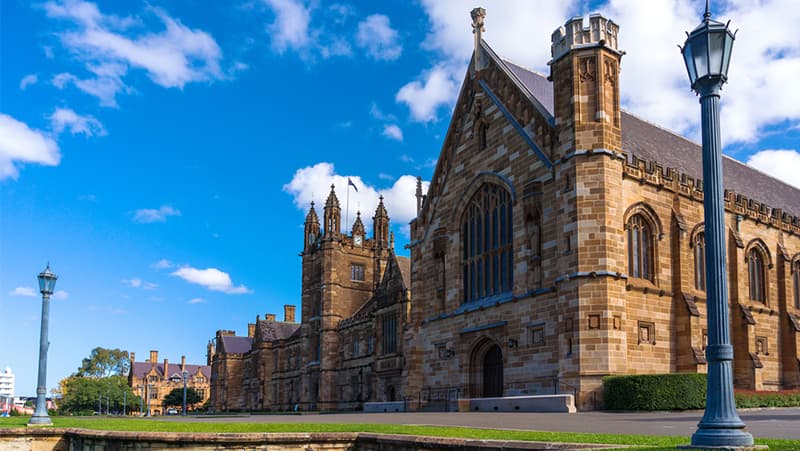
Image- Australian university, 800px x 451px
Reading time: 4 minutes

Australia is known for its beautiful landscapes, quality of life, and excellent standard of education. If you’re interested in studying in Australia, you’ll first need to understand the Australian student visa application process.  This will set the stage for the exciting new chapter in your education. 

However, there can be a lot to remember when it comes to Australian student visa requirements. That’s why we’ve put together this informative guide, which breaks down everything you need to know. Let’s get started!  

Australian student visa requirements 

In order to apply for an Australian student visa – called the Subclass 500 Student visa – you must be enrolled in a course of study at an Australian institution. You’ll need to complete an application form, gather important documents, and prove to the Australian Government that you meet a list of requirements, including:  

  • The Genuine Temporary Entrant (GTE) requirement

  • Financial requirements

  • English proficiency requirements

  • Health and characteristic requirements

You can also use the Document Checklist Tool to which documents need to be attached to the application. 

The Genuine Temporary Entrant (GTE) requirement

To fulfill the GTE requirement, you must prove you’re coming to Australia temporarily to receive a quality education. To do this, you’ll need to provide a personal statement in English, or translated it into English. This should include information and evidence about your:  

  • Previous studies (with academic transcripts)

  • Current employment

  • Ties to your home country 

  • Economic situation  

  • Immigration history

Overall, Australia wants to ensure you’re entering the country to further your education, and not for other motives.

Financial requirements

This is an important part of the Australian student visa application process. Many applicants need to prove they have sufficient funds to pay for life in Australia, including living costs and tuition fees. There are a few options to do this; for example, you can show you’ve received government loans or scholarships. Evidence of 12-months fund or evidence that you meet the annual income requirement will also work.  The requirements range from $29,710 AUD (about $19,000 USD) to $102,500 AUD (about $65,500 USD). For detailed and most updated information, please refer to Department of Home Affairs.  

Learn more about financial requirements.  

English language requirements

Australia is a very diverse country. Approximately 73% of the population in Australia speaks English at home. To meet Australian student visa requirements, applicants who aren’t from an English-speaking country need to show English language proficiency.  And, our computer-based and unbiased English language test at PTE Academic is accepted by the Australian government for every visa category.  

To be eligible for a student visa in Australia, you must achieve:

  • At least 50 for each of the 4 components for PTE Academic 

  • At least 36 for each of the 4 test components of PTE Academic if you undertake an English Language Intensive Course for Overseas Students (ELICOS) course before your main course 

View a full breakdown of Australian study visa PTE requirements

Health & characteristic requirements 

Most visa applicants need to do a medical exam to prove that they are healthy. In addition to the medical exam, the majority of applicants must buy Overseas Student Health Cover (OSHC) from an approved Australian provider. 

To get an Australian student visa, you also need to be of good character. You shouldn’t have a substantial criminal record or be a member of a criminal group, for example. To prove this, you might have to supply a police certificate.  

Fees  

A Subclass 500 Student visa starts at $1,600 AUD ($1,020 USD) unless you are exempt. There are also added charges for each family member who applies for the visa.  For more information on visa costs, check out the Australian government’s visa pricing estimator.  

Processing times 

For an indication of processing times for this visa, use the visa processing time guide tool. This will show the processing times for recently decided applications. It is a guide only and not specific to your application. 

To find out if you’re eligible for an Australian student visa, be sure to review all the requirements on the government website. You can see all the documents you’ll need for your application using the government’s documents checklist tool. 

Learn more about working in Australia on a post-study work visa.

Last updated 20 December 2024.

Related Content

  • Woman sitting in a classroom at a desk, holding a pen and looking up.
    Introducing Smart Prep: the new way to prep like a pro for PTE
    By PTE Author

    Are you gearing up to take an English language test, and feeling a bit overwhelmed? You’re not alone – many test takers share the same initial anxieties. But don’t worry, we are here to help!

    We’ve now launched Smart Prep, so that you can be test ready with one less worry. Smart Prep is a one-stop preparation portal to get you test ready for PTE Academic, PTE Core and PTE Home tests.

    It’s based on feedback from real test takers — we recently conducted a survey of 243 students preparing for PTE and learned:

    • 82% wanted to prepare skill-by-skill. For example, they might want to focus on speaking first, then writing, reading, and listening

    • Many expressed a need for free preparation resources, especially at the beginning of their journey

    • 82% preferred having all preparation materials in one place, organized logically in a step-by-step manner

    Why Smart Prep?

    • Smart Prep combines all our practice materials in one place, so it's easier for you to stay on track

    • It’s a clear path to test day, guiding you through the official paid and free resources available for your test

    • It can be accessed whether you’ve booked a test or not – just create, or sign in to your myPTE account

    • Preparation materials include guided practice tests, introductory videos, video courses and test tips. Note: the available resources depend on your chosen PTE test, please check Smart Prep in myPTE or visit the test preparation page for more details.

    Ready to get started?

    Create or sign in to your myPTE account

  • [Asset] Why more nurses choose Canada
    Why international nurses are choosing Canada: a growing trend
    By PTE Author

    Known for beautiful snowy landscapes and hot maple syrup on pancakes, Canada has become a popular destination for international nurses seeking new opportunities and a better quality of life.

    Discover eight key reasons why international nurses are drawn to Canada:

    1. Growing demand for nurses

    An ongoing nursing shortage means well-trained international nurses are in high demand with many job openings to pick from. That demand is increasing, with the number of job vacancies for registered nurses and registered psychiatric nurses increasing by almost 10% in the third quarter of 2023.

    To help address the shortage, Immigration Refugees and Citizenship Canada (IRCC) has allocated $115 million CAD over the next five years, and $57 million CAD ongoing for expanding Canada's Foreign Credential Recognition Program, helping international nurses get their qualifications recognized by the Canadian government.

    2. High quality of life

    Canada consistently ranks high in global quality of life indices. In 2023, Canada ranked 13th in the World Happiness Report, offering international nurses a stable, safe, and prosperous environment to live and work.

    3. Competitive salaries

    Canadian nurses enjoy competitive salaries. According to Canadian recruitment site ca.talent.com, the average annual salary for a registered nurse in Canada is approximately CAD 73,000 in 2024, varying by province and experience level.

    4. Universal healthcare system

    Canada's universal healthcare system is attractive to many international nurses. It offers the opportunity to work in a well-structured, publicly funded system that prioritizes patient care over profit.

    5. Professional development opportunities

    Canada offers numerous opportunities for career advancement and specialization. Many provinces have programs to support continuing education and professional development for nurses, and the Registered Practical Nurses Association of Ontario offers up to $1,500 CAD per year in education grants

    6. Multicultural society

    Canada's diverse and inclusive society makes it easier for international nurses to integrate. According to the 2021 census, over 23% of Canada's population are immigrants, creating a welcoming environment for newcomers, and the country consistently ranks as one of the top ten friendliest places to live.

    7. Pathway to permanent residency

    Many international nurses view working in Canada as a stepping stone to permanent residency. Programs like Express Entry often favor skilled healthcare workers, making it easier for nurses to transition from temporary to permanent status.

    8. Work-life balance

    Canadian workplaces generally prioritize work-life balance. Nurses in Canada typically work 37.5-hour weeks, with overtime pay for additional hours, allowing for a better quality of life outside of work.

    What next?

    If you’re eyeing up a move north, you’ll need to submit your nursing credentials, take the NCLEX-RN to qualify for a Canadian nursing license if needed, and show you’ve got the necessary language skills.

    Get your move off to a stress-free start with the Pearson Test of English (PTE).

    With no additional speaking exam, PTE covers all four skills in one test using computer-based assessments to remove bias. It’s the faster, fairer, simpler way to evidence your English skills and start your next chapter.

  • [Asset] Girl smiling into distance
    How to be conversation ready for your US student visa interview
    By PTE Author
    Reading time: 6 mins

    Getting a student visa for the US can be a long and stressful process, and one of the final hurdles is the visa interview.

    Conducted in English, it’s one of the parts of the US visa application process that causes international students the most stress.

    We’ll briefly recap the US student visa types and application process before sharing top tips on how to prepare and build your speaking confidence for a stress-free interview experience.

    Understanding the different types US student visas 

    To enter the US to study, you’ll need an F-1 or M-1 visa.

    F-1 visas are intended for international students looking to study at colleges or universities. This visa category also covers other academic institutions, such as language schools.

    M-1 visas are for vocational studies, such as culinary school, trade school programs, and healthcare technician courses.

    If you’re not sure what type of visa you need and want to understand more about the different criteria, there’s an official US Visas website with a useful Visa Wizard tool to point you in the right direction.

    How to apply for a US student visa

    To study in the US, you’ll need to apply for and be accepted on a course at a Student Exchange and Visitor Program (SEVP) approved school before starting the visa process.

    Once accepted, you’ll receive Form I-20 and need to pay the SEVIS (Student and Exchange Visitor Information System) fee.

    There’s another round of forms and fees (DS-160 and the visa application fee), before it’s time to schedule that all-important visa interview at the US embassy or consulate in your home country.

    On interview day, you’ll need to bring documents, such as your passport, academic transcripts, and travel history, as well as details of your intended travel to the US.

    You’ll have an interview with a consulate officer and your visa will either be approved or may require further “administrative processing”.

    The visa application process does vary depending on the local embassy or consulate, so check your local branch’s process on their website.

    What is the US visa interview about?

    Most applicants aged 13-80 must attend an in-person visa interview at a US consulate or embassy.

    The interviewer is looking to understand your qualifications, study plans, and ability to support yourself during your time in the US.

    They also want to make sure that anyone applying for a student visa intends to return to their home country after completing their studies.

    You can find more information on what questions to expect at a US student visa interview on the International Student website.

    Building your speaking confidence

    A high-stakes English interview can be daunting, often making it tough to speak as confidently as you normally would when you’re in the classroom or chatting with friends. Here are four ways to build your speaking confidence ahead of a US visa interview.

    1. Prepare answers to likely questions

    Knowing the purpose of the interview makes it easier to anticipate the types of questions you’ll be asked. Make a list of anticipated topic areas and spend some time crafting concise answers. Once you’ve written your responses, it’s time to speak up! Practice saying the answers aloud every couple of days so that they feel familiar on the day. You don’t have to memorize the responses, but by planning out roughly what you’d like to say, you’re removing that extra pressure of thinking on the spot.

    2. Immerse yourself in English

    Confident speaking starts with great listening. The run-up to your visa interview is the perfect time to revisit that US sitcom you love or to start listening to an audiobook in English on your daily walk. You could even try repeating back new phrases or idioms that you hear to build your vocabulary and practice your pronunciation. If you’re listening to English shows, podcasts, and even following English social media accounts on a regular basis, then being faced with questions in English will feel less new and different on the day.

    3. Find a language exchange partner

    One of the most effective ways to brush up on your speaking skills is to find a language exchange partner. This could be a language swap, where you find someone who speaks English as their first language and who is learning your language, or conversation clubs where everyone is working on learning English. If you can’t find a local tandem partner, take a look at online communities, such as MeetUp, InterNations, or even Facebook, to find someone you can practice with online.

    4. Use speech recognition technology 

    If you can’t find a language tandem partner or are short on time, several language learning apps now include speech recognition — a technology first introduced by Mondly by Pearson.

    This technology allows you to practice pronunciation and conversation without the pressure of another human waiting on or judging your responses.

    In Mondly, for example, the app offers over 500 minutes of conversation practice with Augmented Reality (AR) and Virtual Reality (VR) options to allow you to practice conversations in realistic scenarios.

    With less pressure and instant feedback, virtual conversations using speech recognition can be a great way to build your confidence ahead of real-life challenges like visa interviews.


    It’s natural to feel the pressure with interviews — especially when your dreams of studying in the US hang in the balance.

    Remember, interviewers aren’t looking for flawless language skills, just that your English is at a high enough level to fully participate in your course and enjoy life in the US.

    By thinking through the likely topics and actively finding more opportunities to practice speaking English, you’ll be able to head into your visa interview with confidence.