

Australian post-study work visas

PTE Author
PTE Author
Image- Australian flag- 800px
Reading time: 5 minutes

Are you an international student in Australia who has recently completed your degree? Congratulations! With your studies complete it is now time to think about your future in Australia. Did you know you can apply for a post-study work visa (also known as a Temporary Graduate visa or subclass 485) following the completion of your studies? This enables you to work, live and travel in Australia. Find out more about this visa below.

What is the post-study work visa and what does it mean for you?

Depending on the qualification you graduate with, this visa allows you to stay in Australia for up to 8 years following the completion of your studies, depending on your field of study and degree level. Recent changes have extended work rights for graduates in areas of workforce need. The Australian government currently estimates application processing times to range from 3 to 6 months. 

Eligibility requirements  

Before you apply, check to see if you meet the Australian government’s study requirements to ensure you meet eligibility requirements. A post-study work visa is only available if you successfully applied for your first student visa on or after November 5th, 2011. In order to ensure your application for this visa is processed by the Australian government, you’ll need to have held an Australian student visa for a period greater than 6 months before your application date and currently hold a substantive visa.

Eligibility Requirements   

Before you apply, check to see if you meet the Australian government’s study requirements to ensure you meet eligibility requirements. A post-study work visa is only available if you successfully applied for your first student visa on or after November 5th, 2011. In order to ensure your application for this visa is processed by the Australian government, you’ll need to have held an Australian student visa for a period greater than 6 months before your application date and currently hold a substantive visa. 

Please note that you are not eligible for a post-study work visa if you have previously held a Temporary Graduate visa or a Recognised Graduate visa as a primary visa holder. However, graduates who studied at regional institutions may qualify for a second Post-Study Work visa. This second visa allows an additional 1–2 years of stay, provided that the applicant lived, worked, or studied in a regional area throughout their first PSW visa period. This initiative is part of the Australian government’s efforts to attract skilled graduates to regional areas and promote economic growth outside major cities. 

Check your eligibility in full on the Australian Government Department of Home Affairs website

The application process 

The Australian government provides a useful step by step visa guide so students have a simple resource to follow once they’re in the position to apply for their Temporary Graduate visa.

1. When should you start the application process? 

It’s important that you start the application for your post-study work visa as soon as you receive confirmation from your education provider that you’ve successfully completed your studies. You must apply for this visa within 6 months of completing your eligible course.

2. Ensure you have the required documents and paperwork 

As with any application, you’ll need to provide documented evidence to support your application. It’s important that you thoroughly review all required documentation so you do not accidentally miss items essential to your application. Given that some documents may be harder to source than others, it’s important to get started on your application as soon as you receive notice of your successful completion. Please ensure you check the Australian Government Department of Home Affairs website to make sure you have up to date advice and a detailed list of required documentation.

One of the most important documents to provide with your application is your English language test results to prove your proficiency. PTE Academic is accepted by the Australian Government Department of Home Affairs for all visa categories, including post-study visa applications.

To use PTE Academic to apply for an Australian visa, you need to select ‘Australia’ on the country dropdown menu and ‘work’ on the current goal options. You can choose to have your scores allocated to the DHA when you register or simply provide the Score Report Code on your visa application form so they can access your result.

Find out more about PTE Academic and the test centers near you.

3. Applying for your post-study work visa 

Once you’ve gathered the required documentation, you’ll apply for your visa through your Immi account. If your student visa features a ‘no further stay’ condition (either 8534 or 8503), you’ll need to apply for your visa via the paper form. It’s at this point of the process that you’ll pay the required fee for your visa, and it’s also from this point that the processing of your application actually commences.

4. What happens after you file your application? 

As is the case when applying for a student visa, the Australian government will notify you of any additional required documentation through your Immi account. It’s important to note that if you choose to leave Australia once you’ve filed your post-study work visa application, you’ll need to inform the government. If you’re not in Australia when the government makes the decision about the status of your application, you may run the risk of your visa expiring.

5. Visa outcome 

If you’re successful with your application, the Australian government will notify you of your new visa status as a Temporary Graduate visa holder in writing. It’s important to remember that all updates will be received through your Immi account and as such, there’s no need to call for updates regarding your application.

Are you currently waiting to find out if your visa application has been successful? Whilst it can be stressful waiting for confirmation when professional opportunities are on the line, remember to keep an eye on your Immi account and stay on top of updates. Good luck!

Last updated 20 December 2024.

Related Content

  • Image - A man accepting job offer
    Employment opportunities for postgraduate students in the UK
    By PTE Author
    Reading time: 5 minutes

    Studying in the United Kingdom opens doors for international students. With the right to work during your studies, you’ll have the chance to gain valuable work experience before graduation.  

    But what if you decide you want to stay and work in the UK after your studies? Now, it’s easier than ever to find graduate jobs in the UK, thanks to recent visa changes.  

    Let’s explore what this new UK government initiative means for finding a job after graduating.  

    How to work in the UK after graduating

    You can start your career off with the Graduate Route. Since July 2021, International students have been allowed to spend an additional two years in the UK after successfully completing their degrees. It’s an unsponsored route: this means you don’t need a job offer or funding to apply. 

    You’ll be able to search for a job and get professional experience of the UK job market before returning to your own country.  

    If you decide to remain in the UK and pursue your career after your visa expires, you’ll be able to switch from the Graduate route to the Skilled Worker route.  

    As long as you meet the relevant requirements, the Skilled Worker route allows you to work in the UK for a further five years. It allows you to stay in the UK to do an eligible job with an approved employer. This visa also contributes to settlement rights – meaning you may be able to apply to live permanently in the UK.  

    Read more about the different types of Visas available in the UK.  

    Employment opportunities in the UK 

    Now that working in the UK after your degree is easier than ever before, what kind of graduate jobs are available?  

    The jobs market in the UK is full of opportunities for international students. After all, the UK economy is the fifth biggest in the world. And, there are certain fields which are crying out for workers.  

    It’s certainly helpful to know what’s available for you when it comes to your graduate job search in the UK. Science technology, engineering, and maths (STEM) careers in the UK are in especially high demand.  

    Let’s take a look at some of the STEM jobs on the UK Shortage Occupation list:  

    Graduate jobs in the sciences 

    If you have recently graduated with a degree in the sciences, then you’re in luck. There are lots of science jobs in the UK for graduates. The nuclear industry, the oil and gas industry, and the engineering industry need people in the following roles:  

    • Chemical scientists 

    • Biological scientists and biochemists 

    • Geologists and geophysicists 

    • Hydrogeologists  

    • Geoscientists and geochemists 

    It’s good news for students planning to study biology, physics, chemistry, or geology. Your knowledge and skills will be in demand after you graduate!  

    Find out more about studying the sciences in the UK.  

    Graduate jobs in engineering  

    Engineers of all kinds are always in high demand in a wide variety of industries, from manufacturing to construction to retail. Most undergraduate engineering degrees require you to specialize in mechanical engineering, for example, or electronic engineering. But there are some general engineering degrees where you can specialize later in your studies, once you’ve decided where your interests lie.  

    Once you graduate, there’s a shortage in the UK of the following:  

    • Civil engineers 

    • Mechanical engineers 

    • Electrical engineers 

    • Electronics engineers 

    • Design and development engineers 

    • Production and process engineers 

    Find out more about studying engineering in the UK.  

    Graduate jobs in the tech world 

    Studying computer science or software engineering is a good choice if you want to future-proof your career. Nowadays, technology is all around us, underpinning our everyday life.  

    With a computer science degree, you can work in virtually any sector. The following jobs are in high demand:  

    • IT business analysts, architects, and systems designers 

    •  Programmers and software development professionals 

    • Web design and development professionals 

    Learn more about studying computer science in the UK. 

    Graduate jobs in the arts   

    It’s not just science and technology jobs that are in demand in the UK. The creative industries are also looking for skilled practitioners to work within the UK in the following roles:  

    • Artists 

    • Classical ballet dancers 

    • Contemporary dancers  

    • Orchestral musicians  

    • Arts officers, producers, and directors  

    • Graphic designers 

    • Architects  

    If you’re studying in a creative field, you’ll have lots of opportunities to work in the UK after graduating. Learn more about studying the creative arts, designmusic, or architecture in the UK.  

    Discover 5 more graduate jobs in demand in the UK.  

    How PTE Academic can help you study in the UK 

    If you want to study at a university in the UK, you’ll need to attend lectures, participate in seminars and tutorials, write essays, and complete assignments — all in English. So, you’ll need to show that you have good language skills.  

    PTE Academic is a robust, reliable test of English that’s accepted by 99% of universities in the UK, as well as the UK Home Office. So, you can also use your PTE Academic score to apply for a UK student visa. 
    Learn more about studying in the UK with PTE Academic.

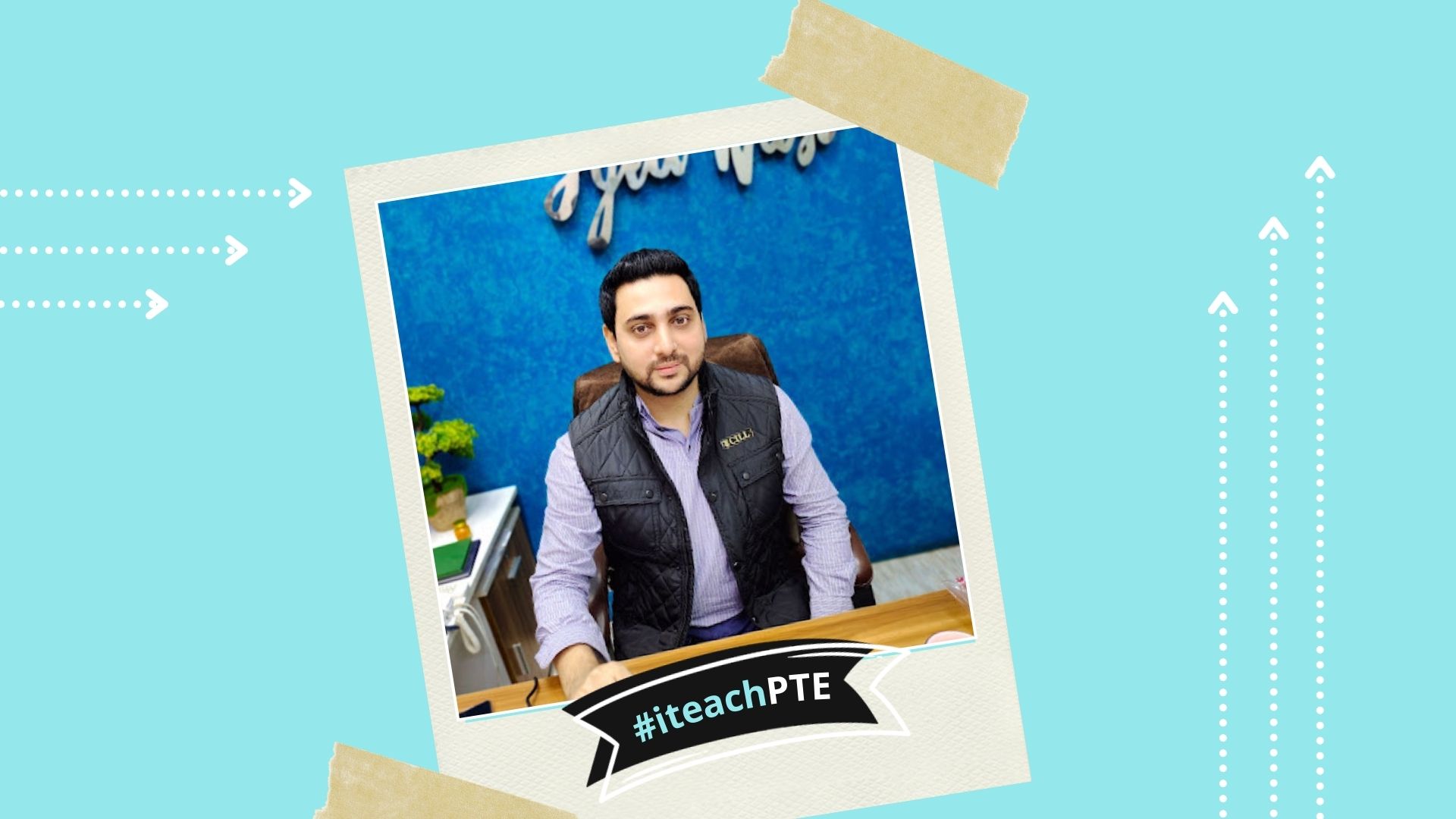
  • Image - iteachPTE Syed Wasi
    Teacher profile: Building a learning community in Dhaka
    By PTE Author
    Reading time: 5 minutes

    Syed Wasi is a pioneer in many ways. He was the first PTE trainer in Bangladesh, and the first Bangladeshi to score 90 in PTE – no mean feat in a country of 166 million people! Syed is the founder of the Center for Innovative Language Learning (CILL) where students come for his help in preparing for PTE. The center is renowned for its high student success rate.  

    So, how does Syed help his students to get the scores they need in PTE? Let’s find out.  

    How Syed teaches PTE  

    When a student arrives at CILL, their first step towards PTE success starts with a language assessment. “If we find that their language skills aren’t particularly strong,” says Syed, “the first thing we do is create a course which includes general language classes. We go step by step through the levels, helping them to improve their language skills – and once they are ready for PTE, they join a PTE preparation class.”  

    Once Syed’s students are part of a preparation class, they follow a carefully designed curriculum. Each language skill tested in PTE (speaking, writing, reading and listening) is covered in a module of three classes. The first class introduces the type of exam questions that students can expect. The second class gives students the practical tools and techniques that they’ll need to answer the exam questions, and the third class is a practice session. But the secret to Syed’s success? He doesn’t let the students sit PTE before they’re ready:  

    "The final step in PTE preparation is the mock test. We don’t let them take the test until they’re ready for the test, which is why we have a very high success rate.”  

    Flexibility is also important. The PTE preparation courses at CILL are blended courses; some students attend the center in person, and others join online. When the pandemic began, there was a massive shift to teaching online, and many schools had to adapt quickly. But Syed’s language school was ahead of the curve when it came to blended learning. “I did my masters in online teaching back in 2012,” says Syed. “We’ve been teaching with a blended learning model since 2016, so it was easy for us to adapt. Now, students are returning to the classroom, but we still offer the blended learning option.”  

    Building a community of learners  

    An important part of the school culture at CILL is the accessibility of the teachers. Learning isn’t confined to the classroom – the teachers are available to answer questions outside of class times. “We create WhatsApp groups for different classes, and it’s like a virtual hub,” Syed explains. What’s more, the teachers follow up with students after class. This dedicated service has helped Syed to build a loyal community of learners around the world. “Many of our students have moved to Australia, to the UK, or to other countries,” he says. “And wherever they go, if they meet anyone interested in PTE preparation, they refer them to our school. They’ll say, there’s a person in Bangladesh who can give you the support you’ll need to pass the test.”  

    Syed’s advice for PTE teachers 

    “If you’re new to PTE teaching, the most important thing is to make sure you have the expertise you need to prepare students for the test,” Syed says. After all, there’s a lot on the line when it comes to PTE. Students often need a certain score for a university application or a visa. So if you don’t prepare students thoroughly, it could have an impact not only on their score but on their careers. Syed recommends taking the test yourself in order to gain real insight into PTE.  

    And for more experienced teachers, Syed believes that honesty is the best policy when it comes to test preparation. “Tell your students exactly what they’ll need to do in order to get the score they need. Be honest with them, and that way they know what they have to do.”  

    PTE is a high stakes test. When you’re helping students to prepare for the exam, you’re helping them to change their lives, to do something new. “It’s not just a business,” says Syed. “We are helping students to reach their goals. It’s my passion, and my vocation.”  

    Learn more

    Each month, we feature the profile of a teacher from our PTE community. If you have advice and insights to share with other PTE preparation teachers, we’d like to hear from you! Fill out this form and we’ll be in touch shortly.  

    In previous months, we featured Jurine Ruperto, who teaches in Cebu in the Philippines, and Ramesh Thapa, a PTE teacher in Kathmandu. You can read all about them on our blog, where you’ll also find lots of resources for PTE preparation classes. And don’t forget to sign up to our monthly newsletter.

  • Image - Typing
    How to prepare for the PTE essay writing task
    By PTE Author
    Reading time: 6 minutes

    The PTE exam includes four main sections: reading, writing, speaking, and listening. You will do the speaking and writing tasks together in part one of the exams. While your writing will be assessed in your answers to other tasks, there are only two specific writing tasks: summarize a written text and write an essay.   

    The PTE essay writing task aims to test your grammar, spelling, vocabulary, and written discourse skills. Therefore, it’s important that you understand this section, and what’s expected before going into the exam.  

    If you’re looking for some tips and guidance on how to approach this part, look no further! 

    Read on to find out what the essay writing task is about, how to approach it, and what the examiners are looking for. 

    Essay Writing Task Structure 

    For this task, you will receive a 2 to 3 line prompt stating an opinion or statement. Prompts can be written in a number of ways.  

    For example, you may have to discuss problems or solutions, or argue for or against an opinion: