Australian loans for international students

PTE Author
PTE Author
Image, student, 800px x 451px
Reading time: 5 minutes

It’s not hard to understand why so many international students want to move to Australia. The country has a world-class education system, excellent climate, and high quality of life. But studying in Australia can be expensive – and you need to be financially prepared before you take the leap.  

In this blog, we’ll help you get started. We’ll explore the student loan options available for international students in Australia, as well as other ways to fund your studies.  

How much money will I need? 

Before you begin to research student loans, it’s important to understand how much it costs to live and study in Australia. You can use the Course Search Tool to find out detailed tuition fee for your dream course and the Cost of Living Calculator to estimate the living cost based on the city you want to move to.  

What student loans in Australia could I be eligible for? 

Australia’s student loan system is known as the Higher Education Loan Program (HELP).  Unfortunately, HELP can only be accessed by Australian citizens or individuals who hold a humanitarian visa. However, there are still lots of other student loans available for international students in Australia.  

University loans 

Universities across Australia provide loans for local and international students. Most institutions offer both short-term and long-term loans; these can help students cover emergencies, as well as pay for bigger expenses.  

Here are a few examples of what some universities offer:  

  • The University of Melbourne will loan eligible students up to$5,000 AUD ($3,883 USD) if they have an Australian co-signer. They’ll loan students up to $3,000 AUD ($2,330 USD) if their co-signer lives overseas or isn’t an Australian citizen/ permanent resident. 

  • The University of Sydney offers loans up to $2,000 ($1,550 USD), which can be paid back up to two years after graduation.  

  • Students in need of financial assistance at Monash University can take out loans between $750-$3,000 AUD ($544 – $2,330 USD), to be paid back within 6-12 months. 

Universities across Australia offer similar loans. It’s best to check directly with your institution to see exactly what loans are available to students – and to make sure you’re eligible.  

International student loan schemes  

You might be eligible to take out federal student loans in your home country to study in Australia. For example, students from the U.S., Canada, Sweden, Norway, or Denmark who attend the University of Sydney can access government funding from home.  

Private loans  

A private loan is one of the simplest forms of international student loans in Australia: you borrow money from a bank or similar lender and repay the loan (with interest) over an agreed-upon period of time. These loans can be secured – which means they’re tied to collateral – or unsecured. But with unsecured loans, interest rates are usually higher. 

How else can I pay for my studies? 

Student loans aren’t the only way to pay for your education in Australia. Here are a few other options to consider:  

Work in Australia  

Many international students are attracted to Australia because they know they’ll be able to work. Unlike other studies abroad destinations, you can work up to 48 hours every two weeks while studying and unlimited hours during study breaks on an Australian student visa. Even more, the minimum wage in Australia is $24.10 per hour or $915.90 per week – meaning many international students are able to pay for some of the costs associated with living in Australia while they study.   

Apply for scholarships 

There are a number of scholarship opportunities for international students in Australia – both funded by the government, and universities. Some, like Australia Awards scholarships, support students with full tuition, living costs, and airfare. Check out the Australian Government’s search tool to find a scholarship that’s right for you.  

Read more: scholarships for international students in Australia 

Take out a private loan in your home country

To apply for a student visa in Australia, you need to prove you have sufficient funds. For this reason, many students decide to take out a private bank loan in their home country before coming to study in Australia.

As you can see, there are lots of ways to fund your studies in Australia as an international student. But everyone’s financial situation is different, so we recommend doing lots of research to find a loan you feel confident about – and one that will work for you both during, and after university.

Still, deciding where in the world you want to study? Check out our article types of loans for international students, which explores more loan options in Canada, the U.S., and the U.K.

We are not immigration agents. For all up-to-date information about visa rules and regulations, see the official guidelines on the Australia Department of Home Affairs website.

Last updated 20 December 2024.

Related Content

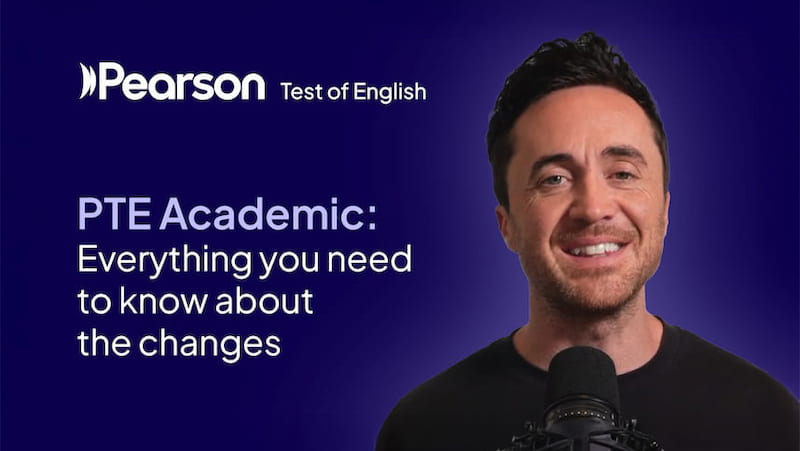
  • PTE changes 2025: everything you need to know
    By PTE Author

    We’ve made a few updates to the PTE Academic and PTE Academic UKVI tests. To make sure you’ve got the facts, we’ve created a short video that walks you through everything you need to know.

    Hosted by Jarrad, one of our product managers, this video covers what’s being updated, what’s staying the same, and how it all benefits you as a test taker.

    What’s covered in the video? 

    • The original 20 question types are still in the test.

    • We are adding two new speaking question types to give you even more chance to demonstrate your skills.  

    • Tips on how to prepare for the new speaking question types.

    • There are no changes to pricing, ID requirements, or score delivery time.

    • There are no changes to the way the test is taken (including the Speaking section).

  • [Asset] On test day during the test - 800 x 451 - for article use
    Busting the myths about English test centers
    By PTE Author
    Reading time: 5 mins

    By: Dan Doyle, Vice President, Assessments & Certifications, Pearson English Language Learning

    Every day, English tests help decide whether someone can start a new life abroad.

    For those taking a language test as part of a visa or migration process, the stakes couldn’t be higher. These are moments that decide futures, whether it’s studying at university, reuniting with family, or landing a first job overseas. That’s why, for tests like PTE Academic and PTE Core, test centers offer a secure, accurate, and trusted experience that governments can rely upon.

    But a few myths still persist, so let’s set the record straight.

    Myth one: “Test centers aren’t that secure”

    Reality: a test center environment provides security that starts before the test begins:

    • Biometric ID checks. Every test taker must show valid ID (like a passport) and confirm their identity with photos, palm-vein scans, and digital signatures.

    • Physical security checks. Trained staff check clothing and personal items before entry, stopping hidden notes or unauthorised materials from getting in.

    Once the test has begun, test centers combine secure-by-design exams with digital and human supervision to create a secure, fair environment:

    • Unique exams. Every PTE test is different. No two test takers get the same questions, and proctors can’t access the content.

    • Secure systems. The test runs on software and hardware fully controlled by Pearson, so it can’t be tampered with.

    • Multiple cameras, full visibility. Test centers use wide-angle CCTV to monitor the entire room.

    • Proctors in the room. Trained staff can spot hidden notes, off-screen help, and respond to anything suspicious straight away.

    Myth two: “Test centers rely on human proctors”

    Reality: human proctors play a key role, but they’re just one piece of what makes test centers secure.

    Test centers provide multiple types of security and supervision, all managed by the testing body — not the student — making them the most secure testing environment.

    As well as cameras, test centers can provide identity verification, physical checks, and in-person supervision needed for a high-stakes test.

    This real-time, multi-layered monitoring means if anything suspicious is flagged, a full investigation can be carried out centrally by Pearson, using CCTV footage, audio, AI checks, and human review.

    Myth three: “Test centers can’t detect cheating afterwards”

    Reality: Pearson carefully analyses every single test result using a combination of AI and trained human experts.

    After the test is completed, it goes through fraud analytics to identify unusual patterns or behaviours. If anything looks suspicious, the result is placed on hold and reviewed in detail by our security experts before it’s released.

    A quick summary: how test centers support high-stakes English testing

    • Biometric checks to confirm identity

    • Physical security checks to ensure no materials enter the test

    • Randomised computer-based test content for every candidate

    • Multiple cameras and full-room visibility

    • Real-time supervision by trained staff

    • AI and human experts working together to spot unusual patterns

    • A consistent environment and equipment for all test takers

    These measures make sure that every candidate has the same opportunity to succeed, and every institution can rely on the result. Behind every test is someone with a dream of a new life abroad, and PTE has the great privilege of helping them get there.

    Want to know more?

    Take a look at our latest PTE security whitepaper.

  • Flinders Street Station Melbourne
    Where to live in Australia: your guide to relocating Down Under
    By PTE Author

    Endless beaches, world-class coffee, and… spiders the size of dinner plates (?) — Australia really does have it all! Thinking about making the move to the Land Down Under? Well, grab your sunscreen and let's explore the best places to call home in Australia.

    Melbourne: the hipster haven

    If laneway cafes, vibrant street art, and sipping artisanal coffee while wearing all black are your thing, Melbourne is your Southern Hemisphere soulmate.

    Consistently ranked as one of the world’s most liveable cities, Melbourne’s thriving arts and music scenes, paired with endless brunch spots serving smashed avo on toast, keep the vibe electric.

    With its unpredictable weather and famous tram network, Melbourne is a quirky yet sophisticated hub that never goes out of style.

    Sydney: the showstopper

    Sydney dazzles with its iconic Opera House and Harbour Bridge, but there’s so much more to this multicultural metropolis.

    From the golden sands of Bondi Beach to bustling neighborhoods like Newtown and Surry Hills, Sydney combines natural beauty with urban excitement. A magnet for international students and professionals, the city boasts fantastic job opportunities and a lively social scene.

    Just prepare for housing prices that might rival your love for flat whites – but the unbeatable lifestyle makes it worth every cent.

    Brisbane: the sunny sweetheart

    Brisbane is a laid-back city that deserves more love. With over 300 days of sunshine each year, it’s a paradise for those who prefer a more relaxed pace without sacrificing big-city perks.

    The South Bank precinct offers riverside dining, cultural attractions, and a man-made beach, while nearby adventures like Moreton Island and the Gold Coast are just a short trip away.

    Perth: the isolated gem

    Perth may be one of the most isolated major cities in the world, but it’s worth the extra travel time for the quality of life.

    With pristine beaches, sunny weather, and a booming economy, this Western Australian city has it all. Weekend wine tastings in the Swan Valley or trips to the quokka-filled Rottnest Island are local favorites.

    Plus, with world-class universities and a vibrant arts scene, Perth proves that being far from everything can be a blessing in disguise.

    The Gold Coast: the eternal summer

    If you dream of an endless summer filled with surfing, sunshine, and stunning beaches, the Gold Coast will be your ultimate playground.

    Known for its laid-back spirit, you’ll find a booming food scene, thrilling theme parks, and lush hinterlands perfect for hiking, as well as the famous 3 km-long “Surfers Paradise”.

    The Gold Coast offers a year-round vacation vibe without compromising on modern conveniences.

    Adelaide: the festival city

    Adelaide may be quieter than some of its bigger siblings, but don’t underestimate its charm.

    Known as the “Festival City,” Adelaide comes alive with events like the Adelaide Fringe and WOMADelaide. Its surrounding wine regions, including the Barossa Valley, are world-class, and the city’s low cost of living is a bonus.

    Whether you’re enjoying fresh produce at the Adelaide Central Market or swimming with dolphins off the coast, Adelaide combines culture, nature, and affordability into one appealing package.

    Canberra: the sophisticated sister

    Often overshadowed by Sydney and Melbourne, Australia’s capital city quietly holds its own with top-tier universities, abundant job opportunities, and a clean, green aesthetic.

    Canberra’s museums, galleries, and parks make it a cultural treasure trove, while its thriving food scene keeps locals happy. Sure, there are plenty of roundabouts, but that just adds to the city’s unique charm.

    With a focus on education, career growth, and quality of life, Canberra is a sophisticated choice for those who value stability and style.

    Relocating to Australia

    Moving to Australia isn’t just about picking a city—it’s about embracing a lifestyle that offers both opportunity and belonging. When we talked to people who’d made the move, 90% of respondents report that they feel welcome in Australia and 81% say they have access to opportunities that aren’t available in their home countries.

    If you’re planning to make the move Down Under, we’re here to make sure you have a worry-free start. PTE Academic is accepted by 100% of Australian universities and colleges, and it’s valid for all migration visas.

    It’s the faster, fairer, simpler test that opens the door to your Australian adventure — no matter which city you choose to call home.