A Complete Guide to Applying for a UK Student Visa

PTE Author
PTE Author
Image- Writing journal with the UK gimmick-800px
Reading time: 4 minutes

Do you have your heart set on studying in England, Scotland, Wales, or Northern Ireland? The UK is a wonderful place to live and learn, but you’ll most likely need to get a UK study visa before you start packing your bags.

This comprehensive guide covers who needs a UK student visa, the requirements for getting one, how to apply, how much it costs, and how long it takes.

Who needs a UK student visa? 

If you’re an international student hoping to study in the UK, you’ll most likely need a student visa. The only exceptions are nationals of Switzerland and countries in the European Economic Area (EEA), who don’t need a visa to enter the UK. * 

* Please note: The outcome of Brexit may alter this after 2020. Check the UK government’s website for up-to-date information about this. 

What are the UK student visa requirements I need to meet? 

There are several UK study visa requirements you’ll need to meet to successfully apply. These include: 

  • You’ve been offered a place in a full-time course from an eligible university (i.e. the school must be a licensed Student route visa*Tier 4 sponsors)

  • You can understand English (both written and spoken)

  • You have enough funds to support yourself and any dependants, while also paying for the course.

These requirements apply to students from all over the world. This means the UK student visa requirements for Indian students and American students are exactly the same for Chinese students and Australian students (and so on).  

Which type of visa do I need to apply for? 

Image - UK visa- 800px

There are three main types of UK student visas: 

  • Student route visa (formerly known as the Tier 4 General student visa)

  • Child Student visa (also Tier 4)

  • Short-term study visa.

You should apply for a Student route visa (formerly known as the Tier 4 General student visa) if: 

  • You’ll be studying at a university/college course for over 6 months 

  • You’ll be taking an English language course for over 11 months.

If the above applies to you and you’re under 18, apply for a child study visa instead. 

Short-term study visas cover English language courses that are shorter than 12 months.  

A Student route visa (formerly known as the Tier 4 General student visa) costs significantly more than a short-term study visa, so make sure that you understand which one is right for you. See more information on student visa costs below. 

How much does a UK student visa cost? 

Getting a student visa in the UK costs £348. You’ll also need to pay the same amount for each dependant (partner or child) you bring with you.  

A Child Student (Tier 4) visa also costs £348. 

Short-term student visas are £97 for 6 months or £186 for 11 months.  

The cost of the Student route visa (formerly known as the Tier 4 General student visa) doesn’t include the healthcare surcharge you will also be required to pay.  

How do I apply for a UK student visa?

Image- Visa application- 800px
  1. Check if you need to apply for a student visa in the UK. You can do so on the government’s website. 

  2. Prepare all your documents. These include your passport, a recent photo and fingerprints (taken at a visa application center), your unconditional placement offer, proof of financial stability (e.g. bank statements), and proof of English language skills (if you don’t already have this).

  3. Apply for a Student route visa (formerly known as the Tier 4 General student visa) via (UK) online. 

You can start your UK student visa application here. If you’re applying from North Korea, you’ll need to download an application form and guidance instead of completing it online.  

How long will it take to get my UK study visa? 

The UK visa processing time is up to three weeks, so you can expect a decision on your application within 21 days. Ensuring all the necessary documentation is provided with your application will help prevent delays.  

As the UK student visa process isn’t particularly quick, we recommend getting your application in as promptly as possible (i.e. as soon as you’ve received your confirmation of acceptance from the school and you’ve prepared your other documents). However, you can’t apply more than three months before your course begins.  

Once your application for a UK student visa is approved, you’ll be ready to start packing and preparing for your course. The next exciting chapter of your academic life is about to begin!

Find out more about taking an English test for a UK student visa.

Related Content

  • A man using a laptop
    Prepare online with E2Language
    By PTE Author
    Reading time: 1 minute

    Are you preparing to take PTE Academic?

    Good news! We have added a new test preparation company to our existing list of providers. This will give you even more options and support in your test preparation.

    Try E2Language with a free trial

    E2Language is a global online tutorial and test preparation provider. They offer good quality practice services and materials for PTE Academic. E2Language offers online tuition through group and 1-1 learning, supported by a range of YouTube videos that share tips and advice. They offer a set of online preparation materials.

    We are always looking to expand and enhance the services we offer our test takers and we believe the addition of E2Language helps us achieve this goal.

    Give yourself the best chance of performing well on the day with E2Language – try for free.

  • Video thumbnail for the video, 'Learn how PTE Academic uses AI to mark tests'
    How do you know PTE Academic’s computer marking works?
    By PTE Author
    Reading time: 2 minutes

    How do we know automated scoring works

    Are you thinking of taking PTE Academic, or have you recently taken it, but you are wondering how it is that a computer can mark your test?

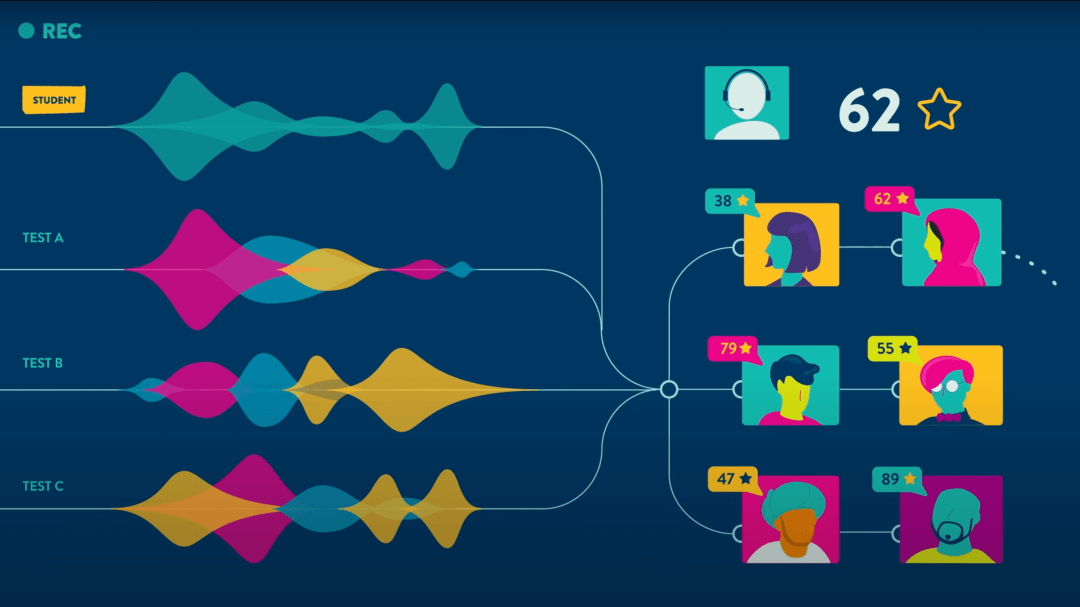
    Well, firstly the test has been designed by humans, all leading experts in their field. Our human experts design and write the questions, quality assure them, and then score them. At this point, computers are trained to use the patterns of highly trained language experts to attribute scores to questions. When the computer marks correlate highly with the human scores, we then allow the computer to mark test scripts from across the world.

    As a result of our processes and technology, the computer behaves like an expert human examiner – but without any possible bias, lack of concentration, or variation between individual examiners.

    The scoring criteria are exactly the same as human scoring – test takers are marked on their delivery, clarity, relevance, the accuracy of grammar, and appropriateness of vocabulary.

    Want to hear more?

    Take a couple of minutes and listen to one of our leading independent advisors, Dr. Alistair Van Moere, a member of Pearson’s Technical Advisory Group, as he explains how it all works.

  • Image- student at class 800px
    Reviewing Test Performance
    By PTE Author
    Reading time: 2 minutes

    If you have completed PTE Academic, you would know by now that it is scored against the Global Scale of English and that you need to practice many skills for each part of the test: Speaking & Writing, Reading, and Listening.

    After completing PTE Academic you will receive an email notification that your results are available online. Typically within 2 days. Learn how to access your Score Report.

    What does my Score Report mean?

    When you receive your Score Report it will show you your overall score, which is based on your performance across all test items. Your communicative skills that are measured are listening, reading, speaking and writing.

    This is an example of what your Score Report may look like.

    The enabling skills are those skills that are required to fulfill the question types in the test. It’s important to know what each of these skills refers to.

    Grammar

    Correct use of language with respect to word form and word order at the sentence level.

    Oral Fluency

    Smooth, effortless and natural-paced delivery of speech.

    Pronunciation

    Production of speech sounds in a way that is easily understandable to most regular speakers of the language. Regional or national varieties of English pronunciation are considered correct to the degree that they are easily understandable to most regular speakers of the language.

    Spelling

    Writing of words according to the spelling rules of the language. All national variations are considered correct, but one spelling convention should be used consistently in a given response.

    Vocabulary

    Appropriate choice of words used to express meaning, as well as lexical range.

    Written Discourse

    Correct and communicatively efficient production of written language at a textual level. Written discourse skills are represented in the structure of a written text, its internal coherence, logical development, and the range of linguistic resources used to express meaning precisely.

    How do I identify my areas of weakness?

    From the visual graph on your Score Report, you will be able to see areas you need to improve on. You should aim to develop your core (enabling) skills required across all areas of the test.

    The following resources will help you develop your enabling skills:

    How can I improve in each part of the test?

    It’s also worth focusing on particular parts of the test or questions you think you had trouble with. The following articles may help you improve your skills across questions:

    If you don’t already have one, it’s recommended to work with an English teacher to work through areas that may need improvement.

    Good luck!