PTE inspiration and advice

Explore our latest articles, guidance and advice to support your test journey

  • Image- UK, 800px x 451px

    Cost of living in the UK

    By PTE Author
    Reading time: 4 minutes

    You may have heard that London is one of the most expensive places in the world to live in, but fortunately, London, and by extension, England, does not equate to the whole of the UK. In fact, many UK towns and cities are very liveable when compared to other cities across the globe.  

    There is quite a bit to look at when considering the cost of living in the UK. Apart from tuition fees, there’s also the cost of rent, transport, and even entertainment – because if you’re living in the UK, there’s no way you should miss out on everything that this great country has to offer- from the food to the culture.  

    Let’s look at some aspects of the UK cost of living, so you can best adjust your budget and prepare yourself for a new life abroad. 

    Calculating living costs in The UK 

    When looking at the cost of living in the UK, it’s best to use an online currency calculator to convert your currency to the British pound – that will give you a better idea of the true cost of living in relation to your country. 

    Here’s a rough guide to the currency conversions we have used in this article, dated March 27th, 2020:

    • AU$1,000 = £500

    • US$1,000 = £805

    • €1000 = £895

    Once you have a better understanding of the conversion rate, you can better interpret how much rent, utilities and other everyday costs will affect your budget.  

    A weekly UK budget 

    There are so many factors that contribute to the UK cost of living that it’s impossible to give you a set cost for each week. But a recommended starting point for a budget for a single student in the UK, per week, averages out to about £300. Let’s see how we got to this number (please note these costs are an average from across UK metropolitan cities, outside of the city center). 

  • Image- Australia, 609px

    12 Aussie slang words you need to know

    By PTE Author
    Reading time: 5 minutes

    If you dream of studying in Australia, be prepared to learn some slang. Aussies are known for their use of informal language. Many consider it part of their national identity.

    As this article by two Monash University linguists points out, Australia’s attachment to slang actually goes all the way back to some of the earliest English settlements in the country. 

     So, what slang words should you know before traveling “down under”? Here are 12 popular Australian slang words to get started: 

    1. Arvo

    “Arvo” means afternoon. According to the Australian National Dictionary Centre, the word was first recorded in 1920. In Australian English, an “-o” is commonly added to shortened words. Two examples are “ambo” (ambulance driver) or “rello” (relative) – but there are many more. 

    How to use it: I’m meeting my sister in the park on Sunday arvo.  

    2. Barbie

    “Barbie” is a short form of barbeque. In Australian English, “-ie” is also added to lots of abbreviated words. The word “selfie” is a good example of this; it was coined by an Australian man in 2002!  

    How to use it: We’re having a barbie tomorrow – do you want to come?  

     3. Chucking a sickie 

    “Chucking a sickie” means to take a sick day from work when you are not sick – or without a proper reason. Look, there’s that “–ie” again. 

    According to a 2018 study, nearly half of Australians who take off sick are actually chucking a sickie.  

    How to use it: I’m going to chuck a sickie on Monday to spend an extra day with my family. 

    4. Give someone a bell

    “To give someone a bell” simply means to call someone on the phone. It’s a term used both in Australia and the U.K.  

    How to use it: I’ll give you a bell tomorrow when I’m out of class. 

    5. Hard yakka

    “Hard yakka” means work hard. The word “yakka” – which first appeared in the 1840s – derives from the word for work (yaga). It comes from Yagara, an Indigenous language in Australia. 

    In fact, many Australian English words derive from Indigenous languages. Take a look at some more examples on ABC Learn English

    How to use it: Studying for my final English exam was hard yakka, but worth it.  

    6. Macca’s

    “Macca’s” is a nickname for Mcdonald’s. If you used the term Macca’s in the U.S. or Canada, you’d get some funny looks. But the term is very common in Australia. In fact, McDonald’s changed its name to Macca’s at stores across the country for Australia Day in 2013 – and still refers to itself as Macca’s today.  

    How to use it: I’m craving a cheeseburger. Where’s the closest Macca’s?  

    7. Mate

    “Mate” is a popular word for friend. And while it’s used in other English-speaking countries around the world, it has a special connection to Australia. In the past, mate has been used to address men,  but it can be gender-neutral.  

    In Australia, you’ll also hear mate used in an ironic sense. If someone is upset with an athlete’s play, for example, they might yell at the T.V.: “maattee!”  

    How to use it: G’day mate, how are you doing? 

    8. No worries 

    “No worries” is a common way to say that something is no bother – or even to say you’re welcome. It’s often used to assure people that everyone will be alright, and not to worry.  

    How to use it: “Thanks for taking that shift at work for me!” – No worries, I don’t mind at all.  

     9. She’ll be right

    “She’ll be right” is an optimistic way to say that everything will turn out okay in the end.  

    Now, why is the pronoun she used? “Australian English often uses the feminine pronoun she where standard English would use it. For example, instead of ‘it’ll be right’ Australians say ‘she’ll be right’,” explains the Australian National Dictionary Centre.  

     How to use it: I’m worried about applying to a university abroad. But I know if I work hard, she’ll be right.  

    10. Uey

    A “uey” is a U-turn. When you say it, it sounds like “You E”. Instead of saying make a uey, you’re more likely to hear an Australian say chuck a uey.

    How to use it: We’re going in the wrong direction! Chuck a uey up ahead to turn around.  

     11. Uni

    “Uni” is an abbreviation for – you guessed it – university. The word uni is used in both Australia, New Zealand, and the U.K.; and while it’s not very common in Canada or the U.S., most people would still understand you if you said it. There are 43 unis in Australia – you can take a look at them here

    How to use it: My best mate from uni just had a baby. She looks just like him!  

     12. Veggo

    A “veggo” is a vegetarian. About 3% of the population in Australia say they’re vegetarian, while just 1% are vegan. But if you’re a veggo, you won’t have any issues shopping. There are lots of meat and dairy-free options available in supermarkets and restaurants.  

    How to use it: My brother is a veggo. He cooked some amazing veggie burgers on the barbie last weekend.  

  • Image- Australia,800px x 451px

    How to apply for a permanent resident visa in Australia

    By PTE Author
    Reading time: 5 minutes

    There’s a lot to love about living in Australia. The country boasts beautiful landscapes, multicultural cities, and one of the best education systems in the world. Many people who hold an Australian work visa want to stay in Australia for the long run and decide to apply to become a permanent resident.

    In this guide, we’ll take a look into what the process entails. By the end you’ll have all the information and online resources you need to apply for a permanent resident visa in Australia:

    What does it mean to be a permanent resident in Australia?

    With an Australian permanent resident visa, you can remain in the country indefinitely. If you secure a permanent resident visa you’ll also be able to:

    • Work and study in Australia

    • Receive healthcare benefits

    • Sponsor relatives for their permanent resident visas

    • Apply for citizenship

    Keep in mind that until you become a citizen, you cannot:

    • Hold an Australian passport

    • Vote in Australian elections

    • Access student loan benefits

    How to apply

    There are multiple ways to apply for a permanent resident visa in Australia. It will depend on how and why you are eligible. Most commonly, people commonly apply through a family, work, or business stream.

    A family-stream permanent resident visa

    A family member can sponsor you for a visa. You can do this if you are the partner, child, parent, or dependent of an Australian citizen or an Australian permanent resident. You can also be sponsored for a permanent resident visa if you need to move to Australia to care for a family member long-term. You can apply from both inside and outside Australia for this type of visa.

    To learn about how to apply through the family stream and all the different visas available, check out this questionnaire on the Government of Australia website.

    A work-stream permanent resident visa

    You can be sponsored by an Australian employer for a permanent resident visa. Likewise, you might also be able to apply through a skilled workers program. You will qualify for this if you have skills the country views as valuable – such as chemistry, agricultural engineering, or carpentry. The skilled occupation list outlines all the jobs in Australia that are in high-demand.

    Keep in mind that for some work-stream visas, you must be nominated by an employer or Australian government agency to apply.

    Discover the different work-stream permanent resident visa options on the Government of Australia website.

    A business or investment permanent resident visa

    If you own or manage a business in Australia, or invest in the country, you can apply for a permanent resident visa. This will allow you to live and work in Australia indefinitely.

    People are also eligible to apply for permanent resident visas in Australia for a range of different reasons. For example, if you wish to retire or are a former resident of the country. You may also apply if you have a “distinguished talent” – which means you have made an outstanding achievement in a certain field – or are a refugee. For each visa, you’ll also have to check if you qualify. Every situation is different and you can explore every visa option on the Australian Government website.

    Fees and processing times

    Expect to pay $2,890 AUD for an investor visa, $4,770 AUD for a skilled visa, and $9,095 AUD for a partner visa.*

    Processing times also range. Some permanent resident visas take a few months, while others can take more than two years to be granted. This makes it extremely important to do your research and plan ahead.

    *Please note these fees are correct at the time of writing. Please consult the government website for up-to-date information.

    Many permanent resident visas always require you to take an English language test, so you’ll have to study for this in advance. Our secure, computer-based English exam PTE Academic is accepted by the Australian government for all visa categories – including business and investment permanent resident visas. And the good news? Once you’ve written the test, you get the results within 48 hours.

    Learn more about PTE Academic for Australia.

    Plan ahead

    Applying for a permanent visa anywhere can be a long (and sometimes complicated) process. So, it really does pay to do your research ahead of time. You’ll need to save up, prepare your application, and plan your move ahead with lots of time to spare.

    Want to learn more about living, working, and studying in Australia? Check out all our articles on our blog.

    We are not immigration agents. For all up-to-date information about visa rules and regulations, see the official guidelines on the Department of Home Affairs website.

    Last updated 20 December 2024.

  • Image- Asian student group, 800px x 451px

    Study in Malaysia with PTE Academic

    By PTE Author
    Reading time: 2 minutes

    Do you want to study in Malaysia?

    If you are an international student wanting to study in Malaysia, you may need to take an English test.

    International students are required to meet the English language competency requirements set by the Malaysian Qualifications Agency (MQA).

    Do you need to take an English test?

    If you are an international student who meets all academic qualifications but have not met the English language requirement for admission you may receive a conditional offer.

    You will then need to complete an English language preparation program within 12 months at the respective private college or university and pass the language test requirement. Only then will you will be able to commence your course.

    Who is exempt?

    You do not need to prove your English language skills if you are an international student that:

    • is from an English-speaking country

    • has an academic qualification from an institution that uses English as the medium of instruction

    • has completed their education in Malaysia and has decided to further their studies to a higher level

    Where is PTE Academic accepted?

    Since April 2016, the Malaysian Ministry of Higher Education has accepted PTE Academic as proof of the English language skills for international students wanting to study at a private higher educational institution in Malaysia.

    There are a growing number of Malaysian Universities that now recognize PTE Academic such as:

    • Asia Pacific Institute of Information Technology (APIIT)

    • Asia Pacific University of Technology & Innovation (APU)

    • Asia School of Business

    • Asia e University

    • Berjaya University College

    • Curtin University (Sarawak)

    • Cyberlynx International College

    • Disted College

    • Education Malaysia Global Services

    • Despark College

    • First City University College

    • HELP University College

    • Heriot Watt University Malaysia

    • Inti International College Subang

    • Malaysia University of Science and Technology

    • Monash University Malaysia

    • Multimedia University

    • MAHSA University

    • Pintar College

    • Segi University

    • Sunway College

    • Sunway University

    • Swinburne University of Technology (Sarawak)

    • Taylor’s University

    • The University of Nottingham Malaysia Campus

    • UCSI University

    • University of Reading Malaysia

    • University of Southampton Malaysia Campus

    • Xiamen University (Malaysia Campus)

    We are constantly expanding the number of Malaysian Universities that accept our scores, explore our full list of institutions in Malaysia who accept PTE.

    You can take PTE Academic at test centers around the world and at 6 locations in Malaysia. Ready to take PTE Academic? Book now!

  • Image- KL twin tower, 624px

    How to study in Malaysia

    By PTE Author
    Reading time: 5 minutes

    With high-quality universities, more affordable tuition, and the fastest growing regional economy in the world, Asia has become a popular destination for international students. This includes students from within the region itself.

    Western countries still attract a large number of students each year. “But the idea that a Western degree is automatically better and more advantageous than one obtained in Asia is losing ground.” states by ICEF Monitor.

    In fact, countries like China, South Korea, Japan, Singapore, and Malaysia have all been competing to attract more international students in recent years. As a result, Asian students now have the opportunity to receive a world-class education and international study experience much closer to home. This is especially important for many families today, as uncertainty surrounding the pandemic is expected to continue.

    Now, let’s take a look at what one Asian country – Malaysia – has to offer international students. We’ll also go into what students should keep in mind as they plans their studies:

    Malaysia at a glance

    Malaysia boasts innovative universities and excellent intra-regional mobility, making it a great place for students to consider. The country has worked to put itself on the map as a destination for international learners. It hopes to welcome 250,000 students from abroad by 2025. Students come from a variety of countries including Bangladesh, China, Indonesia, Yemen, and Nigeria.

    Bahasa Malaysia is the country’s official language. However many university courses are taught in English.

    Universities in Malaysia

    Malaysia boasts more than 100 higher education institutions. Many universities here are also ranked amongst the top in the world by the QS World University Rankings. Included in the ranking are: 

    • University of Malaya (UM): Ranked 60th globally. 

    • Universiti Putra Malaysia (UPM): Ranked 148th globally. 

    • Universiti Kebangsaan Malaysia (UKM): Ranked 138th globally. 

    • Universiti Sains Malaysia (USM): Ranked 146th globally. 

    A number of international universities have also opened branches in Malaysia. These include the University of Nottingham, Heriot Watt University, Monash University, Xiamen University, and Newcastle University, to name a few. They provide students with the chance to earn a degree from Western universities without having to leave the region.

    If you're looking to explore your study options, the government has a great tool for students to find the program that suits them best. You can also learn more about diploma studies with this useful guide.

    In order to study in Malaysia, students will need to prove they are proficient in English and PTE Academic is the ready choice for you to do so. PTE Academic is a computer-based language test that provides unbiased and secure proof of a candidate’s English skills for study, professional, and migration purposes.

    According to language requirements set by Malaysian Qualifications Agency (MQA), students who plan to undertake a Bachelor’s degree and above at university or college must score a minimum of 47 for PTE Academic, which is equivalent to CEFR High B1 level.

    Students who wish to undertake a diploma course will need to have a minimum PTE Academic score of 36, which is equivalent to CEFR Low B1 level. However, students should always check with their respective university or college to confirm their language score requirements.

    Getting your visa

    Applying for a Student Pass to study in Malaysia is relatively simple and can be done online. Before starting your application, you must have a letter of acceptance from your university. The whole visa process takes about one month. You’ll find out how to apply on the Education Malaysia website.

    With a Student Pass you can work up to 20 hours a week, but only during school breaks that last longer than 8 days.

    Cost of living

    Malaysia draws the attention of students all around the world because it offers an affordable, yet still top class education. A bachelor degree, for example, costs between $10,000-20,000 USD. This is a lot less than in the United States or the U.K. In fact, Malaysia’s booming capital city Kuala Lumpur was named the second most affordable city in the world for students by the QS Best Student Cities ranking.

    Financial aid

    International students in Malaysia can apply for financial aid. Universities offer scholarships directly to students. To get an idea of what these might be like, you can take a look at the scholarships offered by University of Malaya.

    The Malaysian government also provides scholarships to international students. The Malaysia International Scholarship – which offers air tickets, tuition, and a monthly allowance, among other benefits – is one scholarship to look into. The Malaysian Commonwealth Scholarship and Fellowship Plan also offers international students some generous financial support.

    Want an international study experience in Malaysia?

    PTE Academic – a fast, flexible, fair, and secure English assessment can help you get there. Book the test now and get the result within 2 days.

    View prices in your country and find your local test center.

    Last updated 20 December 2024.

  • A man using a laptop

    Prepare online with E2Language

    By PTE Author
    Reading time: 1 minute

    Are you preparing to take PTE Academic?

    Good news! We have added a new test preparation company to our existing list of providers. This will give you even more options and support in your test preparation.

    Try E2Language with a free trial

    E2Language is a global online tutorial and test preparation provider. They offer good quality practice services and materials for PTE Academic. E2Language offers online tuition through group and 1-1 learning, supported by a range of YouTube videos that share tips and advice. They offer a set of online preparation materials.

    We are always looking to expand and enhance the services we offer our test takers and we believe the addition of E2Language helps us achieve this goal.

    Give yourself the best chance of performing well on the day with E2Language – try for free.

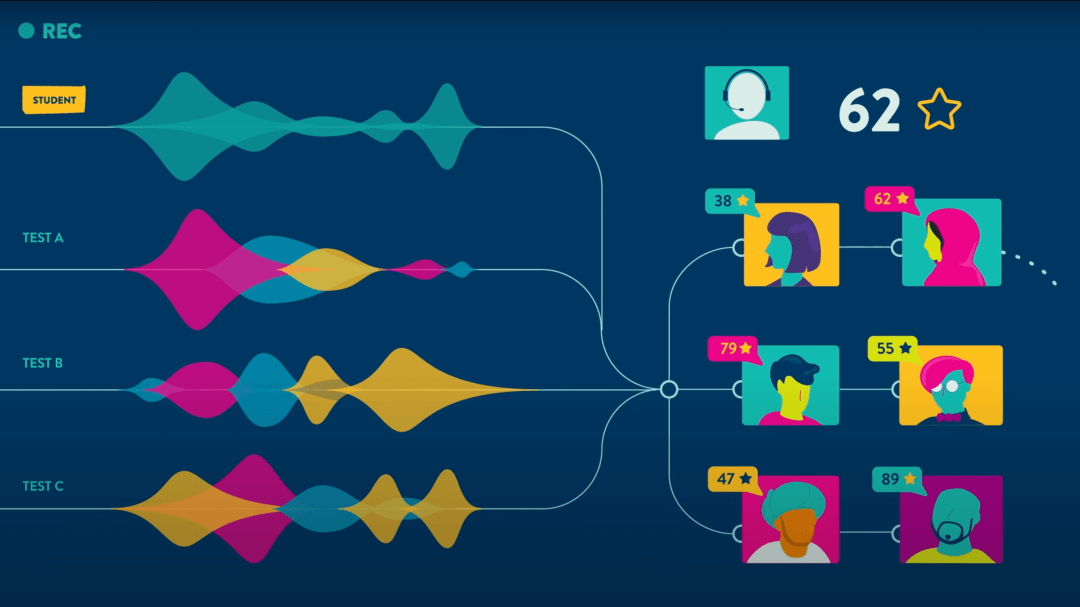
  • Video thumbnail for the video, 'Learn how PTE Academic uses AI to mark tests'

    How do you know PTE Academic’s computer marking works?

    By PTE Author
    Reading time: 2 minutes

    How do we know automated scoring works

    Are you thinking of taking PTE Academic, or have you recently taken it, but you are wondering how it is that a computer can mark your test?

    Well, firstly the test has been designed by humans, all leading experts in their field. Our human experts design and write the questions, quality assure them, and then score them. At this point, computers are trained to use the patterns of highly trained language experts to attribute scores to questions. When the computer marks correlate highly with the human scores, we then allow the computer to mark test scripts from across the world.

    As a result of our processes and technology, the computer behaves like an expert human examiner – but without any possible bias, lack of concentration, or variation between individual examiners.

    The scoring criteria are exactly the same as human scoring – test takers are marked on their delivery, clarity, relevance, the accuracy of grammar, and appropriateness of vocabulary.

    Want to hear more?

    Take a couple of minutes and listen to one of our leading independent advisors, Dr. Alistair Van Moere, a member of Pearson’s Technical Advisory Group, as he explains how it all works.

  • Image- student at class 800px

    Reviewing Test Performance

    By PTE Author
    Reading time: 2 minutes

    If you have completed PTE Academic, you would know by now that it is scored against the Global Scale of English and that you need to practice many skills for each part of the test: Speaking & Writing, Reading, and Listening.

    After completing PTE Academic you will receive an email notification that your results are available online. Typically within 2 days. Learn how to access your Score Report.

    What does my Score Report mean?

    When you receive your Score Report it will show you your overall score, which is based on your performance across all test items. Your communicative skills that are measured are listening, reading, speaking and writing.

    This is an example of what your Score Report may look like.

    The enabling skills are those skills that are required to fulfill the question types in the test. It’s important to know what each of these skills refers to.

    Grammar

    Correct use of language with respect to word form and word order at the sentence level.

    Oral Fluency

    Smooth, effortless and natural-paced delivery of speech.

    Pronunciation

    Production of speech sounds in a way that is easily understandable to most regular speakers of the language. Regional or national varieties of English pronunciation are considered correct to the degree that they are easily understandable to most regular speakers of the language.

    Spelling

    Writing of words according to the spelling rules of the language. All national variations are considered correct, but one spelling convention should be used consistently in a given response.

    Vocabulary

    Appropriate choice of words used to express meaning, as well as lexical range.

    Written Discourse

    Correct and communicatively efficient production of written language at a textual level. Written discourse skills are represented in the structure of a written text, its internal coherence, logical development, and the range of linguistic resources used to express meaning precisely.

    How do I identify my areas of weakness?

    From the visual graph on your Score Report, you will be able to see areas you need to improve on. You should aim to develop your core (enabling) skills required across all areas of the test.

    The following resources will help you develop your enabling skills:

    How can I improve in each part of the test?

    It’s also worth focusing on particular parts of the test or questions you think you had trouble with. The following articles may help you improve your skills across questions:

    If you don’t already have one, it’s recommended to work with an English teacher to work through areas that may need improvement.

    Good luck!

  • Image- A guy with headphones and laptop

    Listening: Self-Improvement Part 1

    By PTE Author
    Reading time: 3 minutes

    After working through the strategies to improve your English listening skills, you can work on specific areas of the test. In this part, you will need to apply a number of listening and writing skills.

    Below are improvement tips on the question types that combine writing and listening skills.

    Summarize Spoken Text

    In the Summarize Spoken Text questions you will be scored on content, form, grammar, vocabulary, and spelling.

    Content and Form

    Make sure you write a good, clear summary of all the key points in the text and also condense the most important supporting points.

    In this question, you will not be given the context of the recording before it starts. Make sure to listen carefully from the start to help understand the context and the information given.

    Some helpful tips for the content and form, to maximize your score are:

    • Take notes on your Erasable Noteboard Booklet or in the response box on the screen

    • Do not try to write down sentences (you will not have enough time)

    • Use symbols and abbreviations in your notes

    • Write down key points and their relationships with others

    • Start with an overview sentence to introduce your summary

    • Use cohesive devices to link the information as you write

    • Try to write between 50 and 70 words

    Overall, make sure you summarize the text in your own words as this will show that you have understood the purpose of the text. If you do not write in your own words, you will score zero for content.

    If you write less than 40 or more than 100 words, you will score zero.

    Grammar

    It is important that grammar is correct as you will be tested on sentence structure, punctuation and capitalization.

    Try not to be too ambitious with your grammar to avoid making mistakes. Try to use grammatical structures you feel comfortable with.

    In this question type you should:

    • Communicate meaning clearly and concisely

    • Use complex sentences where possible to score more points

    • Write sentences between 18 and 30 words – long sentences are hard to control grammar

    • Check your response for common errors before submitting

    Vocabulary and Spelling

    You will score points if you use the correct and appropriate vocabulary in the Summarize Spoken Text question type. Use words from the recording if you use them appropriately, however, try to use synonyms to replace words already used.

    You will also need to make sure to spell every word correctly to receive maximum points. Try to type as carefully as possible during this question. If you can not remember how to spell a word, guess as it is better to include the word than leave it out, even if it is incorrect.

    Don’t forget to use the space bar to show the end of each word.

    Write from Dictation

    Another question that tests both listening and writing is the Write from Dictation question type.

    In this question type, you will need to write the words in the correct order with the correct spelling in order to score points.

    Before the recording starts, place your cursor in the response box and get ready to type as soon as you hear the recording. Make sure to reproduce what you hear exactly as you heard it as the recording will only be played once.

    Remember to start the sentence with a capital letter and end it with a full stop (period).

    Type as you hear it and when finished, check for any mistakes. Always make sure that to read over your answer before clicking next.

    Continue improving your listening skills by reading our Listening: Self-Improvement Part 2 article.

Looking for news or press releases?