
5 common PTE mistakes - and how your students can avoid them

Reading time: 7 minutes

Learning from our mistakes is one of the best ways to improve. This is also true for anyone who is preparing for an English language proficiency exam, like PTE Academic.  

 In this post, we’ll look at five common PTE Academic errors test takers make, and how you can help your students to avoid these mistakes when they are sitting their exam.  

1. Reading: reordering paragraphs

In the PTE Academic reading section, test takers are asked to reorder paragraphs taken from an academic text. They see one panel on the screen with a number of sentences in the wrong order, and need to drag these sentences to a second panel in the correct order. This activity tests how well test-takers can understand the structure of a written text in English.  

However, many people struggle with this. They don’t pay attention to language clues such as linking words or sentences that open with an introductory statement. These are all things that allow texts to follow a cohesive pattern.  

Image - reordering paragraph

Check out our Instagram page for activities like this to help students prepare for their PTE exam! 

To help students avoid this mistake, it’s important to teach them about linking words, opening and concluding statements, and how to give opinions or examples in English. You can also have students practice reordering paragraphs in class. For example: 

  • Bring in some news articles, blog posts, or short academic texts  

  • Cut each one up into a number of paragraphs and mix up the order  

  • Put students in groups and have them reorder the paragraphs 

  • When complete, ask students to read the reordered text aloud and have them explain why they chose this order, focusing on the language clues.  

2. Listening: summarize a spoken text 

One of the listening tasks requires candidates to summarize a spoken text. The objective of this is to test how well students can understand the main ideas of a lecture and how well they can summarize those ideas.  

Students listen to an audio recording, and can take notes while listening. They then have 10 minutes to write a 50-70 word summary of the audio. For this task, they’re judged on both the quality of their writing and how well their response presents the key points from the lecture.  

However, test takers often simply copy what they heard in the audio, word for word. This shows they have recognized and understood the words within the audio. But it doesn’t represent their ability to summarize in their own words, using a range of vocabulary and grammatical structures.  

In order to get a good score, candidates must paraphrase as much of the listening material as possible. To help them achieve this, you can try the following in class:  

  • Choose a short video to watch, such as a Ted Talk. If it’s only a few minutes long, play it twice so they have a better understanding of the ideas. 

  • Ask students to work in pairs to take notes and paraphrase the key points of the video. The pair that uses the most new vocabulary and synonyms in their summary will win.  

  • Have the pairs present their summary to the rest of the class, give feedback, and select a winning pair.  

3. Speaking: describe an image 

One of the PTE Speaking tasks calls for candidates to describe a picture. The aim of this exercise is to test students’ ability to explain what they see - using their own words - in a graph, chart, map, table or picture.   

Students have 25 seconds to look at an image on the screen and think about what they’re going to say. Then, they have 15 seconds more to describe the image out loud. The microphone automatically turns off after 40 seconds.  

A common mistake that candidates make here is that they memorize a response to images they have seen when preparing for the exam. This often means they don’t actually describe the image they’ve seen in front of them. When this happens, they usually get a very low score, or even a zero.  

Students may do this if they don’t feel confident with their level of vocabulary. To help them avoid making this mistake, practice describing a range of images in class. Have students record themselves doing the task. Then listen back and identify areas where students can improve and note down any gaps in vocabulary which can then be taught in future classes.  

Image- Describe image

Check out our Instagram page for images like this to help students prepare for their PTE exam! 

4. Writing: writing an essay   

There are two PTE writing tasks to complete in the exam. One of these involves writing an essay, which tests candidates’ ability to write a short, persuasive or argumentative piece.  

Test-takers are given a short written prompt asking them to agree or disagree, state their opinion, or comment on a situation or problem. The response is judged on how well they’re able to develop a position, organize their ideas, present supporting details and write with a high level of academic English. They must write between 200 and 300 words in 20 minutes.  

Image - Write essay

Check out our Instagram page and discover more essay questions to help students prepare for their PTE exam! 

One big mistake? Test-takers often do not follow the word count. The essay score guide states that if they write fewer than 120 words or more than 380 words, their answer will be scored a zero. 

One way to help students prepare for this is by getting them to practice writing the essay under timed conditions. When finished, have them swap their essays with another student and ask them to total each other’s word counts before handing them in.  

Read more tips for the Writing Essay task.  

5. Not checking answers  

Apart from the task-related mistakes, candidates can often make, the biggest problem that we see are simple errors in written answers. This may be because the candidate has not checked over their work before moving on to the next task.  

Before moving on to a new question, it is vital that test-takers spend a few seconds proofreading their answers. By doing this, they may avoid simple errors in spelling, punctuation, vocabulary, or grammar. Furthermore, it gives them time to check that they’ve completed all the information set out in the question.  

To help students get used to doing this, you could have them proofread each other’s written work in class. They can then provide feedback to the other student and work together to correct the errors. Another idea is to create your own short text with a number of spelling, punctuation, and grammar mistakes in it. Tell students that there are X amount of errors in the text, and that they need to work in pairs to find and correct them.  

This way, they’ll train themselves to proofread their work for any small mistakes that could affect their overall PTE score.  

Discover more resources to help you teach PTE!

Related Content

  • Image- Canada, 800px x 451px

    Canadian scholarships: What international students need to know

    By PTE Author
    Reading time: 7 minutes

    For students wishing to study abroad, it doesn’t get much better than Canada. It is an incredible country with endless opportunities. Study in Canada and you’ll find a rich culture, world-famous universities, and generous Canadian scholarships to help you with costs and tuition.  

    It’s no wonder that the North American nation is a magnet for intelligent, international students. In fact, a Statistics Canada study of the 2018-2019 school year found that Canada hosts students from 225 countries. The study also found that Chinese and Indian students represent more than 50% of that population.  

    What’s more, Canada has been attracting more and more international talent in the past decade. The number of students from abroad has tripled in the past 10 years. International students account for 57.2% of the growth in all program enrollments.    

    Canada is a global leader in terms of university education. But, with more than 100 universities and 15,000 programs of study, it can be difficult to know which are the best and most reputable.  

    Read our guide about how to study in Canada. We’ll break down more about the best universities in Canada and their top programs. Most importantly, we’ll also explore ways to find a Canadian scholarship to fund your studies.  

    Canadian scholarships: What to look for 

    Of course, it’s important to have a plan to finance studies and the cost of living in Canada. That’s where Canadian scholarships come in. Whether you’re looking to fund your undergraduate program or you’re seeking a master's degree scholarship in Canada (or beyond), there are plenty of options.  

    The Canadian government, foundations, and not-for-profit organizations all offer a number of scholarships and grants. The most common place to score scholarships in Canada though is likely from the university itself.  

    Firstly, when looking for Canadian scholarships, international students need to know about the entrance scholarships. Most universities offer these scholarships, which are based on academic history. You’ll be pleased to read that entrance scholarships operate on an automatic consideration basis as part of the admissions process. This means you don’t have to apply for them.

    To understand what those scholarships look like, consider what’s offered by top universities in Canada: 

    The University of Waterloo

    The University of Waterloo in Ontario offers 20 entrance scholarships. These are worth $10,000 and are for international students who have at least a 90% average. In addition, you must demonstrate academic excellence and be starting year one of an undergraduate program.  

    McGill University 

    McGill University in Montreal, Quebec is another of Canada’s best universities. It gives entrance scholarships worth $3,000 to first-time university students starting their undergraduate program. The major entrance scholarship is worth more with some students being awarded as much as $12,000. These scholarships are renewable for three or four years for students who continue to meet scholarship criteria. International students can get this scholarship but short-term exchange students cannot.

    McGill’s in-course awards are awarded automatically by each faculty. Students with excellent academic merit may earn one of these after the academic year is completed.

    University of British Columbia 

    The University of British Columbia is another reputable school. It gives $30 million annually in grants to international undergraduate students. Study there and you could be up for its International Major Entrance Scholarship, which is renewable for three years.  

    Or you might even win its Outstanding International Student Award. This is a one-time award for a student with a strong academic background and involvement in activities beyond the classroom.  

    Government grants 

    The Canada-ASEAN Scholarships and Educational Exchanges for Development program gives support to students from Southeast Asian nations. To be eligible you need to be studying short-term at the college, undergraduate, and graduate levels.  

    They are awarded based on applications submitted by Canadian universities on a candidate’s behalf. These scholarships are part of Canada’s effort to reduce poverty and support sustainable development in the region.  

    The Canadian Commonwealth Scholarship Program is for academically talented students from Commonwealth countries studying at the masters or PhD level. The scholarship is worth $10,000. This helps students pay for transportation, cost of living fees, and any expenses related to their studies in Canada.  

    For students studying in Ontario, the Ontario Graduate Scholarship Program is for those at the masters or doctoral level. To qualify, you must be attending a participating Ontario university, be enrolled for at least two consecutive terms and be studying full-time. Students can get $10,000 for two consecutive terms or $15,000 if they are enrolled in three consecutive terms. This scholarship is funded by the province of Ontario and the participating universities.

    A glimpse at the top universities in Canada 

    One of the best sources that ranks Canada’s best universities is Maclean’s magazine. Each year, the Canadian publication surveys faculty members, senior administration, and successful business people across the country.  

    The aim of the report is to find out their opinions in regards to quality and innovation at Canada’s academic institutions. The result is a published list of rankings of the best overall universities in Canada. In addition, it shares the best programs and best schools based on students’ experiences.  

    In 2021, Maclean’s found the top five Canadian universities to be: 

    Top-ranking specialist schools in Canada 

    Of the international students in Canada, 47% study in the province of Ontario. Their most popular areas of study are business and management, followed by engineering. Considering this, it’s worth looking at the top-ranked schools in those categories as well.  

    After the in-depth surveying of 1,000 professors, deans, and chairs at 80 Canadian institutions, Maclean’s found The University of British Columbia to be the best school for business. The University of Toronto followed in second place. As for engineering, University of Waterloo and The University of Toronto tied for first place.

    How PTE can help you apply for a Visa 

    Canada’s student visa requirements for international students include proof that you have: 

    • a university placement; 

    • the financial ability to live in Canada;

    • your high school transcript and a high level of English.  

    On that last point, you will need to have taken an English language test to prove your abilities in speaking, listening, reading, and writing in order to get your visa.  

    PTE Academic is a trusted English language test accepted by top institutions in Canada including The University of British Columbia, University of Waterloo, McGill University, and McMaster University. PTE Academic can help students study abroad in Canada because Immigration, Refugees, and Citizenship Canada (IRCC) recognizes its tests as being one of the mandatory English tests for a study permit application.  

    If you are planning to take a PTE Academic test to complete your Canada student Visa application, an exam center will not be far away. In Canada, centers currently exist in Toronto, Ottawa, Montreal, Edmonton, Calgary, and Burnaby. 

    Find your nearest exam center now!  

    A home away from home 

    There’s no doubt about it: Canada is a world-class country for getting a university education. It’s also a very multi-culturally diverse place. This means, for international students, it’s a country that offers rich experiences beyond just the classroom.  

    With the recent increase in students coming from countries like India, China, and beyond, many international students find that Canada is an easy place to adjust to. It feels like a home away from home.  

    Canadian universities offer not just top-quality academic institutions and programs, but also scholarships offering students a means to finance their education. That makes Canada an easy choice for furthering your education goals overseas.
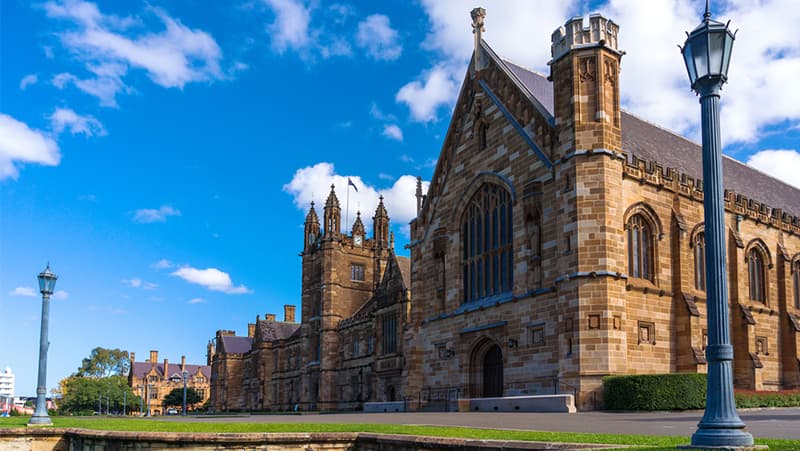

  • Image- Australian university, 800px x 451px

    Australian student visa application guide

    By PTE Author
    Reading time: 4 minutes

    Australia is known for its beautiful landscapes, quality of life, and excellent standard of education. If you’re interested in studying in Australia, you’ll first need to understand the Australian student visa application process.  This will set the stage for the exciting new chapter in your education. 

    However, there can be a lot to remember when it comes to Australian student visa requirements. That’s why we’ve put together this informative guide, which breaks down everything you need to know. Let’s get started!  

    Australian student visa requirements 

    In order to apply for an Australian student visa – called the Subclass 500 Student visa – you must be enrolled in a course of study at an Australian institution. You’ll need to complete an application form, gather important documents, and prove to the Australian Government that you meet a list of requirements, including:  

    • The Genuine Temporary Entrant (GTE) requirement

    • Financial requirements

    • English proficiency requirements

    • Health and characteristic requirements

    You can also use the Document Checklist Tool to which documents need to be attached to the application. 

    The Genuine Temporary Entrant (GTE) requirement

    To fulfill the GTE requirement, you must prove you’re coming to Australia temporarily to receive a quality education. To do this, you’ll need to provide a personal statement in English, or translated it into English. This should include information and evidence about your:  

    • Previous studies (with academic transcripts)

    • Current employment

    • Ties to your home country 

    • Economic situation  

    • Immigration history

    Overall, Australia wants to ensure you’re entering the country to further your education, and not for other motives.

    Financial requirements

    This is an important part of the Australian student visa application process. Many applicants need to prove they have sufficient funds to pay for life in Australia, including living costs and tuition fees. There are a few options to do this; for example, you can show you’ve received government loans or scholarships. Evidence of 12-months fund or evidence that you meet the annual income requirement will also work.  The requirements range from $29,710 AUD (about $19,000 USD) to $102,500 AUD (about $65,500 USD). For detailed and most updated information, please refer to Department of Home Affairs.  

    Learn more about financial requirements.  

    English language requirements

    Australia is a very diverse country. Approximately 73% of the population in Australia speaks English at home. To meet Australian student visa requirements, applicants who aren’t from an English-speaking country need to show English language proficiency.  And, our computer-based and unbiased English language test at PTE Academic is accepted by the Australian government for every visa category.  

    To be eligible for a student visa in Australia, you must achieve:

    • At least 50 for each of the 4 components for PTE Academic 

    • At least 36 for each of the 4 test components of PTE Academic if you undertake an English Language Intensive Course for Overseas Students (ELICOS) course before your main course 

    View a full breakdown of Australian study visa PTE requirements

    Health & characteristic requirements 

    Most visa applicants need to do a medical exam to prove that they are healthy. In addition to the medical exam, the majority of applicants must buy Overseas Student Health Cover (OSHC) from an approved Australian provider. 

    To get an Australian student visa, you also need to be of good character. You shouldn’t have a substantial criminal record or be a member of a criminal group, for example. To prove this, you might have to supply a police certificate.  

    Fees  

    A Subclass 500 Student visa starts at $1,600 AUD ($1,020 USD) unless you are exempt. There are also added charges for each family member who applies for the visa.  For more information on visa costs, check out the Australian government’s visa pricing estimator.  

    Processing times 

    For an indication of processing times for this visa, use the visa processing time guide tool. This will show the processing times for recently decided applications. It is a guide only and not specific to your application. 

    To find out if you’re eligible for an Australian student visa, be sure to review all the requirements on the government website. You can see all the documents you’ll need for your application using the government’s documents checklist tool. 

    Learn more about working in Australia on a post-study work visa.

    Last updated 20 December 2024.

  • Image- Tower Bridge, 800px

    A guide to new visa changes in the UK – and why they’re good news for students

    By PTE Author
    Reading time: 5 minutes

    The UK is an excellent place to study. It is home to a long list of renowned universities, many of which are often ranked among the top universities in the world. Recently the UK government has shown it is committed to attracting more foreign students – and making it simpler for innovative professionals from abroad to call the UK home.  

    In July 2020, the UK published a Research and Development (R&D) Roadmap, which listed a number of exciting new policies and changes to support international students. 

    In this article we’ll learn more about:  

    • The UK’s new “Office for Talent” was created to make the immigration process smoother for skilled students 

    • New visa extensions for international students after graduation 

    • What this means post-Brexit

    What is the Office for Talent? 

    The UK’s new Office for Talent has been set up to make it easier for international scientists, researchers, and innovators to work and live in the UK. The team works from Prime Minister Boris Johnson’s office at 10 Downing Street. In the UK, the headquarters is often simply referred to as “Number 10.”  

    According to the government announcement, the Office for Talent began work right away on reviewing the UK’s current immigration rules and will focus on ensuring the immigration system is simple and quick for both students and professionals alike. “They will also help those coming to the UK better understand the opportunities on offer and break down any barriers they might face,” read the statement. 

    How long can foreign students now stay in the UK after graduation?  

    The UK has also announced some exciting new visa changes. PhD students who graduate in Summer 2021 will now be able to stay in the UK for an additional three years. International students who graduate with undergraduate or Master’s degrees can stay in the UK for two years. This news was announced back in 2019.  

    Before, foreign students could only stay in the country for four months after graduation. This made it difficult for students to find jobs or begin their working lives in the UK. 

    Now, these new changes give foreign students the freedom to nurture the connections they made while studying, build new relationships, establish themselves, and develop meaningful careers in the UK. 

    What else did the UK announce?  

    The UK has introduced a new points-based immigration system, made to streamline the visa process.  According to the roadmap, people interested in studying in the UK will now have more time to make a visa application. 

    The UK also plans to get rid of study time limits for postgraduates. Previously, most students had to complete their studies in five years. Finally, students will no longer need to leave the UK to switch visas – which will help to reduce lots of stress and worry for foreign learners. 

    The UK announced it would also invest £300 million in science infrastructure at research institutes and universities. This could prove to be a plus for international scientists and researchers considering whether to study or live in the UK.

    What does this mean post-Brexit?  

    Brexit caused a lot of uncertainty for students in the UK from the European Union (EU). If you’re an EU citizen moving to the UK in 2021, you’ll now have to apply for a visa to study for longer than 6 months. If you were studying in the UK before this year, you can apply for the EU Settlement Scheme – which will let you continue living in the UK permanently.  

    Learn more about the EU settlement scheme

    The UK states the Research and Development Roadmap will “help to power up the economy and level out the UK.” Overall, the changes are set to help support foreign students in the UK – and particularly those in science, research, and innovation fields. 

    To conclude, here’s a concise look at how student visas have evolved:  

    What were visa rules like before? 

    • In the past, international students could only stay in the UK for four months after graduation

    • Most students had to complete their degrees in five years

    • Students had to leave the UK to apply for a new visa

    • EU citizens did not have to apply for a visa to study in the UK

    What will students be able to do now? 

    • PhD students who graduate this summer can stay in the UK for three more years. Undergraduate and Master’s students can stay for two more years (announced in 2019)

    • The UK will get rid of study limits for postgraduate students

    • Students will not need to leave the UK to switch visas

    • EU citizens must apply for a visa to study for longer than 6 months.

      EU citizens studying in the UK before 2021 can apply for the EU Settlement Scheme instead

    For more information about how to apply for a UK student visa, don’t forget to check out our complete guide.  

    Are you interested in working, studying, or living in the UK? 

    PTE Academic UKVI is approved by the UK Home Office for visa purposes. Book your test 24 hours in advance, get your results typically within 2 days –  and bring your dream a step closer to reality.  

    Learn more about PTE Academic UKVI and book your test today!