
10 things you need to know about studying in Canada

PTE Author
PTE Author
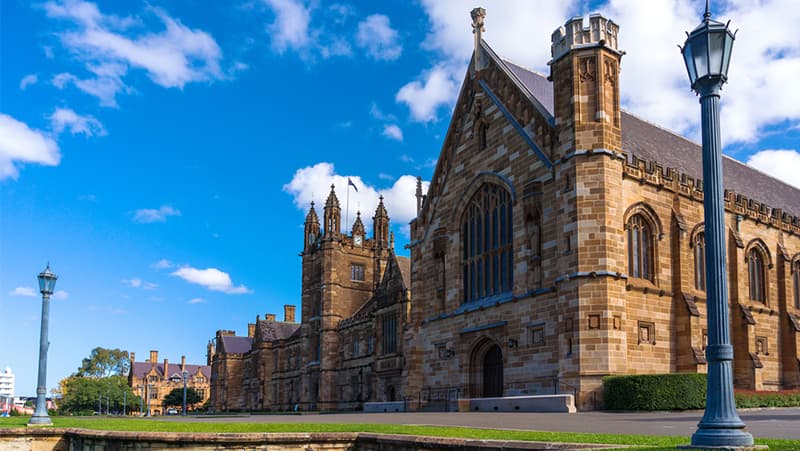
Image - Canada 1080 px
Reading time: 6 minutes

Have you considered moving to Canada to study? With more than 100 world-class universities across the country, there’s good reason to. From coast to coast to coast, it offers many international students a safe and supportive learning environment – as well as the opportunity to work after graduation.  

Want to learn more? In this guide, we cover 10 things you should know about studying in Canada:  

1. Canada is incredibly diverse 

More than one in five Canadians were born outside the country – making Canada one of the most multicultural places in the world. According to the most recent statistics, nearly half of the people born outside Canada are from Asia. About 28% of the people are from Europe, and 8.5% are from Africa. Even more, 37.5% of children in Canada were either born abroad or have a foreign-born parent.  

A large number of students at Canadian universities and colleges also come from abroad – which is a big draw for many international students. In fact, international students are driving university enrolment across Canada!  

Discover the five most diverse and multicultural cities in Canada!  

2. The country has two official languages 

Canada has two official languages: English and French. The English-speaking part of the population is called anglophone, while the French-speaking part of the population is called francophone. About 23% of people in Canada have French as their first language, and the majority of them live in the province of Quebec. There are also more than 100 French-speaking universities and colleges across Canada.  

It’s important to note that federal government institutions are all bilingual. This means you can submit your student visa documents in either English or French. When you enter Canada at the border, you’ll also notice the officer will greet you by saying “bonjour, hello” (or vice versa) 

In addition to English and French, there are also 70 indigenous languages spoken in Canada. 

3. Tuition costs can be more reasonable  

International student tuition fees in Canada are usually lower than in places like the US and UK. However, they are still a big expense. According to the government website EduCanada, tuition ranges between $1,800 CAD–$20,000 CAD per year for an undergraduate university degree. Colleges are sometimes less expensive; however, tuition can still reach $18,000 CAD per year.  

4. There are scholarships available  

Good news: there are lots of scholarships for international students in Canada. Many scholarships, called entrance scholarships, are offered to students by institutions upon acceptance based on academic performance. So, you don’t have to apply for them.  

Others are offered by the government. For example, if you’re studying in the province of Ontario, the Ontario Graduate Scholarship Program offers masters and doctoral students up to $15,000. To learn more about scholarships and awards for international students, EduCanada is a good resource.  

5. Institutions provide lots of support 

Universities and colleges in Canada want their international students to succeed. Your institution will have an international student office that should provide services like visa and health insurance support, upskilling workshops, and advice on how to adjust to life in Canada. There will also be campus-wide support services. These include: 

  • Mentorship programs 

  • Mental health services 

  • Academic accommodations 

  • Language workshops

  • Housing support

  • Employment support  

Find out how you can seek help from international student communities.  

6. On-campus housing is a community hub  

The majority of institutions in Canada offer on-campus housing. Sometimes, student residences are reserved for first-year students. But many universities and colleges will also offer on-campus housing to students coming from abroad.  

Residences can consist of dorm rooms, private studio apartments, or shared houses, and often come with a meal plan. Living on-campus is a great way to meet new people from around the world – and for many students, residences become a real community hub.   

But, you can still have a student housing experience off-campus. In most cities, there are student housing options that aren’t affiliated with any particular institutions, but still offer a similar experience with the same amenities – things like cafeterias, study spaces, and entertainment areas.  

Curious about how much it costs to live in Canada? Our student guide examines the living costs across a number of major cities – including Toronto, Vancouver and Halifax. 

7. You might be able to work while you study  

As an international student in Canada, you can only work if you’re enrolled full-time at a designated learning institution (DLI). If so, you’ll be able to work for 20 hours per week off-campus, and full-time during scheduled semester breaks. Your study permit should have your work conditions printed on it.  

However before you begin work, you’ll need to apply for a Social Insurance Number (SIN). This is free and only takes a few minutes to do online.  

How much you make will depend on where you live. The minimum wage in Canada varies by province and territory. For example, in Ontario minimum wage is $14.25 per hour while in British Columbia it’s $15.20 per hour.  

Check out these 10 part-time jobs for international students in Canada!  

8. Travel can be expensive – but there are some cheaper options 

Did you know Canada is the second-largest country in the world? It has a landmass of 9.1 million square kilometers! This is one reason traveling in Canada is expensive. There are also high airport taxes and a lack of competition in the aviation industry, so flying can be particularly pricey. For example, a 1-hour flight between Toronto and Montreal can cost up to $300.  

However, if you want to explore the country – and travel is deemed safe by government authorities this year to do so – there are some cheaper ways to see Canada. For example, the country’s train service VIA Rail offers discounts to students and riders under 25. Alternatively, Megabus is a discount bus service that offers routes throughout Canada and the U.S.   

9. Canada offers post-study visas  

Want to settle in Canada after you graduate? You’re not alone. Three in 10 international students who came to Canada after 2000 have become permanent residents.  

Canada offers a few ways for students to work in the country after graduation. For example, the post-graduation work permit could allow you to stay in Canada for up to three years after studying, if you are eligible. You could also apply for a work permit through an employer.  

10. Canadians value a global perspective  

Having international experience in Canada is viewed as a big advantage. Nearly every university in the country offers their students the opportunity to study or work abroad. Better yet, 80% of employers that hire people with international and intercultural experience say it makes their business better.

To study in Canada, most students need to take an English language proficiency test. PTE Academic is accepted by more than 200 Canada institutions – and the best choice to help you get accepted.

Related Content

  • Image- Tower Bridge, 800px
    A guide to new visa changes in the UK – and why they’re good news for students
    By PTE Author
    Reading time: 5 minutes

    The UK is an excellent place to study. It is home to a long list of renowned universities, many of which are often ranked among the top universities in the world. Recently the UK government has shown it is committed to attracting more foreign students – and making it simpler for innovative professionals from abroad to call the UK home.  

    In July 2020, the UK published a Research and Development (R&D) Roadmap, which listed a number of exciting new policies and changes to support international students. 

    In this article we’ll learn more about:  

    • The UK’s new “Office for Talent” was created to make the immigration process smoother for skilled students 

    • New visa extensions for international students after graduation 

    • What this means post-Brexit

    What is the Office for Talent? 

    The UK’s new Office for Talent has been set up to make it easier for international scientists, researchers, and innovators to work and live in the UK. The team works from Prime Minister Boris Johnson’s office at 10 Downing Street. In the UK, the headquarters is often simply referred to as “Number 10.”  

    According to the government announcement, the Office for Talent began work right away on reviewing the UK’s current immigration rules and will focus on ensuring the immigration system is simple and quick for both students and professionals alike. “They will also help those coming to the UK better understand the opportunities on offer and break down any barriers they might face,” read the statement. 

    How long can foreign students now stay in the UK after graduation?  

    The UK has also announced some exciting new visa changes. PhD students who graduate in Summer 2021 will now be able to stay in the UK for an additional three years. International students who graduate with undergraduate or Master’s degrees can stay in the UK for two years. This news was announced back in 2019.  

    Before, foreign students could only stay in the country for four months after graduation. This made it difficult for students to find jobs or begin their working lives in the UK. 

    Now, these new changes give foreign students the freedom to nurture the connections they made while studying, build new relationships, establish themselves, and develop meaningful careers in the UK. 

    What else did the UK announce?  

    The UK has introduced a new points-based immigration system, made to streamline the visa process.  According to the roadmap, people interested in studying in the UK will now have more time to make a visa application. 

    The UK also plans to get rid of study time limits for postgraduates. Previously, most students had to complete their studies in five years. Finally, students will no longer need to leave the UK to switch visas – which will help to reduce lots of stress and worry for foreign learners. 

    The UK announced it would also invest £300 million in science infrastructure at research institutes and universities. This could prove to be a plus for international scientists and researchers considering whether to study or live in the UK.

    What does this mean post-Brexit?  

    Brexit caused a lot of uncertainty for students in the UK from the European Union (EU). If you’re an EU citizen moving to the UK in 2021, you’ll now have to apply for a visa to study for longer than 6 months. If you were studying in the UK before this year, you can apply for the EU Settlement Scheme – which will let you continue living in the UK permanently.  

    Learn more about the EU settlement scheme

    The UK states the Research and Development Roadmap will “help to power up the economy and level out the UK.” Overall, the changes are set to help support foreign students in the UK – and particularly those in science, research, and innovation fields. 

    To conclude, here’s a concise look at how student visas have evolved:  

    What were visa rules like before? 

    • In the past, international students could only stay in the UK for four months after graduation

    • Most students had to complete their degrees in five years

    • Students had to leave the UK to apply for a new visa

    • EU citizens did not have to apply for a visa to study in the UK

    What will students be able to do now? 

    • PhD students who graduate this summer can stay in the UK for three more years. Undergraduate and Master’s students can stay for two more years (announced in 2019)

    • The UK will get rid of study limits for postgraduate students

    • Students will not need to leave the UK to switch visas

    • EU citizens must apply for a visa to study for longer than 6 months.

      EU citizens studying in the UK before 2021 can apply for the EU Settlement Scheme instead

    For more information about how to apply for a UK student visa, don’t forget to check out our complete guide.  

    Are you interested in working, studying, or living in the UK? 

    PTE Academic UKVI is approved by the UK Home Office for visa purposes. Book your test 24 hours in advance, get your results typically within 2 days –  and bring your dream a step closer to reality.  

    Learn more about PTE Academic UKVI and book your test today!

  • Image- working with laptop, 1080px
    Should you hire a migration agent to move to Australia?
    By PTE Author
    Reading time: 6 minutes

    Are you planning to move to Australia? The visa process for any country can be confusing – and it’s normal to have some unanswered questions along the way. That’s why many people turn to migration agents for help.  

    In this blog, we’ll take a look at what exactly a migration agent can do for you – and what you should keep in mind if you decide to hire one:  

    What is a migration agent? 

    A migration agent provides immigration advice and assistance. In Australia, they’re registered with the Office of the Migration Agents Registration Authority (OMARA), which is part of the Department of Home Affairs. All qualified agents are authorized by the Australian government to provide their services.  

    While you don’t need to work with a migration agent to apply for an Australian visa, they can help make the process a little less stressful. Migration agents can:  

    • Complete your visa application 

    • Help you understand the dos and don’ts of the visa application process 

    • Prepare all required documents 

    • Contact the Department of Home Affairs about your application

    To find one, you can search the Register of Migration Agents on the OMARA website. If you haven’t moved to Australia yet, keep in mind that there are registered Australian migration agents based around the world. You can check if there’s an agent working close to you using the search tool.

    You might be interested in our Australian student visa application guide.

    The advantages of hiring a migration agent 

    Now that you know what exactly a migration agent does, what are some advantages of hiring one? 

    They’re experts in their field  

    For some people, working on a visa application alone can be overwhelming. There are detailed instructions to keep in mind, and you want to make sure everything is done perfectly. Hiring a migration agent can lessen a lot of the burden. They’re experts in their field, have up-to-date knowledge on Australian migration law, and have helped numerous other people with successful visa applications.  

    Since migration agents follow a Code of Conduct, they’re also obliged to act in your best interest. This means they’ll provide you with professional immigration advice throughout the whole visa process, and should be just a phone call away whenever you have any questions.  

    They could help streamline the process 

    Migration agents know which documents are required and how to best prepare them. And according to OMARA, submitting an application that’s properly prepared can make it easier to get a faster decision on your visa.  

    If you hire a migration agent, you’ll also have someone to represent you in your dealings with the Australian government. Migration agents can reach out to the Department of Home Affairs on your behalf – for example, if your situation has changed or to ask about processing delays. This can save applicants a huge amount of time.   

    They can provide support in English  

    Understanding immigration paperwork can get complicated, even if you’re fluent in English. So if you’re an English learner, working with a migration agent to complete your application can be incredibly helpful.  

    Keep in mind that migration agents aren’t there to translate or interpret documents for you. But working with someone who speaks English fluently to prepare your application can help ensure you don’t miss anything.  

    The challenges of hiring a migration agent 

    Of course, choosing to work with a migration agent is a big decision. There are a few things to keep in mind before you decide to hire an agent – or rather, work on your own.  

    Migration agents can be expensive 

    Working with a migration agent is expensive; their services can sometimes cost thousands of dollars. Each migration agent can set their own price. But the fee will usually depend on what visa you’re applying to, how much help you need, and how much experience your migration agent has. Before signing on with an agent, OMARA recommends speaking with at least three professionals to compare how much they charge. 

    Overall, moving to Australia is a big investment. So if you’ve researched the visa application and are confident you understand all that’s required, you might decide it’s better to complete the visa process yourself. 

    Watch out for unregistered agents  

    In most cases, only registered agents can legally give you immigration advice. However, there are people who pretend to be registered agents, which opens the door to immigration fraud. There are also unregistered agents who might not have knowledge of immigration law, could give bad advice, or could lose important files.  

    On the other hand, as we mentioned above, registered migration agents have to follow a Code of Conduct – which offers you a range of protections. If for some reason you’re unhappy with your agent, OMARA can also help you to resolve disputes.  

    Learn more about the risks of working with an unregistered agent on the OMARA website.  

    There’s no guarantees  

    It’s important to remember that simply hiring a migration agent does not guarantee your application will be successful. There are many factors that influence a successful application, some of which may be outside even the best agent’s control.  

    Overall, it’s important to do lots of research before deciding to hire a migration agent. Once you understand what’s required in the visa process, ask yourself: do I feel confident completing the application on my own? Will I be able to invest the time needed to prepare the application well?  

    And do I have friends who can recommend a good migration agent, if I choose to work with one?  

    Don’t forget… 

    Many Australian visa applicants will also have to prove their English language proficiency. At PTE Academic, we’ve got you covered. Our English language tests are accepted by the Department of Home Affairs for all visa categories.  

    Learn more about how our English exams can help you move to Australia. 

    We are not immigration agents. For all up-to-date information about visa rules and regulations, see the official guidelines on the Australia Department of Home Affairs website.

  • Image- letter of acceptance, 800px
    Types of loans for international students
    By PTE Author
    Reading time: 6 minutes

    No matter where in the world you choose to study, it’s important to take into account the financial cost of living abroad. Tuition, rent, textbooks, and transport can all be big expenses. But because of visa restrictions, not all students are able to work enough hours to support themselves while studying. 

    In this, many international students might need to take out private student loans.  So, let’s explore what loan options are available for students – including in popular study destinations like Canada, Australia, the U.S., and the U.K.  

    Where can I find a private student loan? 

    Many countries have student loan systems in place to help learners fund their education. However international students are usually not eligible for these loans – only citizens, permanent residents, and those with protected status in a country can apply.  

    On the other hand, there are lots of private loans for international students. Your eligibility will depend on what country you’re studying in. For example, in some countries, you’ll need a co-signer. In other countries, you’ll need to show you have a regular source of income.  

    Loans for students studying abroad are available from various sources, including:  

    • Local banks 

    • Non-bank lenders and private student loan programs (popular in the U.S.) 

    • Universities  

    While searching for student loans, we always recommend checking with your university first, as these loans usually come with better terms. For example, the University of Sydney in Australia offers loans of up to $1000 AUD ($777 USD) that are interest-free and payable within 12 months, as well as $2000 ($1550 USD) loans that can be paid back up to two years after graduation.  

    Private student loans by country 

    Private student loans differ by country. So, let’s take a look at what’s available for international students in these four popular study destinations. 

    Australia 

    It can be expensive to study abroad in Australia. According to the Australian Government, tuition for international students perusing a bachelor’s degree can cost between $25,000 – $45,000 AUD ($19,425-$34,966 USD) a year. Likewise, the cost of living can be about $21,000 AUD ($16,317 USD) for 12 months. Of course, these costs can vary depending on your institution and where you study in the country.  

    But, the good news is that on an Australian student visa, you can work up to 40 hours every two weeks

    As an international student, you won’t be able to access Australia’s Higher Education Loan Program (HELP). But you can explore the following to help further fund your studies:  

    • Short-term and long-term loans from a university. Dozens of universities offer loans to international students, just like the ones from the  we mentioned above. For example,  offers students loans up to $5,000 AUD ($3,883 USD). The even gives out student loans of $200 AUD ($155 USD) in case of emergencies, like if you’ve lost your wallet or are short on cash. 

    • A secured personal loan with a private bank, in which you offer an asset as collateral. 

    • An unsecured personal loan. With these, you don’t have to offer an asset as collateral, but interest rates are generally higher. Banks across Australia offer these types of loans. One example is Westpac.  

    Read more: Australian student loans for international students 

    The U.K.  

    On average, students in the U.K. spend about £795 ($1,100 USD) a month on living expenses, and for international students, tuition for a Master’s Degree can be between £5,000-17,000 ($6,983-$23,743 USD) a year. With Brexit, EU/EAA citizens will now considered international students.  

    So, what loan options do foreign students have? 

    • A foreign-enrolled loan. Students can apply to these to fund their education abroad – but it depends on what countries you come from the U.S. and what university you’ll attend. Students from, for example, can be eligible. 

    • Bank loans for students studying abroad from your home country.

    • Private student loans for foreign learners in the UK. Future Finance, for example, offers 

      flexible loans to international students. 

    Read more: UK student loans for international students  

    The U.S.  

    The U.S. is one of the most expensive places to study as an international student. The cost of living can range between $1,000 – 3,000 USD per month, depending on where in the country you settle. Tuition for a four-year bachelor’s degree can cost roughly $40,000 USD at a public university and can reach past $50,000 USD at a private university.  

    However, there are lots of student loan options available. These loans can be quite a long-term, and students might be able to repay them over the course of up to 25 years.  

    • Banks and online lenders. Loans from these sources often require a U.S. co-signer with good credit history. Organizations like Assent and Discover provide loans to international students. 

    • An online lender that doesn’t require a U.S. co-signer. MPOWER Financing, for example, offers loans for international students without a co-signer.

    Canada 

    Tuition fees at Canadian universities and colleges can vary – international students can expect to pay between $1000-30,000 CAD ($794-$23,830 USD) a year for a bachelor’s degree. Living costs depend on what city you study in but can range between $800-$2000 CAD ($635-$1588 USD)  a month.  

    International students in Canada have a few loan options: 

    • A bank loan from your home country. Like many countries, Canada requires students applying for a visa to show they have enough money to cover their expenses

       – making getting a loan from home a good first option.

    • A student line of credit from a Canadian bank. With these, you have a set limit (just like on a credit card) and only have to pay back the money you actually use. Learn more about the student line of credits on the Government of Canada website.   

    • Private companies. For example, MPOWER Financing also offers loans to international students in Canada without a co-signer.  

    This isn’t an exhaustive list. But we hope this article provides you with a good starting point and helps you understand where to begin looking for student loans to fund your education. Remember, it’s important to shop around for the loan that works best for you – there are lots of options out there. 

    Preparing to study abroad?

    PTE Academic can help you get one step closer. Our computer-based, unbiased language test is accepted by governments and higher education institutions around the world as proof of English proficiency. 

    Find out more about the test or book your PTE Academic test today.