PTE inspiration and advice

Explore our latest articles, guidance and advice to support your test journey

  • Image - student, 1080px

    How to apply for a Canadian student visa

    By PTE Author
    Reading time: 6 minutes

    In recent years, Canada has carved out its place on the map as a destination for international students. In fact, the number of students from abroad has tripled over the past decade - and the country is now ranked third in the world for attracting international learners.  

    It’s no wonder. With top universities, multicultural cities, and incredible natural landscapes, Canada is an excellent place to call home and propel your career. So, what type of visa do you need to study in Canada? In this blog, we’ll go through Canada student visa requirements and learn what it takes to apply:  

    Why study in Canada 

    Want to study along the pacific coast with a mountain view? What about in a creative city close to incredible National Parks? Or a stone's throw away from the mighty Niagara Falls? Canada has it all. The country’s landscapes and cities are incredibly diverse - and people who study here will have the opportunity to explore all Canada has to offer. 

    Canada was named the best country for quality of life in 2020. And according to the QS Best Student Cities 2019 ranking, three Canadian cities are listed among the top in the world - including Montreal (6), Toronto (11),and Vancouver (16). Canada is also home to a number of world-class institutions, many of which are ranked in the top 50 globally by the same QS ranking. These include:  

    • University of Toronto (25) 

    • McGill University (31)  

    • University of British Columbia (45)  

    Finally, there’s a good job market for international students in Canada. Between 2009-2019, almost 1.8 million jobs were created in Canada for university graduates. What’s more, 80% of employers say hiring graduates with international experience enhances their companies.  

    Canada student visa requirements 

    To study in Canada, you need to apply for a study permit. This isn’t a visa, because alone, it doesn’t let you enter the country.  But if your study permit is approved, Canada will also grant you either a visitor visa or electronic travel authorization. This will allow you to travel to Canada. 

    Before applying for a study permit, there are a few requirements to keep in mind. For one, you need to already be enrolled at a designated learning institution, which has been approved by the government to accept international students. Check to see if your university or college is on the list.  

    You also need to prove you have enough money to pay for tuition, living expenses and travel costs associated with studying abroad. If you’re alone in Canada and aren’t settling in Quebec, you will need to have at least $10,000 per year - not including tuition. You can demonstrate this money through bank statements, loan information, or proof of a scholarship. Learn more about scholarships for international students in Canada

    Finally, you will also need to be in good health, have no criminal record, and be able to prove you will leave Canada when your study permit is no longer valid. 

    Read more in our article about the cost of living in Canada.

    How do you apply?  

    You can apply for your Canadian study permit online or on paper through the mail. You can also apply from outside Canada or inside Canada. You’ll have to make sure you have all your documents ready to submit.  This includes an acceptance letter from your institution, passport, and proof of funds. If you’re planning to study in Quebec, you’ll also need to apply for a Quebec Acceptance Certificate (CAQ).  

    After you submit your application, you’ll need to give biometrics. You will also likely need to provide a police certificate and pass a medical exam. If you apply from outside Canada, the application process will take about eight weeks. If you apply from inside Canada, it will take about nine weeks.  

    That said, there is a way to get your permit approved sooner. If you’re from Senegal, Vietnam, Pakistan, Morocco, India, China, or the Philippines, you can apply through something called the Student Direct Stream. You should get your permit in just three weeks.  

    Learn more about how to apply on the Canadian government website.  

    How much does it cost? 

    A Canadian study permit costs $150, and this usually includes biometrics. But don’t forget to budget in the price of a police certificate or medical exams, if you need them. Depending on where you currently live, these can increase your costs by quite a lot.  

    What can you do on a student permit?  

    If you’re a full-time student, you can work while studying in Canada (as long as your course  lasts longer than 6 months). But first, you’ll need to apply for a Social Insurance Number (SIN) - this can be done in just a few minutes online, for free. You can work either on-campus or off-campus. If you get a job off-campus, you’ll be able to work 20 hours per week - and full-time during school breaks.  

    And what about Canada’s publicly funded healthcare? Well, not all international students are eligible. Since each province administers their own healthcare, it depends on where you study.  

    For example, many international students in the province of Newfoundland and Labrador have access to free healthcare. But students in Ontario don’t. So, it’s best to reach out to your university or college to see what the situation will be for you. At the same time, you can learn about the insurance options available if you aren’t covered through your province.  

    Staying in Canada after graduation  

    Can you stay in Canada after graduating to work? Yes! International students who’ve finished a course longer than 8 months can apply for a post-graduation work permit (PGWD). This can be valid for up to 3 years.  

    Canada also has a number of streams for permanent residence, which you might be eligible for as an international student. To find out if you can apply, check out this tool on the government’s website.  

    Ready to move to Canada? We’ll help you hit the ground running.  

    Our computer- based language test at PTE Academic is accepted by 200 top Canadian institutions for proof of English proficiency -  including the University of British Columbia, McGill University, University of Waterloo, and McMaster University. 

    Learn more about PTE English tests for Canada.  

    Please note: we are not immigration agents. For all up-to-date information about visa rules and regulations, see the official guidelines on the Government of Canada website.   

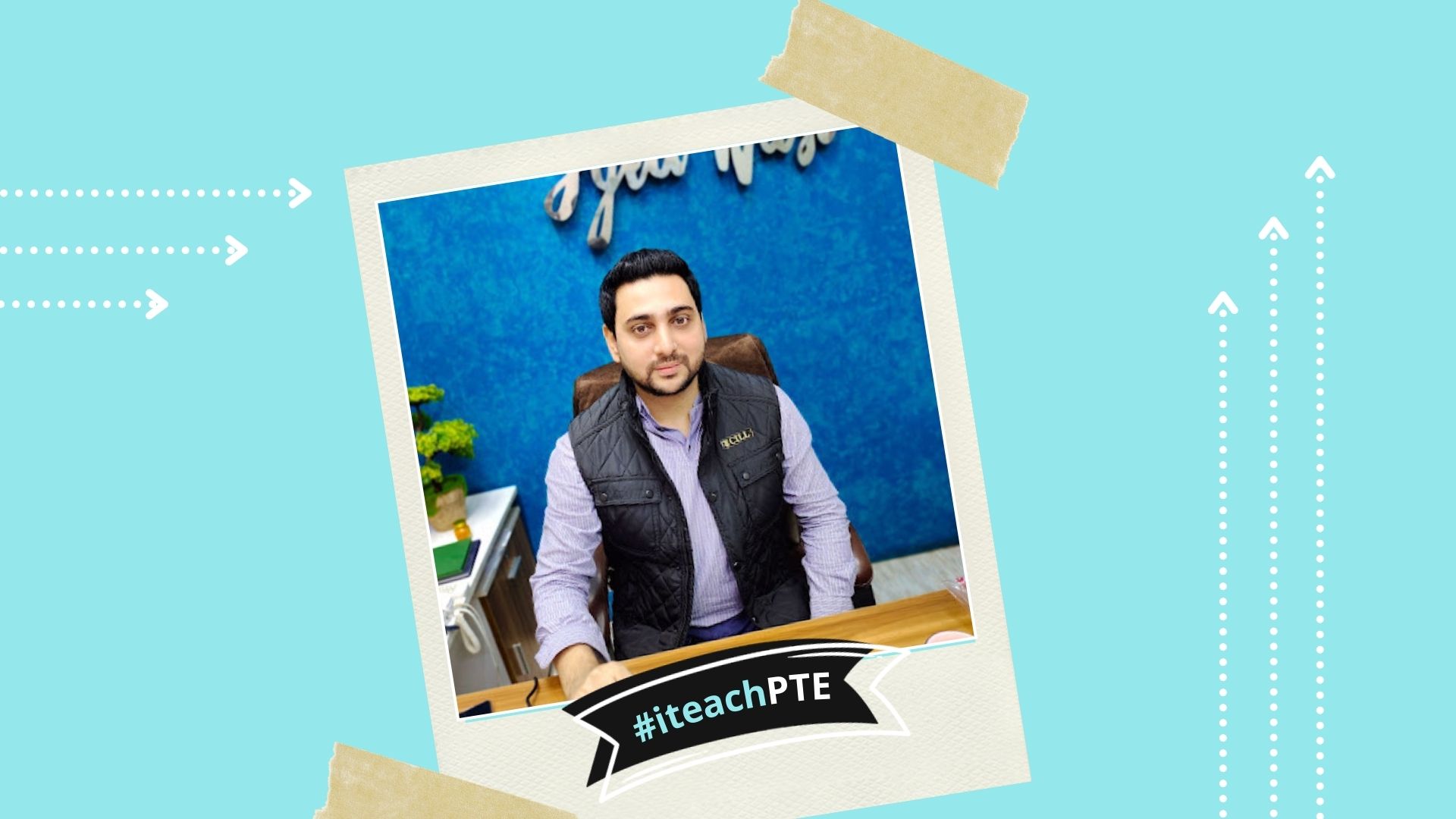
  • Image - iteachPTE: Juniper Ruperto

    Teacher profile: Helping Filipino students achieve their goals

    By PTE Author
    Reading time: 4 minutes

    In the Philippines, there has long been a culture of emigration. It’s common for Filipinos to move overseas to work, study and live. In fact, there are more than 10 million Filipinos living and working around the world. What’s more, about 60,000 people have emigrated each month since the start of 2021!   

    PTE teacher Jurine Ruperto helps students get ready for the linguistic challenge of moving overseas. She is the owner of Ace Review Center, a language school that prepares students to take the language tests they’ll need for working visas and university applications.  

    We spoke to Jurine to find out about her experience of teaching PTE, and the advice she would offer to other teachers.  

    How Jurine prepares her students for PTE  

    Ace Review Center was one of the first language schools in the Philippines to offer PTE preparation, and they have been helping Filipino professionals and skilled workers prepare for the test for six years.  

    Now, the teachers at Ace Review Center have years of experience in preparing students for the exam - and when it comes to results, their experience shows. 

    “We have a high passing rate - and a good number of students who’ve scored a perfect 90,” says Jurine.  

    So what’s her secret? According to Jurine, she builds her students’ skills slowly as they learn the basics of each task type, through a range of different activities.  

    “One of my favorite activities is idea building or [creating] mind webs, which are very useful in writing tasks,” she says. “Students are given a topic and are encouraged to contribute ideas related to it and expounding with supporting details.” 

    According to Jurine, one of the most common challenges for test takers is vocabulary. In order to help them achieve better results, she encourages them to increase their exposure to English in their everyday lives. “Reading and watching movies and TV shows helps to build their knowledge and familiarity with English terminologies and word usage.”  

    Building student confidence  

    We all have those teaching moments that stick with us, for one reason or another. For Jurine, it's an experience she had with a learner with low confidence that comes to mind. 

    The student needed to build his confidence back up when he came to her for PTE preparation classes. “One of my very first students in PTE had a bad experience in another English test,” she says. “He took the test several times with no success - despite only needing a band score of 5.”   

    So, she said, he signed up for a month of PTE test preparation. It was then that he really started to believe in his language abilities. Jurine thinks the fact that PTE is computer-based made a difference.  

    “It must have helped that the test is through a computer because he would easily get intimidated when facing an examiner during the speaking test,” she explains. His minimum target score for PTE was 54 - but on the day of the test he actually scored above this!  “By now,” she muses, “he must have already finished his culinary studies in Australia.” 

    Jurine’s top tip for PTE teachers  

    When we asked Jurine to share her top tip for other PTE teachers to help their students achieve success, she underlined the importance of really knowing the test inside and out. “It is best for teachers to immerse themselves in PTE sample practice tests to familiarize themselves with the test format,” she says. “That way, they will understand their learners' needs.”  

    Further resources

    You can access preparation resources to help your students through the PTE website, where there are a range of materials available, from Scored Practice Tests to a question bank with over 300 sample questions and answers.  

    The Official Guide to PTE Academic will give you all the information you need to prepare your students thoroughly - and there’s even free course modules available to give your exam preparation teaching skills a boost!  

    Do you have advice and insights to share with other PTE teachers? If so, we’d like to hear from you! Each month we’ll be shining a spotlight on someone from our global teaching community.  

    Don’t forget to sign up for our monthly teacher newsletter, which shares teaching tips for test preparation.

  • 5 common PTE mistakes - and how your students can avoid them

    By PTE Author
    Reading time: 7 minutes

    Learning from our mistakes is one of the best ways to improve. This is also true for anyone who is preparing for an English language proficiency exam, like PTE Academic.  

     In this post, we’ll look at five common PTE Academic errors test takers make, and how you can help your students to avoid these mistakes when they are sitting their exam.  

    1. Reading: reordering paragraphs

    In the PTE Academic reading section, test takers are asked to reorder paragraphs taken from an academic text. They see one panel on the screen with a number of sentences in the wrong order, and need to drag these sentences to a second panel in the correct order. This activity tests how well test-takers can understand the structure of a written text in English.  

    However, many people struggle with this. They don’t pay attention to language clues such as linking words or sentences that open with an introductory statement. These are all things that allow texts to follow a cohesive pattern.  

  • Card- Barista- part time job

    5 part time jobs for international students in Australia

    By PTE Author
    Reading time: 5 minutes

    Studying in Australia is a dream for many students. The country is known for its long stretches of white sandy beaches, rugged outback, and charming people. 

    It’s also home to more than 1,100 world-class institutions - earning Australia a reputation for being a top study abroad destination. And don’t just take our word for it: 90% of international students reported being happy studying and living in Australia, according to a 2018 government report.  

    For many international students, working in-between studies to pay for living expenses is also part of life in Australia. So what kinds of jobs are popular for students in the country? And what is the pay like? Let’s take a look:

    1. Barista 

    Coffee culture is huge in Australia. Because the country is famous for its “flat white” drinks and quality coffees, there are many different cafes for international students to apply at. After all, where there is a demand, there will always be jobs! 

    Of course, working as a barista requires that you have strong customer service skills, are proficient in English, and are familiar with popular coffee orders and how to make them (although your workplace will likely also train you). Because cafe culture is so important to Australians, a job serving coffee is arguably one of the best ways to feel immersed in the local culture.  

    2. Bartender  

    For students, being a bartender has many perks. The hours you work rarely conflict with regular university class schedules. Being a bartender is a great way to meet new people. You could also earn tips. Tipping isn’t part of Australian culture per se, however it is becoming more common to tip service staff a small amount to thank them for good service.  

    If you’re interested in serving drinks, you could also consider getting a job at an Australian winery. Because Australia has so many wineries (about 2,361 in total), wine culture is not only a prevalent part of life in Australia. It’s also always usually a thriving industry with lots of job opportunities. 

    3. Server 

    Keen on the hospitality industry? Serving is another great job. And, even better if you get to work at a beachside restaurant. The University of AdelaideThe University of the Sunshine Coast, and The University of Melbourne are all institutions located by the coast, where international students have the opportunity to earn a living part-time while also experiencing Australia’s beautiful beaches.  

    4. Hotel and hostel jobs 

    A bonus of studying in a place that happens to be an internationally-famous vacation spot is that there are many jobs in hospitality. Students studying at institutions like The University of Tasmania, for example, can benefit from the local tourism industry by applying for jobs cleaning in hotels or cooking in hotel kitchens.  

    Australia’s hostels are also great spots to look for a job. Foreign students would be a great fit for hostel jobs like receptionists because of their international experience, age, and language skills. The bonus here is that you will find yourself working amongst like-minded and fun travelers.  

    5. Fruit picking 

    Australia has plenty of fruit picking jobs throughout the country. Strawberry, blueberry, and avocado picking jobs, for example, are all common jobs available to students in Australia. They’re also quite common to come across. Recently, the government also announced they’d allow students working in agriculture to work more hours every week - which is a big plus! We share more on that below.  

    How many hours can I work? 

    When studying in Australia, one of the main regulations for international student visa holders is that  they can work up to 48 hours every two weeks while studying and unlimited hours during study breaks on an Australian student visa. 

    The government changed those restrictions for students working in certain industries to support these sectors during the pandemic. Now, students can work unlimited hours in healthcare, disability care, aged care, agriculture, and tourism. 

    What’s the minimum wage in Australia? 

    Australia is known for its high minimum wage. The minimum wage in Australia is $24.10 per hour or $915.90 per week - this is a huge draw for many international students.   

    Where should I look for work?

    Your institution in Australia should have a career center to help you look for work. They should provide you with resume and interview tips, as well as a job board that lists open positions. We always recommend visiting your institution’s career centre when beginning your job search.  

    There are also job sites like IndeedSeek, and Jobactive from the Australian Government’s Department of Education, Skills, and Employment. All of these sites list thousands of part-time jobs for international students to consider.  

    Last updated 20 December 2024.

    Ready to go? 

    PTE can help you secure a spot at an Australian institution. Our test is faster, fairer, simpler, and accepted by all universities in Australia.   

    Learn more about PTE Academic.

  • Image- study group 800px

    Part 1: English Speaking & Writing Test Introduction

    By PTE Author
    Reading time: 5 minutes

    Part 1 of PTE Academic will take 77-93 minutes and will test your speaking and writing skills.

    To test speaking skills, you will be assessed on your ability to produce spoken English in an academic environment.

    Your writing skills will be assessed by giving written responses in academic English using correct grammar, spelling, and structure.

    Personal Introduction

    First, you will be asked to give a personal introduction to give some information about yourself.

    You will have 25 seconds to read the prompt and prepare your response. You will only have 30 seconds to record a response and can only record this once.

    Don’t worry, your personal introduction is not scored but will be sent together with your score report to the institutions selected by you.

    For the speaking and writing test, there are seven types of questions that you will be scored on. Below, we will break down each part of this section of the test.

    Read Aloud

    The first question type to test your reading and speaking skills will be the Read Aloud assessment. In this test there are 6-7 questions.

    You will be shown a text prompt that will be up to 60 words. You will have 30-40 seconds to prepare by reading the passage. You will also have a set time to read aloud, which will vary by item, depending on the length of the text.

    To complete the question, speak clearly and straight away after you hear a tone. You must finish speaking before the progress bar on the screen reaches the end.

    You can receive a maximum of 3 points for the content spoken, a maximum of 5 points for oral fluency, and a maximum of 5 points for pronunciation.

    Repeat Sentence

    The second question type is Repeat Sentence, which will test listening and speaking skills.

    You will listen to a recording between 3-9 seconds and are given 15 seconds to answer.

    Once the microphone shows as recording, you will need to speak straight away and say all the words that the speaker uses, in the same order.

    For this question, you can receive a maximum score of 3 for content, a maximum 5 for oral fluency, and a maximum of 5 points for pronunciation.

    Describe Image

    The third question type will test speaking skills by describing an image. There are 6-7 questions.

    You will be shown an image and have 25 seconds to study the image and prepare your response. For this task, use the Erasable Noteboard Booklet to take short notes.

    After a short tone is heard, start speaking straight away. You will have 40 seconds to answer and must finish speaking before the progress bar reaches the end.

    In this question type, you can receive a maximum of 5 points for content, a maximum of 5 points for oral fluency, and a maximum of 5 points for pronunciation.

    Re-tell Lecture

    The fourth question type, Re-tell Lecture, will test your listening and speaking skills. There are 3-4 questions in this test.

    You will be given a prompt of up to 90 seconds and will have 40 seconds to answer.

    Audio will be played straight away and you may also see an image related to the audio. While you are listening use the Erasable Noteboard Booklet to take short notes.

    Once the audio finishes you have 10 seconds to prepare. To complete the task, in detail, you will need to cover the situation, characters, aspects, actions, and developments given in the recording.

    You can receive a maximum score of 5 points on content, a maximum of 5 points on your oral fluency, and a maximum of 5 points for pronunciation.

    Answer Short Question

    The fifth question type, Answer Short Question, will assess listening and speaking skills. There are 10-12 questions in this test.

    Here, you will be given a prompt of 3-9 seconds and will have 10 seconds to answer the question.

    You will be required to answer a short question with a clear, simple, single word or a few words. This will not test general knowledge, it will simply test your vocabulary.

    You will receive 1 point per correct word. No points are given for no response or incorrect response.

    Summarize Written Text

    In the first question type in the writing section, you will be required to Summarize Written Text, which will test reading and writing skills.

    You will read a text of up to 300 words and have 10 minutes to write your summary. You will do 2-3 of these questions depending on the combination of tasks in the given test.

    In this assessment, you must write just one sentence. Try using the Erasable Noteboard Booklet to take notes of the main points.

    Make sure to include the main points of the text in a full, single sentence of no more than 75 words.

    You can receive a maximum score of 2 points for content, maximum 1 point for the formal requirements, a maximum of 2 points for grammar and a maximum of 2 points for vocabulary.

    Essay

    The last question type of the Speaking and Writing Test will test writing skills.

    In this question type, you will be provided with 2-3 sentences of text prompt and have 20 minutes to answer, by writing a 200-300 word argumentative essay on a given topic.

    Time management is important for this task as you will need to plan, write and proofread your essay.

    In this question, there are many parts where you can receive points. You can receive a maximum of 3 points for the content, maximum of 2 points for the formal requirements and maximum 2 points for development, structure and coherence.

    You can also receive a maximum score of 2 points for grammar, maximum 2 points for general linguistic range, maximum 2 points for vocabulary range and a maximum of 2 points for no spelling errors.

    There is a total of 15 points that you can pick up in this question type.

    What's next?

    Read more about Part 2: Reading Test Introduction.

    Want more prep ideas?

    Plus, explore Smart Prep, which combines all our practice materials in one place, so it's easier for you to stay on track with your PTE preparation.

    • Smart Prep is a clear path to test day, guiding you through the official paid and free resources available for your test

    • It can be accessed whether you’ve booked a test or not – just create, or sign in to your myPTE account

    • Preparation materials include guided practice tests, introductory videos, video courses and test tips.

    Ready to get started?

  • Image, student, 800px x 451px

    Australian loans for international students

    By PTE Author
    Reading time: 5 minutes

    It’s not hard to understand why so many international students want to move to Australia. The country has a world-class education system, excellent climate, and high quality of life. But studying in Australia can be expensive – and you need to be financially prepared before you take the leap.  

    In this blog, we’ll help you get started. We’ll explore the student loan options available for international students in Australia, as well as other ways to fund your studies.  

    How much money will I need? 

    Before you begin to research student loans, it’s important to understand how much it costs to live and study in Australia. You can use the Course Search Tool to find out detailed tuition fee for your dream course and the Cost of Living Calculator to estimate the living cost based on the city you want to move to.  

    What student loans in Australia could I be eligible for? 

    Australia’s student loan system is known as the Higher Education Loan Program (HELP).  Unfortunately, HELP can only be accessed by Australian citizens or individuals who hold a humanitarian visa. However, there are still lots of other student loans available for international students in Australia.  

    University loans 

    Universities across Australia provide loans for local and international students. Most institutions offer both short-term and long-term loans; these can help students cover emergencies, as well as pay for bigger expenses.  

    Here are a few examples of what some universities offer:  

    • The University of Melbourne will loan eligible students up to$5,000 AUD ($3,883 USD) if they have an Australian co-signer. They’ll loan students up to $3,000 AUD ($2,330 USD) if their co-signer lives overseas or isn’t an Australian citizen/ permanent resident. 

    • The University of Sydney offers loans up to $2,000 ($1,550 USD), which can be paid back up to two years after graduation.  

    • Students in need of financial assistance at Monash University can take out loans between $750-$3,000 AUD ($544 – $2,330 USD), to be paid back within 6-12 months. 

    Universities across Australia offer similar loans. It’s best to check directly with your institution to see exactly what loans are available to students – and to make sure you’re eligible.  

    International student loan schemes  

    You might be eligible to take out federal student loans in your home country to study in Australia. For example, students from the U.S., Canada, Sweden, Norway, or Denmark who attend the University of Sydney can access government funding from home.  

    Private loans  

    A private loan is one of the simplest forms of international student loans in Australia: you borrow money from a bank or similar lender and repay the loan (with interest) over an agreed-upon period of time. These loans can be secured – which means they’re tied to collateral – or unsecured. But with unsecured loans, interest rates are usually higher. 

    How else can I pay for my studies? 

    Student loans aren’t the only way to pay for your education in Australia. Here are a few other options to consider:  

    Work in Australia  

    Many international students are attracted to Australia because they know they’ll be able to work. Unlike other studies abroad destinations, you can work up to 48 hours every two weeks while studying and unlimited hours during study breaks on an Australian student visa. Even more, the minimum wage in Australia is $24.10 per hour or $915.90 per week – meaning many international students are able to pay for some of the costs associated with living in Australia while they study.   

    Apply for scholarships 

    There are a number of scholarship opportunities for international students in Australia – both funded by the government, and universities. Some, like Australia Awards scholarships, support students with full tuition, living costs, and airfare. Check out the Australian Government’s search tool to find a scholarship that’s right for you.  

    Read more: scholarships for international students in Australia 

    Take out a private loan in your home country

    To apply for a student visa in Australia, you need to prove you have sufficient funds. For this reason, many students decide to take out a private bank loan in their home country before coming to study in Australia.

    As you can see, there are lots of ways to fund your studies in Australia as an international student. But everyone’s financial situation is different, so we recommend doing lots of research to find a loan you feel confident about – and one that will work for you both during, and after university.

    Still, deciding where in the world you want to study? Check out our article types of loans for international students, which explores more loan options in Canada, the U.S., and the U.K.

    We are not immigration agents. For all up-to-date information about visa rules and regulations, see the official guidelines on the Australia Department of Home Affairs website.

    Last updated 20 December 2024.

  • Image- scholarships, 800px x 451px

    Scholarships for international students in the UK

    By PTE Author
    Reading time: 3 minutes

    The UK is home to some of the most prestigious universities in the world. And, being awarded a scholarship to study in the UK can give you access to a top-level education at a more affordable price.  

    So, how do you apply? UK university scholarships are offered by both the UK government and individual universities – and are available for undergraduate, postgraduate, and PhD students alike. In this blog, we’ll highlight some of the top scholarships for international students in the UK:  

    Undergraduate scholarships in the UK

  • Image- Norway -800px

    Consider these 6 destinations to study abroad

    By PTE Author
    Reading time: 5 minutes

    You can still study abroad and stick to a budget. In fact, many of the cheapest countries to attend university are also some of the most beautiful places in the world.

    In this blog, we’ll explore 6 affordable international study destinations. And the great news is PTE Academic – our English language proficiency exam can help you achieve your study abroad dream at these amazing places. Let’s delve in:  

    1. Norway 

    Norway isn’t just picturesque. It’s also one of the cheapest countries to study in for international students. Most universities in Norway are publicly funded and don’t charge tuition fees – even for foreign learners. While some private universities do charge tuition – between €7000-€19,000 – international students aren’t required to pay more than Norwegians.  

    It is important to keep in mind, however, that the living costs in Norway are high. It can cost international students between €800 –€1400 per month to live in the country. But there are some grants and scholarships available to help students fund their time abroad. You can check them out here.  

    Overall, Norway offers world-class education and an excellent standard of living. Medical services are usually free for international students and many courses are taught in English, making it a great place to study abroad. 

    PTE Academic is accepted at top institutions in Norway including University of OsloUiT The Arctic University of NorwayNorwegian University of Science and Technology (NTNU). 

    Find out where else PTE Academic can take you in Norway.

     2. Malaysia 

    With high-ranked universities and the fastest growing regional economy in the world, Malaysia is also an excellent destination to consider. The country boasts more than 100 higher education institutions – including branches of universities like Monash University and the University of Nottingham.  

    A bachelor’s degree for international students (not studying medicine) costs about $10,000-$20,000 USD at a public institution, and significantly more at an international branch campus.  

    However, the thing that makes Malaysia attractive is its low cost of living. Kuala Lumpur, the country’s capital city, is ranked by QS Best Student Cities Rankings as the second most affordable student city in the world. Rent in a shared apartment in Malaysia can cost as little as $50-$250 USD per month.  

    To learn more about how much it costs to live in Malaysia, visit the government’s website here.  

    PTE Academic is accepted at top institutions in Malaysia including Universiti Malaya (UM)Universiti Sains Malaysia (USM), and Universiti Teknologi Malaysia (UTM)Find out where else PTE Academic can take you in Malaysia. 

     3. Spain 

    Spain has a great climate, a relaxed lifestyle, and more than 70 universities to choose from. And yes, it also offers affordable tuition fees. Tuition for EU/EAA students at a public university can range from just €150-€3500.  Keep in mind though, if you’re coming from a country outside the EU/EAA, your tuition fees could be higher.  

    The cost of living for international students in Spain ranges from €700-€1,100 a month. Many courses here are also taught in English, making Spain a good choice if you’re interested in improving both your English and Spanish skills.  

    PTE Academic is accepted at top institutions in Spain including Universidad de GranadaFind out where else PTE Academic can take you in Spain.

     4. France 

    France is a surprisingly affordable place for international students to study. It’s also incredibly popular – more than 350,000 students enroll in the university there each year. France’s public universities charge just €170 per year for a bachelor’s degree for EU/EAA students. But like in Spain, if you’re a non-EU/EAA citizen, fees are likely to cost more.  

    The cost of living is more expensive in larger cities like Paris. But in smaller cities, you can expect to pay around €650 per month.  

    PTE Academic is accepted at top institutions in France including Université Paris 1 Panthéon-Sorbonne. Find out where else PTE Academic can take you in France. 

    5. South Africa

    South Africa is renowned for its natural beauty and rich culture – it has 11 official languages, which is more than any other country in the world. It’s also home to the top-rated university in Africa: University of Cape Town.  

    Tuition for a bachelor’s degree in South Africa is reasonably inexpensive compared to locations and will cost international students between €6000–€7000 per year. Living costs are also only about €550 per month. 

    Find out how PTE Academic can help you to study at University of Cape Town. 

    6. Greece 

    Last but not least, Greece is one of the most affordable study destinations in Europe.  Most students from the EU/EEA can study for free, while all other students could pay up to €2000 per year. 

    Greece also boasts low costs of living. Students can expect to pay between €450-€750 per month – and some students in financial need can live on campus for free. Better yet, between studies, international learners can soak up the sun while spending time on Greece’s beautiful beaches. What’s not to love?  

    Ready to kickstart your dream of studying abroad?

    Many top-rated international institutions offer courses in English and require you to take an English language test.  

    PTE Academic is recognized by universities around the world – find out who accepts PTE Academic.

  • image- new world 1080px

    8 things to consider before moving abroad

    By PTE Author
    Reading time: 6 minutes

    There’s a lot to think about when moving overseas. Will you need health insurance? What identity documents will you need to apply for? And of course, where will you live and work?

    We’ve been there, and we get it! That’s why we’ve put together this list of 8 things to consider before moving abroad. Let’s take a look:  

    1. Understand visa requirements

    If you plan to move abroad for more than six months, you might need a visa to live, work or study. So before making any travel plans, you should visit your destination country’s immigration website to ensure you’re eligible for a visa – and understand all the requirements. Many governments, for example, require applicants to take an approved English language proficiency test like PTE Academic to study or work in the country.

    If you’re looking for visa support, you may also decide to hire a registered migration agent. These are immigration professionals and can complete your visa application for you, help prepare documents, and provide advice throughout the application process.

    You can more about specific visa requirements on these government websites:

    You might be interested in reading our article: Should you hire a migration agent to move to Australia?  

    2. Find out if you’re eligible to work 

    Just because you’ve been granted a visa to live in a country, doesn’t mean you have the right to work full-time.

    Many student visas put a cap on how many hours people can work. For example, in Australia students are allowed to work up to 40 hours every two weeks during the school term. In the UK, students are able to work 20 hours per week during the semester. And in Malaysia, students can also work up to 20 hours a week, but only during school breaks longer than eight days.

    If you’re not on a student visa, it is likely you’ll have permission to work full-time. However, many countries require you to apply for a social insurance number – or something similar – before you can.

    In Canada, for example, permanent and temporary residents need to apply for a social insurance number after they land in the country, and it can take about 20 days to arrive.

    3. Create a budget

    Before moving to a new country, you should have some savings. In some cases, depending on your visa type and the country you’re moving to, you might be required to show proof of savings with your visa application.

    Day-to-day living costs may also be more expensive abroad, and it could take you longer than anticipated to find a job – so it’s important to have money put away to help you settle in.

    If you’re a student planning to move to Canada or the UK, we’ve put together some detailed guides that outline the living costs in each country: 

    Many governments offer cost of living calculators online, which can be a great resource for new immigrants. Take a look at New Zealand’s cost of living tool, for example.

    When you arrive, you’ll also need to open a bank account. This can often be done online. Some banks even have accounts specifically designed for newcomers and offer credit cards to help build credit history. 

    4. Search for housing 

    Looking for accommodation can be one of the most exciting parts of moving abroad. Once you find a place to call home, you’re able to really imagine what your new life will be like – you get to explore Google Maps from afar, check out neighborhood restaurants online, and plan where you might socialize with friends.

    If you’re moving with a work visa, your new workplace might be able to help you find temporary accommodation. Likewise, if you’re moving abroad to study, your institution should offer housing options for international students – such as on-campus apartments or other homestay partnerships. It’s also a great idea to join local housing Facebook groups, where people post their apartments or houses for temporary or long-term rentals.

    You might be interested in: How to choose international student accommodation in the UK.

    5. Discover transportation options

    Once you know where you’ll live, you can figure out how you’ll get around. Is your apartment close to public transportation? Or have you opted to live outside a city center, and will need to get around by car?

    You could be able to drive with an international driver’s license right after landing abroad. But after a few months, lots of countries will require you to apply for a local driver’s license instead. If you’re moving to a country where it snows, it might also be a good idea to invest in driving lessons to learn how to drive safely on icy roads.

    6. Apply for healthcare or insurance

    You might not be automatically eligible for health coverage in your destination country, even if it offers universal healthcare to citizens.

    In Canada, for example, each province administers its own publicly-funded healthcare. That means, if you’re a student, your eligibility for healthcare will depend on where you study. If you’re not eligible, your university should offer you insurance.

    On the other hand, if you’re on a work visa or permanent resident visa, you may be able to apply for publicly-funded healthcare. But, there might be a waiting period before you’re able to have access – so it’s important to buy insurance to make sure you’re covered beforehand.

    Always check with the local government in your destination country to see what your rights are regarding healthcare. It’s also important to research the mental health services that may be available once you arrive. If you’re a student, your university may offer counseling services on campus.  

    7. Keep up to date with travel regulations

    Travel regulations change quickly, so it’s essential to keep up to date on what you’ll need to do before – and after – arriving at your destination country.

    Always consult the health authorities in the country you’re traveling to ensure you follow public health guidelines – and you’ll be allowed to enter the country. 

    8. Don’t forget about the little things 

    When moving abroad, we tend to focus on the big things – like housing, work, and healthcare. But there are lots of little things to think about, too! Remember to:

    • Close your utility accounts – like internet and hydro – before leaving home (and do it before the cut-off date, so you don’t get charged extra)

    • Unlock your mobile phone so you’ll be able to use a local SIM card, and get a power plug adapter for your charger if you need one.

    • Bring a few things that remind you of home and that you won’t be able to buy abroad. Something as simple as packing your favorite face wash or snack food can make a big difference when just starting to settle in.

    Overall, getting a head-start on your travel preparations will help you to reduce stress and hit the ground running when you arrive.

Looking for news or press releases?