
Which UK university is best for you?

PTE Author
PTE Author
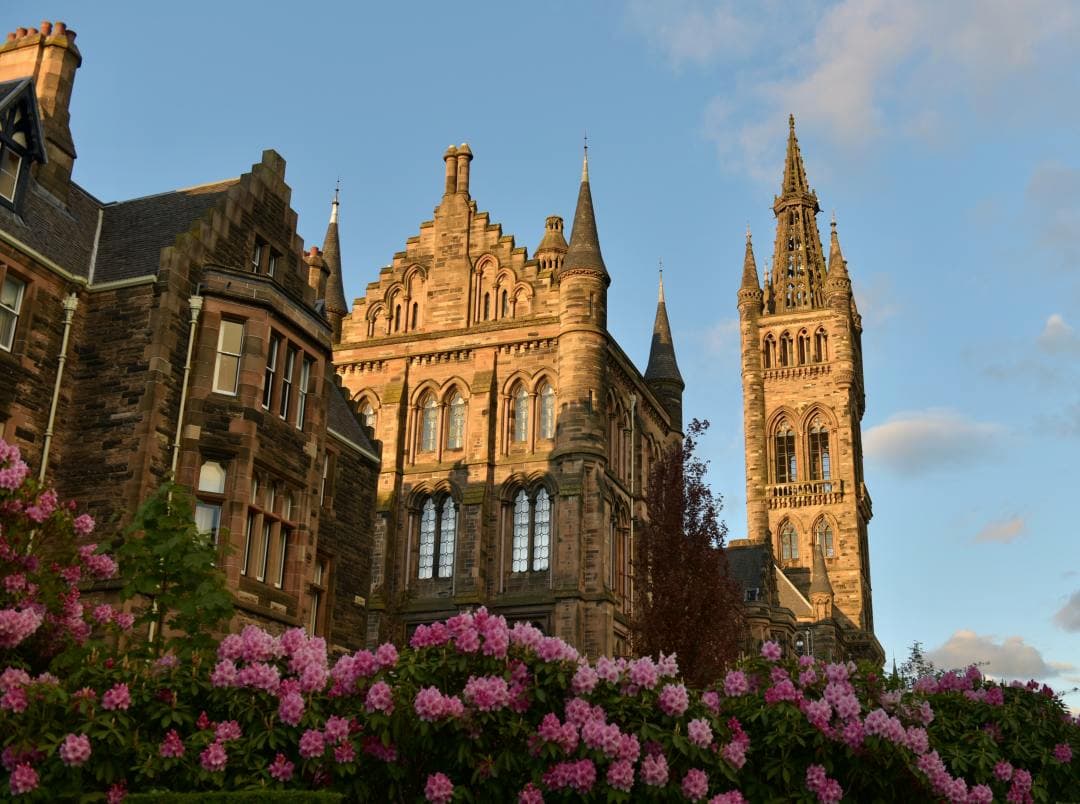
Image - University of Glasgow
Reading time: 8 minutes

People study abroad for many reasons - to see new places, to experience a different culture, and maybe most importantly, to get access to student life and educational opportunities not available at home. If you want to study at a UK university, you’ll not only have access to some truly innovative teaching and research - you’ll also be joining one of the most multicultural student bodies in the world. 

Within the UK, there’s a huge range of universities and courses to choose from. So, how do you choose between over 160 institutions, and thousands of courses? Research finds that half of students who drop out of university early do so because they chose the wrong course, so it’s important to be completely happy with your choice.  

So, let’s have a look at what you need to consider before you make your university application, so that you can make the right choice. 

Choose your subject   

The first step in the process of choosing a university is deciding what you want to study. Your UCAS personal statement will be sent to all your university choices, so it should be relevant to all the courses you apply for. This means that all of your course choices must be the same or in a similar field. 

Think about the school subjects you’re good at, but also think about what you could spend the next three or even four years studying.  

Is there a subject that you want to continue and deepen your knowledge in? Or do you want to study something completely new?  

Do you want to study a subject like law or medicine that relates to a specific job? Or perhaps you want to take a course like history that can be used in a wide range of careers? Think carefully about these questions, and the rest of the process will become a lot easier. 

Do as many events and online taster sessions, and sign up for as many free online courses as you can. Futurelearn has a great range of taster courses from universities all over the world. This can really help you decide where your interests lie.  Above all, keep notes on what interests you, and what doesn’t. 

If you think you want a broader degree, then you’ve always got the option of doing a joint honours degree. This means you combine two different courses. Many joint honours courses combine a language with another subject, giving you the possibility to use your learning around the world, or even do a study placement in another country.  

Consider the competition 

When thinking about what course you could do, it’s important to consider the competition. Some courses have many more applicants than places, but there are also hundreds of ‘hidden’ courses which get far fewer applicants. For example, the University of Oxford gets 16.9 applicants per place on its Economics course, but it’s closer to 3 applicants per Classics place. Classics covers a range of areas like politics, history, linguistics, social sciences and more, and really challenges your intellect.  

Economics might be competitive, but Classics might be just as valuable. There are thousands of ‘hidden’ courses, which, just because they’re not famous, don’t attract as many applicants. Check out the full range of courses on the UCAS Explore site, and the Uni Guide, and do it with an open mind. 

Once you’ve narrowed down your list of courses, it’s time to think about where to study. 

Think about location and compare universities in the UK 

The UK might be a small country, but it’s incredibly diverse. There are large, international cities like London or Glasgow, smaller towns and cities like Cardiff, Belfast or Nottingham, rural universities like Lancaster, coastal towns like St. Andrews or historic cities like York, Oxford or Cambridge.  

So, when you’re deciding on a UK university, you need to first ask yourself: what’s important to you? Would you prefer to live in a busy city or in the quiet countryside? Are you going to be doing a lot of exploring or will you stay near campus? These factors will make a difference to your decision. 

You’ll also need to think carefully about costs. Different parts of the UK have different costs of living, depending on things like rent, transport, and the cost of entertainment. Check out property websites to see what rents are like, to get an idea of how expensive life will be.  

For more information, check out our article on the cost of living in the UK.  

Finally, the type of university itself is important. Some universities have campuses where the whole of university life takes place, like the University of York. Others are more spread out, such as the University of Manchester, which has buildings all over the city. Each has its own atmosphere and you should think about which you prefer. 

Look at the rankings: How to choose a university in the UK 

Find out how your preferred universities rank in the league tables. Rankings of the top universities in the UK don’t just measure teaching quality. They show data on student satisfaction, post-graduation employment rates, and staff to student ratios. 

The best universities in the UK and courses with higher rankings will be more competitive to gain entry to. You can apply for up to five courses on your UCAS form, so it’s a good idea to choose a range of courses and universities. Include an ambitious choice which you may or may not get the grades for, and safe choices that you know will accept you. 

You can check the Guardian university rankings, or the Times Higher Education rankings to see which universities are the most highly rated. 

That being said, student life in the UK is about balance. You need to consider both rankings and what’s right for you. It’s no use going to a top ranking UK university in a location you hate, studying things that don’t interest you, and where the culture on campus doesn’t appeal to you.  

Sometimes it might be better to move down the rankings if you know that the university will really help you to shine.  

Remember, the reason that there are so many different kinds of university is because everyone is unique. If you’re applying to somewhere that you know really matches your values and interests, you’ll be much more likely to make a success of your university career. 

Research the teaching style  

It’s a good idea to look at the style of teaching and assessment at your chosen university. Some courses focus more on final exams, some on coursework, and some on projects, dissertations and independent research.  

See whether your university’s exams are open book or closed book. If they’re closed you have to remember a lot more, but if they’re open you will probably have to give more detailed answers in your exams.  

If you can attend open days and chat to other students and potential professors, do so. But if you can’t, remember that each university course website will tell you about the course content and how it is assessed. You need to make a choice based on what type of assessment will suit you best. 

Some courses are taught in large lectures and seminars, and others, such as many Oxbridge colleges, will teach you in small groups or one-to-one with a tutor. The teaching style that works best for you will be decisive in your choice. 

Consider your hobbies   

Every university has its own culture and social life based around the student unions and societies. University life is about more than studying, for local and international students alike.   

You will have a more balanced student experience if you make time for your hobbies. Look on the university website to learn about student societies and clubs, and see which activities are available to you. But don’t worry if you don’t see anything that appeals - you can always be proactive and start your own society.  

Do you have a sport that you love to do? If you do, and you’re really good at it, you might even be eligible for a scholarship. There are all sorts of funding and awards available, so even if you think you won’t get anything it’s a good idea to check. 

Read about sports scholarships at UK universities.   

Make sure you fulfil the English language requirements 

You’ll need to pass a test of English for your UK student visa requirements. You can take any Secure English Language Test (SELT) that’s been approved by the Home Office, the UK government department responsible for immigration.  

PTE Academic can be used for UK student visas for degree level courses, and to access 99% of universities in the country. The test takes two hours, covers reading, speaking, listening and writing and is entirely done on a computer. Results usually come back within 48 hours, making it convenient and reliable.  

Choosing a UK university requires a lot of thought. Luckily, choosing an English test to get the visa is easy.

Related Content

  • Image, student, 800px x 451px
    Australian loans for international students
    By PTE Author
    Reading time: 5 minutes

    It’s not hard to understand why so many international students want to move to Australia. The country has a world-class education system, excellent climate, and high quality of life. But studying in Australia can be expensive – and you need to be financially prepared before you take the leap.  

    In this blog, we’ll help you get started. We’ll explore the student loan options available for international students in Australia, as well as other ways to fund your studies.  

    How much money will I need? 

    Before you begin to research student loans, it’s important to understand how much it costs to live and study in Australia. You can use the Course Search Tool to find out detailed tuition fee for your dream course and the Cost of Living Calculator to estimate the living cost based on the city you want to move to.  

    What student loans in Australia could I be eligible for? 

    Australia’s student loan system is known as the Higher Education Loan Program (HELP).  Unfortunately, HELP can only be accessed by Australian citizens or individuals who hold a humanitarian visa. However, there are still lots of other student loans available for international students in Australia.  

    University loans 

    Universities across Australia provide loans for local and international students. Most institutions offer both short-term and long-term loans; these can help students cover emergencies, as well as pay for bigger expenses.  

    Here are a few examples of what some universities offer:  

    • The University of Melbourne will loan eligible students up to$5,000 AUD ($3,883 USD) if they have an Australian co-signer. They’ll loan students up to $3,000 AUD ($2,330 USD) if their co-signer lives overseas or isn’t an Australian citizen/ permanent resident. 

    • The University of Sydney offers loans up to $2,000 ($1,550 USD), which can be paid back up to two years after graduation.  

    • Students in need of financial assistance at Monash University can take out loans between $750-$3,000 AUD ($544 – $2,330 USD), to be paid back within 6-12 months. 

    Universities across Australia offer similar loans. It’s best to check directly with your institution to see exactly what loans are available to students – and to make sure you’re eligible.  

    International student loan schemes  

    You might be eligible to take out federal student loans in your home country to study in Australia. For example, students from the U.S., Canada, Sweden, Norway, or Denmark who attend the University of Sydney can access government funding from home.  

    Private loans  

    A private loan is one of the simplest forms of international student loans in Australia: you borrow money from a bank or similar lender and repay the loan (with interest) over an agreed-upon period of time. These loans can be secured – which means they’re tied to collateral – or unsecured. But with unsecured loans, interest rates are usually higher. 

    How else can I pay for my studies? 

    Student loans aren’t the only way to pay for your education in Australia. Here are a few other options to consider:  

    Work in Australia  

    Many international students are attracted to Australia because they know they’ll be able to work. Unlike other studies abroad destinations, you can work up to 48 hours every two weeks while studying and unlimited hours during study breaks on an Australian student visa. Even more, the minimum wage in Australia is $24.10 per hour or $915.90 per week – meaning many international students are able to pay for some of the costs associated with living in Australia while they study.   

    Apply for scholarships 

    There are a number of scholarship opportunities for international students in Australia – both funded by the government, and universities. Some, like Australia Awards scholarships, support students with full tuition, living costs, and airfare. Check out the Australian Government’s search tool to find a scholarship that’s right for you.  

    Read more: scholarships for international students in Australia 

    Take out a private loan in your home country

    To apply for a student visa in Australia, you need to prove you have sufficient funds. For this reason, many students decide to take out a private bank loan in their home country before coming to study in Australia.

    As you can see, there are lots of ways to fund your studies in Australia as an international student. But everyone’s financial situation is different, so we recommend doing lots of research to find a loan you feel confident about – and one that will work for you both during, and after university.

    Still, deciding where in the world you want to study? Check out our article types of loans for international students, which explores more loan options in Canada, the U.S., and the U.K.

    We are not immigration agents. For all up-to-date information about visa rules and regulations, see the official guidelines on the Australia Department of Home Affairs website.

    Last updated 20 December 2024.

  • Image- scholarships, 800px x 451px
    Scholarships for international students in the UK
    By PTE Author
    Reading time: 3 minutes

    The UK is home to some of the most prestigious universities in the world. And, being awarded a scholarship to study in the UK can give you access to a top-level education at a more affordable price.  

    So, how do you apply? UK university scholarships are offered by both the UK government and individual universities – and are available for undergraduate, postgraduate, and PhD students alike. In this blog, we’ll highlight some of the top scholarships for international students in the UK:  

    Undergraduate scholarships in the UK

  • Image- Norway -800px
    Consider these 6 destinations to study abroad
    By PTE Author
    Reading time: 5 minutes

    You can still study abroad and stick to a budget. In fact, many of the cheapest countries to attend university are also some of the most beautiful places in the world.

    In this blog, we’ll explore 6 affordable international study destinations. And the great news is PTE Academic – our English language proficiency exam can help you achieve your study abroad dream at these amazing places. Let’s delve in:  

    1. Norway 

    Norway isn’t just picturesque. It’s also one of the cheapest countries to study in for international students. Most universities in Norway are publicly funded and don’t charge tuition fees – even for foreign learners. While some private universities do charge tuition – between €7000-€19,000 – international students aren’t required to pay more than Norwegians.  

    It is important to keep in mind, however, that the living costs in Norway are high. It can cost international students between €800 –€1400 per month to live in the country. But there are some grants and scholarships available to help students fund their time abroad. You can check them out here.  

    Overall, Norway offers world-class education and an excellent standard of living. Medical services are usually free for international students and many courses are taught in English, making it a great place to study abroad. 

    PTE Academic is accepted at top institutions in Norway including University of OsloUiT The Arctic University of NorwayNorwegian University of Science and Technology (NTNU). 

    Find out where else PTE Academic can take you in Norway.

     2. Malaysia 

    With high-ranked universities and the fastest growing regional economy in the world, Malaysia is also an excellent destination to consider. The country boasts more than 100 higher education institutions – including branches of universities like Monash University and the University of Nottingham.  

    A bachelor’s degree for international students (not studying medicine) costs about $10,000-$20,000 USD at a public institution, and significantly more at an international branch campus.  

    However, the thing that makes Malaysia attractive is its low cost of living. Kuala Lumpur, the country’s capital city, is ranked by QS Best Student Cities Rankings as the second most affordable student city in the world. Rent in a shared apartment in Malaysia can cost as little as $50-$250 USD per month.  

    To learn more about how much it costs to live in Malaysia, visit the government’s website here.  

    PTE Academic is accepted at top institutions in Malaysia including Universiti Malaya (UM)Universiti Sains Malaysia (USM), and Universiti Teknologi Malaysia (UTM)Find out where else PTE Academic can take you in Malaysia. 

     3. Spain 

    Spain has a great climate, a relaxed lifestyle, and more than 70 universities to choose from. And yes, it also offers affordable tuition fees. Tuition for EU/EAA students at a public university can range from just €150-€3500.  Keep in mind though, if you’re coming from a country outside the EU/EAA, your tuition fees could be higher.  

    The cost of living for international students in Spain ranges from €700-€1,100 a month. Many courses here are also taught in English, making Spain a good choice if you’re interested in improving both your English and Spanish skills.  

    PTE Academic is accepted at top institutions in Spain including Universidad de GranadaFind out where else PTE Academic can take you in Spain.

     4. France 

    France is a surprisingly affordable place for international students to study. It’s also incredibly popular – more than 350,000 students enroll in the university there each year. France’s public universities charge just €170 per year for a bachelor’s degree for EU/EAA students. But like in Spain, if you’re a non-EU/EAA citizen, fees are likely to cost more.  

    The cost of living is more expensive in larger cities like Paris. But in smaller cities, you can expect to pay around €650 per month.  

    PTE Academic is accepted at top institutions in France including Université Paris 1 Panthéon-Sorbonne. Find out where else PTE Academic can take you in France. 

    5. South Africa

    South Africa is renowned for its natural beauty and rich culture – it has 11 official languages, which is more than any other country in the world. It’s also home to the top-rated university in Africa: University of Cape Town.  

    Tuition for a bachelor’s degree in South Africa is reasonably inexpensive compared to locations and will cost international students between €6000–€7000 per year. Living costs are also only about €550 per month. 

    Find out how PTE Academic can help you to study at University of Cape Town. 

    6. Greece 

    Last but not least, Greece is one of the most affordable study destinations in Europe.  Most students from the EU/EEA can study for free, while all other students could pay up to €2000 per year. 

    Greece also boasts low costs of living. Students can expect to pay between €450-€750 per month – and some students in financial need can live on campus for free. Better yet, between studies, international learners can soak up the sun while spending time on Greece’s beautiful beaches. What’s not to love?  

    Ready to kickstart your dream of studying abroad?

    Many top-rated international institutions offer courses in English and require you to take an English language test.  

    PTE Academic is recognized by universities around the world – find out who accepts PTE Academic.