

Where to live in Canada: your ultimate guide to finding your perfect slice of the Great White North

PTE Author
PTE Author
women-laughing-in-snow

Looking to make the land of mountains and maple syrup your home? From bustling cities to charming small towns, Canada offers something for everyone. Whether you’re planning to study in one of Canada’s top universities or you’re a skilled worker looking to build your career, here’s our guide to finding the perfect place to call home.

The big players: Canada's metropolitan powerhouses

Moving to Canada doesn’t mean choosing between city life and nature. Many of Canada’s major cities have stunning views right on their doorstep. You’ll pay more for living in Canada’s biggest cities, but you’ll also enjoy a thriving international community and endless things to do.

Toronto: foodie heaven

The capital of Ontario is home to the postcard-famous CN Tower and more food options than you can count. Toronto is perfect for career-focused individuals who love a fast-paced lifestyle.

It’s also where you’ll find the top university in the country Toronto University.

Vancouver: nature meets city chic

Nestled between mountains and the Pacific Ocean, Vancouver is a dream for nature lovers who crave urban sophistication.

This West Coast gem offers endless outdoor adventures, from skiing Grouse Mountain to kayaking in English Bay, all just minutes from downtown.

The city’s diverse neighborhoods buzz with cultural flair, boasting a thriving arts scene, world-class dining, and bustling markets Granville Island.

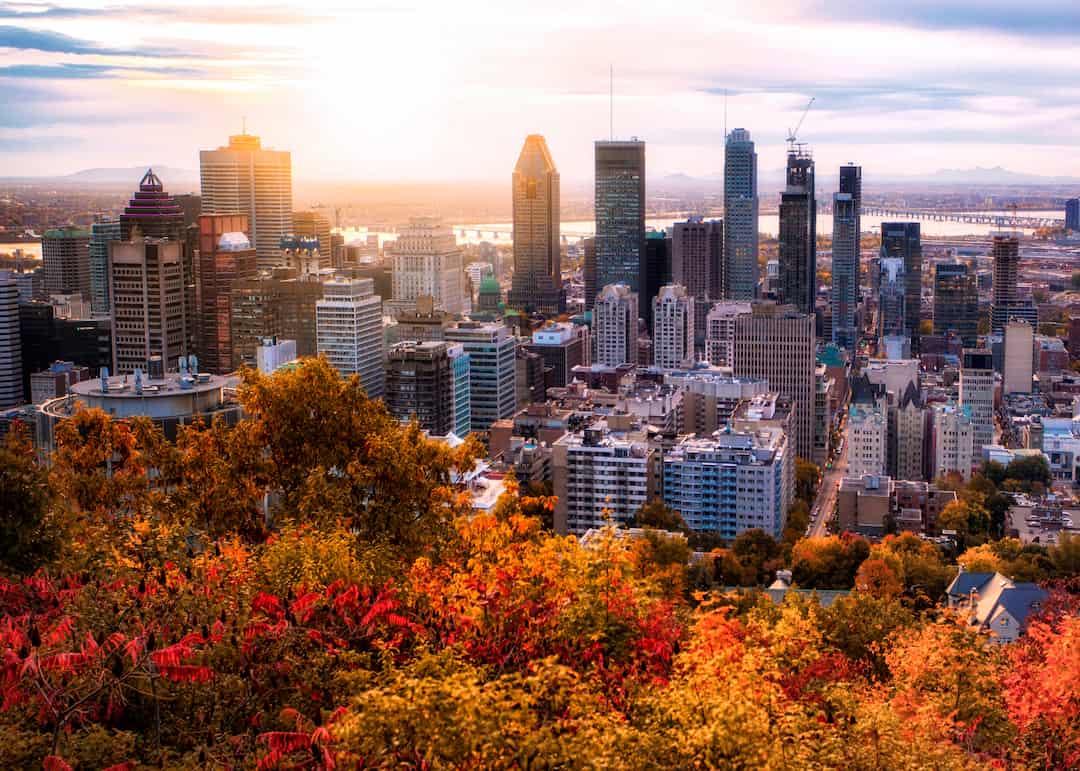
Montreal: bilingual beauty

Craving croissants and culture? Montreal's got you covered! This bilingual city offers the perfect blend of Old World charm and New World opportunities.

The rent is surprisingly reasonable (by big city standards), and the poutine is a must-try for any foodie.

For the budget-conscious: hidden gems

Canada’s not just about the big three — there are many beautiful places just a step or two off the beaten path that can help you save money while building your new life in Canada. Keep in mind that the further north you go, the colder it will get!

Halifax: ocean views without big bills

Over in eastern Canada, this Atlantic port city offers a perfect blend of history, culture, and natural beauty. Stroll along the bustling Halifax Waterfront, where historic warehouses have been transformed into shops, cafes, and galleries. Fresh seafood is a local specialty, with countless restaurants serving up everything from lobster rolls to fish tacos.

Warm summers call for a visit to Chocolate Lake Beach or a ferry ride to explore picturesque Dartmouth. With friendly locals, excellent universities, and a laid-back vibe, Halifax is a seaside haven that won’t break the bank.

Winnipeg: an arty escape

At the meeting point of the Red and Assiniboine rivers, Winnipeg shines as the vibrant capital of Manitoba.

This prairie city punches well above its weight in culture, with events like the Winnipeg Folk Festival and the Royal Winnipeg Ballet keeping locals entertained year-round, while the Exchange District’s stunning architecture houses buzzing cafes, art studios, and theatres.

Winter doesn’t dampen the spirit here — it’s embraced with outdoor skating trails and the enchanting Festival du Voyageur. With nearly 800,000 resilient residents and an affordable cost of living, Winnipeg offers both creativity and community to those willing to brave its long winters.

For the career-focused: cities of opportunity

From oil workers to healthcare professionals, there are many opportunities to further your career in Canada. Good news for professionals looking to relocate to Canada: PTE Core is now accepted for all economic migration visas, making your journey to Canada smoother than a frozen lake in January! Take a look at these career-friendly cities.

Calgary: where oil money meets mountain air

In the heart of Alberta, Calgary is a booming city where opportunity meets outdoor adventure. With a thriving energy sector powering its economy, this city attracts professionals seeking lucrative careers.

On weekends, trade your desk for the Rocky Mountains, just an hour’s drive away, offering hiking in the summer and skiing in the winter. The Calgary Stampede brings cowboy vibes, while its modern downtown and craft breweries keep it contemporary.

And here’s the cherry on top: no provincial sales tax means your hard-earned dollars go even further.

Ottawa: government jobs and gorgeous falls

As Canada’s capital, Ottawa combines political prominence with a charming, laid-back vibe. Jobs in federal government and high-tech industries ensure stability and competitive salaries.

History buffs will love Parliament Hill, while nature lovers can take in stunning views at nearby waterfalls or bike along the scenic Ottawa River Pathway. Winter transforms the iconic Rideau Canal into the world’s largest skating rink, perfect for a commute on blades.

With bilingual culture, excellent schools, and lush green spaces, it’s easy to see why Ottawa consistently ranks as one of the best places to live in Canada.

For the culture vultures: cities with a creative side

Quebec City: culture & croissants

Quebec City brings a slice of Europe to Canada with its cobblestone streets, centuries-old French architecture, and a vibrant cultural scene. The Old Town, a UNESCO World Heritage site, is a picturesque maze of charming shops, cafes, and bistros where you can savor fresh croissants and classic poutine.

Festivals like Carnaval de Québec keep the city buzzing, while local art galleries and theaters celebrate its Francophone heritage. Brushing up on your French will make it easier to enjoy the warm, welcoming community and embrace the city’s distinct identity, making Quebec City a top pick for lovers of culture and history.

Victoria: British vibes with Pacific views

Victoria, British Columbia’s capital, blends Old World charm with laid-back West Coast flair. This picturesque city is rich in culture, offering everything from afternoon tea at the historic Empress Hotel to world-class museums and galleries.

Its stunning harbor is a hub for whale-watching tours, while Beacon Hill Park’s gardens and trails provide a serene escape. Foodies will love the farm-to-table restaurants, craft breweries, and seafood straight from the Pacific.

Moving to Canada

Whether you’re in search of a top student experience or the perfect place to build a career, Canada has a spot you can call home. Wherever you choose, remember to embrace the local culture, buy a good winter coat, and never, ever say you prefer American beer!

Ready to make the move? PTE is the stress-free way to start your Canadian adventure.

With PTE Academic accepted by 98% of Canadian universities and PTE Core accepted for all economic migration visas.

Find out why PTE is the faster, fairer, simpler choice for your move to Canada.

Related Content

  • EU flag 1080 px
    What you need to know about studying in the UK after Brexit
    By PTE Author
    Reading time: 5 minutes

    Before Brexit, EU students enjoyed the freedom of movement to study, work and live across the European Union. The United Kingdom was a popular study destination for thousands of EU students, who were able to study at UK universities under the same conditions as British students.  

    But after Brexit, the rules have changed. Students now need visas, university fees have changed. There are also additional considerations for EU students to think about, like healthcare, and employment while studying. Let’s take a look at what it’s like for EU students to study in the UK after Brexit.  

    How to apply for a UK student visa   

    The good news is that it is still very possible for EU students to study in the UK. However, there is more paperwork involved than there was previously. In order to take up your place at a UK university, you’ll need to apply for a student visa.  

    It will cost you £348 to apply for a student visa if you’re outside the UK. That rises to £475 to apply if you’re in the UK already.  

    In order to apply, you’ll need to show that you have been offered a place at a UK university. You can show this with a Confirmation of Acceptance for Studies (CAS) document from your institution.  

    You’ll also need to show on your visa application that you speak English at the level you’ll need in order to live and study in the UK. To do so, you’ll need a score of at least 59 in PTE Academic.  

    Find out about using PTE Academic for your UK student visa

    The other consideration when applying for a UK student visa? You’ll need to show that you have sufficient funds to pay your course fees for at least the first year of your studies.  

    Many international students also need to show that they have enough money to cover their living expenses while studying, but EU students are exempt from this requirement.  

    Learn how to budget for student life in the UK.

    You will also need to pay the immigration health surcharge which is £470 per year, for every year of your degree. This charge allows you to use the National Health Service (NHS) during your time in the country.  

    The Graduate Route  

    If you complete your degree in the UK and you’d like to stay longer, you’ll be eligible for the Graduate route. It allows international students to stay in the UK for an additional two years after being awarded their degrees, to start their careers in the UK. If you are a doctorate-level graduate, you may apply to stay in the country for up to three years.  

    You’ll be able to look for employment, change workplace, do internships and gain valuable experience in the UK job market after graduation.  

    Student fees for EU nationals  

    Previously, EU students paid the same course fees as UK students. Post-Brexit, that is no longer the case. Now, all international students pay the same fees.  

    The amount you’ll pay for university in the UK will vary from course to course, and institution to institution. Studying English at the University of Oxford costs £32,480 per year, on average  

    But, if you choose to study English at Durham University (also a highly ranked institution) the fees are significantly lower, at £22,900 per year on average.   

    That being said, some universities are offering EU Student Scholarships: 

    • Royal Holloway University of London is offering a fee reduction scholarship, which could reduce the cost of a year’s fees from £18,100 to £12,790.  

    • The University of South Wales is also offering scholarships for EU students which reduce the cost of the fee so that EU students pay the same as British students for their courses.  

    In Scotland, there is a scholarship program specifically for EU students at Master’s level. The Saltire Scholarship will support EU students to study at Scottish universities. There are 272 scholarships available which cover a proportion of your student fees.  

    The fee for a Master’s in Gender Studies at the University of Glasgow is £20,400, for example. But, if you are awarded a Saltire Scholarship, your bursary of £8000 would reduce that fee to £4,400. You can learn more about the Saltire Scholarship here.  

    Many universities throughout the UK are offering similar bursaries, grants and other forms of support for EU students. Once you’ve created a shortlist of UK universities you’d like to study at, make sure to ask what support is available for EU students.  

    Working in the UK as an EU student  

    You might wish to support yourself by working while you’re studying at a UK university, as many students do. With a student visa, you’ll be able to work up to 20 hours a week during term time, and full time (up to 40 hours a week) during the university holidays. Note that students who study full-time below a degree level can only work 10 hours a week. This information will be clearly stated on your visa once it’s approved. 

    Typical student jobs are jobs that fit around classes. This includes jobs in hospitality, courier, or tutoring jobs, among others. You could even work online, doing proofreading or translation.  

    There is a website called Student Jobs where you can have a look at the kind of jobs that students in the UK do – and see what’s available in your destination city.  

    Learn more 

    PTE Academic is accepted by the UK government for visa purposes, as well as by 99% of UK universities as proof of your English language abilities. Find out more about how PTE Academic can help you to study in the UK.
  • Image- Canada, 1080px
    Top 5 multicultural cities in Canada for international students
    By PTE Author
    Reading time: 7 minutes

    Canada is easily one of the most multicultural countries in the world. The northern nation draws people from far and wide - and, for most Canadians, the international scene is a major source of pride.

    There are approximately 7.5 million people from abroad living in Canada today. Walkthrough one of the country’s many amazing cities and you’ll see people from anywhere from Jamaica to China to India. You’ll also experience celebrations, customs, music, food, and art from all over the world. Honoring the backgrounds of its citizens is just part of the Canadian way.

    The North American country invites immigrants for a variety of reasons: population growth, economic growth, and cultural diversity being some of the biggest ones. A 2020 Canadian Government report noted that immigration accounted for more than 80% of Canada’s population growth in 2019. That year, Canada recorded 341,000 permanent residents as well.

    In fact, workers from other countries represent 26% of the workforce. As for students, in 2019, more than 800,000 international students held valid study permits in Canada.

    But with so many great cities from coast to coast, many wonders: “Which are the most multicultural cities in Canada?” Below, a look at five Canadian cities that are home to the largest percentages of people from abroad.

    1. Toronto: Canada’s most diverse city 

    Among Canada’s most diverse cities, Toronto easily wins first place. It’s nearly impossible to spend a day in Toronto without mixing with people from around the world. A Statistics Canada report examined the geographic distribution of the Canadian immigrant population and found Toronto to be the top destination for new Canadians.  

    Toronto’s 2.7 million immigrants actually account for nearly half—46% to be exact—of the city’s entire population. This group represents 35.9% of Canada’s entire immigrant population.  

    That’s exactly why The BBC named Toronto the most multicultural city in the world a few years ago. In Toronto, the bustling Chinatown takes up a prominent part of the city’s downtown that it’s pretty hard to miss. Koreatown is a great place for food and fashion. Little Italy always has dozens of restaurants with mouth-watering pizzas and pastas on offer. There are also festivals like Taste of the Danforth (Canada’s largest street festival) that celebrates all things Greek, the Tamil Festival, and the Chinese Lantern Festival.  

    Studying in Toronto with a PTE Academic Score 

    If Toronto appeals to you, there are a number of excellent universities in Toronto that accept PTE: York University, Ryerson University, Ontario College of Art & Design University, George Brown College, Humber College.  

    2. Montreal: An incredible arts scene  

    Located in the French-speaking province of Quebec, Montreal is the home to 936,305 immigrants. It’s the second most diverse city in Canada. It has 12.4% of Canada’s immigrant population with folks from abroad representing 23.4% of the city’s total population. The ministry of immigration in Quebec reports that they are mostly European, Asian, or from other parts of the Americas.  

    Montreal is a great city for a variety of reasons: its arts scene is incredible, it has amazing cuisine, it’s affordable and it’s located in the culturally-rich province of Quebec.  

    And, if any newcomers want to experience this cultural diversity, the city puts on a number of festivals in summer in order to do so. There are entire weeks devoted to celebrating Japanese and Italian culture in June, for example.  

    There is also a festival of world music in early summer where bystanders can hear instruments and music styles from all over the world. The Festival International Nuits d’Afrique is also a well-known festival in which more than 100 performers put on shows celebrating culture from Africa, the Caribbean, and Latin America.  

    Studying in Montreal with a PTE Academic Score 

    If Montreal appeals to you, there are a number of excellent universities in Montreal that accept PTE: McGill University, Concordia University, Montreal College of Information Technology. 

    3. Vancouver: Combining city life with nature 

    Vancouver’s 989,545 immigrants represent nearly 41% of the city’s population and just over 13% of the Canadian immigrant population. Many of those people come from places like China, India, The UK, the Philippines, and Hong Kong.  

    Vancouver is arguably Canada’s most beautiful city. Those who live there get the best of both city life and nature. This is because Vancouver sits on the shores of the Pacific Ocean and in the mountains. It’s entirely possible to go trekking or sea kayaking during the day and settle in for cocktails and a fancy dinner in the evening. And thanks to the international community, you can expect to sit down to Chinese, Indian, or fusion foods at one of Vancouver’s many ethnically diverse restaurants.  

    Studying in Vancouver with a PTE Academic Score 

    If Vancouver appeals to you, there are a number of excellent universities in Vancouver that accept PTE: Simon Fraser University, University of British Columbia.  

    4. Calgary: Close to tourist hotspots 

    Calgary (nicknamed “Cowtown”) is one of Alberta’s most thriving areas. Statistics Canada has reported that about 5.4% of Canada’s immigrant population live in Calgary. That translates to nearly 405,000 and over 29% of the city’s total population. 

    While the Calgary Stampede festival is Calgary’s claim to fame, many other events highlight the international cultures present in the neighborhoods of Cowtown. Examples include GlobalFest, Omatsuri (a Japanese event), Fiestaval (which celebrates Latin American identity), Serbian Fest, and the Calgary International Film Festival which screens works from more than 40 countries worldwide.

    Another huge draw for those from abroad: Calgary provides the comforts of city life but is just a short road trip from main Canadian tourist destinations like Banff, Lake Louise and Kootenay National Park.  

    Studying in Calgary with a PTE Academic Score 

    If Calgary appeals to you, there are a number of excellent universities in Calgary that accept PTE: University of Calgary, Bow Valley College, Mount Royal University. 

    5. Edmonton: A city of parks  

    Edmonton has become a hub for immigrants seeking a new home in Canada. About 4% of Canada’s immigrant population lives in the northern city representing nearly a quarter of the Edmonton population overall. Move here and you can expect dry weather and long days with late sunsets in the summer. The winter, by contrast, is very snowy and cold.  

    Edmonton locals also brag that more than 150 languages are spoken there. French, Punjabi, Cantonese, Mandarin, Arabic, and Spanish are the most prevalent.  

    Edmonton is also a fairly green city with more than 460 parks. For day trips, newcomers can experience iconic locations nearby like Jasper National Park and UNESCO site Dinosaur Provincial Park—a spot famous for its dinosaur fossils.  

    Studying in Edmonton with a PTE Academic Score 

    If Edmonton appeals to you, there are a number of excellent universities in Edmonton that accept PTE: University of Alberta, The King’s University, Northern Alberta Institute of Technology, Macewan University.  

    PTE can make your Canadian dream a reality 

    If you’re thinking about studying in any of these top five most multicultural Canadian cities, consider using PTE as your stepping stone. The English proficiency test is recognized by some of Canada’s most prestigious colleges and universities. It also has testing centers in or near each of the cities listed above. Currently, international students can complete a test in Toronto, Montreal, Calgary, Edmonton, Burnaby (right next door to Vancouver), and Ottawa.  

    Discover where PTE can take you in Canada.

  • Image - reading book 1080px
    5 famous Canadian authors and where they went to university
    By PTE Author
    Reading time: 6 minutes

    Are you thinking about moving to Canada to study? Get inspired by these talented Canadian authors and discover the universities they attended. Find out which Canadian universities accept PTE Academic now! 

    Canada inspires good writing. The northern country is home to many talented literary figures and authors whose works have been celebrated worldwide for decades. From old classics like Anne of Green Gables to newer works like Women Talking and The English Patient, Canadian literature has really made a mark.  

    But who are the masterminds behind these incredible stories? More importantly, where in Canada did they study?  

    Here, we take a look at some of Canada’s most talented writers and learn where they earned their university degrees. 

    This list includes reputable institutions from the scenic east coast, to the quiet prairies to highly-regarded schools in Ontario. And if you have yet to read these writers’ books, add them to your reading list! 

    1. Lucy Maud Montgomery  

    Lucy Maud Montgomery published Anne of Green Gables in 1908. It became one of Canada’s most famous books. The story is set in the Canadian province of Prince Edward Island which is where the author was born.  

    The fictional story is about a red-haired, impulsive orphan growing up in a small eastern Canadian town. Though it was rejected by many publishers at first, the novel went on to sell more than 50 million copies. It has also been translated into 36 languages.  

    More recently, it was developed into a TV series called Anne With An E, which can be streamed on Netflix.  

    Education: Dalhousie University 

    Lucy Maud Montgomery studied at Dalhousie University in Halifax, Nova Scotia. She started her studies there at age 21 in 1895. At the time, it wasn’t common for women to be seen on campus. During her time at Dalhousie, she argued that more women should seek a university education.  

    Feeling inspired to study at Dalhousie University? The good news is that they accept PTE as proof of your English level.  

    2. Joseph Boyden  

    Joseph Boyden is a Canadian novelist and short-story writer. Boyden is best known for writing about First Nations culture. He is best known for his books Three Day Road, Through The Black Spruce, and The Orenda. In his writing career, Boyden has collected many Canadian literary prizes. These include Canada Reads, the Scotiabank Giller Prize, the Rogers Writers’ Trust Fiction Prize, The Governor General’s Award for fiction, and the Canadian Booksellers Association Fiction Book of the Year. Boyden grew up in North York, Ontario.  

    Education: York University  

    He studied creative writing at York University where he was admired by a professor for his intensity and determination. He also has honorary degrees from Wilfrid Laurier University, Trent University, Nipissing University, and Algoma University.  

    Do you want to follow in Boyden’s footsteps? York University accepts PTE

    3. Alice Munro 

    Alice Munro is one of the best authors to have ever come out of Canada. In 2013, she won the Nobel Prize in Literature. She is known and praised as being the master of the short story. Her books include Dear Life, Dance of the Happy Shades, The Lives of Girls and Women, Who Do You Think You Are and The Love of a Good Woman. When she won the Nobel Prize, she was quoted saying that she didn’t expect to win.  

    Education: Western University  

    As for her education, Munro studied English at Western University. She started at the university in 1949. She actually published her first-ever work at the university’s campus literary magazine called Folio. Munro is one of Western University’s most famous alumni.  

    If you’ve bookmarked Western University as a place to study, it also accepts PTE.  

    4. Miriam Toews 

    Miriam Toews is a bestselling author of Women Talking, All My Puny Sorrows, and A Complicated Kindness. Toews has collected many literary awards in Canada. Her major awards are the Governor General’s Award for English-language fiction, Canada Reads, and the Scotiabank Giller Prize. Her novel Women Talking is a fictional story based on a Mennonite colony in Bolivia. It became a bestseller and was shortlisted for the Governor General’s Award. Toews lives in Toronto.  

    Education: University of Manitoba 

    She earned her first degree at the University of Manitoba where she studied film studies and earned a bachelor of arts degree.  

    Check out the University of Manitoba for yourself, the highly regarded institution also accepts PTE. 

    5. Michael Ondaatje 

    Michael Ondaatje is considered one of Canada’s most important contemporary writers. His novels and poetry are required reading in many Canadian schools and universities. Ondaatje was born in Sri Lanka but moved to Canada in 1962 and stayed. His most famous book is The English Patient. It’s a war-era love story set in Italy. Not only did it win the Man Booker Prize, but it was also turned into an award-winning movie in 1996. Ondaatje also wrote In The Skin Of A Lion, The Cat’s Table, and Anil’s Ghost. In addition to the Booker Prize, Ondaatje has also won Governor General’s Awards and the Giller Prize. He is also a member of the Order of Canada. Before becoming the famous author that he’s known as today,  

    Education: Queen’s University 

    Ondaatje studied ag Queen’s University in Kingston, Ontario in 1967. He’s one of the university’s most celebrated past students. Currently, he lives in Toronto.  

    Queen’s University is a great choice for international students and accepts PTE

    Travel to study in Canada 

    Thinking of studying in Canada? With so many incredible universities, Canada is an obvious pick for many international students. In order to secure a spot at a Canadian university though, students coming from abroad must prove English proficiency.  

    PTE Academic can help make your dreams of studying in Canada come true. The English language test is recognized worldwide. Many top Canadian universities including the ones mentioned above accept PTE scores as part of their application process.  

    Check out PTE test centers and view prices in Toronto, Ottawa, Montreal, Edmonton, Calgary, or Burnaby to take the first step towards your Canadian university career.