
Top 5 multicultural cities in Canada for international students

PTE Author
PTE Author
Image- Canada, 1080px
Reading time: 7 minutes

Canada is easily one of the most multicultural countries in the world. The northern nation draws people from far and wide - and, for most Canadians, the international scene is a major source of pride.

There are approximately 7.5 million people from abroad living in Canada today. Walkthrough one of the country’s many amazing cities and you’ll see people from anywhere from Jamaica to China to India. You’ll also experience celebrations, customs, music, food, and art from all over the world. Honoring the backgrounds of its citizens is just part of the Canadian way.

The North American country invites immigrants for a variety of reasons: population growth, economic growth, and cultural diversity being some of the biggest ones. A 2020 Canadian Government report noted that immigration accounted for more than 80% of Canada’s population growth in 2019. That year, Canada recorded 341,000 permanent residents as well.

In fact, workers from other countries represent 26% of the workforce. As for students, in 2019, more than 800,000 international students held valid study permits in Canada.

But with so many great cities from coast to coast, many wonders: “Which are the most multicultural cities in Canada?” Below, a look at five Canadian cities that are home to the largest percentages of people from abroad.

1. Toronto: Canada’s most diverse city 

Among Canada’s most diverse cities, Toronto easily wins first place. It’s nearly impossible to spend a day in Toronto without mixing with people from around the world. A Statistics Canada report examined the geographic distribution of the Canadian immigrant population and found Toronto to be the top destination for new Canadians.  

Toronto’s 2.7 million immigrants actually account for nearly half—46% to be exact—of the city’s entire population. This group represents 35.9% of Canada’s entire immigrant population.  

That’s exactly why The BBC named Toronto the most multicultural city in the world a few years ago. In Toronto, the bustling Chinatown takes up a prominent part of the city’s downtown that it’s pretty hard to miss. Koreatown is a great place for food and fashion. Little Italy always has dozens of restaurants with mouth-watering pizzas and pastas on offer. There are also festivals like Taste of the Danforth (Canada’s largest street festival) that celebrates all things Greek, the Tamil Festival, and the Chinese Lantern Festival.  

Studying in Toronto with a PTE Academic Score 

If Toronto appeals to you, there are a number of excellent universities in Toronto that accept PTE: York University, Ryerson University, Ontario College of Art & Design University, George Brown College, Humber College.  

2. Montreal: An incredible arts scene  

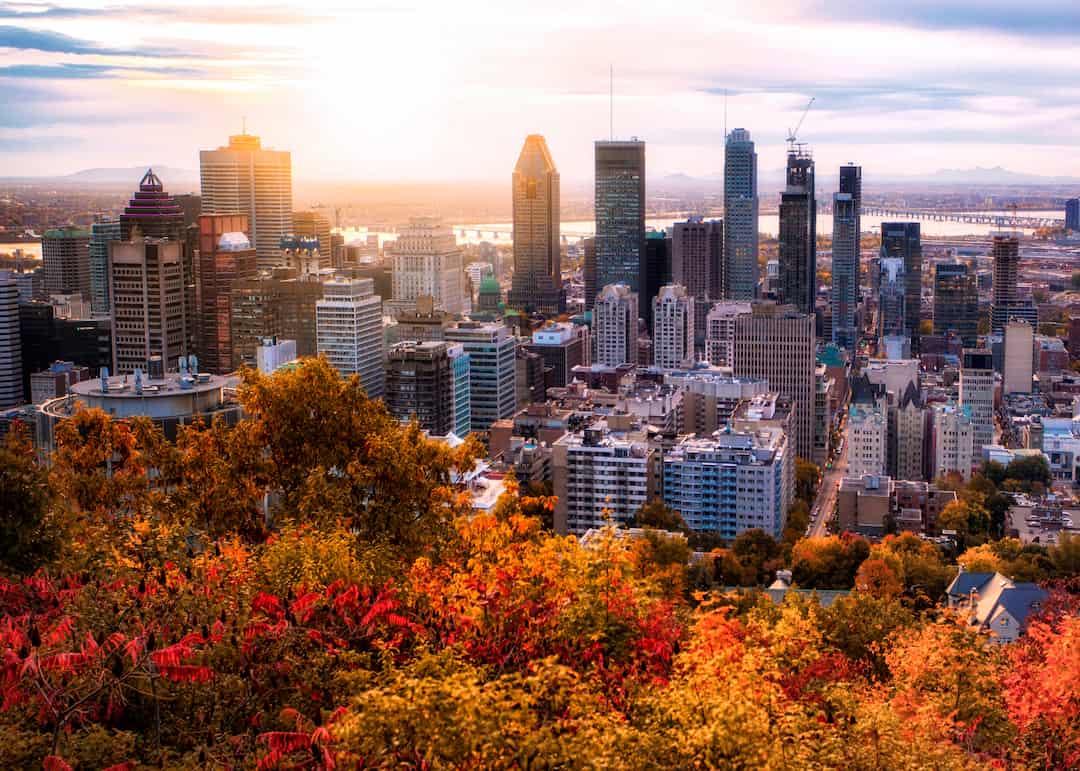
Located in the French-speaking province of Quebec, Montreal is the home to 936,305 immigrants. It’s the second most diverse city in Canada. It has 12.4% of Canada’s immigrant population with folks from abroad representing 23.4% of the city’s total population. The ministry of immigration in Quebec reports that they are mostly European, Asian, or from other parts of the Americas.  

Montreal is a great city for a variety of reasons: its arts scene is incredible, it has amazing cuisine, it’s affordable and it’s located in the culturally-rich province of Quebec.  

And, if any newcomers want to experience this cultural diversity, the city puts on a number of festivals in summer in order to do so. There are entire weeks devoted to celebrating Japanese and Italian culture in June, for example.  

There is also a festival of world music in early summer where bystanders can hear instruments and music styles from all over the world. The Festival International Nuits d’Afrique is also a well-known festival in which more than 100 performers put on shows celebrating culture from Africa, the Caribbean, and Latin America.  

Studying in Montreal with a PTE Academic Score 

If Montreal appeals to you, there are a number of excellent universities in Montreal that accept PTE: McGill University, Concordia University, Montreal College of Information Technology. 

3. Vancouver: Combining city life with nature 

Vancouver’s 989,545 immigrants represent nearly 41% of the city’s population and just over 13% of the Canadian immigrant population. Many of those people come from places like China, India, The UK, the Philippines, and Hong Kong.  

Vancouver is arguably Canada’s most beautiful city. Those who live there get the best of both city life and nature. This is because Vancouver sits on the shores of the Pacific Ocean and in the mountains. It’s entirely possible to go trekking or sea kayaking during the day and settle in for cocktails and a fancy dinner in the evening. And thanks to the international community, you can expect to sit down to Chinese, Indian, or fusion foods at one of Vancouver’s many ethnically diverse restaurants.  

Studying in Vancouver with a PTE Academic Score 

If Vancouver appeals to you, there are a number of excellent universities in Vancouver that accept PTE: Simon Fraser University, University of British Columbia.  

4. Calgary: Close to tourist hotspots 

Calgary (nicknamed “Cowtown”) is one of Alberta’s most thriving areas. Statistics Canada has reported that about 5.4% of Canada’s immigrant population live in Calgary. That translates to nearly 405,000 and over 29% of the city’s total population. 

While the Calgary Stampede festival is Calgary’s claim to fame, many other events highlight the international cultures present in the neighborhoods of Cowtown. Examples include GlobalFest, Omatsuri (a Japanese event), Fiestaval (which celebrates Latin American identity), Serbian Fest, and the Calgary International Film Festival which screens works from more than 40 countries worldwide.

Another huge draw for those from abroad: Calgary provides the comforts of city life but is just a short road trip from main Canadian tourist destinations like Banff, Lake Louise and Kootenay National Park.  

Studying in Calgary with a PTE Academic Score 

If Calgary appeals to you, there are a number of excellent universities in Calgary that accept PTE: University of Calgary, Bow Valley College, Mount Royal University. 

5. Edmonton: A city of parks  

Edmonton has become a hub for immigrants seeking a new home in Canada. About 4% of Canada’s immigrant population lives in the northern city representing nearly a quarter of the Edmonton population overall. Move here and you can expect dry weather and long days with late sunsets in the summer. The winter, by contrast, is very snowy and cold.  

Edmonton locals also brag that more than 150 languages are spoken there. French, Punjabi, Cantonese, Mandarin, Arabic, and Spanish are the most prevalent.  

Edmonton is also a fairly green city with more than 460 parks. For day trips, newcomers can experience iconic locations nearby like Jasper National Park and UNESCO site Dinosaur Provincial Park—a spot famous for its dinosaur fossils.  

Studying in Edmonton with a PTE Academic Score 

If Edmonton appeals to you, there are a number of excellent universities in Edmonton that accept PTE: University of Alberta, The King’s University, Northern Alberta Institute of Technology, Macewan University.  

PTE can make your Canadian dream a reality 

If you’re thinking about studying in any of these top five most multicultural Canadian cities, consider using PTE as your stepping stone. The English proficiency test is recognized by some of Canada’s most prestigious colleges and universities. It also has testing centers in or near each of the cities listed above. Currently, international students can complete a test in Toronto, Montreal, Calgary, Edmonton, Burnaby (right next door to Vancouver), and Ottawa.  

Discover where PTE can take you in Canada.

Related Content

  • Image - woman on hill in Canada - 800px w
    Student guide: What is the cost of living in Canada?
    By PTE Author
    Reading time: 6 minutes

    Many students dream of studying in Canada. The country has world-renowned teaching facilities and universities, an open immigration system, metropolitan cities, and scenic landscapes. Altogether, it’s a great choice for international students.  

    Studying in Canada is not as expensive as studying in other countries, like the U.S. or U.K. However it is still a big investment. International students pay between $1,800-20,000 CAD per year to attend a Canadian university or college.  

    But, what’s the cost of living in Canada? Canada is a big country and prices vary by region. Nevertheless, the EduCanada government website estimates the average cost of living for foreign students is about $12,000 CAD a year.  

    In this guide, we outline how much students across Canada pay for things like rent, transportation, entertainment, and food – and look into some hidden costs that everyone should keep in mind. 

    Here is our student guide on the cost of living in Canada: 

    Accommodation costs by city  

    When you’re studying in Canada, you can choose between living on-campus or off-campus. Living on-campus is a great opportunity to socialize with other students and make friends. Most institutions also give students on-campus the option to buy a meal plan. But, keep in mind that many universities and colleges prioritize first-year students for on-campus housing.  

    You might also decide to rent an apartment or room off-campus instead. There are lots of housing options in neighborhoods close to universities and colleges – and these are often advertised specifically for students.  

    To give you an idea about how much accommodation will cost, we take a look at some popular Canadian study destinations. Keep in mind, off-campus housing prices might fluctuate because of the pandemic. 

    Toronto  

    At the University of Toronto, on-campus housing for eight months ranges from about $6500- $20,500 CAD, depending on the room and meal-plan. A one-bedroom apartment in Toronto costs about $2,100 CAD/month on average.  

    Vancouver 

    At the University of British Columbia in Vancouver, a room and meal-plan will cost you between $10,700-$13,850 CAD for two terms. A one-bedroom apartment in the city center costs $2,050 CAD/month on average.  

    Montreal 

    At McGill University in Montreal, a single room for 1st-year undergraduate students costs between about $9,700-$12,700 CAD/academic year, without a meal plan. A one-bedroom apartment costs 1,300 CAD/month on average. 

    Halifax 

    At Dalhousie University in Halifax, a single room costs between $8,130-$9,450 CAD/academic year with a meal plan. A one-bedroom apartment costs about $1,400 CAD/month on average.  

    Waterloo 

    At the University of Waterloo, a single room in a traditional-style dorm costs between about $6,700-$7,000 CAD for the fall and winter term, not including a mandatory meal-plan. A one-bedroom apartment costs about $1,500 CAD/month on average.  

    Food costs  

    If you don’t have a meal plan and live off-campus, you must include grocery shopping in your budget. Of course, food prices are different across the country and depend on where you decide to shop.  

    Let’s take a quick look at how much essential items may cost in Canada’s largest city, Toronto:  

    • Milk (about $3 CAD)

    • Rice, 1kg (about $3.50 CAD)

    • Apples, 1kg (about $4 CAD)

    • Red meat, 1kg (about $16 CAD)

    • 12 eggs (about $3.50 CAD)

    According to the City of Toronto’s Nutritious Food Basket Calculator, a male aged 19-30 must spend a minimum of $65.50/week to buy healthy food. A female the same age living in Toronto must spend about $51 CAD/week to buy healthy food.  

    Transportation costs in Canada 

    How much is the average cost of transportation in Canada? Many international students rely on public transportation to get around. And oftentimes, transport costs are included in tuition fees – giving you unlimited access to the city’s whole transportation system.  

    But in some cities – like Toronto and Montreal – you can buy your own pass at a reduced fare. In Montreal, a student pass costs $53 CAD/month. In Toronto, which is a much more expensive city, a pass costs $128 CAD/month.  

    Outside of larger cities, it can also be useful to have a car, especially if you are used to driving at home. But, keep in mind this can cost a lot extra. To get an idea of how much it costs to drive a car in Canada, check out this driving costs calculator by the Canadian Automobile Association (CAA).  

    Entertainment costs 

    Canada offers many cultural and outdoor activities for you to enjoy. You can find world-class music festivals, skiing and snowboarding, and giant sporting events like basketball, hockey, and baseball games.  

    Of course, you will also still get to enjoy many things you did at home. Here are a few things you might like to do in Canada, along with how much each costs:  

    • Visit a renowned museum (many offer free evenings, and entrance for young people or students) 

    • Meet a friend for coffee ($1.76 CAD at coffee chain Tim Hortons) 

    • Rent skates and go ice-skating outdoors (about $10 CAD)

    • Watch a movie in theaters (about $15 CAD)

    • Eat dinner at a casual restaurant (about $15-25 CAD)

    Insurance costs 

    Canada has a publicly-funded health system. However, each province and territory administers its own healthcare. Whether or not you can receive publicly-funded medical coverage will depend on where you are in Canada.  

    If you don’t qualify for public healthcare, your institution might require you to enroll in a specific insurance plan or find your own private coverage. You should check with your institutions about exactly what coverage you need to study safety in Canada.  

    Hidden costs 

    Lots of hidden costs arise when studying abroad, and there are a few things students in Canada should keep in mind.  

    For one, it is expensive to own a cellphone in Canada. In fact, cell phone bills in Canada are among the highest in the world. Canadians pay $101 CAD/month, on average, for a cellphone plan.  

    You will also need to buy warm winter clothing – including a jacket, boots, socks, gloves, hat, and scarf. You can expect to pay about $300-$400 CAD for these items brand new. However, thrift stores might also carry winter clothing for much cheaper.  

    Finally, you shouldn’t forget about Canadian sales taxes. Taxes in Canada are higher than many places in the world and range from about 12%-15%.

  • Image- UK, 800px x 451px
    Cost of living in the UK
    By PTE Author
    Reading time: 4 minutes

    You may have heard that London is one of the most expensive places in the world to live in, but fortunately, London, and by extension, England, does not equate to the whole of the UK. In fact, many UK towns and cities are very liveable when compared to other cities across the globe.  

    There is quite a bit to look at when considering the cost of living in the UK. Apart from tuition fees, there’s also the cost of rent, transport, and even entertainment – because if you’re living in the UK, there’s no way you should miss out on everything that this great country has to offer- from the food to the culture.  

    Let’s look at some aspects of the UK cost of living, so you can best adjust your budget and prepare yourself for a new life abroad. 

    Calculating living costs in The UK 

    When looking at the cost of living in the UK, it’s best to use an online currency calculator to convert your currency to the British pound – that will give you a better idea of the true cost of living in relation to your country. 

    Here’s a rough guide to the currency conversions we have used in this article, dated March 27th, 2020:

    • AU$1,000 = £500

    • US$1,000 = £805

    • €1000 = £895

    Once you have a better understanding of the conversion rate, you can better interpret how much rent, utilities and other everyday costs will affect your budget.  

    A weekly UK budget 

    There are so many factors that contribute to the UK cost of living that it’s impossible to give you a set cost for each week. But a recommended starting point for a budget for a single student in the UK, per week, averages out to about £300. Let’s see how we got to this number (please note these costs are an average from across UK metropolitan cities, outside of the city center). 

  • Image- Australia, 609px
    12 Aussie slang words you need to know
    By PTE Author
    Reading time: 5 minutes

    If you dream of studying in Australia, be prepared to learn some slang. Aussies are known for their use of informal language. Many consider it part of their national identity.

    As this article by two Monash University linguists points out, Australia’s attachment to slang actually goes all the way back to some of the earliest English settlements in the country. 

     So, what slang words should you know before traveling “down under”? Here are 12 popular Australian slang words to get started: 

    1. Arvo

    “Arvo” means afternoon. According to the Australian National Dictionary Centre, the word was first recorded in 1920. In Australian English, an “-o” is commonly added to shortened words. Two examples are “ambo” (ambulance driver) or “rello” (relative) – but there are many more. 

    How to use it: I’m meeting my sister in the park on Sunday arvo.  

    2. Barbie

    “Barbie” is a short form of barbeque. In Australian English, “-ie” is also added to lots of abbreviated words. The word “selfie” is a good example of this; it was coined by an Australian man in 2002!  

    How to use it: We’re having a barbie tomorrow – do you want to come?  

     3. Chucking a sickie 

    “Chucking a sickie” means to take a sick day from work when you are not sick – or without a proper reason. Look, there’s that “–ie” again. 

    According to a 2018 study, nearly half of Australians who take off sick are actually chucking a sickie.  

    How to use it: I’m going to chuck a sickie on Monday to spend an extra day with my family. 

    4. Give someone a bell

    “To give someone a bell” simply means to call someone on the phone. It’s a term used both in Australia and the U.K.  

    How to use it: I’ll give you a bell tomorrow when I’m out of class. 

    5. Hard yakka

    “Hard yakka” means work hard. The word “yakka” – which first appeared in the 1840s – derives from the word for work (yaga). It comes from Yagara, an Indigenous language in Australia. 

    In fact, many Australian English words derive from Indigenous languages. Take a look at some more examples on ABC Learn English

    How to use it: Studying for my final English exam was hard yakka, but worth it.  

    6. Macca’s

    “Macca’s” is a nickname for Mcdonald’s. If you used the term Macca’s in the U.S. or Canada, you’d get some funny looks. But the term is very common in Australia. In fact, McDonald’s changed its name to Macca’s at stores across the country for Australia Day in 2013 – and still refers to itself as Macca’s today.  

    How to use it: I’m craving a cheeseburger. Where’s the closest Macca’s?  

    7. Mate

    “Mate” is a popular word for friend. And while it’s used in other English-speaking countries around the world, it has a special connection to Australia. In the past, mate has been used to address men,  but it can be gender-neutral.  

    In Australia, you’ll also hear mate used in an ironic sense. If someone is upset with an athlete’s play, for example, they might yell at the T.V.: “maattee!”  

    How to use it: G’day mate, how are you doing? 

    8. No worries 

    “No worries” is a common way to say that something is no bother – or even to say you’re welcome. It’s often used to assure people that everyone will be alright, and not to worry.  

    How to use it: “Thanks for taking that shift at work for me!” – No worries, I don’t mind at all.  

     9. She’ll be right

    “She’ll be right” is an optimistic way to say that everything will turn out okay in the end.  

    Now, why is the pronoun she used? “Australian English often uses the feminine pronoun she where standard English would use it. For example, instead of ‘it’ll be right’ Australians say ‘she’ll be right’,” explains the Australian National Dictionary Centre.  

     How to use it: I’m worried about applying to a university abroad. But I know if I work hard, she’ll be right.  

    10. Uey

    A “uey” is a U-turn. When you say it, it sounds like “You E”. Instead of saying make a uey, you’re more likely to hear an Australian say chuck a uey.

    How to use it: We’re going in the wrong direction! Chuck a uey up ahead to turn around.  

     11. Uni

    “Uni” is an abbreviation for – you guessed it – university. The word uni is used in both Australia, New Zealand, and the U.K.; and while it’s not very common in Canada or the U.S., most people would still understand you if you said it. There are 43 unis in Australia – you can take a look at them here

    How to use it: My best mate from uni just had a baby. She looks just like him!  

     12. Veggo

    A “veggo” is a vegetarian. About 3% of the population in Australia say they’re vegetarian, while just 1% are vegan. But if you’re a veggo, you won’t have any issues shopping. There are lots of meat and dairy-free options available in supermarkets and restaurants.  

    How to use it: My brother is a veggo. He cooked some amazing veggie burgers on the barbie last weekend.