The best universities in the UK for international students

PTE Author
PTE Author
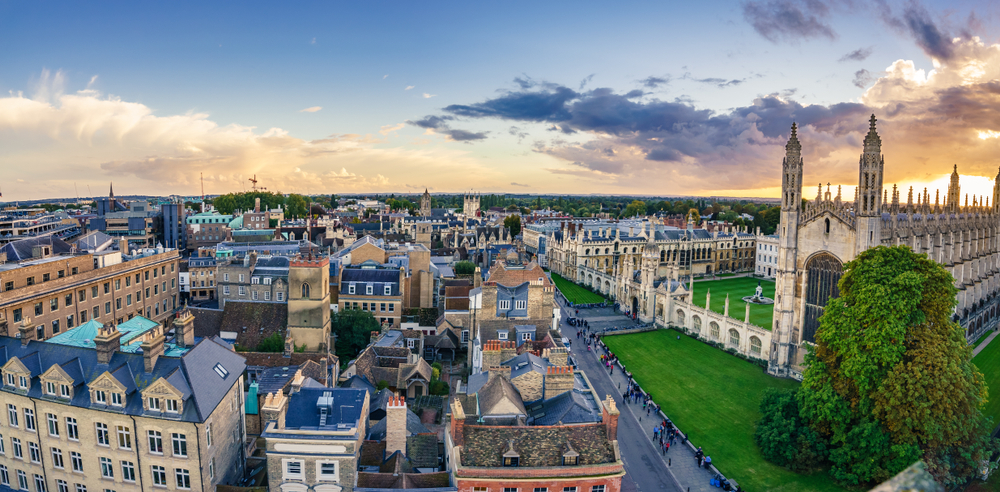
Image of Cambridge University
Reading time: 4 minutes

The UK has plenty of respected and renowned universities. Most of these schools are welcoming to foreign students, but some are particularly good at providing a world-class education for students coming from abroad.  

In this article for international students in the UK, we cover: 

  • An overview of the British education system

  • The best universities in the UK for international students

  • Some of the best unis in the UK for specific fields (e.g. law, medicine, business, psychology).

The UK education system: A quick overview 

Higher-Education-Students-in-the-UK

There technically isn’t one overarching United Kingdom education system. Rather, each nation (England, Scotland, Wales, and Northern Ireland) has its own system.  

For simplicity, we’ll just cover the English higher education system, and this is what we’re referring to when we use “British education system” or “the education system of Great Britain” here.

The system of education in Great Britain

There are four types of schools in England that can provide higher education. These are: 

  • Universities

  • University colleges

  • Higher Education (HE) colleges

  • Private colleges.

Students can usually enter undergraduate courses from age 18. These courses range from certificates of higher education and diplomas to bachelor’s degrees and foundation degrees. These awards are ranked in levels. For example, a diploma of higher education is level 5, whereas a degree in dentistry, medicine, or veterinary science is level 7.  

Postgraduate study is available to any student who has completed a degree. These come in a variety of forms including graduate diplomas, postgraduate certificates, and master's degrees. 

Many English schools also offer integrated masters degrees, which automatically bridge the gap between undergraduate and postgraduate studies.

Once you have both an undergraduate and postgraduate qualification, you may be able to study a PhD or professional doctorate (the highest level of university education in England).  

Other countries in the UK have a similar higher education system to this, but you might notice some slight differences if you study in Wales, Scotland, or Northern Ireland.  

The best universities in the UK for international students 

Image - Oxford University

With so many prestigious colleges in the UK, it’s difficult to identify the “best”. But these five universities are consistently ranked among the top schools around the world: 

  • University of Oxford

     The English-speaking world’s oldest university is perhaps the UK’s most well-known and reputable institution. Over 20,000 students attend Oxford, with around 40% of them being international students.


  • University of Cambridge

     This storied school caters to over 18,000 students with six academic schools. It has over 100 libraries, more than 80 sports offerings, and a plethora of extracurricular activities and societies. 


  • University College London

    UCL has a reputation worldwide for high-quality teaching and research. Its location in central London is convenient and ideal for international students who wish to embrace English culture between lessons. The University of London’s international programmes are among the best available in the UK, and this college is commonly regarded as one of the best universities in London.


  • University of Edinburgh

    From industry pioneers to Nobel Prize winners, the University of Edinburgh attracts top talent from around the globe. About 30% of the cohort here is comprised of international students. 


  • University of Manchester

    This university offers over 1,000 degrees ranging from foundation courses to PhDs. It’s at the forefront of research in several industries including science, engineering, and medicine. 


The best unis in the UK by academic field

Studying-Law-or-Medicine

Some universities in the UK have particularly strong offerings in specific fields. Here’s a brief overview of some schools that stand out in certain areas, based primarily on league tables from the Complete University Guide.  

Keep in mind that these lists are far from exhaustive. Speaking with an international education agent may help you find the most appropriate institute for your studies. 

Some of the best universities for law in the UK 

Some of the best universities for medicine in the UK 

Some of the best engineering universities in the UK 

Some of the best universities for economics in the UK 

Some of the best universities for psychology in the UK 

Some of the best business universities in the UK 

As the two top-ranked UK universities in general, it’s unsurprising to see Oxford and Cambridge represented in most of these lists. But, as you can see, there’s a wide range of prestigious universities in the UK to consider – no matter what field you’re looking to study.

Related Content

  • Image- UK, 800px x 451px
    Cost of living in the UK
    By PTE Author
    Reading time: 4 minutes

    You may have heard that London is one of the most expensive places in the world to live in, but fortunately, London, and by extension, England, does not equate to the whole of the UK. In fact, many UK towns and cities are very liveable when compared to other cities across the globe.  

    There is quite a bit to look at when considering the cost of living in the UK. Apart from tuition fees, there’s also the cost of rent, transport, and even entertainment – because if you’re living in the UK, there’s no way you should miss out on everything that this great country has to offer- from the food to the culture.  

    Let’s look at some aspects of the UK cost of living, so you can best adjust your budget and prepare yourself for a new life abroad. 

    Calculating living costs in The UK 

    When looking at the cost of living in the UK, it’s best to use an online currency calculator to convert your currency to the British pound – that will give you a better idea of the true cost of living in relation to your country. 

    Here’s a rough guide to the currency conversions we have used in this article, dated March 27th, 2020:

    • AU$1,000 = £500

    • US$1,000 = £805

    • €1000 = £895

    Once you have a better understanding of the conversion rate, you can better interpret how much rent, utilities and other everyday costs will affect your budget.  

    A weekly UK budget 

    There are so many factors that contribute to the UK cost of living that it’s impossible to give you a set cost for each week. But a recommended starting point for a budget for a single student in the UK, per week, averages out to about £300. Let’s see how we got to this number (please note these costs are an average from across UK metropolitan cities, outside of the city center). 

  • Image- Australia, 609px
    12 Aussie slang words you need to know
    By PTE Author
    Reading time: 5 minutes

    If you dream of studying in Australia, be prepared to learn some slang. Aussies are known for their use of informal language. Many consider it part of their national identity.

    As this article by two Monash University linguists points out, Australia’s attachment to slang actually goes all the way back to some of the earliest English settlements in the country. 

     So, what slang words should you know before traveling “down under”? Here are 12 popular Australian slang words to get started: 

    1. Arvo

    “Arvo” means afternoon. According to the Australian National Dictionary Centre, the word was first recorded in 1920. In Australian English, an “-o” is commonly added to shortened words. Two examples are “ambo” (ambulance driver) or “rello” (relative) – but there are many more. 

    How to use it: I’m meeting my sister in the park on Sunday arvo.  

    2. Barbie

    “Barbie” is a short form of barbeque. In Australian English, “-ie” is also added to lots of abbreviated words. The word “selfie” is a good example of this; it was coined by an Australian man in 2002!  

    How to use it: We’re having a barbie tomorrow – do you want to come?  

     3. Chucking a sickie 

    “Chucking a sickie” means to take a sick day from work when you are not sick – or without a proper reason. Look, there’s that “–ie” again. 

    According to a 2018 study, nearly half of Australians who take off sick are actually chucking a sickie.  

    How to use it: I’m going to chuck a sickie on Monday to spend an extra day with my family. 

    4. Give someone a bell

    “To give someone a bell” simply means to call someone on the phone. It’s a term used both in Australia and the U.K.  

    How to use it: I’ll give you a bell tomorrow when I’m out of class. 

    5. Hard yakka

    “Hard yakka” means work hard. The word “yakka” – which first appeared in the 1840s – derives from the word for work (yaga). It comes from Yagara, an Indigenous language in Australia. 

    In fact, many Australian English words derive from Indigenous languages. Take a look at some more examples on ABC Learn English

    How to use it: Studying for my final English exam was hard yakka, but worth it.  

    6. Macca’s

    “Macca’s” is a nickname for Mcdonald’s. If you used the term Macca’s in the U.S. or Canada, you’d get some funny looks. But the term is very common in Australia. In fact, McDonald’s changed its name to Macca’s at stores across the country for Australia Day in 2013 – and still refers to itself as Macca’s today.  

    How to use it: I’m craving a cheeseburger. Where’s the closest Macca’s?  

    7. Mate

    “Mate” is a popular word for friend. And while it’s used in other English-speaking countries around the world, it has a special connection to Australia. In the past, mate has been used to address men,  but it can be gender-neutral.  

    In Australia, you’ll also hear mate used in an ironic sense. If someone is upset with an athlete’s play, for example, they might yell at the T.V.: “maattee!”  

    How to use it: G’day mate, how are you doing? 

    8. No worries 

    “No worries” is a common way to say that something is no bother – or even to say you’re welcome. It’s often used to assure people that everyone will be alright, and not to worry.  

    How to use it: “Thanks for taking that shift at work for me!” – No worries, I don’t mind at all.  

     9. She’ll be right

    “She’ll be right” is an optimistic way to say that everything will turn out okay in the end.  

    Now, why is the pronoun she used? “Australian English often uses the feminine pronoun she where standard English would use it. For example, instead of ‘it’ll be right’ Australians say ‘she’ll be right’,” explains the Australian National Dictionary Centre.  

     How to use it: I’m worried about applying to a university abroad. But I know if I work hard, she’ll be right.  

    10. Uey

    A “uey” is a U-turn. When you say it, it sounds like “You E”. Instead of saying make a uey, you’re more likely to hear an Australian say chuck a uey.

    How to use it: We’re going in the wrong direction! Chuck a uey up ahead to turn around.  

     11. Uni

    “Uni” is an abbreviation for – you guessed it – university. The word uni is used in both Australia, New Zealand, and the U.K.; and while it’s not very common in Canada or the U.S., most people would still understand you if you said it. There are 43 unis in Australia – you can take a look at them here

    How to use it: My best mate from uni just had a baby. She looks just like him!  

     12. Veggo

    A “veggo” is a vegetarian. About 3% of the population in Australia say they’re vegetarian, while just 1% are vegan. But if you’re a veggo, you won’t have any issues shopping. There are lots of meat and dairy-free options available in supermarkets and restaurants.  

    How to use it: My brother is a veggo. He cooked some amazing veggie burgers on the barbie last weekend.  

  • Image- Australia,800px x 451px
    How to apply for a permanent resident visa in Australia
    By PTE Author
    Reading time: 5 minutes

    There’s a lot to love about living in Australia. The country boasts beautiful landscapes, multicultural cities, and one of the best education systems in the world. Many people who hold an Australian work visa want to stay in Australia for the long run and decide to apply to become a permanent resident.

    In this guide, we’ll take a look into what the process entails. By the end you’ll have all the information and online resources you need to apply for a permanent resident visa in Australia:

    What does it mean to be a permanent resident in Australia?

    With an Australian permanent resident visa, you can remain in the country indefinitely. If you secure a permanent resident visa you’ll also be able to:

    • Work and study in Australia

    • Receive healthcare benefits

    • Sponsor relatives for their permanent resident visas

    • Apply for citizenship

    Keep in mind that until you become a citizen, you cannot:

    • Hold an Australian passport

    • Vote in Australian elections

    • Access student loan benefits

    How to apply

    There are multiple ways to apply for a permanent resident visa in Australia. It will depend on how and why you are eligible. Most commonly, people commonly apply through a family, work, or business stream.

    A family-stream permanent resident visa

    A family member can sponsor you for a visa. You can do this if you are the partner, child, parent, or dependent of an Australian citizen or an Australian permanent resident. You can also be sponsored for a permanent resident visa if you need to move to Australia to care for a family member long-term. You can apply from both inside and outside Australia for this type of visa.

    To learn about how to apply through the family stream and all the different visas available, check out this questionnaire on the Government of Australia website.

    A work-stream permanent resident visa

    You can be sponsored by an Australian employer for a permanent resident visa. Likewise, you might also be able to apply through a skilled workers program. You will qualify for this if you have skills the country views as valuable – such as chemistry, agricultural engineering, or carpentry. The skilled occupation list outlines all the jobs in Australia that are in high-demand.

    Keep in mind that for some work-stream visas, you must be nominated by an employer or Australian government agency to apply.

    Discover the different work-stream permanent resident visa options on the Government of Australia website.

    A business or investment permanent resident visa

    If you own or manage a business in Australia, or invest in the country, you can apply for a permanent resident visa. This will allow you to live and work in Australia indefinitely.

    People are also eligible to apply for permanent resident visas in Australia for a range of different reasons. For example, if you wish to retire or are a former resident of the country. You may also apply if you have a “distinguished talent” – which means you have made an outstanding achievement in a certain field – or are a refugee. For each visa, you’ll also have to check if you qualify. Every situation is different and you can explore every visa option on the Australian Government website.

    Fees and processing times

    Expect to pay $2,890 AUD for an investor visa, $4,770 AUD for a skilled visa, and $9,095 AUD for a partner visa.*

    Processing times also range. Some permanent resident visas take a few months, while others can take more than two years to be granted. This makes it extremely important to do your research and plan ahead.

    *Please note these fees are correct at the time of writing. Please consult the government website for up-to-date information.

    Many permanent resident visas always require you to take an English language test, so you’ll have to study for this in advance. Our secure, computer-based English exam PTE Academic is accepted by the Australian government for all visa categories – including business and investment permanent resident visas. And the good news? Once you’ve written the test, you get the results within 48 hours.

    Learn more about PTE Academic for Australia.

    Plan ahead

    Applying for a permanent visa anywhere can be a long (and sometimes complicated) process. So, it really does pay to do your research ahead of time. You’ll need to save up, prepare your application, and plan your move ahead with lots of time to spare.

    Want to learn more about living, working, and studying in Australia? Check out all our articles on our blog.

    We are not immigration agents. For all up-to-date information about visa rules and regulations, see the official guidelines on the Department of Home Affairs website.

    Last updated 20 December 2024.