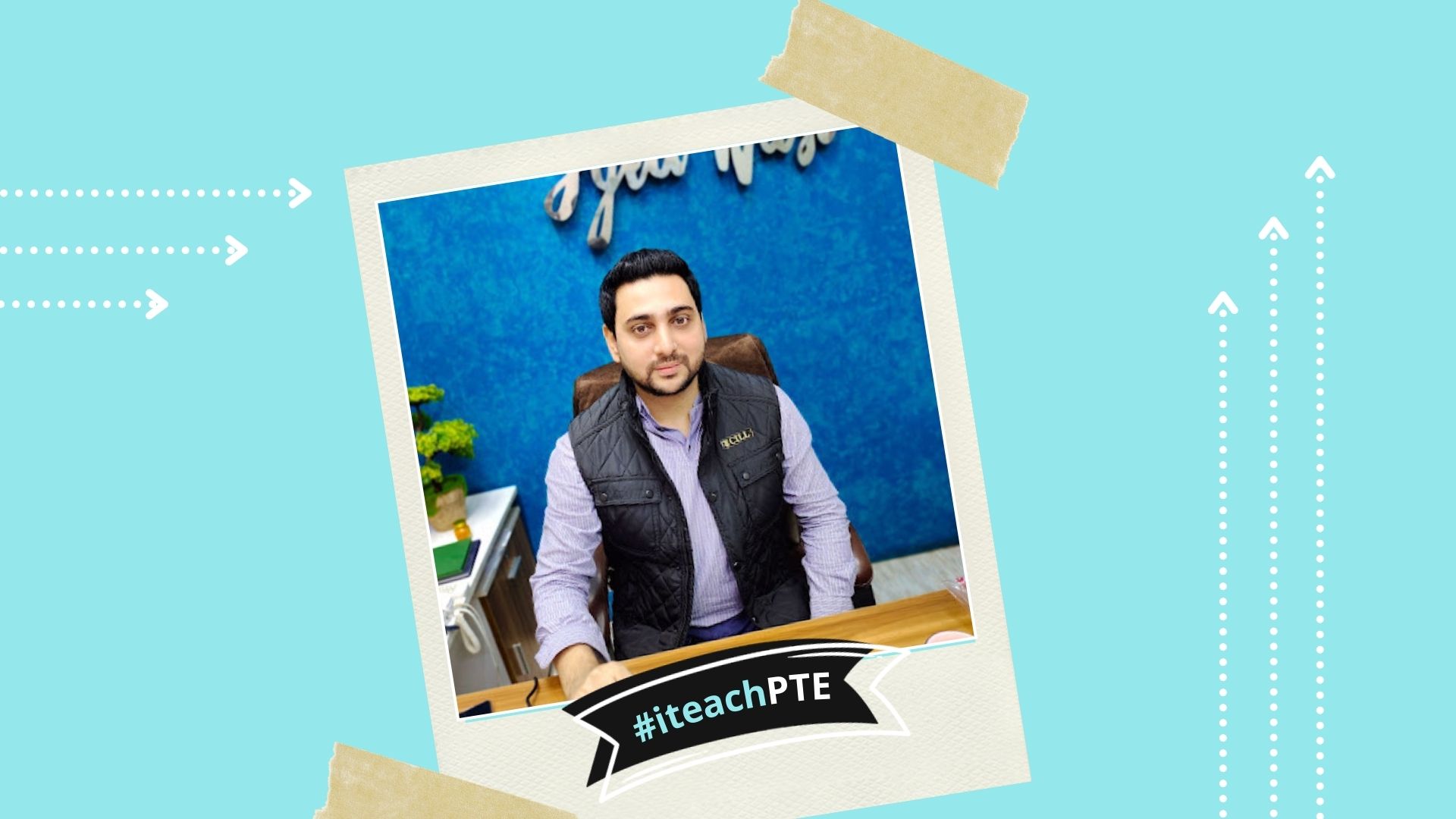

Teacher profile: Building a learning community in Dhaka

PTE Author
PTE Author
Image - iteachPTE Syed Wasi
Reading time: 5 minutes

Syed Wasi is a pioneer in many ways. He was the first PTE trainer in Bangladesh, and the first Bangladeshi to score 90 in PTE – no mean feat in a country of 166 million people! Syed is the founder of the Center for Innovative Language Learning (CILL) where students come for his help in preparing for PTE. The center is renowned for its high student success rate.  

So, how does Syed help his students to get the scores they need in PTE? Let’s find out.  

How Syed teaches PTE  

When a student arrives at CILL, their first step towards PTE success starts with a language assessment. “If we find that their language skills aren’t particularly strong,” says Syed, “the first thing we do is create a course which includes general language classes. We go step by step through the levels, helping them to improve their language skills – and once they are ready for PTE, they join a PTE preparation class.”  

Once Syed’s students are part of a preparation class, they follow a carefully designed curriculum. Each language skill tested in PTE (speaking, writing, reading and listening) is covered in a module of three classes. The first class introduces the type of exam questions that students can expect. The second class gives students the practical tools and techniques that they’ll need to answer the exam questions, and the third class is a practice session. But the secret to Syed’s success? He doesn’t let the students sit PTE before they’re ready:  

"The final step in PTE preparation is the mock test. We don’t let them take the test until they’re ready for the test, which is why we have a very high success rate.”  

Flexibility is also important. The PTE preparation courses at CILL are blended courses; some students attend the center in person, and others join online. When the pandemic began, there was a massive shift to teaching online, and many schools had to adapt quickly. But Syed’s language school was ahead of the curve when it came to blended learning. “I did my masters in online teaching back in 2012,” says Syed. “We’ve been teaching with a blended learning model since 2016, so it was easy for us to adapt. Now, students are returning to the classroom, but we still offer the blended learning option.”  

Building a community of learners  

An important part of the school culture at CILL is the accessibility of the teachers. Learning isn’t confined to the classroom – the teachers are available to answer questions outside of class times. “We create WhatsApp groups for different classes, and it’s like a virtual hub,” Syed explains. What’s more, the teachers follow up with students after class. This dedicated service has helped Syed to build a loyal community of learners around the world. “Many of our students have moved to Australia, to the UK, or to other countries,” he says. “And wherever they go, if they meet anyone interested in PTE preparation, they refer them to our school. They’ll say, there’s a person in Bangladesh who can give you the support you’ll need to pass the test.”  

Syed’s advice for PTE teachers 

“If you’re new to PTE teaching, the most important thing is to make sure you have the expertise you need to prepare students for the test,” Syed says. After all, there’s a lot on the line when it comes to PTE. Students often need a certain score for a university application or a visa. So if you don’t prepare students thoroughly, it could have an impact not only on their score but on their careers. Syed recommends taking the test yourself in order to gain real insight into PTE.  

And for more experienced teachers, Syed believes that honesty is the best policy when it comes to test preparation. “Tell your students exactly what they’ll need to do in order to get the score they need. Be honest with them, and that way they know what they have to do.”  

PTE is a high stakes test. When you’re helping students to prepare for the exam, you’re helping them to change their lives, to do something new. “It’s not just a business,” says Syed. “We are helping students to reach their goals. It’s my passion, and my vocation.”  

Learn more

Each month, we feature the profile of a teacher from our PTE community. If you have advice and insights to share with other PTE preparation teachers, we’d like to hear from you! Fill out this form and we’ll be in touch shortly.  

In previous months, we featured Jurine Ruperto, who teaches in Cebu in the Philippines, and Ramesh Thapa, a PTE teacher in Kathmandu. You can read all about them on our blog, where you’ll also find lots of resources for PTE preparation classes. And don’t forget to sign up to our monthly newsletter.

Related Content

  • Image- A guy with headphones and laptop
    Listening: Self-Improvement Part 1
    By PTE Author
    Reading time: 3 minutes

    After working through the strategies to improve your English listening skills, you can work on specific areas of the test. In this part, you will need to apply a number of listening and writing skills.

    Below are improvement tips on the question types that combine writing and listening skills.

    Summarize Spoken Text

    In the Summarize Spoken Text questions you will be scored on content, form, grammar, vocabulary, and spelling.

    Content and Form

    Make sure you write a good, clear summary of all the key points in the text and also condense the most important supporting points.

    In this question, you will not be given the context of the recording before it starts. Make sure to listen carefully from the start to help understand the context and the information given.

    Some helpful tips for the content and form, to maximize your score are:

    • Take notes on your Erasable Noteboard Booklet or in the response box on the screen

    • Do not try to write down sentences (you will not have enough time)

    • Use symbols and abbreviations in your notes

    • Write down key points and their relationships with others

    • Start with an overview sentence to introduce your summary

    • Use cohesive devices to link the information as you write

    • Try to write between 50 and 70 words

    Overall, make sure you summarize the text in your own words as this will show that you have understood the purpose of the text. If you do not write in your own words, you will score zero for content.

    If you write less than 40 or more than 100 words, you will score zero.

    Grammar

    It is important that grammar is correct as you will be tested on sentence structure, punctuation and capitalization.

    Try not to be too ambitious with your grammar to avoid making mistakes. Try to use grammatical structures you feel comfortable with.

    In this question type you should:

    • Communicate meaning clearly and concisely

    • Use complex sentences where possible to score more points

    • Write sentences between 18 and 30 words – long sentences are hard to control grammar

    • Check your response for common errors before submitting

    Vocabulary and Spelling

    You will score points if you use the correct and appropriate vocabulary in the Summarize Spoken Text question type. Use words from the recording if you use them appropriately, however, try to use synonyms to replace words already used.

    You will also need to make sure to spell every word correctly to receive maximum points. Try to type as carefully as possible during this question. If you can not remember how to spell a word, guess as it is better to include the word than leave it out, even if it is incorrect.

    Don’t forget to use the space bar to show the end of each word.

    Write from Dictation

    Another question that tests both listening and writing is the Write from Dictation question type.

    In this question type, you will need to write the words in the correct order with the correct spelling in order to score points.

    Before the recording starts, place your cursor in the response box and get ready to type as soon as you hear the recording. Make sure to reproduce what you hear exactly as you heard it as the recording will only be played once.

    Remember to start the sentence with a capital letter and end it with a full stop (period).

    Type as you hear it and when finished, check for any mistakes. Always make sure that to read over your answer before clicking next.

    Continue improving your listening skills by reading our Listening: Self-Improvement Part 2 article.

  • Image- A guy with headphone 1080px
    Listening: Core English Skills Part 1
    By PTE Author
    Reading time: 3 minutes

    The last part of PTE Academic, Part 3: Listening, requires a large combination of core skills.

    The very first skill you will need to develop involves how you listen (listening methods).

    Below, is information on different types of listening and where you may need to use them during PTE Academic.

    Listening Methods

    Predicting

    One of the listening methods you will need to develop is predicting. Before listening, most people will have some idea about what they are going to listen to and prepare themselves for it. They predict.

    It helps to think about the recordings before you hear it spoken, it helps you listen more effectively.

    This listening method will help during Select Missing Word questions as the topic of the text you listen to is given in the instructions. It will also help in the Re-tell Lecture questions as the image will give you an idea of the general context of the listening text.

    Listening for Gist

    Listening for ‘gist’ will allow you to understand the general meaning of a text quickly. When someone is talking, listen in a general way and think about what the speaker is trying to communicate and how they might feel about the topic based on their tone of voice.

    When practicing, try to listen for the gist before listening for a second time more intensively for specific information.

    This reading method will help in the Multiple-choice, Choose Multiple Answer and Multiple-choice, Choose Single Answer questions. Remember in PTE Academic you can not replay the listening track.

    Listen for Specific Information

    You will also need to be able to listen effectively to find specific information. This is more detailed listening and is often used when you need to answer comprehension questions. You first need to understand what information you are looking for in the text.

    When practicing, if you listen to a text that does not have questions write some yourself. Questions that may help could be:

    • What happened?

    • When did it happen?

    • Where did it happen?

    • Why did it happen? Or, why did it happen in this way, and not another way?

    While listening for specific information, you should listen for synonyms and paraphrasing to match the meaning of the text with the meaning of the questions.  This is because you will not hear the exact words in the question.

    Listening to Infer Meaning

    At times you can understand what the speakers are saying by inferring meaning, as the information is not always stated by the speakers.

    To infer meaning, you need to listen for clues in the text or use general knowledge to guess the meaning of what the speakers are saying. Do this by working out the relationship between the speakers, the tone of voice or the words they use.

    You may need to use this listening method in the Multiple-choice, Choose Multiple Answer and Multiple-choice, Choose Single Answer questions.

    In addition to listening methods, you will also need to understand how words are pronounced on their own and together in a sentence. Read more about pronunciation in Part 2 of Core English Skills.

    Want more prep ideas?

    Explore Smart Prep, which combines all our practice materials in one place, so it's easier for you to stay on track with your PTE preparation.

    • Smart Prep is a clear path to test day, guiding you through the official paid and free resources available for your test

    • It can be accessed whether you’ve booked a test or not – just create, or sign in to your myPTE account

    • Preparation materials include guided practice tests, introductory videos, video courses and test tips.

    Ready to get started?

  • Image- Reading
    Reading: Core English skills part 2
    By PTE Author
    Reading time: 3 minutes

    Once you have practiced and improved your grammar and vocabulary, for Part 2: Reading in PTE Academic, you will need to learn reading methods and the different styles of writing.

    As the PTE Academic is an integrated skills test, the skills developed will be applicable to most sections of the test.

    Firstly, the reading methods you will need to learn and develop are:

    Skim Reading

    By quickly moving your eyes over the text you will be able to get the general meaning of the text. This is the fastest way to understand the text’s meaning.

    Scan Reading

    The fastest way to locate specific information in a text is to scan read. Scan reading helps you find the keywords in a text. Once you find the section of text needed, slow down and read intensively until you understand the information needed to answer the question.

    Intensive Reading

    Intensive reading is done at a slower pace and more carefully. After using scan reading to find the section of text containing the answer you need, you will then need to read intensively to locate the specific information required to answer the question.

    If you are unable to answer the question from the section read, go back to scan reading the whole text to find the correct section, then intensively read that section.

    Critical Reading

    To read critically, you need to think more deeply about what you are reading to understand the text at a deeper level. You will then be able to identify the writer’s purpose, as well as the organization of the text in order to make inferences or understand the textual value.

    You may have to read critically to answer the reading questions Multiple-Choice, Choose Single Answer and Multiple-Choice, Choose Multiple Answers. You may also need this skill to answer the writing question Summarize Written Text, as you will score zero points if you don’t correctly identify the purpose of the text.

    The last question type this skill is used for is the listening question Highlight Correct Summary, as you may need to clarify and organize information to identify the correct summary of the text heard.

    You will also need to be able to identify the style of writing used in the reading texts throughout the test.

    Style of Writing

    For PTE Academic, you will need to understand the style or register of English texts. The style or register refers to the way in which text, that has the same meaning, can be written in different ways.

    When writing, you will need to be able to choose the appropriate words to fit the correct style of the text, as well as understand the style of texts you are reading. For example, an email to your friend will be in an informal style. However, a journal article will be in the academic style. Abstract ideas are also usually written in the academic style.

    Two or three-part verbs (phrasal and prepositional verbs) are generally informal while Latinate verbs are formal, or academic. For example, find out (informal), pick up on (informal) and discover (formal or academic).

    You will need to be able to understand not just the meaning but also the style of a text for the Reading & Writing: Fill in the Blanks questions.