Teacher profile: Building a learning community in Dhaka

PTE Author
PTE Author
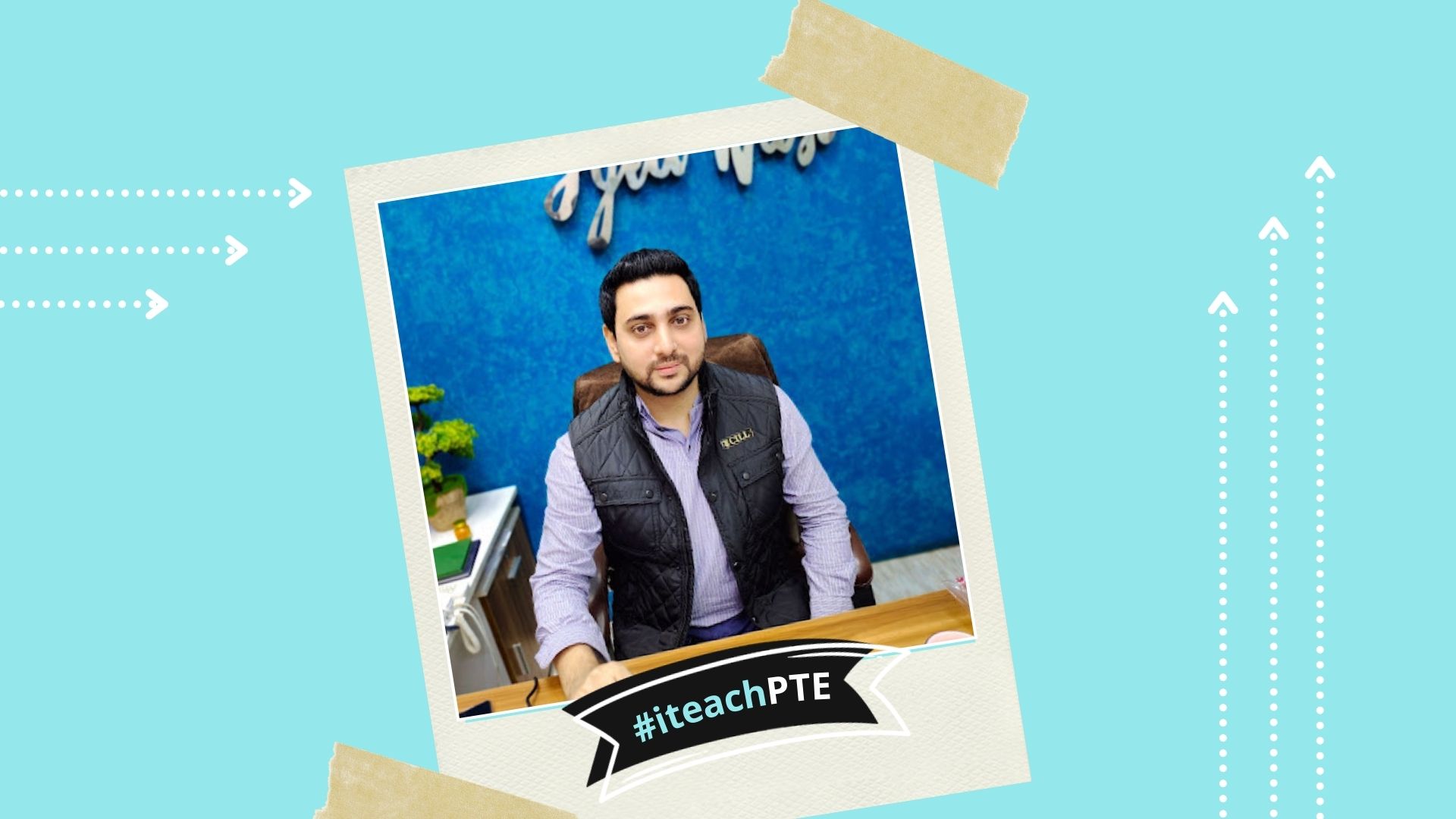
Image - iteachPTE Syed Wasi
Reading time: 5 minutes

Syed Wasi is a pioneer in many ways. He was the first PTE trainer in Bangladesh, and the first Bangladeshi to score 90 in PTE – no mean feat in a country of 166 million people! Syed is the founder of the Center for Innovative Language Learning (CILL) where students come for his help in preparing for PTE. The center is renowned for its high student success rate.  

So, how does Syed help his students to get the scores they need in PTE? Let’s find out.  

How Syed teaches PTE  

When a student arrives at CILL, their first step towards PTE success starts with a language assessment. “If we find that their language skills aren’t particularly strong,” says Syed, “the first thing we do is create a course which includes general language classes. We go step by step through the levels, helping them to improve their language skills – and once they are ready for PTE, they join a PTE preparation class.”  

Once Syed’s students are part of a preparation class, they follow a carefully designed curriculum. Each language skill tested in PTE (speaking, writing, reading and listening) is covered in a module of three classes. The first class introduces the type of exam questions that students can expect. The second class gives students the practical tools and techniques that they’ll need to answer the exam questions, and the third class is a practice session. But the secret to Syed’s success? He doesn’t let the students sit PTE before they’re ready:  

"The final step in PTE preparation is the mock test. We don’t let them take the test until they’re ready for the test, which is why we have a very high success rate.”  

Flexibility is also important. The PTE preparation courses at CILL are blended courses; some students attend the center in person, and others join online. When the pandemic began, there was a massive shift to teaching online, and many schools had to adapt quickly. But Syed’s language school was ahead of the curve when it came to blended learning. “I did my masters in online teaching back in 2012,” says Syed. “We’ve been teaching with a blended learning model since 2016, so it was easy for us to adapt. Now, students are returning to the classroom, but we still offer the blended learning option.”  

Building a community of learners  

An important part of the school culture at CILL is the accessibility of the teachers. Learning isn’t confined to the classroom – the teachers are available to answer questions outside of class times. “We create WhatsApp groups for different classes, and it’s like a virtual hub,” Syed explains. What’s more, the teachers follow up with students after class. This dedicated service has helped Syed to build a loyal community of learners around the world. “Many of our students have moved to Australia, to the UK, or to other countries,” he says. “And wherever they go, if they meet anyone interested in PTE preparation, they refer them to our school. They’ll say, there’s a person in Bangladesh who can give you the support you’ll need to pass the test.”  

Syed’s advice for PTE teachers 

“If you’re new to PTE teaching, the most important thing is to make sure you have the expertise you need to prepare students for the test,” Syed says. After all, there’s a lot on the line when it comes to PTE. Students often need a certain score for a university application or a visa. So if you don’t prepare students thoroughly, it could have an impact not only on their score but on their careers. Syed recommends taking the test yourself in order to gain real insight into PTE.  

And for more experienced teachers, Syed believes that honesty is the best policy when it comes to test preparation. “Tell your students exactly what they’ll need to do in order to get the score they need. Be honest with them, and that way they know what they have to do.”  

PTE is a high stakes test. When you’re helping students to prepare for the exam, you’re helping them to change their lives, to do something new. “It’s not just a business,” says Syed. “We are helping students to reach their goals. It’s my passion, and my vocation.”  

Learn more

Each month, we feature the profile of a teacher from our PTE community. If you have advice and insights to share with other PTE preparation teachers, we’d like to hear from you! Fill out this form and we’ll be in touch shortly.  

In previous months, we featured Jurine Ruperto, who teaches in Cebu in the Philippines, and Ramesh Thapa, a PTE teacher in Kathmandu. You can read all about them on our blog, where you’ll also find lots of resources for PTE preparation classes. And don’t forget to sign up to our monthly newsletter.

Related Content

  • Image- calculator-800px x451px
    Living expenses in the UK for international students
    By PTE Author
    Reading time: 3 minutes

    Studying abroad in the UK can be expensive. International students need to budget for flights, tuition, textbooks, accommodation, and don’t forget the visa application.

    Of course, living costs in the UK for international students can vary depending on your lifestyle and where you live. So, in this blog, we’ll look at how much students in the UK spend on average each month – and explore how much it cost to live in a large city, compared to a smaller city.  

    Average student living expenses in the UK

  • Image- UK, 1080px
    Applying for the EU Settlement Scheme: what you need to know to get British citizenship
    By PTE Author
    Reading time: 6 minutes

    At the beginning of this year, new Brexit-related rules went into effect in the UK and the EU.  They’ll have a big impact on immigration and travel – including on how people will be able to move to the UK to live, work and study. 

    If you’re an EU citizen—and started living in the UK before 2021—immigration rules won’t change for you until June. But after that, you might have to apply for the EU Settlement Scheme to stay in the country. 

    More than 4.3 million people have been approved for the scheme already. And, they’re on the path to receiving a British passport. With the EU Settlement Scheme, EU citizens can apply for British citizenship after 12 months. 

    In this blog, we’ll explore more about the scheme and how to apply for citizenship. We will also look at the English language requirements you’ll need to keep in mind as an EU citizen. 

    Keep in mind: We aren’t immigration agents. For the latest information and official updates, please visit the GOV UK website. 

    First, what is the EU Settlement Scheme?

    The EU Settlement Scheme is a program set up by the UK government. It allows EU, Swiss, and EEA citizens to keep living in the UK after June 2021. It’s free to apply, and once you do, you’ll be granted either: 

    • Settled status – You’ll get this if you’ve lived in the UK continuously for five years. You will be able to stay in the UK indefinitely provided you don’t leave the UK for 5 years consecutively.

    • Pre-settled status – You’ll get this if you’ve lived in the UK for less than five years. With pre-settled status, you’ll only be able to stay in the UK for another five years but can always apply for settled status later if you want to settle permanently. 

    With settled status, as we mentioned, you’ll also have the opportunity to apply for British citizenship. Although, many people have decided to apply for citizenship right away instead of going through the scheme – for example, if they have a British parent or spouse. 

    With citizenship, you’ll have the right to live permanently in the UK with a British passport, which means you’ll no longer be subject to immigration controls. You’ll also be able to work and study in the UK, sponsor your family members to migrate, access NHS healthcare, access public benefits and pensions  – and of course, vote in elections. 

    The Mayor of London’s website has a comprehensive FAQ on the EU Settlement Scheme. You can also find out more information on the official GOV UK page.

    How to apply for British citizenship 

    If you’re interested in applying for British citizenship, there are a few ways to do so. For example, you could be eligible if you: 

    • have a British civil partner or spouse;

    • were born in the UK;

    • have a British parent;

    • have settled status under the EU Settlement Scheme. 

    The requirements for citizenship are often different, depending on why you’re applying and how you’re eligible. But if you’re applying under the EU Settlement Scheme, in most circumstances you’ll have to show you: 

    • have been living in the UK for more than five years and will continue to do so;

    • are of good character;

    • have passed the Life in the UK Test, which consists of 24 questions on British traditions;

    • are knowledgeable in English, Welsh, or Gaelic. You will also need to take an approved English test for UK citizenship.

    Learn more about how to apply for British citizenship with the scheme here. 

  • Image- Singapore, 800px x 451px
    How to study in Singapore
    By PTE Author
    Reading time: 5 minutes

    Asian students have long been drawn to Western universities. In fact, in 2018 and 2019, China sent more students to study in the UK than any other country. But now as Asian countries seek to attract more international students themselves, many learners are choosing to study closer to home instead.  

    After all, studying within the region offers plenty of benefits. Not only do Asian universities provide a world-class education at a more affordable price. But they are also “among the world’s best at enhancing their alumni’s job market prospects,” states the QS Graduate Employability Rankings. This is a big draw, considering a recent report found that 81% of respondents from eight Asian countries wanted to study at a foreign university to improve employment. 

    So, what are some of the top study abroad locations for Asian students? And what do learners need to keep in mind when choosing a destination? In this guide, we’ll focus on Singapore: 

    Singapore at a glance 

    Singapore is modern, sustainable, and multicultural. This makes it an attractive place to study for students from around the region. Malay, Mandarin, Tamil, and English are all recognized as official languages, although English is most commonly spoken. In fact, almost 40% of the population in Singapore speaks English at home.  

    Singapore invests heavily in human capital. For example, it spends more than 20% of its budget on education each year. It comes as no surprise, then, that Singapore’s education system is listed as one of the best in the world by OECD’s Programme for International Student Assessment (PISA). 

    Universities in Singapore 

    There are dozens of universities and colleges in Singapore. The two most popular universities are the National University of Singapore (NUS) and Nanyang Technological University (NTU). Both universities are ranked among the top 20 in the world. According to QS World University Rankings 2021, NUS holds the spot for 11. NTU is ranked number 13. About a quarter of learners at both universities are international students.  

    Even more, according to QS, NUS ranks number 24 for graduate employability.  

    To study at a Singaporean institution, you must apply directly through the admissions office. This is usually done at the beginning of the year. 

    If you’re a second language speaker or haven’t studied full-time at an English institution, you will also need to prove your English proficiency. PTE Academic is a computer-based language test that provides unbiased and secure results and can help you qualify for studying and migrating abroad.  

    Students wanting to attend a college in Singapore – including the Singapore Institute of Management Global Education (SIM GE), the East Asia Institute of Management, and LASALLE College of the Arts – will need a PTE Academic score of 42. In general, universities look for a minimum PTE Academic score between 55 and 62. Here’s a more detailed breakdown of what some popular universities require: 

    • National University of Singapore–62 

    • Nanyang Technological University– 55 

    • Singapore University of Technology and Design (SUTD) – 62 

    However, students are strongly advised to always check with their own university or college to see exactly what PTE Academic score is needed.  

    Getting your visa 

    If you want to study in Singapore, you will need to have a Student Pass. To apply, you must already be accepted as a full-time student at an academic institution. With a Student Pass, you’ll be able to work up to 16 hours a week during the school term. However, you can only do this if you go to an approved institution.  

    Find out exactly how to apply for a Student Pass here.  

    Cost of living 

    Singapore is considered one of the best student cities in the world; it has great weather, a vibrant mix of cultures, and an excellent food scene. However, compared to other Asian countries, it is on the expensive side. International student tuition fees sit at about $18,700 USD a year. To get an idea about how much it costs to live in Singapore, check out the government’s cost of living calculator.  

    Financial aid 

    It’s important to keep in mind that Singapore does offer financial aid for citizens, permanent residents, and international students. The Ministry of Education provides these grants under The Tuition Grant Scheme.  

    The amount of money offered depends on the area of study and the status of each student in Singapore. This table is a good resource, showing what was available to students studying at NTU in 2020. You can see that for international students, the grants start at about $7,700 USD.   

    To accept a Tuition Grant, students who aren’t citizens must sign a Tuition Grant Agreement. This states that they will work in Singapore for a minimum of three years after graduation.  

    For more grant information, visit the Ministry of Education website.  

    Want to study in Singapore?

    With PTE Academic you can achieve your dreams.  

    Our unbiased English tests are trusted as proof of English proficiency by universities in Singapore –  and results are typically ready within 2 days. 

    Find out where you can take PTE Academic now.