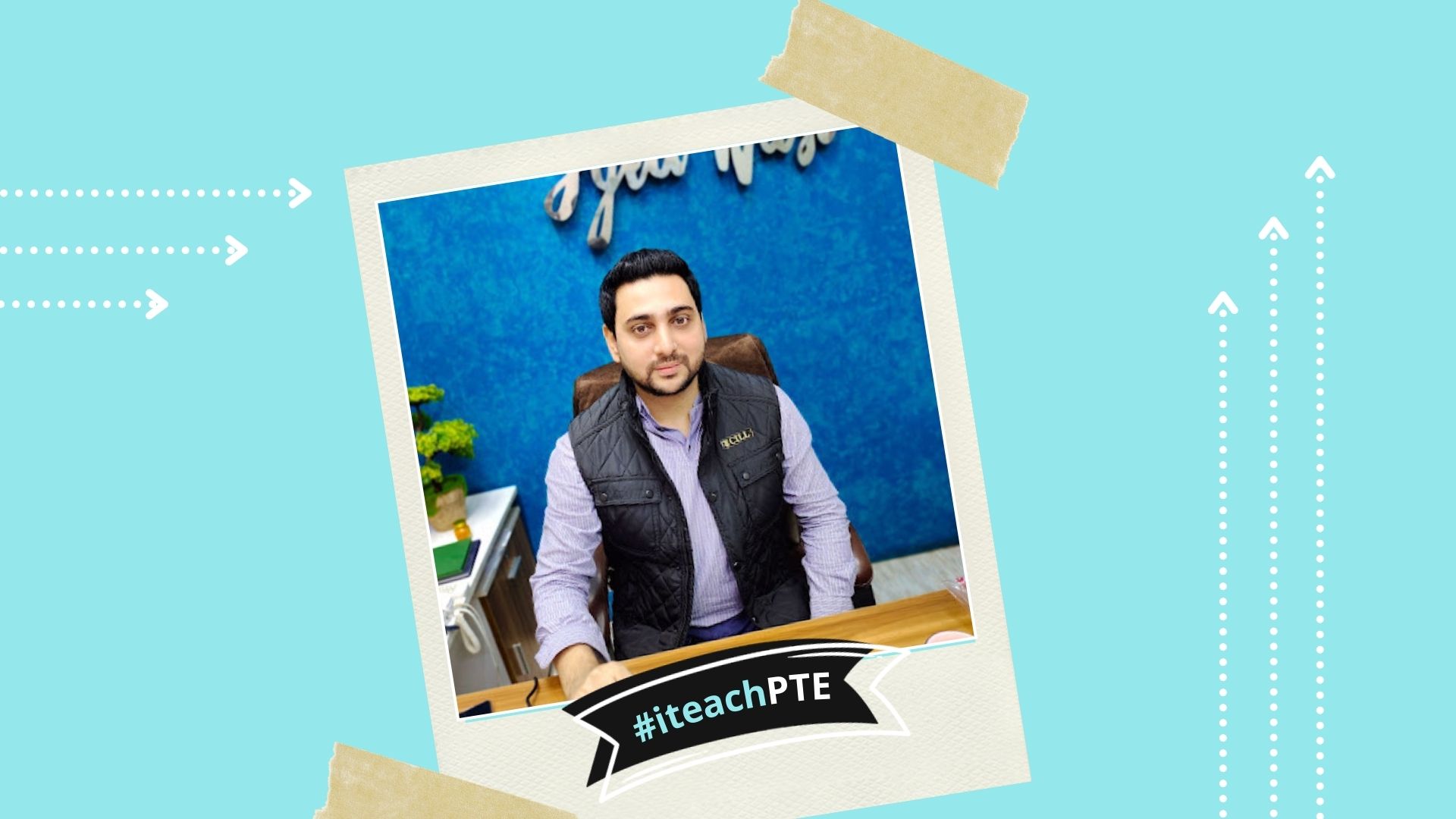

Teacher profile: Building a learning community in Dhaka

PTE Author
PTE Author
Image - iteachPTE Syed Wasi
Reading time: 5 minutes

Syed Wasi is a pioneer in many ways. He was the first PTE trainer in Bangladesh, and the first Bangladeshi to score 90 in PTE – no mean feat in a country of 166 million people! Syed is the founder of the Center for Innovative Language Learning (CILL) where students come for his help in preparing for PTE. The center is renowned for its high student success rate.  

So, how does Syed help his students to get the scores they need in PTE? Let’s find out.  

How Syed teaches PTE  

When a student arrives at CILL, their first step towards PTE success starts with a language assessment. “If we find that their language skills aren’t particularly strong,” says Syed, “the first thing we do is create a course which includes general language classes. We go step by step through the levels, helping them to improve their language skills – and once they are ready for PTE, they join a PTE preparation class.”  

Once Syed’s students are part of a preparation class, they follow a carefully designed curriculum. Each language skill tested in PTE (speaking, writing, reading and listening) is covered in a module of three classes. The first class introduces the type of exam questions that students can expect. The second class gives students the practical tools and techniques that they’ll need to answer the exam questions, and the third class is a practice session. But the secret to Syed’s success? He doesn’t let the students sit PTE before they’re ready:  

"The final step in PTE preparation is the mock test. We don’t let them take the test until they’re ready for the test, which is why we have a very high success rate.”  

Flexibility is also important. The PTE preparation courses at CILL are blended courses; some students attend the center in person, and others join online. When the pandemic began, there was a massive shift to teaching online, and many schools had to adapt quickly. But Syed’s language school was ahead of the curve when it came to blended learning. “I did my masters in online teaching back in 2012,” says Syed. “We’ve been teaching with a blended learning model since 2016, so it was easy for us to adapt. Now, students are returning to the classroom, but we still offer the blended learning option.”  

Building a community of learners  

An important part of the school culture at CILL is the accessibility of the teachers. Learning isn’t confined to the classroom – the teachers are available to answer questions outside of class times. “We create WhatsApp groups for different classes, and it’s like a virtual hub,” Syed explains. What’s more, the teachers follow up with students after class. This dedicated service has helped Syed to build a loyal community of learners around the world. “Many of our students have moved to Australia, to the UK, or to other countries,” he says. “And wherever they go, if they meet anyone interested in PTE preparation, they refer them to our school. They’ll say, there’s a person in Bangladesh who can give you the support you’ll need to pass the test.”  

Syed’s advice for PTE teachers 

“If you’re new to PTE teaching, the most important thing is to make sure you have the expertise you need to prepare students for the test,” Syed says. After all, there’s a lot on the line when it comes to PTE. Students often need a certain score for a university application or a visa. So if you don’t prepare students thoroughly, it could have an impact not only on their score but on their careers. Syed recommends taking the test yourself in order to gain real insight into PTE.  

And for more experienced teachers, Syed believes that honesty is the best policy when it comes to test preparation. “Tell your students exactly what they’ll need to do in order to get the score they need. Be honest with them, and that way they know what they have to do.”  

PTE is a high stakes test. When you’re helping students to prepare for the exam, you’re helping them to change their lives, to do something new. “It’s not just a business,” says Syed. “We are helping students to reach their goals. It’s my passion, and my vocation.”  

Learn more

Each month, we feature the profile of a teacher from our PTE community. If you have advice and insights to share with other PTE preparation teachers, we’d like to hear from you! Fill out this form and we’ll be in touch shortly.  

In previous months, we featured Jurine Ruperto, who teaches in Cebu in the Philippines, and Ramesh Thapa, a PTE teacher in Kathmandu. You can read all about them on our blog, where you’ll also find lots of resources for PTE preparation classes. And don’t forget to sign up to our monthly newsletter.

Related Content

  • image- new world 1080px
    8 things to consider before moving abroad
    By PTE Author
    Reading time: 6 minutes

    There’s a lot to think about when moving overseas. Will you need health insurance? What identity documents will you need to apply for? And of course, where will you live and work?

    We’ve been there, and we get it! That’s why we’ve put together this list of 8 things to consider before moving abroad. Let’s take a look:  

    1. Understand visa requirements

    If you plan to move abroad for more than six months, you might need a visa to live, work or study. So before making any travel plans, you should visit your destination country’s immigration website to ensure you’re eligible for a visa – and understand all the requirements. Many governments, for example, require applicants to take an approved English language proficiency test like PTE Academic to study or work in the country.

    If you’re looking for visa support, you may also decide to hire a registered migration agent. These are immigration professionals and can complete your visa application for you, help prepare documents, and provide advice throughout the application process.

    You can more about specific visa requirements on these government websites:

    You might be interested in reading our article: Should you hire a migration agent to move to Australia?  

    2. Find out if you’re eligible to work 

    Just because you’ve been granted a visa to live in a country, doesn’t mean you have the right to work full-time.

    Many student visas put a cap on how many hours people can work. For example, in Australia students are allowed to work up to 40 hours every two weeks during the school term. In the UK, students are able to work 20 hours per week during the semester. And in Malaysia, students can also work up to 20 hours a week, but only during school breaks longer than eight days.

    If you’re not on a student visa, it is likely you’ll have permission to work full-time. However, many countries require you to apply for a social insurance number – or something similar – before you can.

    In Canada, for example, permanent and temporary residents need to apply for a social insurance number after they land in the country, and it can take about 20 days to arrive.

    3. Create a budget

    Before moving to a new country, you should have some savings. In some cases, depending on your visa type and the country you’re moving to, you might be required to show proof of savings with your visa application.

    Day-to-day living costs may also be more expensive abroad, and it could take you longer than anticipated to find a job – so it’s important to have money put away to help you settle in.

    If you’re a student planning to move to Canada or the UK, we’ve put together some detailed guides that outline the living costs in each country: 

    Many governments offer cost of living calculators online, which can be a great resource for new immigrants. Take a look at New Zealand’s cost of living tool, for example.

    When you arrive, you’ll also need to open a bank account. This can often be done online. Some banks even have accounts specifically designed for newcomers and offer credit cards to help build credit history. 

    4. Search for housing 

    Looking for accommodation can be one of the most exciting parts of moving abroad. Once you find a place to call home, you’re able to really imagine what your new life will be like – you get to explore Google Maps from afar, check out neighborhood restaurants online, and plan where you might socialize with friends.

    If you’re moving with a work visa, your new workplace might be able to help you find temporary accommodation. Likewise, if you’re moving abroad to study, your institution should offer housing options for international students – such as on-campus apartments or other homestay partnerships. It’s also a great idea to join local housing Facebook groups, where people post their apartments or houses for temporary or long-term rentals.

    You might be interested in: How to choose international student accommodation in the UK.

    5. Discover transportation options

    Once you know where you’ll live, you can figure out how you’ll get around. Is your apartment close to public transportation? Or have you opted to live outside a city center, and will need to get around by car?

    You could be able to drive with an international driver’s license right after landing abroad. But after a few months, lots of countries will require you to apply for a local driver’s license instead. If you’re moving to a country where it snows, it might also be a good idea to invest in driving lessons to learn how to drive safely on icy roads.

    6. Apply for healthcare or insurance

    You might not be automatically eligible for health coverage in your destination country, even if it offers universal healthcare to citizens.

    In Canada, for example, each province administers its own publicly-funded healthcare. That means, if you’re a student, your eligibility for healthcare will depend on where you study. If you’re not eligible, your university should offer you insurance.

    On the other hand, if you’re on a work visa or permanent resident visa, you may be able to apply for publicly-funded healthcare. But, there might be a waiting period before you’re able to have access – so it’s important to buy insurance to make sure you’re covered beforehand.

    Always check with the local government in your destination country to see what your rights are regarding healthcare. It’s also important to research the mental health services that may be available once you arrive. If you’re a student, your university may offer counseling services on campus.  

    7. Keep up to date with travel regulations

    Travel regulations change quickly, so it’s essential to keep up to date on what you’ll need to do before – and after – arriving at your destination country.

    Always consult the health authorities in the country you’re traveling to ensure you follow public health guidelines – and you’ll be allowed to enter the country. 

    8. Don’t forget about the little things 

    When moving abroad, we tend to focus on the big things – like housing, work, and healthcare. But there are lots of little things to think about, too! Remember to:

    • Close your utility accounts – like internet and hydro – before leaving home (and do it before the cut-off date, so you don’t get charged extra)

    • Unlock your mobile phone so you’ll be able to use a local SIM card, and get a power plug adapter for your charger if you need one.

    • Bring a few things that remind you of home and that you won’t be able to buy abroad. Something as simple as packing your favorite face wash or snack food can make a big difference when just starting to settle in.

    Overall, getting a head-start on your travel preparations will help you to reduce stress and hit the ground running when you arrive.


  • Image, teaching, 800px
    How are PTE and IELTS different? Here’s what you need to know
    By PTE Author

    Read Time: 6 minutes

    PTE Academic is a real-world English test. This means it uses authentic source materials and a range of accents to assess natural real-world English proficiency. The test format is clearly structured, but students still need to understand the tasks in each section and know what they have to do to succeed on test day. 

    The good news is that if you’re already used to preparing candidates for IELTS Academic, you’ll easily be able to adapt to help prepare them for their PTE Academic test. 

    Let’s have a look at the similarities and differences between both tests and explore how you can adapt your test preparation classes for success in PTE Academic. 

    The structure of the tests

    The structure of PTE Academic and IELTS Academic is broadly similar. Both tests assess students on all four language skills: speaking, writing, reading and listening. The biggest difference in structure is that for PTE Academic there is just one two-hour computed-based test for all four skills. Whereas with IELTS Academic you need to book a separate face-to-face speaking test. More on that below. The order that skills are tested in, and the way the tasks are timed and organized, is also different:

  • image- #iteachPTE- Ramesh Thapa, 1920px x 1080px
    Teacher Profile: Preparing for PTE in Kathmandu
    By PTE Author
    Reading time: 4 minutes

    Ramesh Thapa works in a language school in Kathmandu, Nepal. As an English language teacher, he does more than teach grammar and vocabulary – he helps people change their lives.

    Four years ago, Ramesh began teaching preparation classes for students who want to take PTE Academic. It’s no small challenge: His students need a good PTE score so they can study and live abroad – or to get the English-speaking jobs they want at home.

    People come to Ramesh because they know they can rely on him to help them prepare for the test. They have big dreams – so the stakes are high.

    We spoke to Ramesh to find out more about his experience of preparing students for PTE. He told us all about the challenges, the successes, and shared advice with the teaching community around the world.  

    How Ramesh teaches PTE preparation   

    With a maximum of ten people per class, students in Ramesh’s classes get a lot of personal attention and support. He explains that he uses a computer with a projector in the main classroom to share examples of PTE activities. Students get to try each task type themselves –  and Ramesh shares with them tips and strategies for maximizing their score.

    For Ramesh, the students are the most important part of the equation. As such, peer-to-peer learning and home study are key parts of his preparation course.“I’ll have my students take turns reading aloud and commenting on one another’s speaking,” he explains. “At the end of the class, I’ll give them an assignment so they can keep practicing at home.”

    Ramesh is no stranger to technology either. When it comes to PTE, he knows how important it is for students to feel comfortable with the technology. “It is a computer-based exam, so all teachers should make sure that their students are practicing on a computer,” he says. “We have a separate computer lab where students can get unlimited lab access – and this is a big part of helping students get their desired scores.” 

    In this way, not only do students get a better feel for the exam, but they also get to practice their typing skills. 

    Helping students to overcome their challenges 

    Ramesh finds that his students struggle with the Repeat sentence task in the Speaking part of the exam. “They have trouble with the accent when listening and pronouncing the words,” he says.

    For the same reason, his students often find the Listening part of PTE the most challenging. “Most of my students find difficulty in listening because our accents differ from the American and British accents,” Ramesh explains.

    And of course, as any language teacher knows, practice makes perfect. “The main solution is practice,” he says, “so I ask them to listen to more audio recordings which will ultimately help them be successful.”  

    Advice for other teachers 

    “Personally,” Ramesh says, “I think students should get all of the required details, materials, tips, and tricks from their PTE tutors.” So, a robust understanding of the exam is crucial for teachers. “It’s helpful to access the free training that is available from Pearson,” Ramesh advises. And, for the best chance of success, students need to do a practice test. “After they have completed a course, students should be provided with several mock tests,” he says.

    This builds students’ confidence and helps to reduce test-day nerves.

    What about his other students? 

    Many of Ramesh’s former students have gone on to achieve their goals and are now studying thousands of miles away, in Australia and Canada. It’s been hard work for them, but with thorough preparation with the help of an inspiring teacher, it’s been a great journey.

    Learn more 

    We’d like to shine a spotlight on the work of our teachers so that we can learn from one another. Each month we’ll be showcasing the work of one PTE Academic teacher from around the globe.

    Are you a PTE Academic teacher who has advice and teaching tips to share with the Teacher Community? We’d like to hear from you! Fill out this brief form to express your interest in being featured in an upcoming teacher profile and we’ll be in touch shortly. And for more insights into teaching PTE, sign up for our teacher newsletter