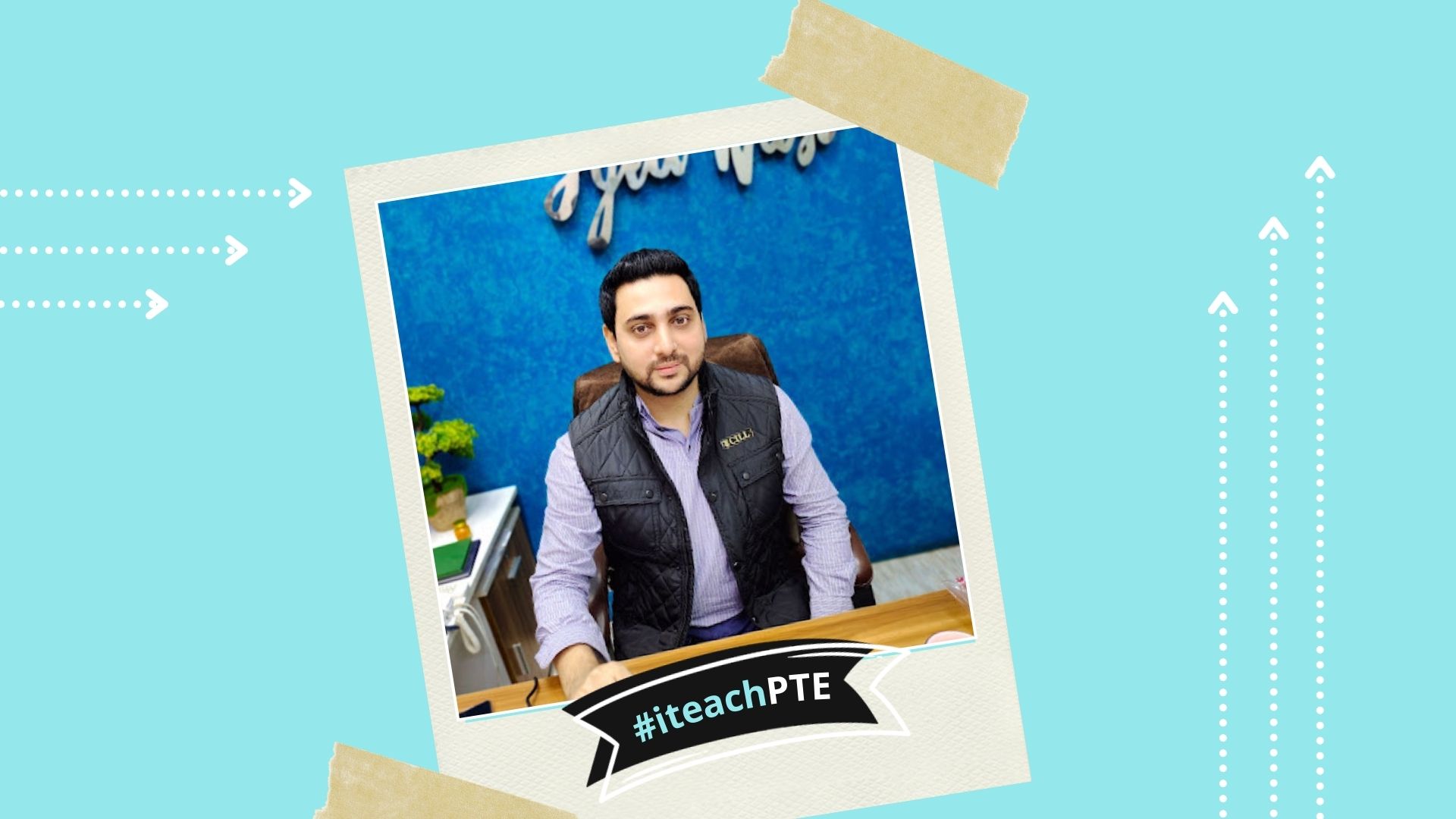

Teacher profile: Building a learning community in Dhaka

PTE Author
PTE Author
Image - iteachPTE Syed Wasi
Reading time: 5 minutes

Syed Wasi is a pioneer in many ways. He was the first PTE trainer in Bangladesh, and the first Bangladeshi to score 90 in PTE – no mean feat in a country of 166 million people! Syed is the founder of the Center for Innovative Language Learning (CILL) where students come for his help in preparing for PTE. The center is renowned for its high student success rate.  

So, how does Syed help his students to get the scores they need in PTE? Let’s find out.  

How Syed teaches PTE  

When a student arrives at CILL, their first step towards PTE success starts with a language assessment. “If we find that their language skills aren’t particularly strong,” says Syed, “the first thing we do is create a course which includes general language classes. We go step by step through the levels, helping them to improve their language skills – and once they are ready for PTE, they join a PTE preparation class.”  

Once Syed’s students are part of a preparation class, they follow a carefully designed curriculum. Each language skill tested in PTE (speaking, writing, reading and listening) is covered in a module of three classes. The first class introduces the type of exam questions that students can expect. The second class gives students the practical tools and techniques that they’ll need to answer the exam questions, and the third class is a practice session. But the secret to Syed’s success? He doesn’t let the students sit PTE before they’re ready:  

"The final step in PTE preparation is the mock test. We don’t let them take the test until they’re ready for the test, which is why we have a very high success rate.”  

Flexibility is also important. The PTE preparation courses at CILL are blended courses; some students attend the center in person, and others join online. When the pandemic began, there was a massive shift to teaching online, and many schools had to adapt quickly. But Syed’s language school was ahead of the curve when it came to blended learning. “I did my masters in online teaching back in 2012,” says Syed. “We’ve been teaching with a blended learning model since 2016, so it was easy for us to adapt. Now, students are returning to the classroom, but we still offer the blended learning option.”  

Building a community of learners  

An important part of the school culture at CILL is the accessibility of the teachers. Learning isn’t confined to the classroom – the teachers are available to answer questions outside of class times. “We create WhatsApp groups for different classes, and it’s like a virtual hub,” Syed explains. What’s more, the teachers follow up with students after class. This dedicated service has helped Syed to build a loyal community of learners around the world. “Many of our students have moved to Australia, to the UK, or to other countries,” he says. “And wherever they go, if they meet anyone interested in PTE preparation, they refer them to our school. They’ll say, there’s a person in Bangladesh who can give you the support you’ll need to pass the test.”  

Syed’s advice for PTE teachers 

“If you’re new to PTE teaching, the most important thing is to make sure you have the expertise you need to prepare students for the test,” Syed says. After all, there’s a lot on the line when it comes to PTE. Students often need a certain score for a university application or a visa. So if you don’t prepare students thoroughly, it could have an impact not only on their score but on their careers. Syed recommends taking the test yourself in order to gain real insight into PTE.  

And for more experienced teachers, Syed believes that honesty is the best policy when it comes to test preparation. “Tell your students exactly what they’ll need to do in order to get the score they need. Be honest with them, and that way they know what they have to do.”  

PTE is a high stakes test. When you’re helping students to prepare for the exam, you’re helping them to change their lives, to do something new. “It’s not just a business,” says Syed. “We are helping students to reach their goals. It’s my passion, and my vocation.”  

Learn more

Each month, we feature the profile of a teacher from our PTE community. If you have advice and insights to share with other PTE preparation teachers, we’d like to hear from you! Fill out this form and we’ll be in touch shortly.  

In previous months, we featured Jurine Ruperto, who teaches in Cebu in the Philippines, and Ramesh Thapa, a PTE teacher in Kathmandu. You can read all about them on our blog, where you’ll also find lots of resources for PTE preparation classes. And don’t forget to sign up to our monthly newsletter.

Related Content

  • Image, a girl using ATM
    A practical guide to moving to the UK as a student
    By PTE Author
    Reading time: 7 minutes

    Studying abroad is the experience of a lifetime. You’ll have an untold number of opportunities,  make friends, grow your network and broaden your horizons. But there are nerves too – and lots of questions before you start packing your bags.  

    So, if you’re considering moving to the UK to study for a pre-sessional English language course, a degree, or even a Ph.D., we have some top tips.  

    Read on to explore our short guide to studying in the UK for international students. 

    1. Setting up a bank account 

    Unless you plan to stuff your money in your mattress (not recommended), you’ll probably need to open a bank account in the UK. The process is usually completed in one or two days and is much simpler if you do it once you’re living in the country.   

    If you’re a student and come from abroad, you’ll need to show the bank a number of things before you can open your account, including: 

    • A valid passport and visa; 

    • Proof you are studying in the UK (your student ID or a letter from your university); 

    • Recent proof of address in the form of a utility bill that’s less than three months old (e.g. electricity bill); 

    • A bank or credit card statement that’s less than three months old. 

    Note that the requirements may differ from bank to bank and you may also need to show proof of employment. Some banks, like HSBC, also allow you to set up your account in your own country before leaving for the UK.  

    2. Student accommodation in the UK 

    You have two main options when it comes to student accommodation in the UK:  

    On-campus accommodation 

    In the UK, on-campus student accommodation is often referred to as living in halls. When you apply to live in halls, you are given a room in shared accommodation. Your room is usually private, however you will often share bathrooms, kitchen, and other communal areas with other students.  

    Living in halls is recommended if you’re coming from abroad. Not only does the university manage the housing, but it will be easier for you to find a place with other students.  

    Shared student accommodation 

    You can also opt to go through the university and find a place in privately rented accommodation. Second and third year students usually choose this option and move in with friends. Generally, this type of housing has been approved by the university, but you will be responsible for paying rent to a private landlord.  

    Ask your university admissions department or student services about the right option for you.  

    Alternatively, you may wish to rent privately, through a real estate agent. However, this is likely to be a far more expensive option and you won’t necessarily have university support. 

    Average student rental prices 

    The cost of living in the UK varies from region to region. According to a Save the Student survey in 2021, the average rent for students in the UK is £146 per week.  

    Here’s the breakdown of costs: 

    • Scotland: £127 per week 

    • Northern England: £122  

    • Wales and the Midlands: £119 to £129 per week 

    • East Anglia: £132 per week 

    • Southwest: £147 per week 

    • Southeast:  £146 per week 

    • London:  £152 per week 

    Living cost in the UK for international students 

    On top of rent, you also have to consider how much food, leisure, transport, and other expenses will be. Our handy guide to living expenses in the UK for international students, outlines the following, and also compares costs in different cities: 

    • Groceries – £100 per month  

    • Going out – £46 per month  

    • Transportation– £46 per month  

    • Household bills (like electricity and water) – £37 per month 

    • University tuition fees for international students – £10,000–£38,000 per year (Reddin survey of university tuition fees) 

    3. Health care systems in the UK 

  • Image - firework
    10 British cultural events for international students
    By PTE Author
    Reading time: 6 minutes

    UK culture and traditions are rich and diverse – and it’s not all about drinking tea at 5 o’clock, we promise. There are lots of British festivals and events, and you’ll never find yourself stuck for things to see and do. If you’re studying at a British university, you’ll definitely want to make your time as memorable as possible.  

    That’s why we’ve put together a list of the best cultural events and festivals in the UK. You can take a break from your studies and go exploring at weekends throughout the academic year.  

    With everything from flower shows to fashion shows - you’re sure to find a UK festival that suits you.  

    Read on to discover the best 10 British cultural events for international students. 

    1. London Fashion Week  

  • Image - online meeting
    How to prepare for your UK university interview
    By PTE Author
    Reading time: 6 minutes

    Do interviews make you nervous? You feel under the spotlight. Every answer is important – and it’s even scarier when something big is at stake, like a place at your dream university.

    But college interviews really don’t have to be nerve-wracking!  

    First, remember that not every UK university or subject will ask you to do an admissions interview. Only some universities, like the University of Oxford, Imperial College London and University College London always interview their applicants.  

    For others, it will depend on the course you are taking. Dentistry, teaching, social work and medicine, tend to feature admissions interviews, for example.  

    In this guide, we’ll share some interview tips for freshers, so you’ll feel fully prepared by the day of your university interview. You’ll soon be able to leave your nerves behind and walk into the interview room with confidence.  

    1. Take care of the practical preparation 

    If you’re attending an in-person interview, research how to travel there and make sure you have your ticket organized. It might even be worth doing a trial run a few days before. This will  just to make sure you know exactly where you’re going.  

    University campuses can be confusing, and departments can be spread out over different buildings. So, make sure you know the exact street address, floor and office number where your university interview is being held.  

    What if you are doing an online university interview? Well, the standard Zoom interview tips apply! Make sure that your laptop is connected to charge, that your microphone is working properly, that you have a good Wi-Fi signal and a quiet place where you won’t be interrupted. You might also want to set up a neutral virtual background, if you think your surroundings look unprofessional. That way, you won’t get distracted during the interview and you’ll be able to do your best to answer the student interview questions you’ll be asked.  

    It’s also a good idea to do a bit of research into the academics who will be interviewing you. You don’t have to read all their published works, but showing that you are at least familiar with their research will create a good impression. It will tell them that you have a genuine interest in the subject and in their work.  

    On that note, it’s important to dress smartly. You don’t need to wear a suit, but wearing something smart like a shirt or a blouse shows that you are taking the interview seriously and that you want to give the interview panel a good impression.  

    2. Prepare some relevant student interview questions and answers  

    Preparation is key when it comes to how to impress in an interview. That being said, it’s not a good idea to learn answers off by heart. Even if the exact question you have prepared for comes up, you’ll be so focused on trying to remember your answer that your answer will seem stilted. It’s better to make notes about the things you’d like to talk about, and then your answers will flow more naturally, and you’ll be able to convey your enthusiasm and excitement.  

    So, what are some common student interview questions that you might be asked? Let’s take a look: 

    • Tell us about yourself.  

    • Why do you want to study at this university? 

    • Why have you applied to study this particular course?  

    • What are your academic strengths and weaknesses?  

    • Tell us about someone you admire.

    • What would you like to be doing ten years from now?

    • What are you reading at the moment?

    • What do you like doing in your free time?

    • What will you contribute to our institution?  

    When you’re preparing, it’s important to remember there are no right or wrong answers. The interviewers want to get to know you, so try to give full, detailed answers to the questions. The final question you are likely to be asked is:  

    • Do you have any questions for us?  

    It’s really important to prepare some thoughtful questions for your student interview panel in response. This is where your research can come in handy! You can ask the panel about their work and how it informs the course, or any questions you have about the university.  

    A well-informed question shows the panel that you are well-prepared and you’ve done your research. Again, this will create a good impression.  

    And if there is a question you don’t understand, don’t panic! Just ask the interviewer to repeat the question, or ask for clarification. Likewise, if you make a mistake when you’re speaking, try not to worry or get embarrassed. Everyone makes mistakes sometimes - even fluent English speakers!  

    3. Read over your personal statement just before the interview  

    Your personal statement is what got you the interview, and it’s likely to set the agenda for the conversation. So, it’s a good idea to read it over before your interview as part of your interview preparation, and remind yourself of the talking points.  

    Your interviewers will refer to the things that you said in your personal statement when they are asking you questions, so it’s worth refreshing your memory - after all, you probably wrote it a few months ago.  

    Rereading your personal statement will also help you feel more confident. It will remind you of everything you’ve achieved so far. Seeing your qualifications, talents and attributes written down in black and white can have a powerful effect. It will help you to shake off any lingering imposter syndrome and you’ll go into the interview feeling that you deserve to be there.  

    Get tips on how to write a great personal statement for your UCAS application.  

    4. Do a power pose 

    Research has found that power posing - standing in an open, expansive stance for two minutes - can change your body chemistry and make you feel more confident. In a job interview experiment, researchers found that people who did a two minute power pose before the interview projected more confidence, seemed less flustered, and were more dynamic and enthusiastic when speaking. As a result, the interviewers scored their performance higher than people who didn’t do the power pose.  

    So even if you’re doing an interview over Zoom, it’s worth doing a power pose beforehand. Just stand with your legs wide apart and your arms held up and out in a wide, expansive pose. The idea is to take up as much space as possible. Hold this pose for two minutes - and you’ll be ready to impress!  

    Learn more 

    If you need to prove your level of English as part of the UCAS application process, PTE Academic can help you. You’ll typically receive your score in typically just 48 hours, and PTE Academic is accepted by the UK Home Office for student visas, as well as by 99% of universities in the UK.  

    Learn more about how PTE Academic can help you achieve your dream of living and studying in the United Kingdom.