Mastering the ‘summarize group discussion’ task for PTE Academic success

PTE Author
PTE Author

The Summarize Group Discussion task is one of the most comprehensive speaking challenges in PTE Academic. It tests your ability to listen actively, take effective notes, and deliver a coherent summary that captures multiple perspectives.

Understanding how to approach this task strategically can significantly boost your speaking score.

Play
Privacy and cookies
By watching, you agree Pearson can share your viewership data for marketing and analytics for one year, revocable upon changing cookie preferences. Disabling cookies may affect video functionality. More info...

What the task involves

In this task, you'll listen to a conversation between three people discussing an academic topic. Your responsibility is to summarize the entire discussion, capturing what each person says, thinks, and potentially feels about the subject at hand.

The discussions are academic in nature and typically fall into three categories:

  • Lecture discussions

    where students share opinions, clarify concepts, or debate key points

  • Course challenges

    involving difficulties with assignments, project coordination, or study strategies

  • Assignment planning

    where professors provide guidance and students raise concerns or questions

The critical distinction here is that you're not simply summarizing facts. You need to capture the main points of the conversation, the perspectives of each speaker, and how their ideas connect and relate to one another.

Task structure and timing

Understanding the format helps you prepare mentally for what's coming. Here's what you'll see on screen:

At the top of the screen, you'll find the instructions, which remain consistent for every Summarize Group Discussion task. Below that sits an audio box, and at the bottom, a status bar tracks the audio progress.

The timeline:

  • A few seconds to read the instructions before the audio begins automatically

  • Audio duration of 2.5 to 3 minutes (plays only once)

  • 10 seconds to prepare after the audio finishes

  • Up to 2 minutes to deliver your summary

You don't need to use the full two minutes for your response, but you should aim to demonstrate a comprehensive understanding and clear organization. The key is speaking confidently and logically rather than rushing to fill time.

How your response is scored

This is a partial credit task evaluated on three main criteria: content, fluency, and pronunciation.

While pronunciation and oral fluency follow the same standards as other PTE speaking tasks, content scoring has unique requirements for this task.

Content scoring requirements

To achieve a high content score, you must:

  • Summarize the entire group discussion accurately

  • Provide detailed information about what each speaker says, thinks, and feels

  • Deliver an original response without memorized templates or pre-prepared phrases

  • Use a variety of appropriate expressions

  • Connect ideas smoothly using linking words like "however," "on the other hand," and "as a result"

  • Use appropriate academic language throughout

Common mistakes that hurt your content score

Missing what one speaker says or misrepresenting their viewpoint will cost you points. You need to correctly summarize all three speakers' points of view to achieve full marks for content.

The note-taking strategy that works

Since the audio is lengthy and plays only once, effective note-taking is essential. A simple, structured approach will serve you well.

The speaker-based method

Before the audio begins, set up your note-taking template:

Topic: _______________

Speaker 1:

Speaker 2:

Speaker 3:

Leave ample space between each speaker section to accommodate your notes.

As you listen, jot down the discussion topic and the main ideas, opinions, and feelings each speaker expresses. Don't attempt to write full sentences. Use keywords, phrases, or shorthand that will trigger your memory when you speak.

Important consideration: The speakers won't take turns in a neat 1-2-3 pattern. The conversation will shift back and forth, so you need to stay alert about who's speaking and add notes to the appropriate speaker section as the discussion unfolds.

This approach makes organizing your summary significantly easier because you'll already have each speaker's contributions categorized and ready to reference.

Sample discussion: Time management at university

Let's examine a typical discussion you might encounter. Three students discuss time management challenges at university:

Speaker 1 expresses concern about balancing academic work with personal life and extracurricular activities, not wanting university to be only about studying and writing papers.

Speaker 2 describes feeling overwhelmed with lectures, readings, assignments, projects, and exams, barely having time to breathe.

Speaker 3 identifies time management as their biggest challenge, struggling with organization and feeling constantly stressed and exhausted, particularly when adjusting to new schedules each term.

The conversation continues with speakers discussing:

  • Difficulty creating consistent routines across different courses

  • Procrastination and poor long-term planning

  • Challenges with multitasking and jumping between different types of assignments

  • The contrast between structured high school environments and university autonomy

  • Prioritization struggles and feeling burnt out

  • A potential solution: attending a university seminar on time management

What a high-scoring response looks like

A strong response demonstrates several key qualities:

Comprehensive coverage: The response identifies the main topic (time management challenges at university) and addresses each speaker's contributions.

Detailed attribution: It clearly indicates who said what, using phrases like "the first speaker talked about," "the second speaker also mentioned," and "the third speaker agreed with."

Relationship mapping: It highlights areas of agreement (all three struggled with time management and procrastination) and notes unique points from each speaker.

Logical organization: The summary flows naturally from speaker to speaker while maintaining coherence.

Appropriate language: It uses academic vocabulary and connecting phrases to link ideas smoothly.

A sample high-scoring response might sound like this:

"The three speakers were talking about the various challenges they face at university, especially with respect to time management. The first speaker talked about concerns regarding workload and seemed very stressed. They mentioned having no consistency in their routine and particular concerns about course length and workload. They also mentioned challenges with their computer crashing in relation to time management issues.

The second speaker also talked about the number of lectures, projects, and exams they have and said they're not very good with time management, especially because of procrastination. This speaker mentioned that they rush when there's a deadline because they tend to focus on things that interest them rather than things that are important. This person also mentioned an issue with discipline and made a comparison with high school, where teachers provide your schedule, whereas at university you have greater autonomy.

The third speaker agreed with much of what was said and also had an issue with procrastination, the same as speaker two. They talked about time management issues, stress, and exhaustion. They discussed long-term planning as key and multitasking as an important attribute but said this is challenging to achieve. In the end, the third speaker mentioned a seminar on time management and suggested they attend because it might help them."

Perfection isn't required

Even high-scoring responses may contain some hesitations or filler words like "um" or "uh." What matters most is that you capture the main topic, correctly identify details from each speaker, and establish relationships between what they're saying, including areas of agreement or disagreement.

Key strategies for test day success

Stay focused during listening. You only get one chance to hear the audio, so concentration is critical from the first second.

Take clear, organized notes. Use the speaker-based method to keep track of who says what.

Identify the main topic immediately. This provides the framework for your entire summary.

Note supporting details for each speaker. Capture their main ideas, opinions, and feelings.

Organize your summary logically. Structure your response so it flows naturally from one speaker to the next.

Mention each speaker's contributions. Don't leave anyone out or you'll lose content points.

Point out areas of agreement or disagreement. This shows you understand how the ideas connect.

Begin speaking when the microphone opens. Don't wait too long or you'll miss your opportunity to respond.

Speak confidently and clearly. Even if your notes are messy, deliver your summary with assurance.

Practice makes progress

The best way to improve at this task is through deliberate practice. Summarize different discussions using the strategies outlined here. Record yourself and listen back critically. Are you capturing all three speakers? Are you showing relationships between their ideas? Is your delivery fluent and confident?

With focused practice and strategic note-taking, you can master the Summarize Group Discussion task and demonstrate the comprehensive listening and speaking skills that PTE Academic is designed to assess.

The task may seem challenging at first, but with the right approach, you'll be well-equipped to deliver high-scoring summaries on test day.

For more test preparation check out our PTE Academic preparation.

Related Content

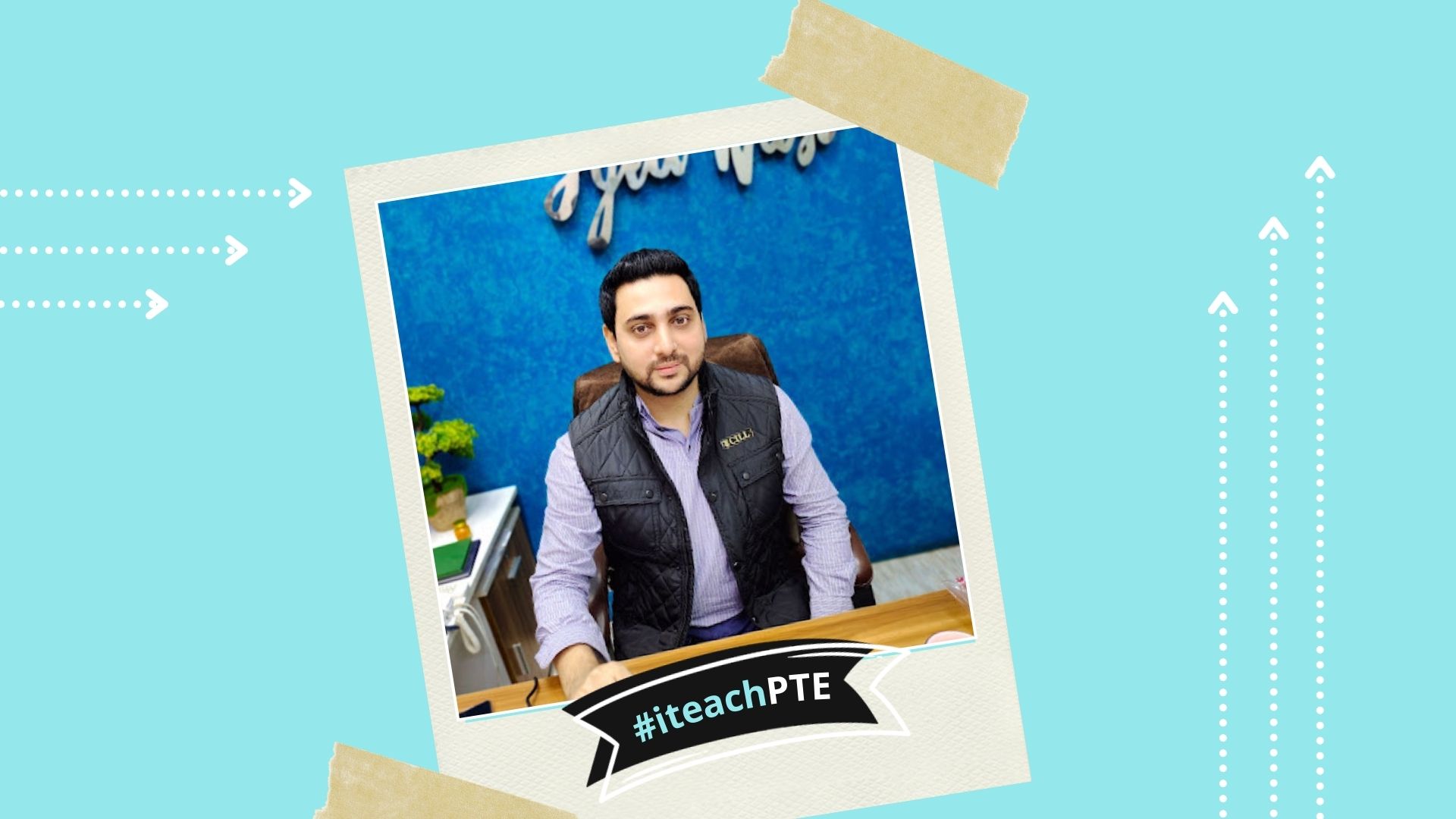
  • Image - iteachPTE Syed Wasi
    Teacher profile: Building a learning community in Dhaka
    By PTE Author
    Reading time: 5 minutes

    Syed Wasi is a pioneer in many ways. He was the first PTE trainer in Bangladesh, and the first Bangladeshi to score 90 in PTE – no mean feat in a country of 166 million people! Syed is the founder of the Center for Innovative Language Learning (CILL) where students come for his help in preparing for PTE. The center is renowned for its high student success rate.  

    So, how does Syed help his students to get the scores they need in PTE? Let’s find out.  

    How Syed teaches PTE  

    When a student arrives at CILL, their first step towards PTE success starts with a language assessment. “If we find that their language skills aren’t particularly strong,” says Syed, “the first thing we do is create a course which includes general language classes. We go step by step through the levels, helping them to improve their language skills – and once they are ready for PTE, they join a PTE preparation class.”  

    Once Syed’s students are part of a preparation class, they follow a carefully designed curriculum. Each language skill tested in PTE (speaking, writing, reading and listening) is covered in a module of three classes. The first class introduces the type of exam questions that students can expect. The second class gives students the practical tools and techniques that they’ll need to answer the exam questions, and the third class is a practice session. But the secret to Syed’s success? He doesn’t let the students sit PTE before they’re ready:  

    "The final step in PTE preparation is the mock test. We don’t let them take the test until they’re ready for the test, which is why we have a very high success rate.”  

    Flexibility is also important. The PTE preparation courses at CILL are blended courses; some students attend the center in person, and others join online. When the pandemic began, there was a massive shift to teaching online, and many schools had to adapt quickly. But Syed’s language school was ahead of the curve when it came to blended learning. “I did my masters in online teaching back in 2012,” says Syed. “We’ve been teaching with a blended learning model since 2016, so it was easy for us to adapt. Now, students are returning to the classroom, but we still offer the blended learning option.”  

    Building a community of learners  

    An important part of the school culture at CILL is the accessibility of the teachers. Learning isn’t confined to the classroom – the teachers are available to answer questions outside of class times. “We create WhatsApp groups for different classes, and it’s like a virtual hub,” Syed explains. What’s more, the teachers follow up with students after class. This dedicated service has helped Syed to build a loyal community of learners around the world. “Many of our students have moved to Australia, to the UK, or to other countries,” he says. “And wherever they go, if they meet anyone interested in PTE preparation, they refer them to our school. They’ll say, there’s a person in Bangladesh who can give you the support you’ll need to pass the test.”  

    Syed’s advice for PTE teachers 

    “If you’re new to PTE teaching, the most important thing is to make sure you have the expertise you need to prepare students for the test,” Syed says. After all, there’s a lot on the line when it comes to PTE. Students often need a certain score for a university application or a visa. So if you don’t prepare students thoroughly, it could have an impact not only on their score but on their careers. Syed recommends taking the test yourself in order to gain real insight into PTE.  

    And for more experienced teachers, Syed believes that honesty is the best policy when it comes to test preparation. “Tell your students exactly what they’ll need to do in order to get the score they need. Be honest with them, and that way they know what they have to do.”  

    PTE is a high stakes test. When you’re helping students to prepare for the exam, you’re helping them to change their lives, to do something new. “It’s not just a business,” says Syed. “We are helping students to reach their goals. It’s my passion, and my vocation.”  

    Learn more

    Each month, we feature the profile of a teacher from our PTE community. If you have advice and insights to share with other PTE preparation teachers, we’d like to hear from you! Fill out this form and we’ll be in touch shortly.  

    In previous months, we featured Jurine Ruperto, who teaches in Cebu in the Philippines, and Ramesh Thapa, a PTE teacher in Kathmandu. You can read all about them on our blog, where you’ll also find lots of resources for PTE preparation classes. And don’t forget to sign up to our monthly newsletter.

  • Image - Typing
    How to prepare for the PTE essay writing task
    By PTE Author
    Reading time: 6 minutes

    The PTE exam includes four main sections: reading, writing, speaking, and listening. You will do the speaking and writing tasks together in part one of the exams. While your writing will be assessed in your answers to other tasks, there are only two specific writing tasks: summarize a written text and write an essay.   

    The PTE essay writing task aims to test your grammar, spelling, vocabulary, and written discourse skills. Therefore, it’s important that you understand this section, and what’s expected before going into the exam.  

    If you’re looking for some tips and guidance on how to approach this part, look no further! 

    Read on to find out what the essay writing task is about, how to approach it, and what the examiners are looking for. 

    Essay Writing Task Structure 

    For this task, you will receive a 2 to 3 line prompt stating an opinion or statement. Prompts can be written in a number of ways.  

    For example, you may have to discuss problems or solutions, or argue for or against an opinion: 

  • Image - Canada, 1080px
    Canada’s post-graduation work permit: requirements and how to apply
    By PTE Author
    Reading time: 5 minutes

    Canada needs immigrants to grow its population. And there’s good news for students: foreign learners and people with a post-graduation work permit (PGWP) are some of the most important propellers of the country’s population growth.  

    So how does a PGWP work? In this guide, we cover what you need to know. You’ll learn about who’s eligible, how much it costs, and most importantly, how long you can stay in the country after graduation to gain Canadian work experience.  

    Canada’s post-graduation work permit: how does it work? 

    The PGWP lets international students who have graduated from an eligible designated learning institution to stay in Canada and work for up to three years. Not surprisingly, the program is a big draw to work and study in Canada for international students – and it’s grown in popularity over the last several years.  

    Just take a look at the numbers: between 2005 and 2016, the amount of permits issued to new graduates increased by 15 times – from 7,400 to 117,700 per year. By 2018, 143,000 permits were issued. And in the first quarter of 2021, PGWPs increased 160% year-over-year.  

    The PGWP is an open work permit, which means you can work for any employer in Canada. You also don’t need a job offer to apply. The length of your PGWP depends on how long you’ve studied in Canada. For example, if your program was: 

    • Under 8 months, you won’t be eligible for a PGWP. 

    • Less than 2 years, you may get a permit for the same amount of time as you studied (for example if your program was one year, you might get a permit for one year).

    • More than 2 years, you could be eligible for a 3-year permit. 

    If you studied more than 1 program, you may also get a PGWP that combines the length of each program.  

    Who is eligible?  

    To be eligible for a PGWP, you need to meet a number of criteria. For example, you need to have graduated from a program that was at least 8 months long at a designated learning institution – and have earned a degree, diploma, or certificate from that. 

    International students who were approved for a study permit and are studying online outside Canada due to the pandemic are also eligible for a PGWP.  

    However, people who’ve only studied English or French as a second language in Canada are not.  

    For a full list of criteria, make sure to check out the Government of Canada website.  

    How can you apply? 

    Before you begin the application process, you need to have proof that you’ve completed your studies. You need to show either: 

    • An official letter from your institution 

    • An official transcript  

    • A degree or diploma  

    After you’ve got one of these, you need to apply for a PGWP within 180 days.  

    Instructions for exactly how to apply depending on whether you’re applying from inside or outside Canada. You can find the step-by-step instructions on the Government of Canada website – including an official guide and a document checklist.  

    How much does it cost? 

    It costs $255 CAD to apply for a PGWP. Processing times differ, but it can take up to 73 days to be approved on average. However, the good news is that many graduates can work while they’re waiting on a decision.  

    Other visa options  

    Being able to work and study in Canada for international students around the world is often a dream come true. However if you’re not eligible for a PGWP, you do have some other visa options.  

    An employer-specific work permit 

    This type of work permit allows you to work for a certain amount of time for a specific employer. You might be eligible for this if you’ve gotten a job to be a researcher at a university, or a charitable worker at an NGO, for example.  

    Canada has a tool to help you learn more about what type of work permit you could be eligible for. You can check it out here.  

    Permanent residence  

    If you’ve worked full-time for 12 months after graduation in a skilled trade, a professional job that requires a degree, or a management-level job, you could be eligible for permanent residence.