
Student life in the UK: A guide to British festivals

PTE Author
PTE Author
Image- sparklers
Reading time: 6 minutes

Studying in the UK provides a great opportunity to immerse yourself in British culture and traditions. Not only can you meet new people, try new food and explore different cities, you can also experience a range of different festivals that you might not celebrate in your own country.  

While there are many British traditions and festivals, here are some of the oldest and most widely celebrated festivals that you can get involved in while you’re studying in the UK: 

The top 5 British festivals

1. Halloween

So what is Halloween? Also known as All Saints’ Eve, Halloween is a celebration in many countries on 31st October, which honours religious Saints and the dead.

The tradition dates back to an ancient Celtic festival held on this day, where people would light bonfires and wear costumes to frighten away spirits. Later, in the 8th century, Pope Gregory III chose November 1st as a time to honour the saints.

While it remained a religious festival for many years, in the last century it has turned into a fun, yet spooky, holiday to celebrate. Children and young adults particularly enjoy Halloween and take part in a number of activities.

These include trick-or-treating where they knock on neighbours’ doors and ask for sweets, carving faces into pumpkins and watching horror movies. Let’s not forget dressing up in scary costumes, like a vampire, witch or zombie, and attending a fancy dress party!

There are lots of different ways to take part in this festival as a university student. In the UK, most universities normally organize Halloween parties on October 31st. And if you don’t like dressing up, it’s also a common tradition for cinemas to show horror films as an alternative Halloween celebration.

2. Bonfire Night

Also known as Guy Fawkes’ Night, Bonfire Night is a British festival that takes place on November 5th each year. So why do people celebrate bonfire night? It is a day that commemorates the anniversary of the Gunpowder Plot of 1605.

Guy Fawkes was a Catholic who didn’t agree with the King’s persecution of Catholics at the time. So, he developed a plan to blow up Westminster Palace in London while King James I and the members of parliament were inside. However, the plot was unsuccessful and he was sentenced to death.

When the people of London realized that the king had escaped assassination, they lit bonfires to celebrate. After this, King James I declared that November the 5th would be a public day of thanksgiving for the plot's failure. Nowadays, people celebrate this night with bonfires, fireworks, sparklers and toffee apples.

If you’d like to experience Bonfire Night, you’ll be able to attend organized outdoor gatherings with bonfires and fireworks displays around cities and in public spaces. Make sure to wrap up warm, as it gets cold during November evenings in the UK!

3. Christmas

Christmas is an annual religious festival celebrating the birth of Jesus on December 25th. However, both religious and non-religious people across the country celebrate this holiday. Although Christmas Day on December 25th is the main event, British people also celebrate Christmas Eve on December 24th and Boxing Day on December 26th.

There are a number of British Christmas traditions associated with this holiday. For instance, people eat turkey, hang up decorations and stockings, pull crackers, eat mince pies, give each other presents and even watch the Queen give a televised speech on Christmas Day.

If this is something that you’d like to experience you’ll have plenty of options in the UK. Many pubs and restaurants allow you to book a traditional Christmas meal. Moreover, many cities have a Christmas market in December where you can try mulled wine and buy gifts. It’s truly a magical time of year!  

4. New Year's Eve

Shortly after Christmas, people in the UK and other countries around the world celebrate New Year's Eve on December 31st. It is the last day of the year before New Year’s Day, which marks the start of a new calendar year.

A festival that has been celebrated for centuries, British people recognise it as a night where they can welcome in a new year. At midnight on New Year’s Eve, it is tradition to set off fireworks and firecrackers, as well as celebrate with food and drink. Some families dance to Auld Lang Syne, a Scottish folk song which means ‘long long ago’ and is traditionally sung to farewell the old year.

Cities and towns around the country hold fireworks displays, parties and other events to celebrate this festival. If you’d like to join in you’ll be able to search for an event near you. Similarly, you can watch the BBC or another major television channel from your home - each year they broadcast live performances, interviews with celebrities and the countdown to midnight.

5. Easter

The end of winter and beginning of spring is celebrated in many countries across the world, and Britain is no different. In the UK, Easter heralds a week of celebrations for those who are both religious and non-religious.

Easter begins with Palm Sunday, which marks the beginning of Holy Week. This week includes Good Friday, a public holiday, Easter Sunday and ends with Easter Monday, also a public holiday. The date of Easter Sunday varies from year to year - in 2022 it will be on April 17th.

Nowadays, this festival offers an opportunity for families to get together and eat a traditional roast dinner. Some people decorate the dinner table with painted eggs, little yellow chicks, bunnies and spring flowers like daffodils, white lilies and tulips. It’s also tradition to buy family and friends chocolate eggs from supermarkets or chocolatiers.

If you’re interested in celebrating Easter in the UK, you’ll be able to book an Easter roast dinner at most pubs and restaurants, as well as buy chocolate eggs. There are also a number of Easter egg hunts that you can try. In London, for example,  there’s an event where you have to search for chocolate eggs around the city. You can check your local area to see what they have organized.  

Study in the UK

The opportunity to study in another country is an invaluable experience. If you choose the UK as a study destination, not only will you improve your English, you’ll also learn about UK culture, celebrate British traditions, and make some memories that will last a lifetime!

If you’re interested in experiencing life as a student in the UK, PTE Academic may just be what you need. This test is recognized as an official language certificate that can be used for UK visas to access 99% of British universities.

Discover how PTE Academic can help you achieve your goals.

Related Content

  • Image, student, 800px x 451px
    Australian loans for international students
    By PTE Author
    Reading time: 5 minutes

    It’s not hard to understand why so many international students want to move to Australia. The country has a world-class education system, excellent climate, and high quality of life. But studying in Australia can be expensive – and you need to be financially prepared before you take the leap.  

    In this blog, we’ll help you get started. We’ll explore the student loan options available for international students in Australia, as well as other ways to fund your studies.  

    How much money will I need? 

    Before you begin to research student loans, it’s important to understand how much it costs to live and study in Australia. You can use the Course Search Tool to find out detailed tuition fee for your dream course and the Cost of Living Calculator to estimate the living cost based on the city you want to move to.  

    What student loans in Australia could I be eligible for? 

    Australia’s student loan system is known as the Higher Education Loan Program (HELP).  Unfortunately, HELP can only be accessed by Australian citizens or individuals who hold a humanitarian visa. However, there are still lots of other student loans available for international students in Australia.  

    University loans 

    Universities across Australia provide loans for local and international students. Most institutions offer both short-term and long-term loans; these can help students cover emergencies, as well as pay for bigger expenses.  

    Here are a few examples of what some universities offer:  

    • The University of Melbourne will loan eligible students up to$5,000 AUD ($3,883 USD) if they have an Australian co-signer. They’ll loan students up to $3,000 AUD ($2,330 USD) if their co-signer lives overseas or isn’t an Australian citizen/ permanent resident. 

    • The University of Sydney offers loans up to $2,000 ($1,550 USD), which can be paid back up to two years after graduation.  

    • Students in need of financial assistance at Monash University can take out loans between $750-$3,000 AUD ($544 – $2,330 USD), to be paid back within 6-12 months. 

    Universities across Australia offer similar loans. It’s best to check directly with your institution to see exactly what loans are available to students – and to make sure you’re eligible.  

    International student loan schemes  

    You might be eligible to take out federal student loans in your home country to study in Australia. For example, students from the U.S., Canada, Sweden, Norway, or Denmark who attend the University of Sydney can access government funding from home.  

    Private loans  

    A private loan is one of the simplest forms of international student loans in Australia: you borrow money from a bank or similar lender and repay the loan (with interest) over an agreed-upon period of time. These loans can be secured – which means they’re tied to collateral – or unsecured. But with unsecured loans, interest rates are usually higher. 

    How else can I pay for my studies? 

    Student loans aren’t the only way to pay for your education in Australia. Here are a few other options to consider:  

    Work in Australia  

    Many international students are attracted to Australia because they know they’ll be able to work. Unlike other studies abroad destinations, you can work up to 48 hours every two weeks while studying and unlimited hours during study breaks on an Australian student visa. Even more, the minimum wage in Australia is $24.10 per hour or $915.90 per week – meaning many international students are able to pay for some of the costs associated with living in Australia while they study.   

    Apply for scholarships 

    There are a number of scholarship opportunities for international students in Australia – both funded by the government, and universities. Some, like Australia Awards scholarships, support students with full tuition, living costs, and airfare. Check out the Australian Government’s search tool to find a scholarship that’s right for you.  

    Read more: scholarships for international students in Australia 

    Take out a private loan in your home country

    To apply for a student visa in Australia, you need to prove you have sufficient funds. For this reason, many students decide to take out a private bank loan in their home country before coming to study in Australia.

    As you can see, there are lots of ways to fund your studies in Australia as an international student. But everyone’s financial situation is different, so we recommend doing lots of research to find a loan you feel confident about – and one that will work for you both during, and after university.

    Still, deciding where in the world you want to study? Check out our article types of loans for international students, which explores more loan options in Canada, the U.S., and the U.K.

    We are not immigration agents. For all up-to-date information about visa rules and regulations, see the official guidelines on the Australia Department of Home Affairs website.

    Last updated 20 December 2024.

  • Image- scholarships, 800px x 451px
    Scholarships for international students in the UK
    By PTE Author
    Reading time: 3 minutes

    The UK is home to some of the most prestigious universities in the world. And, being awarded a scholarship to study in the UK can give you access to a top-level education at a more affordable price.  

    So, how do you apply? UK university scholarships are offered by both the UK government and individual universities – and are available for undergraduate, postgraduate, and PhD students alike. In this blog, we’ll highlight some of the top scholarships for international students in the UK:  

    Undergraduate scholarships in the UK

  • Image- Norway -800px
    Consider these 6 destinations to study abroad
    By PTE Author
    Reading time: 5 minutes

    You can still study abroad and stick to a budget. In fact, many of the cheapest countries to attend university are also some of the most beautiful places in the world.

    In this blog, we’ll explore 6 affordable international study destinations. And the great news is PTE Academic – our English language proficiency exam can help you achieve your study abroad dream at these amazing places. Let’s delve in:  

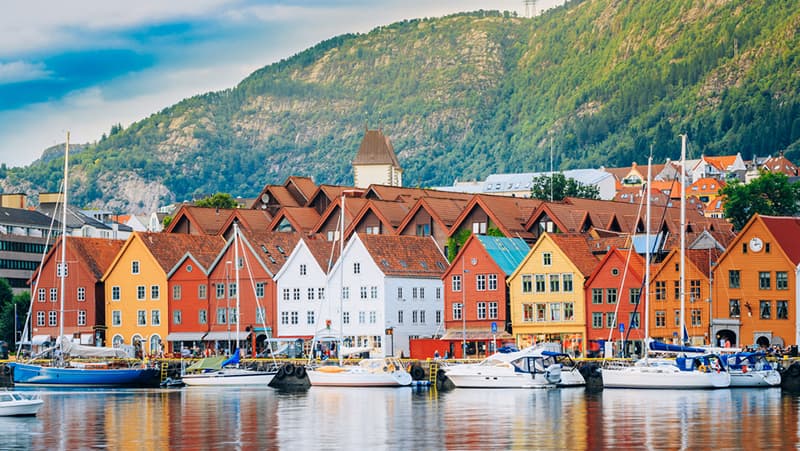
    1. Norway 

    Norway isn’t just picturesque. It’s also one of the cheapest countries to study in for international students. Most universities in Norway are publicly funded and don’t charge tuition fees – even for foreign learners. While some private universities do charge tuition – between €7000-€19,000 – international students aren’t required to pay more than Norwegians.  

    It is important to keep in mind, however, that the living costs in Norway are high. It can cost international students between €800 –€1400 per month to live in the country. But there are some grants and scholarships available to help students fund their time abroad. You can check them out here.  

    Overall, Norway offers world-class education and an excellent standard of living. Medical services are usually free for international students and many courses are taught in English, making it a great place to study abroad. 

    PTE Academic is accepted at top institutions in Norway including University of OsloUiT The Arctic University of NorwayNorwegian University of Science and Technology (NTNU). 

    Find out where else PTE Academic can take you in Norway.

     2. Malaysia 

    With high-ranked universities and the fastest growing regional economy in the world, Malaysia is also an excellent destination to consider. The country boasts more than 100 higher education institutions – including branches of universities like Monash University and the University of Nottingham.  

    A bachelor’s degree for international students (not studying medicine) costs about $10,000-$20,000 USD at a public institution, and significantly more at an international branch campus.  

    However, the thing that makes Malaysia attractive is its low cost of living. Kuala Lumpur, the country’s capital city, is ranked by QS Best Student Cities Rankings as the second most affordable student city in the world. Rent in a shared apartment in Malaysia can cost as little as $50-$250 USD per month.  

    To learn more about how much it costs to live in Malaysia, visit the government’s website here.  

    PTE Academic is accepted at top institutions in Malaysia including Universiti Malaya (UM)Universiti Sains Malaysia (USM), and Universiti Teknologi Malaysia (UTM)Find out where else PTE Academic can take you in Malaysia. 

     3. Spain 

    Spain has a great climate, a relaxed lifestyle, and more than 70 universities to choose from. And yes, it also offers affordable tuition fees. Tuition for EU/EAA students at a public university can range from just €150-€3500.  Keep in mind though, if you’re coming from a country outside the EU/EAA, your tuition fees could be higher.  

    The cost of living for international students in Spain ranges from €700-€1,100 a month. Many courses here are also taught in English, making Spain a good choice if you’re interested in improving both your English and Spanish skills.  

    PTE Academic is accepted at top institutions in Spain including Universidad de GranadaFind out where else PTE Academic can take you in Spain.

     4. France 

    France is a surprisingly affordable place for international students to study. It’s also incredibly popular – more than 350,000 students enroll in the university there each year. France’s public universities charge just €170 per year for a bachelor’s degree for EU/EAA students. But like in Spain, if you’re a non-EU/EAA citizen, fees are likely to cost more.  

    The cost of living is more expensive in larger cities like Paris. But in smaller cities, you can expect to pay around €650 per month.  

    PTE Academic is accepted at top institutions in France including Université Paris 1 Panthéon-Sorbonne. Find out where else PTE Academic can take you in France. 

    5. South Africa

    South Africa is renowned for its natural beauty and rich culture – it has 11 official languages, which is more than any other country in the world. It’s also home to the top-rated university in Africa: University of Cape Town.  

    Tuition for a bachelor’s degree in South Africa is reasonably inexpensive compared to locations and will cost international students between €6000–€7000 per year. Living costs are also only about €550 per month. 

    Find out how PTE Academic can help you to study at University of Cape Town. 

    6. Greece 

    Last but not least, Greece is one of the most affordable study destinations in Europe.  Most students from the EU/EEA can study for free, while all other students could pay up to €2000 per year. 

    Greece also boasts low costs of living. Students can expect to pay between €450-€750 per month – and some students in financial need can live on campus for free. Better yet, between studies, international learners can soak up the sun while spending time on Greece’s beautiful beaches. What’s not to love?  

    Ready to kickstart your dream of studying abroad?

    Many top-rated international institutions offer courses in English and require you to take an English language test.  

    PTE Academic is recognized by universities around the world – find out who accepts PTE Academic.