
Student guide: What is the cost of living in Canada?

PTE Author
PTE Author
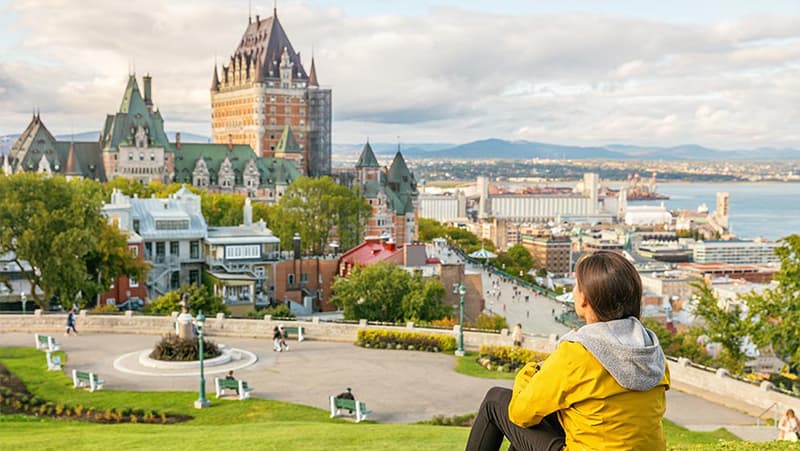
Image - woman on hill in Canada - 800px w
Reading time: 6 minutes

Many students dream of studying in Canada. The country has world-renowned teaching facilities and universities, an open immigration system, metropolitan cities, and scenic landscapes. Altogether, it’s a great choice for international students.  

Studying in Canada is not as expensive as studying in other countries, like the U.S. or U.K. However it is still a big investment. International students pay between $1,800-20,000 CAD per year to attend a Canadian university or college.  

But, what’s the cost of living in Canada? Canada is a big country and prices vary by region. Nevertheless, the EduCanada government website estimates the average cost of living for foreign students is about $12,000 CAD a year.  

In this guide, we outline how much students across Canada pay for things like rent, transportation, entertainment, and food – and look into some hidden costs that everyone should keep in mind. 

Here is our student guide on the cost of living in Canada: 

Accommodation costs by city  

When you’re studying in Canada, you can choose between living on-campus or off-campus. Living on-campus is a great opportunity to socialize with other students and make friends. Most institutions also give students on-campus the option to buy a meal plan. But, keep in mind that many universities and colleges prioritize first-year students for on-campus housing.  

You might also decide to rent an apartment or room off-campus instead. There are lots of housing options in neighborhoods close to universities and colleges – and these are often advertised specifically for students.  

To give you an idea about how much accommodation will cost, we take a look at some popular Canadian study destinations. Keep in mind, off-campus housing prices might fluctuate because of the pandemic. 

Toronto  

At the University of Toronto, on-campus housing for eight months ranges from about $6500- $20,500 CAD, depending on the room and meal-plan. A one-bedroom apartment in Toronto costs about $2,100 CAD/month on average.  

Vancouver 

At the University of British Columbia in Vancouver, a room and meal-plan will cost you between $10,700-$13,850 CAD for two terms. A one-bedroom apartment in the city center costs $2,050 CAD/month on average.  

Montreal 

At McGill University in Montreal, a single room for 1st-year undergraduate students costs between about $9,700-$12,700 CAD/academic year, without a meal plan. A one-bedroom apartment costs 1,300 CAD/month on average. 

Halifax 

At Dalhousie University in Halifax, a single room costs between $8,130-$9,450 CAD/academic year with a meal plan. A one-bedroom apartment costs about $1,400 CAD/month on average.  

Waterloo 

At the University of Waterloo, a single room in a traditional-style dorm costs between about $6,700-$7,000 CAD for the fall and winter term, not including a mandatory meal-plan. A one-bedroom apartment costs about $1,500 CAD/month on average.  

Food costs  

If you don’t have a meal plan and live off-campus, you must include grocery shopping in your budget. Of course, food prices are different across the country and depend on where you decide to shop.  

Let’s take a quick look at how much essential items may cost in Canada’s largest city, Toronto:  

  • Milk (about $3 CAD)

  • Rice, 1kg (about $3.50 CAD)

  • Apples, 1kg (about $4 CAD)

  • Red meat, 1kg (about $16 CAD)

  • 12 eggs (about $3.50 CAD)

According to the City of Toronto’s Nutritious Food Basket Calculator, a male aged 19-30 must spend a minimum of $65.50/week to buy healthy food. A female the same age living in Toronto must spend about $51 CAD/week to buy healthy food.  

Transportation costs in Canada 

How much is the average cost of transportation in Canada? Many international students rely on public transportation to get around. And oftentimes, transport costs are included in tuition fees – giving you unlimited access to the city’s whole transportation system.  

But in some cities – like Toronto and Montreal – you can buy your own pass at a reduced fare. In Montreal, a student pass costs $53 CAD/month. In Toronto, which is a much more expensive city, a pass costs $128 CAD/month.  

Outside of larger cities, it can also be useful to have a car, especially if you are used to driving at home. But, keep in mind this can cost a lot extra. To get an idea of how much it costs to drive a car in Canada, check out this driving costs calculator by the Canadian Automobile Association (CAA).  

Entertainment costs 

Canada offers many cultural and outdoor activities for you to enjoy. You can find world-class music festivals, skiing and snowboarding, and giant sporting events like basketball, hockey, and baseball games.  

Of course, you will also still get to enjoy many things you did at home. Here are a few things you might like to do in Canada, along with how much each costs:  

  • Visit a renowned museum (many offer free evenings, and entrance for young people or students) 

  • Meet a friend for coffee ($1.76 CAD at coffee chain Tim Hortons) 

  • Rent skates and go ice-skating outdoors (about $10 CAD)

  • Watch a movie in theaters (about $15 CAD)

  • Eat dinner at a casual restaurant (about $15-25 CAD)

Insurance costs 

Canada has a publicly-funded health system. However, each province and territory administers its own healthcare. Whether or not you can receive publicly-funded medical coverage will depend on where you are in Canada.  

If you don’t qualify for public healthcare, your institution might require you to enroll in a specific insurance plan or find your own private coverage. You should check with your institutions about exactly what coverage you need to study safety in Canada.  

Hidden costs 

Lots of hidden costs arise when studying abroad, and there are a few things students in Canada should keep in mind.  

For one, it is expensive to own a cellphone in Canada. In fact, cell phone bills in Canada are among the highest in the world. Canadians pay $101 CAD/month, on average, for a cellphone plan.  

You will also need to buy warm winter clothing – including a jacket, boots, socks, gloves, hat, and scarf. You can expect to pay about $300-$400 CAD for these items brand new. However, thrift stores might also carry winter clothing for much cheaper.  

Finally, you shouldn’t forget about Canadian sales taxes. Taxes in Canada are higher than many places in the world and range from about 12%-15%.

Infographic- Student guide: What is the cost of living in Canada?

Feeling ready to go to Canada? 

At PTE Academic, we want to help you achieve your Canadian study dreams. Book your PTE Academic test today – wherever you are in the world.  

Check exam fees and find the closest test center to you now.

Related Content

  • Image- Australia,800px x 451px
    How to apply for a permanent resident visa in Australia
    By PTE Author
    Reading time: 5 minutes

    There’s a lot to love about living in Australia. The country boasts beautiful landscapes, multicultural cities, and one of the best education systems in the world. Many people who hold an Australian work visa want to stay in Australia for the long run and decide to apply to become a permanent resident.

    In this guide, we’ll take a look into what the process entails. By the end you’ll have all the information and online resources you need to apply for a permanent resident visa in Australia:

    What does it mean to be a permanent resident in Australia?

    With an Australian permanent resident visa, you can remain in the country indefinitely. If you secure a permanent resident visa you’ll also be able to:

    • Work and study in Australia

    • Receive healthcare benefits

    • Sponsor relatives for their permanent resident visas

    • Apply for citizenship

    Keep in mind that until you become a citizen, you cannot:

    • Hold an Australian passport

    • Vote in Australian elections

    • Access student loan benefits

    How to apply

    There are multiple ways to apply for a permanent resident visa in Australia. It will depend on how and why you are eligible. Most commonly, people commonly apply through a family, work, or business stream.

    A family-stream permanent resident visa

    A family member can sponsor you for a visa. You can do this if you are the partner, child, parent, or dependent of an Australian citizen or an Australian permanent resident. You can also be sponsored for a permanent resident visa if you need to move to Australia to care for a family member long-term. You can apply from both inside and outside Australia for this type of visa.

    To learn about how to apply through the family stream and all the different visas available, check out this questionnaire on the Government of Australia website.

    A work-stream permanent resident visa

    You can be sponsored by an Australian employer for a permanent resident visa. Likewise, you might also be able to apply through a skilled workers program. You will qualify for this if you have skills the country views as valuable – such as chemistry, agricultural engineering, or carpentry. The skilled occupation list outlines all the jobs in Australia that are in high-demand.

    Keep in mind that for some work-stream visas, you must be nominated by an employer or Australian government agency to apply.

    Discover the different work-stream permanent resident visa options on the Government of Australia website.

    A business or investment permanent resident visa

    If you own or manage a business in Australia, or invest in the country, you can apply for a permanent resident visa. This will allow you to live and work in Australia indefinitely.

    People are also eligible to apply for permanent resident visas in Australia for a range of different reasons. For example, if you wish to retire or are a former resident of the country. You may also apply if you have a “distinguished talent” – which means you have made an outstanding achievement in a certain field – or are a refugee. For each visa, you’ll also have to check if you qualify. Every situation is different and you can explore every visa option on the Australian Government website.

    Fees and processing times

    Expect to pay $2,890 AUD for an investor visa, $4,770 AUD for a skilled visa, and $9,095 AUD for a partner visa.*

    Processing times also range. Some permanent resident visas take a few months, while others can take more than two years to be granted. This makes it extremely important to do your research and plan ahead.

    *Please note these fees are correct at the time of writing. Please consult the government website for up-to-date information.

    Many permanent resident visas always require you to take an English language test, so you’ll have to study for this in advance. Our secure, computer-based English exam PTE Academic is accepted by the Australian government for all visa categories – including business and investment permanent resident visas. And the good news? Once you’ve written the test, you get the results within 48 hours.

    Learn more about PTE Academic for Australia.

    Plan ahead

    Applying for a permanent visa anywhere can be a long (and sometimes complicated) process. So, it really does pay to do your research ahead of time. You’ll need to save up, prepare your application, and plan your move ahead with lots of time to spare.

    Want to learn more about living, working, and studying in Australia? Check out all our articles on our blog.

    We are not immigration agents. For all up-to-date information about visa rules and regulations, see the official guidelines on the Department of Home Affairs website.

    Last updated 20 December 2024.

  • Image- Asian student group, 800px x 451px
    Study in Malaysia with PTE Academic
    By PTE Author
    Reading time: 2 minutes

    Do you want to study in Malaysia?

    If you are an international student wanting to study in Malaysia, you may need to take an English test.

    International students are required to meet the English language competency requirements set by the Malaysian Qualifications Agency (MQA).

    Do you need to take an English test?

    If you are an international student who meets all academic qualifications but have not met the English language requirement for admission you may receive a conditional offer.

    You will then need to complete an English language preparation program within 12 months at the respective private college or university and pass the language test requirement. Only then will you will be able to commence your course.

    Who is exempt?

    You do not need to prove your English language skills if you are an international student that:

    • is from an English-speaking country

    • has an academic qualification from an institution that uses English as the medium of instruction

    • has completed their education in Malaysia and has decided to further their studies to a higher level

    Where is PTE Academic accepted?

    Since April 2016, the Malaysian Ministry of Higher Education has accepted PTE Academic as proof of the English language skills for international students wanting to study at a private higher educational institution in Malaysia.

    There are a growing number of Malaysian Universities that now recognize PTE Academic such as:

    • Asia Pacific Institute of Information Technology (APIIT)

    • Asia Pacific University of Technology & Innovation (APU)

    • Asia School of Business

    • Asia e University

    • Berjaya University College

    • Curtin University (Sarawak)

    • Cyberlynx International College

    • Disted College

    • Education Malaysia Global Services

    • Despark College

    • First City University College

    • HELP University College

    • Heriot Watt University Malaysia

    • Inti International College Subang

    • Malaysia University of Science and Technology

    • Monash University Malaysia

    • Multimedia University

    • MAHSA University

    • Pintar College

    • Segi University

    • Sunway College

    • Sunway University

    • Swinburne University of Technology (Sarawak)

    • Taylor’s University

    • The University of Nottingham Malaysia Campus

    • UCSI University

    • University of Reading Malaysia

    • University of Southampton Malaysia Campus

    • Xiamen University (Malaysia Campus)

    We are constantly expanding the number of Malaysian Universities that accept our scores, explore our full list of institutions in Malaysia who accept PTE.

    You can take PTE Academic at test centers around the world and at 6 locations in Malaysia. Ready to take PTE Academic? Book now!

  • Image- KL twin tower, 624px
    How to study in Malaysia
    By PTE Author
    Reading time: 5 minutes

    With high-quality universities, more affordable tuition, and the fastest growing regional economy in the world, Asia has become a popular destination for international students. This includes students from within the region itself.

    Western countries still attract a large number of students each year. “But the idea that a Western degree is automatically better and more advantageous than one obtained in Asia is losing ground.” states by ICEF Monitor.

    In fact, countries like China, South Korea, Japan, Singapore, and Malaysia have all been competing to attract more international students in recent years. As a result, Asian students now have the opportunity to receive a world-class education and international study experience much closer to home. This is especially important for many families today, as uncertainty surrounding the pandemic is expected to continue.

    Now, let’s take a look at what one Asian country – Malaysia – has to offer international students. We’ll also go into what students should keep in mind as they plans their studies:

    Malaysia at a glance

    Malaysia boasts innovative universities and excellent intra-regional mobility, making it a great place for students to consider. The country has worked to put itself on the map as a destination for international learners. It hopes to welcome 250,000 students from abroad by 2025. Students come from a variety of countries including Bangladesh, China, Indonesia, Yemen, and Nigeria.

    Bahasa Malaysia is the country’s official language. However many university courses are taught in English.

    Universities in Malaysia

    Malaysia boasts more than 100 higher education institutions. Many universities here are also ranked amongst the top in the world by the QS World University Rankings. Included in the ranking are: 

    • University of Malaya (UM): Ranked 60th globally. 

    • Universiti Putra Malaysia (UPM): Ranked 148th globally. 

    • Universiti Kebangsaan Malaysia (UKM): Ranked 138th globally. 

    • Universiti Sains Malaysia (USM): Ranked 146th globally. 

    A number of international universities have also opened branches in Malaysia. These include the University of Nottingham, Heriot Watt University, Monash University, Xiamen University, and Newcastle University, to name a few. They provide students with the chance to earn a degree from Western universities without having to leave the region.

    If you're looking to explore your study options, the government has a great tool for students to find the program that suits them best. You can also learn more about diploma studies with this useful guide.

    In order to study in Malaysia, students will need to prove they are proficient in English and PTE Academic is the ready choice for you to do so. PTE Academic is a computer-based language test that provides unbiased and secure proof of a candidate’s English skills for study, professional, and migration purposes.

    According to language requirements set by Malaysian Qualifications Agency (MQA), students who plan to undertake a Bachelor’s degree and above at university or college must score a minimum of 47 for PTE Academic, which is equivalent to CEFR High B1 level.

    Students who wish to undertake a diploma course will need to have a minimum PTE Academic score of 36, which is equivalent to CEFR Low B1 level. However, students should always check with their respective university or college to confirm their language score requirements.

    Getting your visa

    Applying for a Student Pass to study in Malaysia is relatively simple and can be done online. Before starting your application, you must have a letter of acceptance from your university. The whole visa process takes about one month. You’ll find out how to apply on the Education Malaysia website.

    With a Student Pass you can work up to 20 hours a week, but only during school breaks that last longer than 8 days.

    Cost of living

    Malaysia draws the attention of students all around the world because it offers an affordable, yet still top class education. A bachelor degree, for example, costs between $10,000-20,000 USD. This is a lot less than in the United States or the U.K. In fact, Malaysia’s booming capital city Kuala Lumpur was named the second most affordable city in the world for students by the QS Best Student Cities ranking.

    Financial aid

    International students in Malaysia can apply for financial aid. Universities offer scholarships directly to students. To get an idea of what these might be like, you can take a look at the scholarships offered by University of Malaya.

    The Malaysian government also provides scholarships to international students. The Malaysia International Scholarship – which offers air tickets, tuition, and a monthly allowance, among other benefits – is one scholarship to look into. The Malaysian Commonwealth Scholarship and Fellowship Plan also offers international students some generous financial support.

    Want an international study experience in Malaysia?

    PTE Academic – a fast, flexible, fair, and secure English assessment can help you get there. Book the test now and get the result within 2 days.

    View prices in your country and find your local test center.

    Last updated 20 December 2024.