You can still study abroad and stick to a budget. In fact, many of the cheapest countries to attend university are also some of the most beautiful places in the world.
In this blog, we’ll explore 6 affordable international study destinations. And the great news is PTE Academic – our English language proficiency exam can help you achieve your study abroad dream at these amazing places. Let’s delve in:
1. Norway
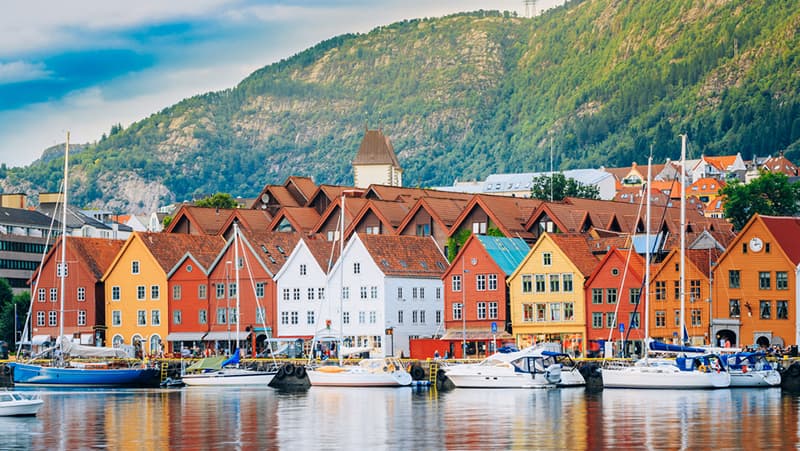
Norway isn’t just picturesque. It’s also one of the cheapest countries to study in for international students. Most universities in Norway are publicly funded and don’t charge tuition fees – even for foreign learners. While some private universities do charge tuition – between €7000-€19,000 – international students aren’t required to pay more than Norwegians.
It is important to keep in mind, however, that the living costs in Norway are high. It can cost international students between €800 –€1400 per month to live in the country. But there are some grants and scholarships available to help students fund their time abroad. You can check them out here.
Overall, Norway offers world-class education and an excellent standard of living. Medical services are usually free for international students and many courses are taught in English, making it a great place to study abroad.
PTE Academic is accepted at top institutions in Norway including University of Oslo, UiT The Arctic University of Norway, Norwegian University of Science and Technology (NTNU).
Find out where else PTE Academic can take you in Norway.
2. Malaysia
With high-ranked universities and the fastest growing regional economy in the world, Malaysia is also an excellent destination to consider. The country boasts more than 100 higher education institutions – including branches of universities like Monash University and the University of Nottingham.
A bachelor’s degree for international students (not studying medicine) costs about $10,000-$20,000 USD at a public institution, and significantly more at an international branch campus.
However, the thing that makes Malaysia attractive is its low cost of living. Kuala Lumpur, the country’s capital city, is ranked by QS Best Student Cities Rankings as the second most affordable student city in the world. Rent in a shared apartment in Malaysia can cost as little as $50-$250 USD per month.
To learn more about how much it costs to live in Malaysia, visit the government’s website here.
PTE Academic is accepted at top institutions in Malaysia including Universiti Malaya (UM), Universiti Sains Malaysia (USM), and Universiti Teknologi Malaysia (UTM). Find out where else PTE Academic can take you in Malaysia.
3. Spain
Spain has a great climate, a relaxed lifestyle, and more than 70 universities to choose from. And yes, it also offers affordable tuition fees. Tuition for EU/EAA students at a public university can range from just €150-€3500. Keep in mind though, if you’re coming from a country outside the EU/EAA, your tuition fees could be higher.
The cost of living for international students in Spain ranges from €700-€1,100 a month. Many courses here are also taught in English, making Spain a good choice if you’re interested in improving both your English and Spanish skills.
PTE Academic is accepted at top institutions in Spain including Universidad de Granada. Find out where else PTE Academic can take you in Spain.
4. France
France is a surprisingly affordable place for international students to study. It’s also incredibly popular – more than 350,000 students enroll in the university there each year. France’s public universities charge just €170 per year for a bachelor’s degree for EU/EAA students. But like in Spain, if you’re a non-EU/EAA citizen, fees are likely to cost more.
The cost of living is more expensive in larger cities like Paris. But in smaller cities, you can expect to pay around €650 per month.
PTE Academic is accepted at top institutions in France including Université Paris 1 Panthéon-Sorbonne. Find out where else PTE Academic can take you in France.
5. South Africa
South Africa is renowned for its natural beauty and rich culture – it has 11 official languages, which is more than any other country in the world. It’s also home to the top-rated university in Africa: University of Cape Town.
Tuition for a bachelor’s degree in South Africa is reasonably inexpensive compared to locations and will cost international students between €6000–€7000 per year. Living costs are also only about €550 per month.
Find out how PTE Academic can help you to study at University of Cape Town.
6. Greece
Last but not least, Greece is one of the most affordable study destinations in Europe. Most students from the EU/EEA can study for free, while all other students could pay up to €2000 per year.
Greece also boasts low costs of living. Students can expect to pay between €450-€750 per month – and some students in financial need can live on campus for free. Better yet, between studies, international learners can soak up the sun while spending time on Greece’s beautiful beaches. What’s not to love?
Ready to kickstart your dream of studying abroad?
Many top-rated international institutions offer courses in English and require you to take an English language test.
PTE Academic is recognized by universities around the world – find out who accepts PTE Academic.




![[Asset] On test day during the test - 800 x 451 - for article use](/content/dam/ELL/pte/pearsonpte/articles/test-day-during-the-test-800-451.jpg)